
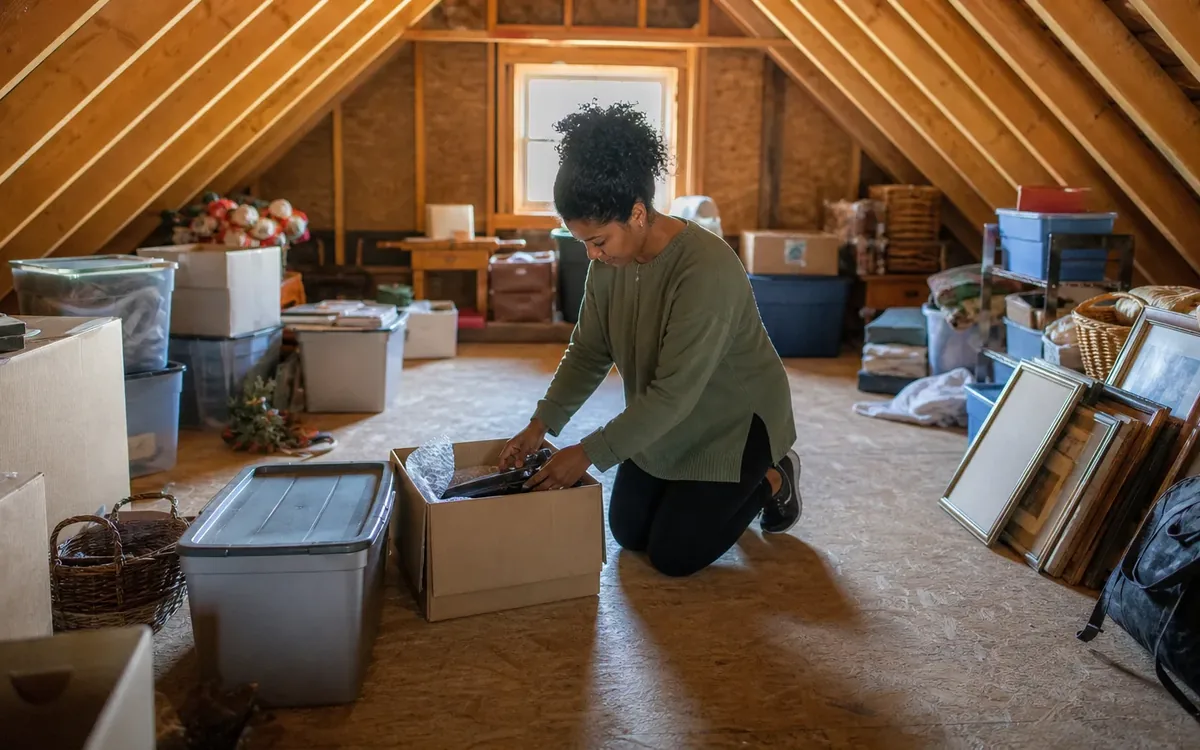
Before contractors arrive, remove loose belongings, fragile items, valuables, confidential papers, textiles, stored chemicals, and anything blocking the route to the attic or the area where work is expected. Do not disturb insulation, wiring, suspected mold, animal waste, damaged building materials, or unidentified hazardous substances. Ask the contractor what access and clearance they need before anyone starts moving attic contents.
Quick answer: Clear a safe route from the entrance to the work area, then remove portable possessions from that area. Photograph the attic first, separate valuables and estate documents, and protect items that must remain. Leave building systems, insulation, contamination, and questionable materials for the appropriate contractor, inspector, environmental professional, or authority.
An attic cleanout before repairs is not simply a matter of emptying the whole space. The useful goal is to create safe, practical access without discarding estate property prematurely or interfering with materials that another professional needs to inspect.
Start With the Contractor’s Required Work Zone
Before moving boxes, ask the incoming contractor to define the scope as clearly as possible. A roofer may need access near the roof deck. An electrician may need a route to junction boxes or wiring. An HVAC contractor may need clearance around equipment and ducts. An inspector may need to see the attic in its existing condition.
Questions worth asking include:
- Which attic entrance will you use?
- How wide should the access route be?
- What parts of the attic must be empty?
- Do you need the floor area, roof framing, eaves, wiring, ducts, or equipment exposed?
- Should insulation or stored boards remain untouched?
- Will you bring protective coverings for the occupied parts of the home?
- Are there conditions that should be evaluated before a cleanout begins?
Get these instructions from the contractor responsible for the upcoming work. A cleanout or move team can discuss moving logistics, sorting areas, packing, donation categories, and removal flow. It should not decide how much clearance a roofer, electrician, HVAC professional, pest professional, or inspector requires.
For an estate property with a large volume of stored belongings, an estate cleanout service may help the household organize and remove ordinary contents after the work boundaries are understood.
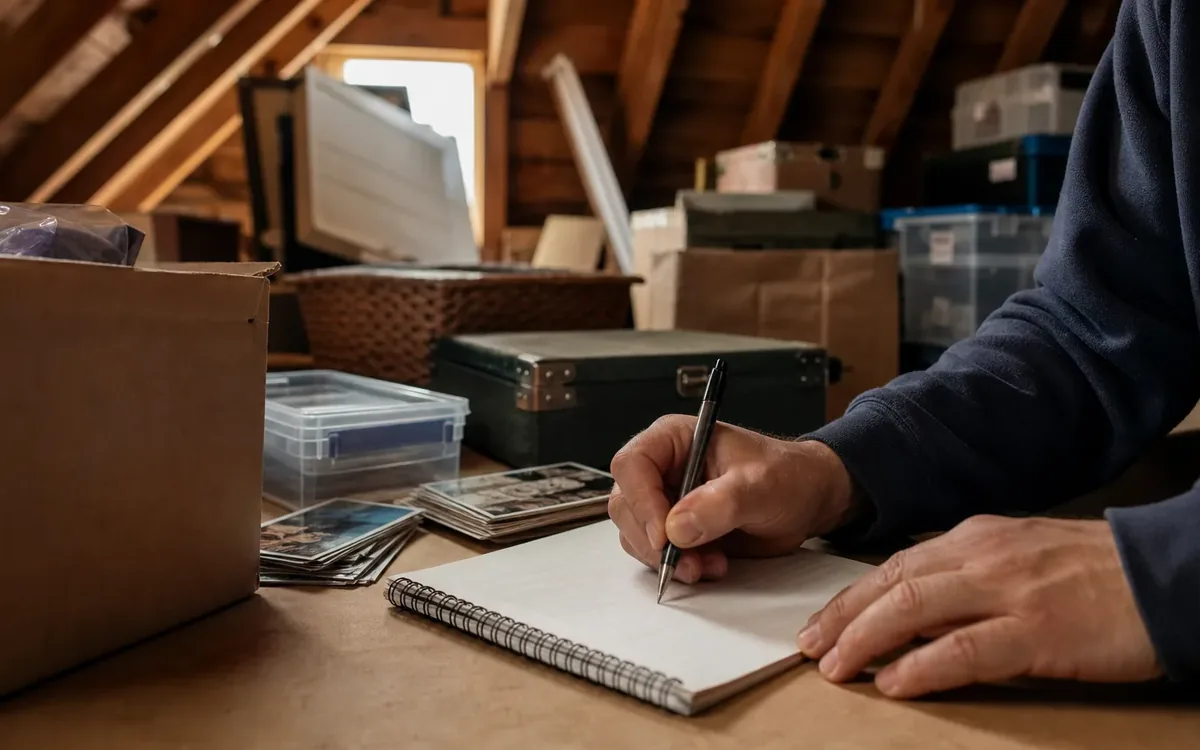
Document the Attic Before Anything Leaves
Take clear photographs or video before sorting. Capture wide views from the entrance, each section of the attic, the route through the space, and close views of stored groups. This creates a basic record of what was present and where it was located.
Documentation is especially useful when:
- Several heirs or family members must make decisions
- The personal representative is managing the property remotely
- Boxes have unclear ownership
- Contractors will work near stored property
- Water intrusion, pests, or physical damage are visible
- Valuable collections or household records may be present
Do not use photographs as a substitute for a professional inspection or appraisal. They are an organizational record. A qualified appraiser determines value, an inspector evaluates property conditions within the inspector’s scope, and the responsible contractor determines how the work area should be prepared.
Label photographs by area if the attic is large. Simple names such as “left of stairs,” “rear eave,” or “near air handler” can help family members discuss items without repeatedly entering the attic.
Remove Loose Household Contents From the Work Area
Once the required zone is confirmed and documented, remove portable possessions that could obstruct access, collect dust, or be damaged during work. Begin with items directly in the route and then clear the contractor’s work zone.
Common items to remove include:
- Cardboard boxes and plastic totes
- Holiday decorations
- Luggage and empty containers
- Clothing, linens, rugs, and fabric remnants
- Framed art, mirrors, and loose glass
- Books, photographs, and paper records
- Small furniture and household accessories
- Toys, hobby materials, and sporting goods
- Loose tools that are not part of the contractor’s work
- Portable electronics and small appliances
Fragile possessions should not simply be shifted to the far side of the attic. Vibration, dust, foot traffic, and changes in temperature or humidity can still affect them. Move them to a dry, secure interior area when practical.
Keep pathways clear on the level below the attic too. Remove furniture, cords, rugs, and boxes near pull-down stairs, hatches, hallways, and exterior doors. A practical move team may help plan where attic contents can be staged so that the contractor’s route does not become a new household obstacle.
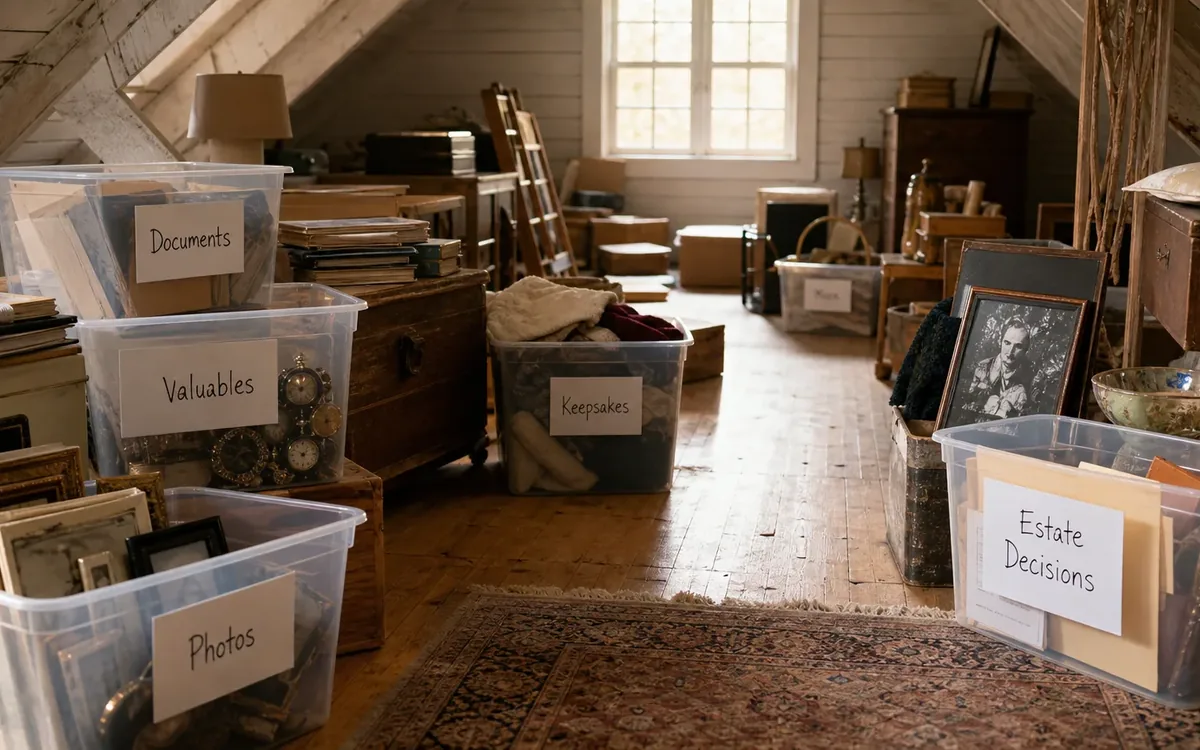
Pull Out Valuables, Records, and Estate Decision Items First
Attics often contain items that appear ordinary but require family review. Before arranging donation or disposal, set aside anything involving ownership, identity, value, or sentimental significance.
Prioritize removal of:
- Wills, deeds, titles, tax papers, and financial records
- Birth, marriage, military, immigration, and death records
- Family photographs, letters, and genealogy materials
- Jewelry, coins, watches, and precious-metal objects
- Collectibles, signed items, artwork, and antiques
- Firearms, ammunition, and related documents
- Prescription medicines and personal information
- Keys, access cards, safe combinations, and device passwords
- Items specifically named in estate documents
- Property belonging to another person
Place confidential papers and small valuables in secure containers under the control of the responsible household member or estate representative. Do not mix them into general staging piles.
The household or legally authorized estate representative decides what may be kept, distributed, donated, sold, or discarded. If ownership is disputed or estate documents restrict distribution, pause and seek guidance from the appropriate attorney or probate authority. A cleanout team can carry out authorized sorting and removal directions, but it cannot determine heirs, interpret a will, resolve ownership, or provide legal advice.
If the estate may contain marketable property, ask a qualified appraiser or appropriate sale professional to review uncertain items before disposal. Clutter Cleaner of South Carolina lists auctions and estate sales among its services, but valuation decisions should still be made by the responsible qualified professional rather than assumed during hauling or sorting.
Readers planning a broader property transition can also review the company’s South Carolina home-transition resources for related preparation topics.
Remove Chemicals and Special-Handling Items Carefully
Some portable items should come out of the contractor’s work area, but they should not enter an ordinary trash or donation pile. Keep products in their original containers when possible and avoid mixing, opening, or transferring them.
Look for:
- Paint, stain, thinner, and solvents
- Pesticides, herbicides, and fertilizers
- Fuels, oils, and automotive fluids
- Propane cylinders or other pressurized containers
- Batteries and damaged electronics
- Fluorescent lamps and other breakable bulbs
- Cleaning chemicals
- Fireworks, ammunition, or unidentified powders
- Medicines and medical sharps
If a container is leaking, swollen, corroded, unlabeled, or producing an odor, stop handling it and restrict access. Ask the appropriate waste program, fire authority, environmental professional, or other responsible authority how it should be managed. Disposal requirements can depend on the material and jurisdiction.
A practical cleanout team may discuss visible item categories, safe staging locations, and which objects need separate handling. It should not identify an unknown chemical by appearance or decide regulatory disposal requirements. Those determinations belong to the relevant professional, facility, manufacturer guidance, or public authority.
Leave Building Materials and Questionable Conditions Alone
Not everything in an attic is stored property. Some loose-looking material may be part of the building, an earlier repair, or evidence needed for an inspection. Do not remove or disturb it merely to make the attic appear cleaner.
Leave the following for professional direction:
- Insulation of any type
- Electrical wiring, junction boxes, fixtures, and cables
- HVAC equipment, ducts, vents, and condensate components
- Roof framing, decking, braces, and fasteners
- Plumbing, pipes, tanks, and vent lines
- Installed fans, antennas, alarms, or communication equipment
- Suspected asbestos-containing material
- Suspected mold or widespread microbial growth
- Animal nests, droppings, carcasses, or contaminated insulation
- Charred, wet, sagging, or structurally damaged materials
- Unknown construction debris that may relate to past work
Even when a household member believes a material is harmless, disturbing it can release dust, hide evidence, damage a system, or create exposure. An inspector may document conditions, but inspection findings and repair plans are separate matters. A licensed trade professional, environmental specialist, structural professional, pest professional, or relevant authority should address issues within that party’s scope.
If the attic floor feels unstable, joists are exposed, headroom is limited, or access requires stepping on framing, do not send untrained helpers into the space. Ask the incoming contractor what preparation can be performed safely from accessible areas.
Protect Items That Cannot Be Removed
A full attic empty-out may be impractical when furniture is too large, ownership decisions are pending, or the contractor needs only a limited section. Ask whether remaining contents can stay and what protection is acceptable.
Useful preparation may include:
- Consolidating approved items outside the required work zone
- Placing small contents in lidded, labeled containers
- Moving belongings away from eaves or equipment as directed
- Creating an inventory of everything left behind
- Marking boxes that contractors must not move
- Protecting the occupied route below the attic
- Restricting household access while work is underway
Do not drape plastic or fabric over electrical equipment, heat-producing equipment, vents, or components without contractor approval. Coverings can impede access or create a hazard. The responsible contractor should approve both the placement and type of protection near the work.
If contents are temporarily relocated, choose a destination before moving begins. Good staging areas are dry, secure, and separate from contractor traffic. Avoid filling stairs, hallways, garages, porches, or exits in ways that create another access problem.
Use a Four-Part Sorting Sequence
A focused sequence prevents the attic project from becoming a rushed whole-house cleanout. Sort only after documentation and professional boundaries are established.
Use four clearly labeled categories:
- Secure now: Records, valuables, sentimental items, and property with unclear ownership.
- Relocate: Belongings the household will keep but that must leave the work zone.
- Review before release: Potentially valuable, disputed, unusual, or estate-directed property.
- Approved removal: Ordinary contents that the authorized decision-maker has cleared for donation, sale, recycling, or disposal.
Avoid a vague “maybe” pile. Instead, label review items with the person who must decide and a decision date tied to the contractor schedule.
A cleanout or move management team may help with packing, room-to-room relocation, labels, inventories, donation separation, and removal of authorized contents. The household remains responsible for keep-or-release decisions unless an authorized representative has formally taken that role. Appraisers determine value opinions, sale professionals advise on marketability, and waste or compliance authorities determine applicable handling rules.
Prepare the Access Route and Day-of-Work Handoff
The attic itself may be ready while the route to it remains blocked. Walk the full path the contractor will use, from parking or entry to the attic opening.
Check that:
- Exterior and interior doors open fully
- Stairs and hallways are free of stored items
- Pull-down stairs or ladders are accessible
- Pets and children can remain away from the work route
- Breakable decor has been removed nearby
- The attic light works, if one is installed and safe to use
- The responsible contact is available for questions
- Contractors know which contents must not be moved
Do not repair an attic ladder, electrical light, or damaged walking surface unless you are qualified and authorized to do so. Report the condition to the contractor in advance.
At handoff, point out anything unusual without diagnosing it. Examples include visible staining, an odor, evidence of pests, a soft area, or an unidentified container. Let the appropriate professional decide what the observation means and whether work should pause.
Know Who Makes Each Decision
Clear roles reduce delays and prevent accidental disposal.
The household or authorized estate representative can decide:
- Which ordinary personal belongings to keep
- Who may receive sentimental items
- Which authorized contents may be packed or removed
- Where retained belongings will be relocated
- Who may enter the property
A practical cleanout or move team may discuss:
- Sorting order and staging zones
- Packing and labeling methods
- Movement of portable household contents
- Donation, sale, recycling, or disposal categories after authorization
- Coordination needs related to the transition schedule
Other responsible professionals or authorities decide:
- The contractor’s required clearance and work boundaries
- Whether building materials or systems may be disturbed
- Repair methods and technical safety requirements
- Inspection findings and recommended specialist review
- Appraisal conclusions and value opinions
- Real-estate listing, disclosure, or transaction advice
- Legal ownership, estate distribution, and probate questions
- Environmental, waste, code, or other compliance requirements
Clutter Cleaner of South Carolina provides estate cleanouts, downsizing and organizing, auctions and estate sales, move management, home sale preparation, and code compliance support statewide. These practical services can support an authorized plan, but they do not replace legal counsel, an appraiser, a real-estate professional, an inspector, a licensed trade contractor, or the responsible public authority.
Final Steps Before the Appointment
Confirm the attic’s condition with the incoming contractor after the cleanout, especially if the requested scope changed. Send updated photographs if requested and ask whether the cleared route and work zone are sufficient.
Before the appointment:
- Verify that no valuables or confidential records remain exposed
- Remove authorized loose contents from the defined work area
- Keep questionable materials undisturbed
- Label possessions that must remain
- Confirm access instructions and the property contact
- Record what was removed and where retained items went
- Keep family approvals or estate instructions with the project file
For help organizing an authorized attic cleanout anywhere in South Carolina, contact Clutter Cleaner of South Carolina at (843) 972-7020. Begin by explaining which contractor is coming, what work area that contractor identified, and whether the property is part of an estate. That information supports a focused preparation plan without shifting technical, legal, valuation, inspection, real-estate, or compliance decisions away from the professionals responsible for them.



