
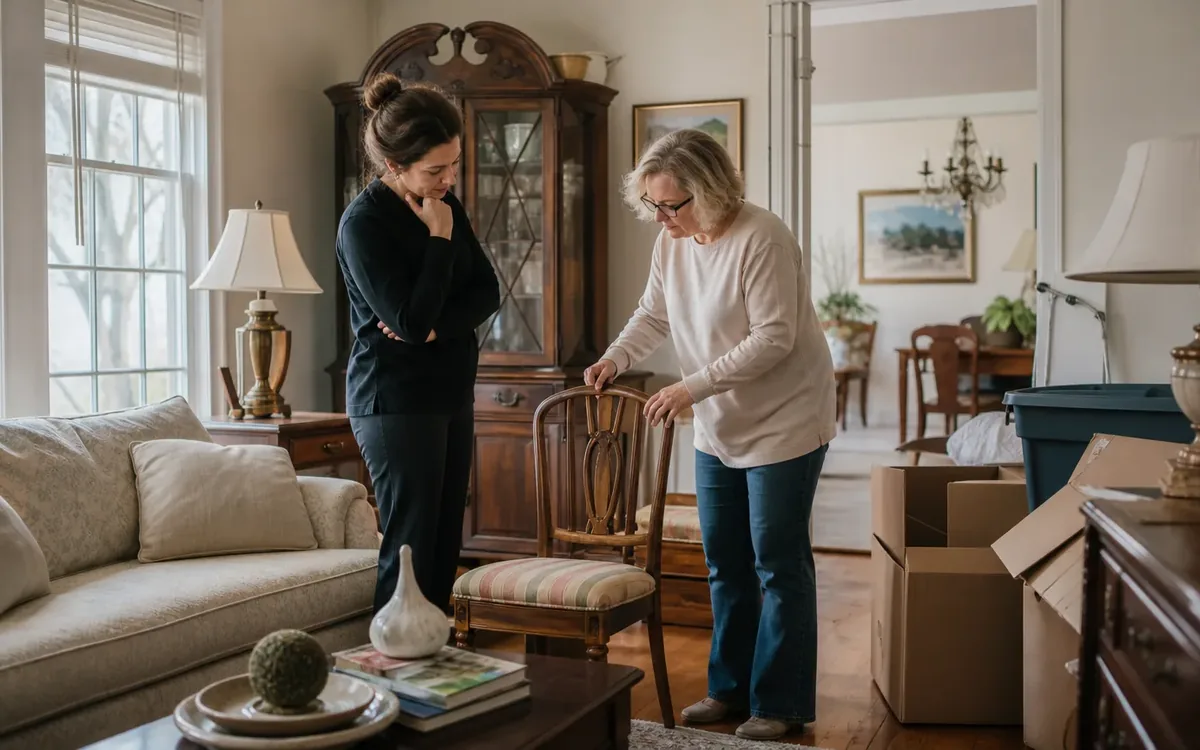
Furniture in an estate cleanout is usually sorted into several paths: keep, transfer to family, appraise, sell, donate, recycle, or discard. The household or legally authorized decision-maker chooses what may leave the property. A cleanout or move team can help organize, move, and route approved pieces, but it should not decide ownership, interpret a will, assign formal value, or resolve family disputes.
Quick answer: Before furniture is moved, identify the person authorized to make decisions and separate anything claimed, specifically bequeathed, financially uncertain, or potentially valuable. Then create clear destinations for the remaining pieces. Photographing each item and recording its destination helps prevent mistakes.
Who decides what happens to estate furniture?
The executor, personal representative, trustee, surviving owner, or another authorized person generally directs the process. The correct decision-maker depends on how the property is owned and how the estate is being administered.
Family members may express preferences, but preference alone does not necessarily establish ownership or authority. If authority is unclear, pause the furniture removal and consult the estate attorney, probate professional, trustee, or other responsible authority.
The household can usually decide practical questions once authority is confirmed, such as:
- Which pieces authorized recipients will keep
- Where retained furniture should be delivered
- Whether approved items should be considered for sale
- Which donation organizations to contact
- Whether unwanted pieces may be recycled or discarded
- When rooms need to be cleared
- Who should receive an inventory or completion record
A practical cleanout or move team may discuss room-by-room sorting, labor, access, transportation, destination labels, donation logistics, sale preparation, and disposal planning. Clutter Cleaner of South Carolina provides estate cleanout services across South Carolina, but legal authority and ownership questions remain with the appropriate estate professional or authority.
Do not let scheduling pressure turn an unresolved legal question into a moving decision. Furniture can wait while authority is confirmed.

What happens before anyone moves the furniture?
The safest sequence begins with a controlled walkthrough rather than immediate lifting. During that review, identify pieces that must not move and note any furniture containing personal property.
Dressers, desks, cabinets, nightstands, hutches, trunks, and upholstered furniture can hold more than expected. Check all drawers, shelves, compartments, cushions, slipcovers, and undersides before assigning a destination.
Commonly overlooked contents include:
- Cash, checks, and gift cards
- Jewelry and watches
- Deeds, titles, tax documents, and insurance records
- Photographs, letters, and military papers
- Keys, remotes, and safe combinations
- Prescription medication
- Firearms or ammunition
- Small collectibles tucked into drawers
- Personal data stored on electronic devices
Set aside documents, valuables, medication, weapons, and sensitive materials for the authorized person. Applicable laws, law enforcement guidance, pharmacists, financial institutions, or other qualified professionals should direct specialized handling when needed.
Next, mark furniture by destination. Colored painter’s tape or removable labels can work, provided labels will not damage the finish. Use plain categories such as:
- KEEP IN HOME
- FAMILY PICKUP
- MOVE TO NEW HOME
- APPRAISAL HOLD
- SALE REVIEW
- DONATE
- RECYCLE
- DISPOSE
- DO NOT MOVE
For a broader explanation of sequencing the property, possessions, and final clearing, see the best way to clean out an estate.
Does estate furniture get appraised or sold?
Some furniture may be worth evaluating, but age does not automatically mean value. Condition, maker, construction, provenance, completeness, design demand, and the regional market can all matter. Large pieces may also have modest resale demand even when they are well made because buyers must transport and place them.
A cleanout or move team may point out a maker’s mark, recommend pausing a piece for review, photograph furniture, or coordinate practical access for an appraiser or sale professional. It should not present a casual opinion as a formal appraisal.
Consider qualified appraisal or specialized sale advice when furniture appears to have:
- A recognized maker, label, signature, or workshop mark
- Documented provenance or historical association
- Unusual hand construction or fine materials
- A matching set in good condition
- Regional, artistic, or collectible significance
- Insurance, tax, equitable-distribution, or probate implications
The responsible appraiser, auction professional, estate-sale professional, tax adviser, attorney, or fiduciary should address value and the appropriate sales method within that person’s expertise.
Possible sales channels include an auction, estate sale, consignment arrangement, dealer purchase, or direct private sale. Each option has different timelines, costs, risks, and likely buyers. Before authorizing a route, ask who sets prices, who holds the goods, what fees apply, how unsold items are handled, and when proceeds are reported.
Keep sale candidates protected until the applicable professional has reviewed them. Cleaning, refinishing, separating a set, or making repairs can sometimes affect value.
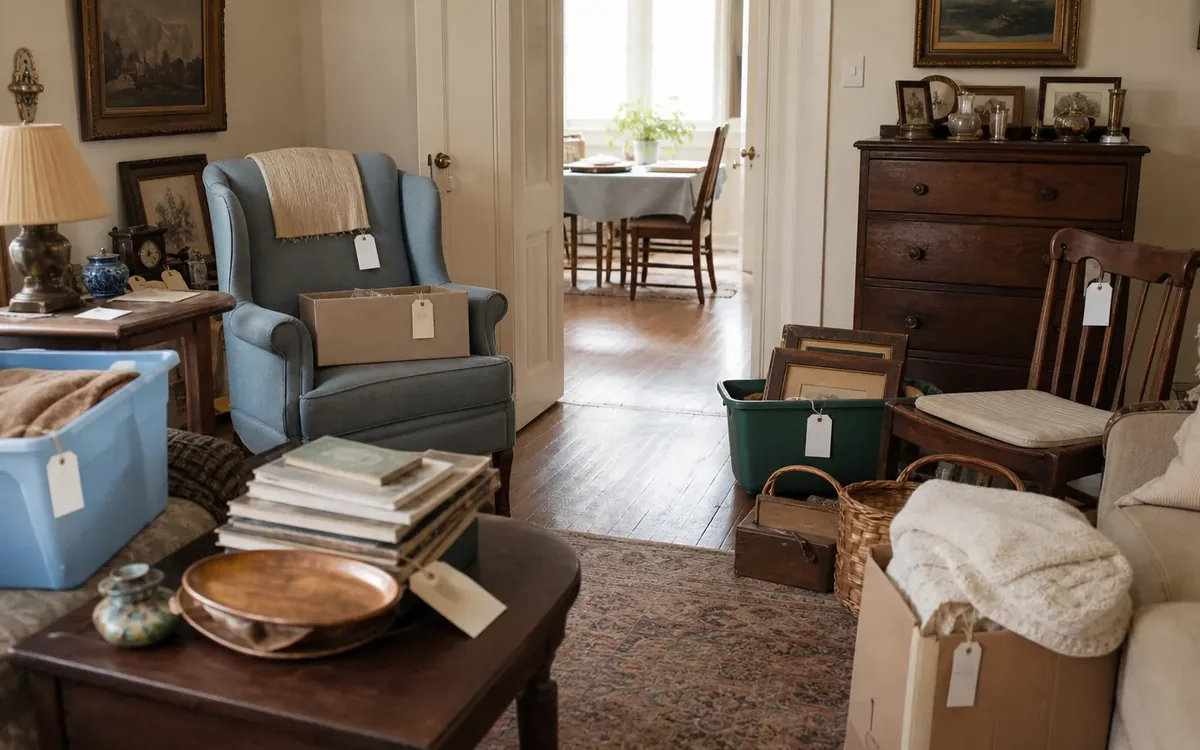
How is furniture divided among family members?
Family distribution works best when it follows written instructions and a documented process. Start by identifying furniture specifically addressed by a will, trust, agreement, court instruction, or other controlling document. An estate attorney or responsible fiduciary should interpret those materials when their meaning or legal effect is uncertain.
For furniture not specifically assigned, the authorized decision-maker may establish a selection method. Depending on the estate and professional guidance, options might include:
- A scheduled selection round
- A rotating choice order
- Written requests submitted by a deadline
- Distribution based on an agreed valuation
- Sale of disputed pieces followed by distribution of proceeds
A cleanout team can label selected furniture, group pieces by recipient, stage them for collection, and record where they went. It should not choose who deserves an item or mediate a legal ownership dispute.
Use a simple transfer record containing:
- Item description and photograph
- Room where it was found
- Recipient’s name
- Pickup or delivery destination
- Date transferred
- Name of the person approving release
- Recipient acknowledgment when appropriate
Set firm pickup instructions. Note whether recipients must bring labor, blankets, tools, and a suitable vehicle, or whether move coordination has been arranged. If an item is not collected by the deadline, the authorized person should decide the next step.
What furniture can usually be donated?
Donation can be a useful route for clean, functional furniture, but every organization sets its own acceptance rules. Confirm those rules before loading a truck or promising that an item will be accepted.
Organizations may consider factors such as:
- Structural stability
- Tears, stains, odors, or heavy wear
- Pet hair or pest evidence
- Current safety standards
- Missing hardware or parts
- Size and weight
- Available storage and current community demand
- Whether pickup is offered in that location
Mattresses, sleeper sofas, cribs, medical furniture, damaged particleboard pieces, and heavily upholstered items may face added restrictions. Acceptance varies, so call the chosen organization directly and describe each piece accurately.
The household can select an organization and approve the donation. A cleanout or move team may discuss sorting, measurements, loading access, transportation, and documentation practices. The recipient organization decides what it will accept. A tax professional should advise whether a donation is deductible and what records or valuation support may be required.
Do not assume a donation receipt establishes fair market value. Keep the receipt with the estate records and seek qualified tax or appraisal guidance when necessary.
When does furniture need to be recycled or discarded?
Furniture generally reaches the recycling or disposal path when it is unsafe, contaminated, badly broken, pest-affected, or refused by practical reuse channels. Even then, some components may be recoverable depending on local facility rules.
Possible separable materials include:
- Metal bed frames and hardware
- Clean scrap metal
- Certain untreated wood components
- Cardboard from disassembled modular pieces
- Electronics incorporated into desks or cabinets
Do not dismantle potentially valuable furniture before appraisal review. Also avoid breaking furniture inside a finished home unless the work area and removal path have been evaluated. Nails, staples, broken glass, splintered wood, and heavy mechanisms create avoidable hazards.
Special caution is appropriate for furniture affected by mold, bodily fluids, chemicals, pests, or other contamination. A practical cleanout team may identify visible concerns and discuss access or containment logistics, but qualified remediation, pest-control, environmental, health, or disposal professionals should determine specialized treatment and compliance requirements.
Disposal rules can vary by material and receiving facility. The applicable local authority or facility decides what it accepts and how loads must be prepared. The estate’s decision-maker should approve disposal before usable or disputed furniture leaves the property.
How should furniture be prepared for removal?
Once every piece has an approved destination, plan removal around safety and property protection. Measure furniture and the entire exit route, not just the nearest doorway.
Record:
- Furniture width, depth, and height
- Door and hallway clearances
- Stair dimensions and turns
- Elevator dimensions and reservation rules
- Porch, gate, and driveway constraints
- Low fixtures, railings, and fragile flooring
- Whether legs, doors, shelves, or mirrors detach
Empty furniture completely. Secure drawers and doors without placing damaging adhesive directly on delicate finishes. Bag and label loose hardware. Keep keys with the corresponding piece.
Protect corners, floors, walls, banisters, and door frames where appropriate. Large wardrobes, sleeper sofas, mechanical beds, glass cabinets, and stone-top tables may require special equipment or experienced handling. A move team can discuss practical handling methods, but a building manager, inspector, contractor, or other responsible professional decides building-access, structural, or safety questions within that person’s authority.
If the home is being sold, coordinate furniture removal with the real-estate plan. An agent may recommend retaining selected pieces for staging or clearing rooms for photography and showings. The seller or authorized estate representative makes the final household decision, while the real-estate professional advises on market presentation.
A practical furniture-routing sequence
Furniture decisions become easier when each stage has a clear stopping point. Use this sequence to reduce accidental removal:
- Confirm authority. Identify who can approve transfers, sales, donations, and disposal.
- Secure the property. Control keys and limit unsupervised removal.
- Search every piece. Empty compartments and protect sensitive contents.
- Identify specific gifts or claims. Place disputed or unclear items on hold.
- Photograph and list furniture. Capture maker’s marks and visible condition.
- Create an appraisal hold. Keep potentially significant pieces untouched.
- Record family selections. Assign recipients and pickup deadlines.
- Evaluate approved sale candidates. Obtain relevant professional advice.
- Confirm donation acceptance. Verify item condition and destination requirements.
- Approve recycling or disposal. Document the final route for unusable pieces.
- Plan removal order. Clear safe paths and avoid blocking retained furniture.
- Complete a final walkthrough. Check rooms, closets, garages, and outbuildings before signoff.
The removal order matters. Family pickups and appraisal reviews may need to occur before general clearing. Donation and disposal loads should remain visibly separated so that a destination mix-up does not happen at the truck.
What records should the estate keep?
Documentation does not have to be elaborate, but it should be consistent. A shared spreadsheet or written inventory can track the item’s description, photo number, decision, destination, approval, and completion date.
Useful records may include:
- Before-removal room photographs
- A furniture inventory
- Appraisal reports or professional evaluations
- Sale agreements and settlement statements
- Donation receipts
- Transfer acknowledgments
- Disposal or recycling records when provided
- Moving paperwork
- Notes about items placed on hold
Records can support communication among the authorized representative, beneficiaries, attorneys, accountants, agents, and other involved professionals. The responsible legal and tax advisers should determine what must be retained and for how long.
After removal, inspect for property issues previously concealed by furniture. Look for wall damage, floor staining, moisture, pest evidence, missing outlet covers, or unstable fixtures. A cleanout team can flag visible conditions, but inspectors, contractors, remediation specialists, code officials, or other qualified parties determine their significance and required correction.
Short FAQ
Should all old furniture be thrown away?
No. Old furniture may be retained, transferred, appraised, sold, donated, recycled, or discarded. Its age alone does not determine condition, usefulness, or value.
Can family members take furniture before the cleanout?
Only with approval from the person authorized to release it. Photographing the item and recording the transfer can reduce later confusion. Pause if ownership or authority is disputed.
Will a cleanout team determine what furniture is valuable?
A team may notice features worth further review and help place pieces on hold. Formal valuation should come from the appropriate qualified appraiser or market professional.
What if a donation organization refuses an item?
Return it to the approved routing process. The authorized decision-maker can consider another organization, recycling, or disposal rather than leaving it without permission.
Should furniture stay for home-sale staging?
Possibly. The real-estate professional can advise which pieces support the presentation and schedule. The seller or authorized estate representative approves what remains, and inspection or repair decisions stay with the relevant professional.
What is the best next step?
Confirm decision-making authority, stop unapproved removal, and label each piece by destination. Then contact Clutter Cleaner of South Carolina at (843) 972-7020 to discuss practical estate cleanout, move-management, sale-preparation, or furniture-routing needs across South Carolina.



