

If an estate property is in a South Carolina hurricane evacuation zone, plan the cleanout around safe access rather than a fixed calendar. Confirm the official zone, identify who can pause work, keep evacuation routes clear, and avoid leaving belongings or loaded vehicles exposed when tropical-weather alerts or access restrictions change.
Quick answer: Treat evacuation status as a stop-work control, not a scheduling inconvenience. Before sorting begins, assign a decision-maker, verify information through official state and local sources, define triggers for securing the property, and create a plan for items already staged when work must stop. Household members can make decisions about belongings, but public authorities control evacuation orders and restricted access.
This guide focuses on evacuation-zone logistics for coastal South Carolina properties. It does not address the specialized handling of flood-damaged belongings, mold, structural hazards, or contaminated materials.
Why does an evacuation zone change an estate cleanout plan?
An estate cleanout normally involves repeated entries, open doors, sorting areas, parked vehicles, and items moving between rooms and destinations. In an evacuation zone, each of those activities can become harder to manage if an alert escalates or authorities restrict access.
The central issue is not whether a storm will reach the property. It is whether the cleanout can be stopped and secured without creating extra risk, blocking a route, or separating important property from the person responsible for it.
An evacuation zone also is not the same thing as a forecast area or a description of a property’s flood risk. Use current state and local emergency-management information to confirm the property’s zone and applicable instructions. A cleanout company, real-estate agent, appraiser, or contractor should not replace the authority issuing evacuation or access directions.
Before choosing work dates, the household or estate representative should identify:
- The property’s official evacuation zone, if any
- Available approaches to and exits from the property
- Parking rules and community or building access procedures
- The person authorized to halt the cleanout
- A secure indoor place for anything awaiting a decision
- Where keys, gate credentials, and alarm instructions will be kept
- Who will monitor official alerts during the project
For the underlying sequence of sorting and disposition, review the best way to clean out an estate. Add the evacuation controls in this guide to that process rather than replacing careful estate decision-making with rushed weather preparation.

Who should make each decision?
A practical plan separates household choices from professional and government decisions. This prevents a cleanout team from being asked to decide something outside its role when conditions are changing.
The household or authorized estate representative can decide
- Which belongings family members may keep
- Which papers and valuables require protected handling
- Whether undecided items remain in the home or go to separately arranged storage
- Which donations, sales, recycling, or disposal options to consider
- Who may enter the property
- Whether work should stop earlier than an official order requires
- Who can approve changes if the main decision-maker is unavailable
Only someone with proper authority should direct the removal or disposition of estate property. If authority is unclear, pause that portion of the work and consult the appropriate attorney, personal representative, probate contact, or other responsible professional.
A practical cleanout or move team may discuss
- Room-by-room sequencing
- Clear loading and walking paths
- Indoor staging options
- Methods for labeling destination groups
- How to leave the property securable at the end of a work period
- Which planned tasks are easy to stop and which should not begin near a weather decision point
- Vehicle positioning that does not obstruct an evacuation route
Clutter Cleaner of South Carolina offers estate cleanout services across South Carolina. Any project scope, access plan, or weather-related pause should be discussed for the specific property rather than assumed from a general service description.
Other professionals or authorities decide
- Emergency officials: evacuation orders, route instructions, reentry restrictions, and public-safety notices
- Attorneys or probate professionals: legal authority, estate obligations, disputes, and document-retention questions
- Appraisers: valuation and whether an item requires specialist review
- Real-estate professionals: listing strategy, disclosures, and market preparation advice within their role
- Inspectors and contractors: structural, electrical, roofing, tree, utility, or other property conditions within their expertise
- Local authorities or associations: permits, code requirements, access rules, and community restrictions
- Storage and disposal providers: acceptance rules, facility access, transport conditions, and prohibited materials
A cleanout plan should coordinate with these decisions, not absorb them.
What should trigger a pause or stop-work decision?
Do not rely on a vague instruction such as “stop if the weather gets bad.” Write down specific triggers and who acts on them. Official instructions always take priority over the project’s internal plan.
Useful triggers can include:
- An evacuation order or other direction affecting the property
- An official closure or restriction on a required access route
- Building management, community management, or the property owner suspending access
- Conditions that prevent doors, windows, gates, or vehicles from being secured
- Loss of necessary utilities or communications
- A warning that makes continued travel or outdoor loading inconsistent with official guidance
- A decision by the authorized representative or crew lead that the site cannot be left orderly and secure
- Discovery of a structural, electrical, tree, or utility hazard requiring qualified assessment
A tropical-weather alert does not tell a cleanout team what legal action to take. The decision-maker should consult the exact alert, the property’s location, official instructions, and site conditions. It is reasonable for a household to adopt a more cautious internal stop point than the minimum required by authorities.
When a trigger occurs, stop opening new rooms or creating new piles. Shift attention to closing containers, moving loose items indoors, documenting the current status, clearing paths, removing permitted vehicles and equipment, and securing authorized entry points.
No one should enter or remain at a property contrary to an evacuation order, road closure, law-enforcement direction, fire authority instruction, or property-access restriction.
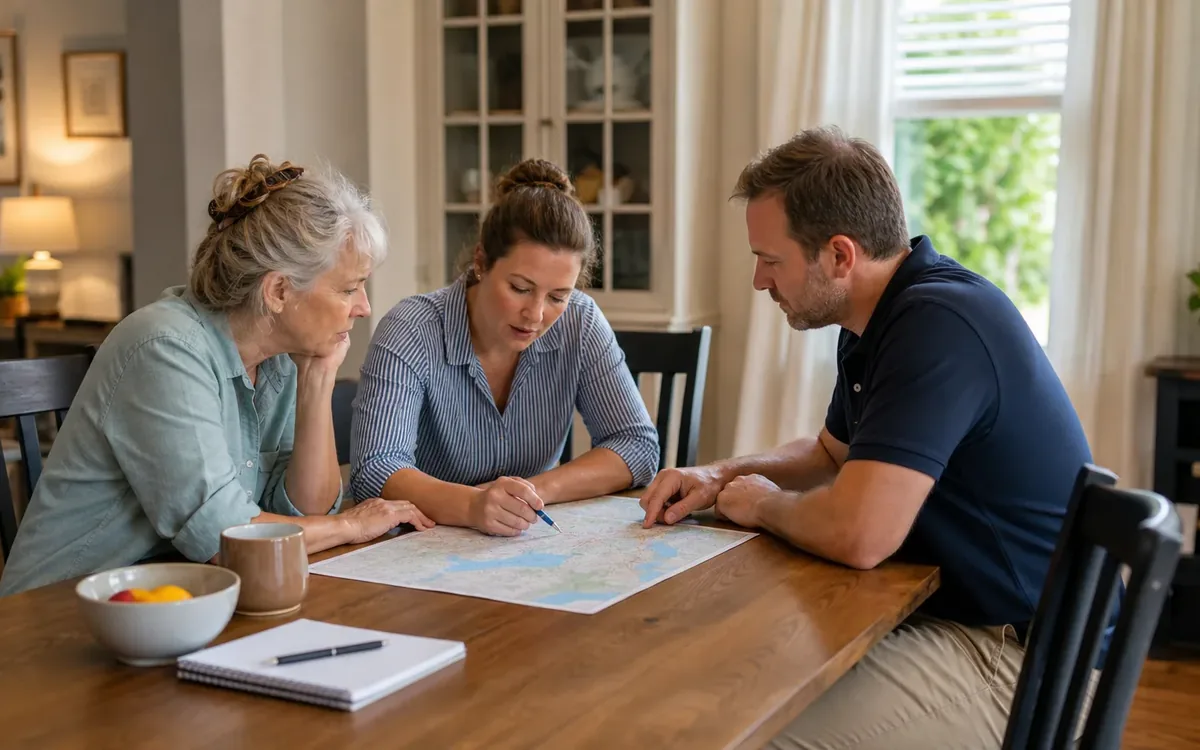
Build a cleanout plan that can stop cleanly
A stoppable plan is more useful than a plan built around completing as much as possible before weather arrives. Organize work into contained units that do not leave the house spread across driveways, porches, hallways, and open vehicles.
Use the following four-part structure:
-
Start with records and irreplaceable items. Locate legal papers, financial records, photographs, keys, medications, identification, and small valuables. The responsible person should decide where they go. Do not leave them in general staging areas.
-
Finish one contained area before opening another. A closet, cabinet group, or single room is easier to secure than several partially sorted floors. Keep each destination category labeled and physically separate.
-
Use indoor staging by default. Outdoor staging may interfere with access and can become difficult to secure quickly. Do not block doors, stairs, walkways, hydrants, shared drives, or the route needed to leave the property.
-
End each work period in a secure state. Close containers, consolidate tools, remove loose packing materials, return keys as agreed, and record what remains. The property should not depend on the next work period to become lockable.
Labels should describe both status and destination. Examples include “family decision required,” “appraisal review,” “approved donation,” “approved disposal,” and “do not move.” Avoid using color alone because labels may be separated from a key or interpreted differently by different people.
Maintain a simple written log showing:
- Areas completed
- Items awaiting authority or appraisal
- Property moved off site and its approved destination
- Keys and access devices issued
- Existing property concerns noticed during work
- Tasks needed before the next entry
This record is operational, not a legal inventory or appraisal unless the responsible professional says otherwise.
How should evacuation routes and property access be handled?
Start at the street and work inward. A well-organized room does not help if a vehicle, container, gate, or loading arrangement prevents a safe departure.
Check whether the property relies on a shared drive, controlled gate, garage, elevator, loading area, ferry, bridge, or route that authorities could restrict. Do not assume an alternate route will remain available. Official sources should guide travel and evacuation choices.
At the property, keep these areas unobstructed:
- The household’s selected exit path
- Exterior doors and gates needed for departure
- Stairs, hallways, and ramps
- Driveways and shared access lanes
- Utility shutoffs and emergency equipment
- Areas needed by residents, neighbors, building staff, or responders
Discuss parking and loading before work begins. A practical cleanout team may identify where vehicles can be positioned and moved, but local traffic controls, association rules, property permissions, and emergency directions govern what is allowed.
If access is restricted after an evacuation, do not promise a restart date based only on the weather improving. Reentry can depend on public instructions, road conditions, utility status, building management, the property owner, and site-specific hazards.
Remote access also needs controls. Decide who holds keys, who may authorize entry, and whether alarm or gate information can be shared. Avoid informal key handoffs without a record. If a neighbor or family member is asked to check the property, that person still must follow official access restrictions.
Plan destinations without creating weather exposure
Every outgoing category needs an approved destination, but those destinations involve different providers and decisions.
Storage is a household choice arranged with a storage provider. Confirm what the facility accepts, who signs the agreement, who has access, and whether transport can be postponed. Do not use storage as a substitute for deciding who owns disputed property.
Appraisal belongs with a qualified appraiser or specialist. Set aside potentially valuable items without cleaning, repairing, donating, or discarding them until the authorized person receives appropriate advice. A cleanout team can isolate labeled items but should not determine value unless separately qualified and engaged to do so.
Estate sales and auctions require separate decisions about suitability, timing, access, and sale terms. Clutter Cleaner of South Carolina lists auctions and estate sales among its services, but the responsible representative should confirm the agreed scope and whether changing weather affects the plan.
Donation, recycling, and disposal depend on the receiving organization’s acceptance rules and operating status. Approval from the estate representative should come before removal. Hazardous, regulated, unknown, or prohibited materials may require direction from the appropriate local authority or specialized provider.
Contractor work should remain separate from sorting. If roof, electrical, structural, tree, plumbing, or utility concerns appear, secure the area if it is safe to do so and refer the condition to a qualified contractor or authority. A cleanout should not continue through a hazard simply to meet a property-preparation goal.
Create a restart plan before work pauses
A restart plan reduces confusion after access resumes. It should be written before the property is secured, not reconstructed from memory later.
Record the last completed area, the location of undecided items, the status of vehicles or containers, and every key holder. Photographing work status may be useful if authorized, but consider privacy and sensitive documents before taking or sharing images.
Before returning, the responsible person should verify:
- Official reentry and route information
- Permission from the owner, estate representative, association, or building manager as applicable
- Utility and access conditions
- Whether an inspector or contractor must evaluate a concern first
- Whether destination providers are accepting deliveries
- Whether the original work scope still makes sense
Do not treat visible exterior calm as confirmation that a property is safe to enter. Downed lines, unstable trees, damaged structures, inaccessible roads, and utility problems require the appropriate authority or qualified professional.
Once access is confirmed, begin with a site check rather than immediate loading. Compare the property with the pause log, identify anything that moved or changed, and keep people away from questionable areas. Decisions about habitability, structural safety, electrical safety, code compliance, or repairs belong with the responsible inspector, contractor, utility, or authority.
A focused pre-work briefing
Before each work period during tropical-weather monitoring, hold a short briefing. It should answer the following five questions:
- Who is the authorized decision-maker today?
- Which official sources are being monitored?
- What exact condition stops sorting or loading?
- Where will staged items go if work stops?
- Who confirms that the property is secured and records its status?
Keep contact details available offline in case mobile service is unreliable. Include the estate representative, property manager if applicable, key holders, and separately hired destination providers. Emergency contact information should supplement, not replace, official emergency channels.
The briefing should also identify what will not happen that day. Near a potential stop point, avoid beginning tasks that require prolonged open access, broad outdoor staging, or several dependent pickups. Select work that can end at a clear boundary.
Short FAQ
Is an evacuation zone the same as a flood zone?
No. They serve different planning purposes. Confirm evacuation information through official emergency-management sources and direct flood, insurance, or property-risk questions to the appropriate authority or qualified professional.
Can a cleanout continue under a tropical-weather alert?
That depends on the specific official guidance, property location, access conditions, and the household’s stop-work plan. An evacuation order, closure, or authority’s restriction must be followed. The household may choose to pause earlier.
Who decides whether estate property can be discarded?
The person with proper authority over the estate should approve disposition. Legal uncertainty, family disputes, creditor questions, or probate obligations should be addressed by the appropriate attorney or probate professional before removal.
Should belongings be moved to storage before an evacuation?
That is a household decision based on authority, item priority, safe transport, and the storage provider’s terms and access. Do not make a rushed move that conflicts with official travel guidance or leaves ownership undocumented.
When should the cleanout restart?
Restart only after official access is permitted, the property owner or authorized representative approves entry, and any apparent hazards have been addressed by the appropriate professional. A cleanout team may discuss revised sequencing, but it does not control public reentry or safety determinations.
A strong evacuation-zone estate cleanout plan protects decision quality as much as property access. Keep authority clear, use official information, work in sections that can be secured, and separate cleanout logistics from legal, appraisal, inspection, real-estate, contractor, storage, and compliance decisions.



