
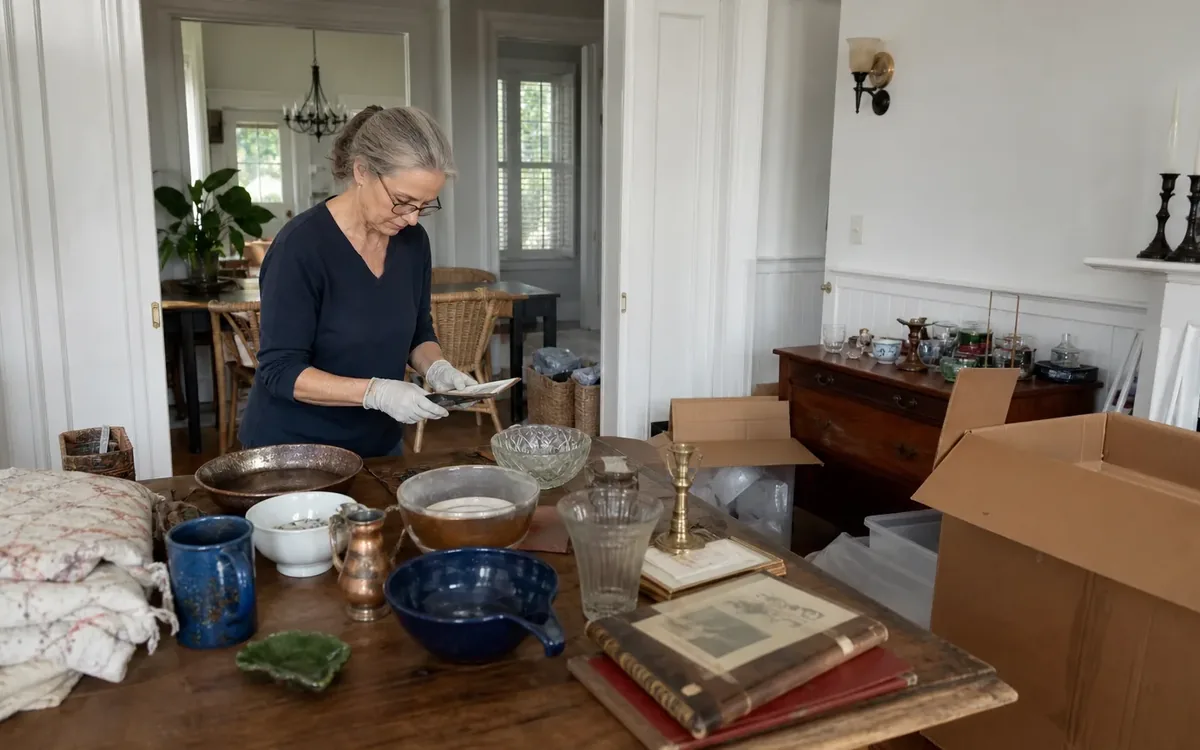
Coastal humidity can leave estate belongings damp, musty, stained, warped, or visibly moldy. The safest first response is to pause ordinary sorting, isolate affected items without spreading moisture or residue, record their condition, and direct questionable belongings to the appropriate specialist. Household decision-makers can set priorities and authorize routine sorting, but conservators, appraisers, remediation contractors, inspectors, attorneys, and local authorities should handle decisions within their respective fields.
Quick answer: Separate the estate into dry, questionable, and visibly affected zones. Photograph items before moving them, protect important records, and avoid wiping, spraying, or discarding potentially valuable property until the authorized decision-maker and any needed specialist have reviewed it. A cleanout or move team may discuss handling order, staging, and removal logistics, but it should not diagnose mold, determine legal ownership, or certify that property is safe.
Why does coastal humidity change estate sorting?
Humidity exposure is not simply a housekeeping issue. Moisture can affect an item’s physical condition, potential value, safe handling, and suitability for storage or sale. It may also move between belongings when damp papers, fabrics, or boxes are stacked together.
In South Carolina’s coastal and Lowcountry environments, a closed home, interrupted climate control, a roof or plumbing problem, or belongings stored against a damp surface can create uncertainty. Even when no active leak is apparent, some possessions may feel clammy, smell musty, show spotting, or have distorted surfaces.
That uncertainty changes the order of work. A normal estate sort might begin by grouping items for family, sale, donation, recycling, or disposal. After moisture exposure, condition triage should come first. Otherwise, people may carry affected belongings through dry rooms, place damp items into sealed containers, or clean away evidence that an insurer, appraiser, conservator, or contractor may need to see.
For broader planning after the condition review, see the best way to clean out an estate. If hands-on sorting and removal support is being considered, review the statewide estate cleanout service separately from specialist assessment or remediation.

What should happen before belongings are moved?
Begin with control, not cleanup. The household’s authorized representative should identify who may approve movement, disposal, sale, donation, or specialist expenses. If authority is unclear, pause irreversible decisions and consult the estate’s attorney or personal representative.
Use this five-part opening check:
- Look for immediate hazards. Do not enter areas with standing water, damaged ceilings, unstable flooring, exposed wiring, strong chemical odors, or extensive suspected biological growth. The appropriate emergency, building, utility, or remediation professional should assess those conditions.
- Confirm the source status. A qualified contractor may need to determine whether a roof, plumbing, drainage, HVAC, or structural problem is active. A cleanout team should not represent that it has identified or repaired the cause unless that work is separately handled by a properly qualified provider.
- Limit traffic. Keep family members, buyers, and helpers out of affected rooms until a handling plan exists. Avoid carrying boxes from those rooms into clean staging areas.
- Create a written boundary. Label rooms or shelves as dry, questionable, or visibly affected. Record who established the categories and note that they are sorting categories, not environmental findings.
- Gather documentation tools. Use a phone or camera, notebook, labels, and an inventory sheet. Personal protective equipment should be selected according to site conditions and professional guidance, not guessed at from an item’s appearance.
Do not use fragrance, bleach, household sprays, or aggressive scrubbing to make items appear cleaner before documentation. Treatments can damage finishes, inks, textiles, photographs, and other materials. They can also obscure the original condition.
How can an estate be divided into condition zones?
A simple zone system helps prevent ordinary sorting from overtaking condition control. It is an organizational method only. It does not determine whether mold is present or whether a room is safe to occupy.
Dry zone
Use this area for belongings with no observed dampness, staining, unusual odor, distortion, or nearby moisture concern. Choose a location separated from questionable rooms. Keep surfaces clean and avoid placing items directly on floors or exterior walls.
Questionable zone
Place items here when their condition is uncertain. Examples include a dry-feeling box from a musty closet, furniture stored beside a stained wall, or papers that are curled but not visibly wet. Keep these belongings apart while the responsible person decides whether specialist review is warranted.
Visibly affected zone
This category includes belongings that are wet, damp, stained, fuzzy or spotted, stuck together, swollen, rusted, or strongly musty. Avoid unnecessary handling. Do not shake fabrics, fan papers through the air, or open suspect containers in a dry room.
Documentation zone
If conditions permit, establish a place where one item or container can be photographed, labeled, and entered into the inventory without mixing it with cleared belongings. If moving an item there could spread residue or cause damage, document it in place instead.
A practical cleanout or move team may discuss room sequencing, staging space, container labeling, and which routine items are ready for an authorized destination. Environmental classification, remediation scope, structural safety, and clearance decisions belong to the relevant inspector, contractor, industrial hygiene professional, authority, or other qualified party.

Record damage before deciding an item’s destination
Documentation should preserve context. A close-up of a stain is useful, but it may not show where the object was found or what surrounded it. Capture both the setting and the detail before changing the scene.
For each important item or group, record:
- Room and exact location
- Box, shelf, drawer, or furniture identifier
- General item description
- Visible moisture, staining, spotting, corrosion, warping, or adhesion
- Noticeable odor, described without diagnosing its cause
- Whether nearby surfaces appear affected
- Whether the item was moved and where it went
- Names of people who authorized handling or disposal
- Any referral for conservation, appraisal, insurance, legal, or remediation review
Use neutral wording. Write “brown spotting on lower edge” rather than “mold damage” unless an appropriately qualified professional made that determination. Write “pages feel damp and are adhered” rather than predicting that a document cannot be saved.
Keep estate administration records separate from household paperwork. Wills, deeds, titles, tax documents, insurance materials, military records, account information, and correspondence may require legal or fiduciary review even when their physical condition is poor. Their importance is not determined by resale value.
If an insurance claim may be involved, ask the insurer what documentation and handling it requires before disposal or treatment. A cleanout company does not decide coverage or settle a claim.
Which belongings should receive specialist review?
Specialist review is most useful when an item is significant, difficult to replace, legally important, or vulnerable to well-intended cleaning. Do not assume that visible damage makes an item worthless. Also do not assume that sentimental or market value means it can be restored.
Consider pausing these categories:
- Fine art and framed works: An art conservator can evaluate media, supports, frames, and glazing. Avoid separating stuck layers or cleaning painted surfaces.
- Books, manuscripts, and photographs: A paper, book, or photograph conservator can advise on handling and stabilization. Do not peel adhered pages or photographs apart.
- Textiles and garments: A textile conservator or appropriate specialty cleaner may evaluate delicate, historic, ceremonial, or high-value pieces.
- Wood furniture and musical instruments: Moisture can affect joints, veneers, finishes, and internal components. A relevant conservator, restorer, or instrument professional should assess treatment.
- Jewelry, coins, collectibles, and decorative objects: An appraiser with experience in the specific property type may distinguish condition problems from ordinary aging or surface changes.
- Electronics and appliances: Do not energize equipment that is wet, corroded, or suspected of moisture exposure. An appropriate technician or electrician should address electrical safety.
- Firearms, ammunition, medications, and chemicals: These require controlled handling and lawful disposition. Consult the relevant authority, pharmacist, law enforcement agency, hazardous-waste resource, or qualified professional as applicable.
An appraiser determines value within the scope of the appraisal. A conservator evaluates preservation options. A remediation contractor proposes environmental work. These are separate from the household’s choice to retain, sell, donate, store, or discard property after receiving appropriate advice.
Sort by condition before sorting by destination
Once immediate concerns and specialist holds are identified, the authorized household representative can make practical destination decisions. Keep condition and destination as separate fields in the inventory.
For example, “family keepsake” describes the intended destination, while “questionable moisture exposure” describes condition. A cherished object may still need conservation advice. An item intended for sale may need an appraisal before cleaning. A routine disposal item may still be subject to claim documentation or regulated disposal requirements.
Useful decision labels include:
- Hold for estate representative
- Hold for family selection
- Legal or records review
- Insurance review
- Appraisal review
- Conservation review
- Remediation guidance needed
- Ready for routine packing
- Sale consideration
- Donation consideration, subject to recipient acceptance
- Recycling or disposal consideration, subject to local rules
Do not promise that a charity, auctioneer, estate-sale provider, storage facility, recycler, or disposal site will accept moisture-affected property. Each provider sets its own standards. Contact the intended recipient before loading or transporting questionable items.
Clutter Cleaner of South Carolina may discuss estate cleanout, downsizing and organizing, auctions and estate sales, move management, home sale preparation, or code compliance support where relevant. The exact scope should be confirmed for the property. Those discussions do not replace environmental testing, remediation, appraisal, legal advice, inspection, contracting, or government approval.
Prevent cross-contamination during handling
After a handling plan is approved, organize movement so dry belongings do not pass through affected staging areas. Use separate work surfaces and clearly marked containers. Avoid packing damp items in ordinary sealed boxes for storage, since trapped moisture may worsen deterioration.
Practical controls may include:
- Assigning separate tools or carts to different zones
- Labeling containers with source room and condition status
- Keeping questionable textiles away from clean upholstery
- Avoiding shared packing paper between zones
- Cleaning reusable equipment according to professional guidance
- Recording every transfer between rooms, vehicles, or providers
- Keeping specialist holds physically separate from disposal loads
Storage is a distinct household and storage-provider decision. Ask a facility about prohibited goods, condition requirements, climate-control features, insurance terms, and procedures for affected property. “Climate controlled” should not be treated as a promise that an already damp item will dry safely or stop deteriorating.
If contractor work is underway, coordinate access and sequencing. Roof, plumbing, HVAC, electrical, structural, pest, and remediation work may affect when contents can be moved. Contractors define their own scopes. The household should confirm who protects contents, who moves them, and what must be removed before work begins.
Prepare for sale, transfer, or disposal carefully
Moisture exposure can influence a home sale as well as the contents. The owner and real-estate professional can discuss presentation, access, transaction planning, and disclosures. Inspectors evaluate within their inspection scope. Attorneys advise on legal obligations. Contractors estimate or perform authorized repairs. A cleanout or home-preparation team should not make disclosure, habitability, code, or clearance determinations.
Before property leaves the estate, confirm:
- The decision-maker has authority to approve the destination
- Required beneficiaries or co-owners have been consulted
- Claim documentation is complete
- Appraisal or conservation holds are released
- Personal data and sensitive records are secured
- The receiving provider has accepted the item’s stated condition
- Transportation will not expose clean belongings or people unnecessarily
- Disposal follows facility rules and applicable local or state requirements
Code compliance support may help a household organize items, access, or documentation connected with an identified issue. Only the responsible government authority determines compliance, violations, deadlines, or closure of a case.
For a broader view of roles and sequencing, read how estate cleanouts work. That process should begin only after moisture-related boundaries and specialist holds are clear.
FAQ
Can family members wipe visible growth off furniture before appraisal?
It is better to pause. Cleaning can alter finishes, remove evidence of condition, spread residue, or reduce an appraiser’s ability to assess the item as found. Ask the appraiser whether conservation or environmental review should come first.
Should damp papers be placed in plastic bags?
Do not assume sealed plastic is appropriate. It can trap moisture, and fragile papers may be damaged by handling. Keep the material isolated and seek advice from a paper conservator or other qualified specialist based on its importance and condition.
Who decides whether a room is safe for sorting?
The appropriate qualified inspector, remediation professional, contractor, or public authority makes findings within its scope. A household or cleanout team can observe conditions and stop work, but should not certify environmental or structural safety.
Can affected belongings go to an estate sale or auction?
The estate representative can ask a sale or auction provider to evaluate them. That provider decides what it will accept and what condition information it requires. An appraiser may be needed for valuation, while legal counsel can address ownership or fiduciary questions.
When should disposal stop completely?
Pause when authority is unclear, records or valuables are mixed into debris, an insurance review is pending, regulated material is present, or site conditions may be unsafe. Resume only after the responsible person or professional resolves the issue.
Keep the triage record with the estate file
Humidity-related sorting should end with a usable record, not just a cleared room. Retain photographs, inventories, provider communications, appraisal reports, disposal receipts, claim instructions, and written approvals according to advice from the estate’s responsible legal or fiduciary professional.
The household controls personal priorities and authorized destination choices. A practical cleanout or move team may help discuss sequencing, labels, staging, packing, and removal. Conservators, appraisers, real-estate professionals, inspectors, contractors, attorneys, insurers, disposal facilities, and government authorities remain responsible for decisions within their own scopes.
Clutter Cleaner of South Carolina is physically located in Mount Pleasant and serves households across South Carolina, with Charleston as its primary market. For a property affected by coastal humidity, the useful starting conversation is about boundaries: what must remain untouched, what has been documented, which specialists are involved, and which belongings are cleared for routine estate sorting.



