
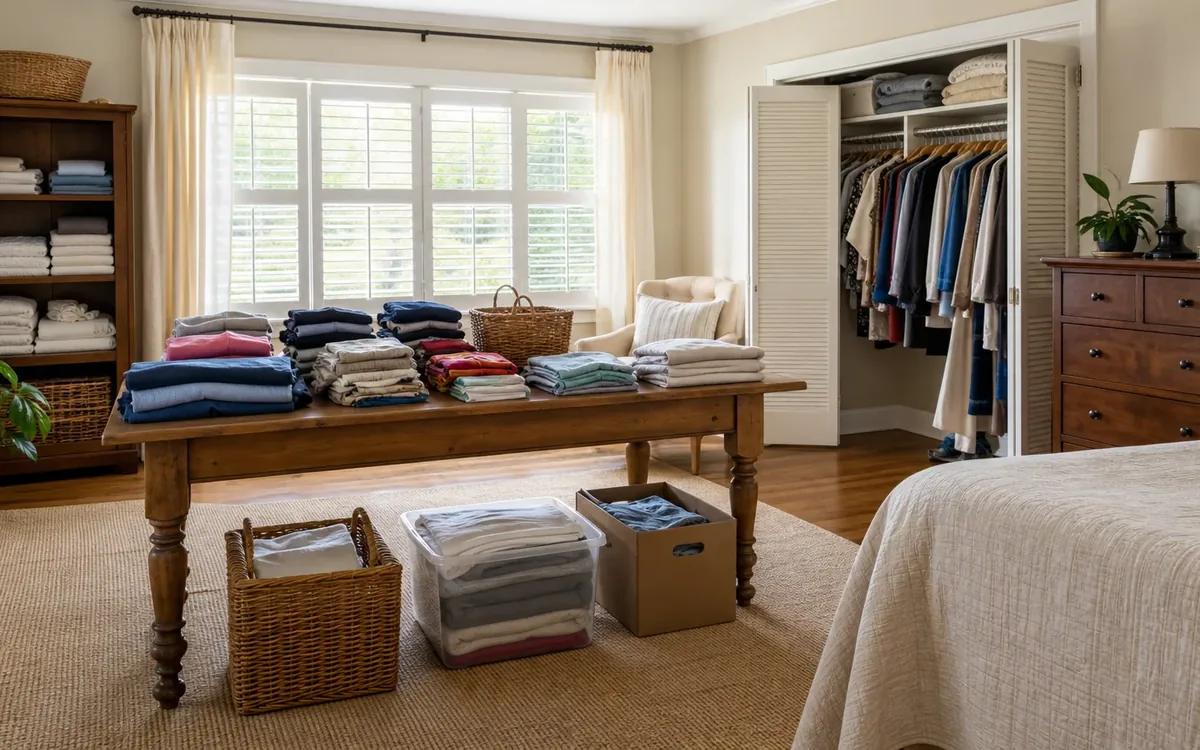
Estate clothing and linens should be sorted by ownership, condition, and the receiving charity’s current requirements before anything is washed or bagged. Keep family keepsakes separate, donate only suitable textiles that the organization accepts, and route damaged or contaminated materials through separately confirmed recycling or disposal options. For households in Charleston and elsewhere in South Carolina, confirm acceptance standards and pickup availability before preparing a donation load.
Quick answer: Set aside keepsakes and disputed belongings first. Separate clothing, bedding, towels, and specialty textiles. Check each item for moisture, odor, pests, stains, and damage. Ask the charity what it accepts and how donations must be packed. Launder suitable items according to their care labels, dry them completely, and label containers by contents and destination.
Who should decide which estate textiles can leave the home?
Begin with permission, not laundry. A closet may contain borrowed clothing, a relative’s stored belongings, or items specifically addressed in estate instructions. The person responsible for the estate should clarify who can authorize donation and which belongings need to remain available for family review.
Household members can identify sentimental pieces and propose practical sorting categories. Questions about ownership, inheritance, disputes, or authority to dispose of estate property belong with the estate’s responsible representative and, when needed, their legal adviser. A cleanout team does not replace that decision-making process.
Create a clearly marked hold area for:
- Clothing requested by family members.
- Monogrammed linens, quilts, and other keepsakes.
- Items whose ownership is uncertain.
- Pieces that may need an appraisal or sale review.
- Garments with documents, money, or personal items still in their pockets.
Keep this area physically separate from approved donations. A labeled shelf or closed container is safer than a loose pile beside the exit. If several people are helping, give everyone the same written instructions about what cannot leave.
For the broader sequence of estate decisions, see What Is the Best Way to Clean Out an Estate?. This textile-focused process fits within that larger plan without requiring every closet to be emptied at once.
What will South Carolina charities actually accept?
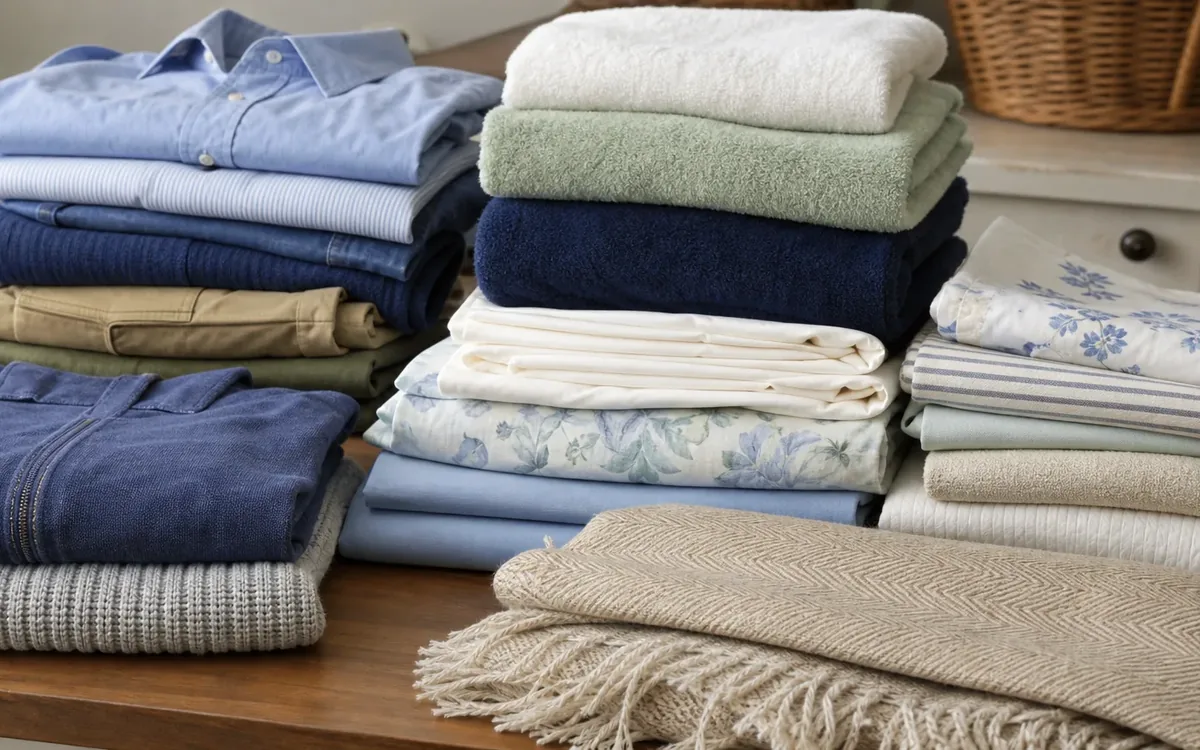
Acceptance varies by organization, location, available space, and current needs. Do not assume that a charity accepting shirts also accepts pillows, mattress pads, curtains, or fabric scraps. A posted donation list is a useful starting point, but confirm unclear categories directly before preparing them.
Describe the items specifically. “Bedding” could mean clean sheet sets, used pillows, comforters, or damaged mattress covers, each of which may receive a different answer.
Ask the receiving organization:
- Which clothing and household textile categories are currently accepted?
- Must items be freshly laundered, or is clean condition sufficient?
- Are used pillows, comforters, quilts, and curtains accepted?
- Are there restrictions on odors, stains, repairs, or pet hair?
- Should donations arrive in bags, boxes, or another container?
- Is pickup available for this address and this type of donation?
- What should happen if some items are declined at collection?
Record the organization, contact information, confirmed categories, and packing instructions on a donation destination sheet. Share it with anyone helping so they do not combine incompatible loads.
Pickup availability is a separate question from acceptance. Confirm arrangements directly with the charity, including access requirements and whether someone must be present. Do not treat an unconfirmed pickup request as permission to leave bags outdoors.
Build a sorting station around textile condition
Use a clean, dry work surface with enough space to unfold items. Avoid sorting directly on a damp garage floor or beside materials already marked for disposal. Good lighting makes stains, worn seams, and pest evidence easier to notice.
Set up distinct destinations rather than one large “donation” pile:
- Family hold: Keepsakes and belongings awaiting a decision.
- Ready for donation: Accepted categories in suitable condition.
- Laundry or minor repair: Potential donations needing a manageable correction.
- Separate review: Vintage, handmade, or potentially valuable pieces.
- Confirmed textile recycling: Materials a specific receiver has agreed to accept.
- Unsuitable or uncertain: Items requiring disposal guidance or further assessment.
The separate review category is important for handmade quilts, collectible clothing, and other unusual textiles. Age alone does not establish value. If value affects an estate decision, consult an appropriate appraiser or sale professional rather than guessing from appearance.
For help coordinating the physical sorting process, explore estate cleanout services from Clutter Cleaner of South Carolina. Its statewide service territory includes Charleston; its physical business location is Mount Pleasant. A practical discussion can cover staging areas, approved keep piles, handling instructions, and the household’s chosen donation destinations. Charity acceptance and pickup still require separate confirmation.
How can you tell whether clothing or linens are suitable to donate?
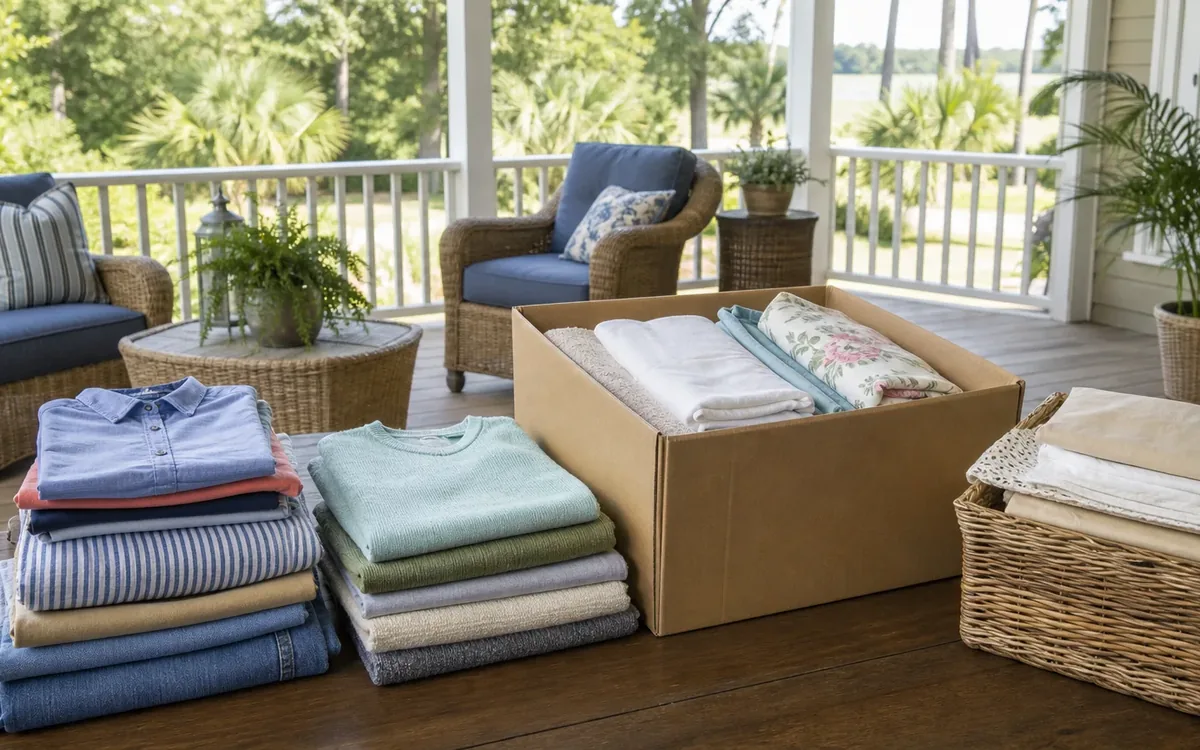
Judge each item as something another person would reasonably use, then apply the receiving organization’s requirements. “Still has fabric left” is not the same as “ready for reuse.” Check the whole item, not just the visible top layer.
For clothing, look at collars, cuffs, underarms, closures, pockets, and seams. Check for broken zippers, missing buttons, persistent odors, thinning fabric, and stains. Empty every pocket before the item enters a donation container.
For linens, unfold enough to inspect the full surface. Examine sheet corners, towel edges, blanket bindings, and the underside of quilts. A neatly folded exterior can hide a large stain or damaged section.
Useful condition distinctions include:
- Usable and accepted: Clean, dry items without disqualifying damage.
- Potentially usable after care: Items with removable dirt or a simple repair the household chooses to complete.
- Not suitable for reuse donation: Items with extensive wear, unresolved odors, or damage outside the charity’s standards.
- Possible contamination: Items showing mold, pest activity, bodily-fluid contamination, or unknown residues.
Do not shake out suspect textiles across a clean sorting area. Keep them apart and seek appropriate guidance before handling them further. A household can choose what to retain or discard, but contamination assessment and treatment may require a qualified specialist.
A charity’s willingness to accept worn textiles for recycling must be confirmed explicitly. Do not hide unsuitable items inside an otherwise acceptable donation bag.
Launder selectively, then let textiles dry completely
Confirm acceptance before spending effort on laundry. Washing a category that the intended charity refuses creates extra work without resolving its destination. Prioritize accepted, reusable items that genuinely need cleaning.
Read care labels and separate loads appropriately. Some estate textiles may be delicate, dry-clean-only, embellished, or too fragile for ordinary washing. Professional cleaning is a separate household choice, not an assumed part of a cleanout service.
Use these practical boundaries:
- Follow the textile’s care instructions rather than a single method for everything.
- Avoid adding fragrance merely to disguise an odor.
- Recheck stains and smells after cleaning.
- Let every item dry completely before folding or packing.
- Keep newly cleaned donations away from unsorted or suspect materials.
If an odor remains after appropriate cleaning, move the item out of the ready-to-donate category. The receiving charity can clarify its standards, but laundering does not automatically make every textile acceptable.
Do not wash potentially contaminated items together with ordinary donation laundry. Where mold, pests, or other contamination is suspected, consult the appropriate professional about handling and treatment. The decision to pay for specialist care should be separate from the decision to donate.
Avoid creating an endless repair backlog. The household can choose whether replacing a button or repairing a seam is worthwhile. Items waiting for that choice should remain clearly marked, not disappear into finished donation bags.
Pack clothing and linens so the destination stays clear
Pack only after the final condition check. Use clean containers that meet the receiving organization’s instructions, and keep loads manageable for the people handling them. Avoid overfilled bags that split or boxes that cannot close securely.
Group items in ways that make receiving easier without assuming the charity wants elaborate sorting. Clothing can be separated from household linens. Where useful, identify broad sizes or categories on the outside rather than opening every bag again later.
For linens:
- Keep matching sheet sets together when practical.
- Note bed size only when it is known.
- Separate towels from bedding if requested.
- Keep accepted specialty textiles in their own labeled container.
- Remove pins or loose hangers that could snag fabric or injure handlers.
Labels should state the contents and intended destination. Keep private information, family names, and estate paperwork out of donation bags. If a garment needs personal labels removed, check that doing so will not damage it.
Store packed donations in a dry indoor area until the handoff. Do not seal damp textiles in plastic or leave finished bags where weather or pests can affect them. Off-site storage, if needed, is a separate provider and household decision.
Maintain separation between donations, family keepsakes, recycling, and disposal through loading. A clear label matters most when several people are carrying similar-looking bags.
Keep unsuitable textiles out of reusable donations
A declined item needs a new destination, not a different label. Textile recycling programs may have their own restrictions, and an organization collecting usable clothing may not accept damaged fabrics at all.
Before using a recycling option, confirm the exact material and condition accepted. Ask specifically about mixed-fiber fabrics, heavily worn linens, wet materials, and contamination. Do not assume an animal organization wants old bedding or that a collection bin accepts every textile.
For items without a confirmed reuse or recycling route, consult the relevant local waste provider about disposal requirements. Unusual contamination may require additional professional guidance. Recycling and disposal arrangements remain separate choices unless a provider has expressly agreed to them.
Keep a simple destination record:
- What the container holds.
- Who approved its removal.
- Which receiver agreed to accept it.
- Whether its handoff is confirmed or still pending.
A cleanout or move team may discuss container placement, access, carrying routes, and how to protect items staying in the home. Legal authority, appraisal conclusions, tax questions, and any property inspection or compliance determination remain with the responsible professionals or authorities. Textile sorting is not a substitute for those reviews.
Short FAQ
Should every item be washed before donation?
Not automatically. Ask the charity about its requirements, then clean accepted items as needed according to their care labels. Everything packed for donation should be dry and meet the receiver’s condition standards.
Can stained towels go into a clothing donation bag?
Only if the receiving organization explicitly accepts them in that condition and category. Otherwise, separate them for a confirmed alternative destination. Do not mix them into reusable donations.
What if a relative wants something after it has been bagged?
Keep bags accessible until the estate’s responsible decision-maker approves release. A clear family hold area and agreed review process reduce confusion before anything leaves the property.
Does preparing bags mean charity pickup is arranged?
No. Confirm pickup availability, accepted contents, and handoff instructions directly. Finished bags should remain protected indoors until a confirmed transfer or another household-approved arrangement.



