
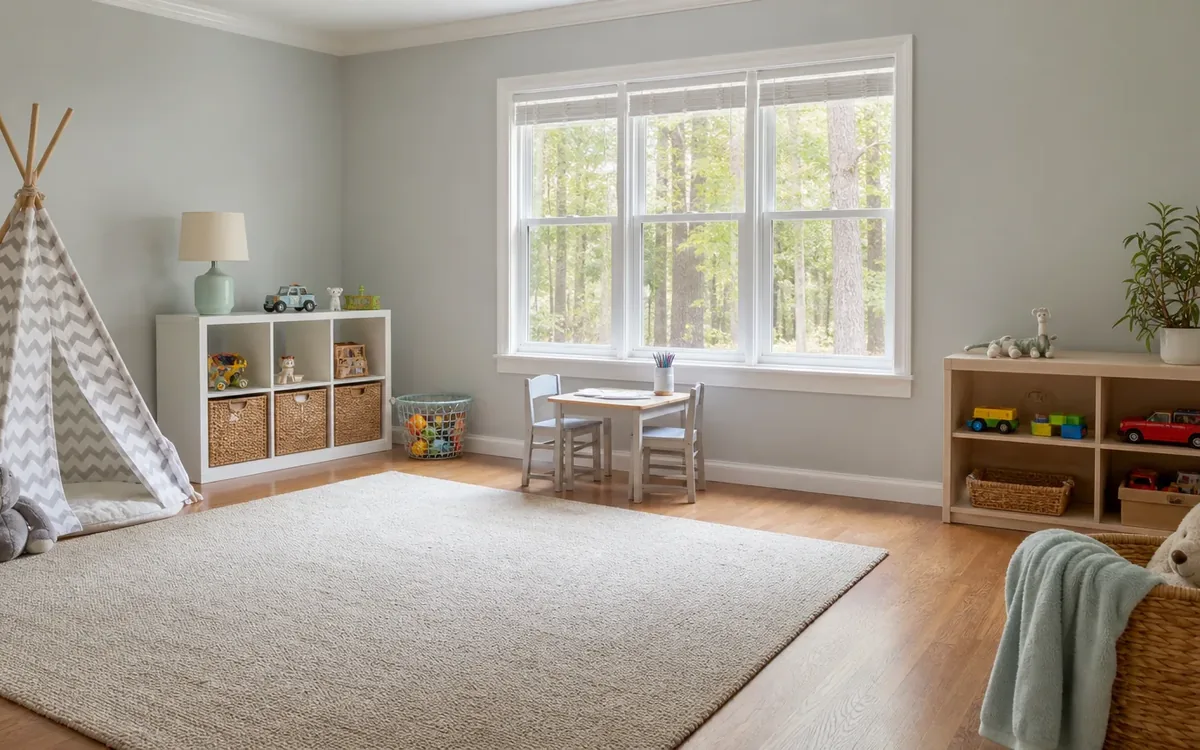
Kids’ rooms can stay functional while your South Carolina home is for sale. The key is not removing every toy. It is limiting what remains visible, creating a simple bin system for fast resets, and keeping names, school details, schedules, and family photos out of listing images. A room that still works for your child can also help buyers understand its size, storage, and possible uses.
Quick answer: Keep one manageable set of toys or activities available, pack excess items by category, assign every remaining item a closed storage spot, and create a private bin for personalized belongings. Before photos or showings, clear floors and main surfaces, make the bed, close storage containers, and check the room from the doorway.
What should stay in a child’s room during a home sale?
Keep the items your child needs for ordinary routines, along with a small amount of entertainment. The right amount depends on your household, your child’s age, available storage, and how often showings occur.
Useful items to keep accessible may include:
- Current-season clothing
- Bedding and bedtime necessities
- A small selection of favorite books
- A limited set of toys or creative materials
- School supplies needed at home
- Daily care items
- A laundry hamper with a lid or neat appearance
Try to preserve the room’s clear purpose. A bed, dresser, lamp, and modest play or study area usually communicate function more clearly than a room crowded with toys, extra furniture, or packed boxes.
The household decides what a child needs emotionally and practically. A home preparation or move team may discuss sorting, packing, room arrangement, and manageable reset systems. Your real-estate professional should advise how the room fits the property’s marketing plan and what should be ready before photography or buyer visits.
Clutter Cleaner of South Carolina offers home sale preparation support throughout the state. That support can be coordinated around family needs without treating an actively used bedroom as if no one lives there.
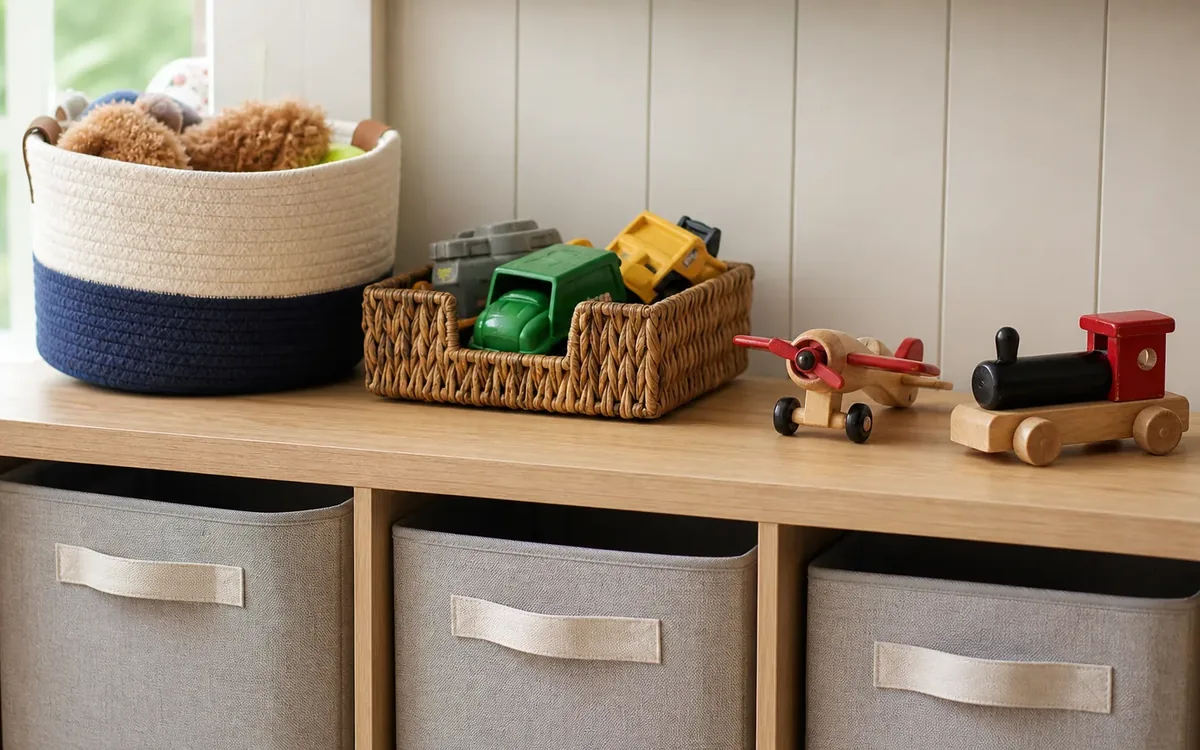
Reduce toys without disrupting daily routines
Start with the visual volume of toys rather than aiming for a perfectly minimal room. Large collections of small objects, open bins, stacked games, and crowded shelves can make storage feel limited. Reducing what is visible helps buyers see the room instead of the contents.
Sort toys into four practical groups:
- Keep available: Favorites that are used regularly and can be reset easily.
- Pack for the move: Toys worth keeping that are not needed before relocation.
- Pass along: Outgrown or unwanted items the household chooses to donate, sell, or give away.
- Discard appropriately: Broken, incomplete, unsafe, or unusable items, subject to local disposal requirements.
Do not ask a young child to evaluate an entire collection at once. Offer limited choices, such as which building set or group of stuffed animals should remain available. Adults can handle broken items, keepsakes, and categories that might become overwhelming.
Pack retained toys by category and label containers clearly. Labels such as “puzzles,” “train pieces,” or “art supplies” will be more useful after the move than a vague label such as “playroom.” Avoid packing medicines, critical documents, irreplaceable objects, or items needed during the move into general storage boxes.
If the sorting task overlaps with a larger family transition, the guide on how estate cleanouts work explains how decisions, sorting, and removal can be separated. The same basic principle applies here: decide what belongs to the household before selecting a destination for it.
How can you build a quick-reset bin system?
A quick-reset system should be simple enough for the family to use on an ordinary day. It is not a complicated organizing project. Its purpose is to give every active item a convenient place before a showing.
Use containers based on function:
- Daily toy bin: A small selection of current favorites
- Book basket: Books that are actively being read
- Creative-supply container: Pencils, paper, and washable materials
- Loose-parts bin: Small figures, blocks, or game components
- Private-items bin: Personalized objects removed before photos or visits
- Parent-action bin: Items requiring repair, permission slips, or another adult decision
Closed containers usually create a calmer visual field than several open baskets. However, avoid buying a full storage system solely for showings unless it will be useful in the next home. Existing drawers, cabinets, lidded bins, and under-bed storage may be enough.
Do not overfill containers. If lids bulge, drawers do not close, or belongings spill onto the floor, reduce the contents again. A reset system fails when putting things away takes more effort than leaving them out.
Assign each container a fixed location. Children who are old enough to help can return objects by broad category without arranging every piece. Picture labels may be more useful than written labels for younger children, but remove labels containing full names or school information before photography.
Storage outside the home is a separate household choice and should be evaluated for access, security, conditions, contract terms, and cost. A cleanout or move team may discuss what could be packed or relocated, but the storage provider controls its own services and terms.
Keep names and personal details out of listing photos
Listing images can circulate beyond a single showing. Before photography, scan every child’s space for information that identifies a family member, school, team, schedule, or routine.
Temporarily remove or conceal:
- Wall letters spelling a child’s name
- School uniforms, badges, and branded bags
- Sports jerseys displaying surnames
- Calendars and activity schedules
- Certificates containing full names
- Medical information or care instructions
- Family photos and photo boards
- Addressed mail and school forms
- Device screens, account names, and passwords
- Notes showing pickup arrangements or emergency contacts
Store these items somewhere that will not appear in photographs. A closed, portable privacy bin can work if an adult knows where it is and removes it from the photo area. Do not place sensitive records in a garage corner, unlocked vehicle, or visible open box simply to clear the bedroom.
Personalized decor is not inherently undesirable. The concern is privacy and visual distraction, not erasing evidence that a child lives in the home. Neutral bedding or bare walls are optional household choices, not universal requirements.
Ask the listing agent or photographer which areas are expected to appear in marketing images, including closets or built-ins. The real-estate professional controls the marketing strategy, and the photographer controls image capture and editing. The household remains responsible for deciding which personal items may be visible.
Make floors, surfaces, and storage easy to understand
Buyers need enough visual clarity to judge room layout. Concentrate on the areas that communicate usable space: the doorway view, walking paths, bed, main surface, closet access, and windows.
Clear floors of loose toys, laundry, bags, and cords. This helps the room appear navigable and reduces trip hazards. Do not hide everything under the bed if items will remain visible or prevent buyers from understanding available storage.
Keep desks and dressers lightly occupied. A lamp, a small group of books, or one decorative object can show purpose without covering the surface. Secure medications, sharp tools, valuable electronics, and confidential paperwork rather than placing them in an unlocked drawer.
Closets do not need to be empty, but doors and drawers should operate normally. Pack outgrown clothing, excess hangers, bulky costumes, and off-season items if the household does not need them. Avoid stacking heavy boxes where they could shift or fall.
Repairs, furniture anchoring, electrical work, painting, window-safety modifications, and other contractor tasks are separate decisions. Qualified contractors should assess and perform work within their expertise. An inspector evaluates property conditions within the scope of the inspection, while applicable authorities determine code or compliance requirements. A preparation team should not substitute its opinion for those professionals.
What should happen to child-made art and sentimental items?
Treat art, handmade gifts, trophies, baby items, and memory objects differently from ordinary clutter. These belongings may be visually busy, but their meaning can make rushed decisions difficult.
Create three destinations:
- Display: Keep a small, intentional selection that does not reveal names or school information.
- Preserve: Place valued pieces in a clearly labeled portfolio, document box, or protected container.
- Review later: Use one limited container for items the family is not ready to decide about.
Photographing bulky artwork before releasing it may suit some families, but it is a personal choice. Confirm that names, classroom details, or other children’s information are not visible in any digital image you plan to share.
Do not disguise sentimental items as trash or mix them with donations. Anyone helping should know which containers are not to be removed. If ownership is shared, disputed, or affected by an estate, divorce, guardianship, trust, or court matter, the responsible attorney, fiduciary, guardian, or other authorized party should determine what may be moved or released.
An appraiser should handle formal value opinions for art, collectibles, antiques, or potentially valuable objects. An auction or estate-sale professional may discuss possible sale channels, but the household or authorized decision-maker chooses whether an item is offered. Value and sale outcome should not be assumed.
Prepare the playroom without making it feel empty
A playroom often contains more categories than a bedroom, so focus on creating readable zones. Buyers should be able to see whether the area functions as a play space, study room, bonus room, or another type of space allowed by the property’s actual features and marketing description.
Retain only a few clear zones, such as:
- A reading corner
- A compact toy shelf
- A child-sized table or activity area
- A closed cabinet for supplies
Remove duplicate seating, unused toy kitchens, indoor play structures, large ride-on toys, and crowded shelving if they overwhelm the room. The household can choose to pack, relocate, donate, sell, or dispose of those items. Disposal options and acceptance rules depend on the relevant facility, municipality, hauler, donation recipient, or other provider.
Keep room descriptions accurate. Whether an area may legally be called a bedroom, finished room, or habitable space is not determined by staging. The listing professional, inspector, appraiser, contractor, or applicable authority should address classification, condition, valuation, and compliance questions within their respective roles.
Create a showing reset that the whole household can follow
A repeatable reset protects daily family life from turning into a constant deep clean. Write a short room-specific sequence and keep it somewhere private rather than displaying family scheduling information.
A practical reset can include:
- Return active toys to their assigned bins.
- Put laundry in the hamper and remove visible overflow.
- Make the bed and straighten pillows.
- Clear the desk, dresser, and windowsill.
- Place personalized items in the privacy bin.
- Check the floor, doorway, and closet access.
- Remove food, cups, rubbish, and noticeable odors at their source.
Match tasks to age and ability. A child might return books to a basket while an adult handles private papers, cords, valuables, or heavy containers. Keep essential comfort items accessible and develop a plan for where they go during photography or a showing.
Pets, aquariums, child-safety devices, and medical equipment require household-specific planning. Discuss showing access with the real-estate professional. Do not disable necessary safety equipment or conceal a material property concern for visual presentation.
Who makes decisions during home sale preparation?
Clear roles help prevent belongings from being removed without approval or property issues from being treated as decorating problems.
The household or authorized decision-maker decides:
- Which toys, clothes, art, and keepsakes remain
- What may be packed, donated, sold, stored, or discarded
- What children need for routines and comfort
- Who may access personal belongings
- Which optional storage or specialty providers to hire
A practical cleanout, organizing, or move team may discuss:
- Sorting categories and labeling methods
- Packing sequences and room resets
- Furniture or container placement
- Removal plans for approved items
- Coordination with separately selected providers
Responsible professionals or authorities decide within their roles:
- The listing agent advises on marketing and showing presentation
- An appraiser provides applicable value opinions
- An inspector reports conditions within the inspection scope
- Contractors assess and perform specialized work
- Attorneys, fiduciaries, guardians, or courts address legal authority and disputed property
- Local or state authorities interpret and enforce applicable requirements
- Disposal sites, donation organizations, storage companies, and other providers set acceptance rules and service terms
Clutter Cleaner of South Carolina is physically located in Mount Pleasant and serves households across South Carolina, with Charleston as its primary market. A conversation about organizing or home sale preparation does not replace legal, real-estate, appraisal, inspection, contractor, or compliance advice.
Short FAQ
Should every toy be removed before a showing?
No. Keep a limited selection that supports daily life and fits easily into assigned storage. Pack or relocate excess items so floors, surfaces, and room function remain visible.
Is it acceptable to put everything in a closet?
A closet can hold ordinary belongings, but it should remain usable and safe. Avoid unstable stacks, jammed doors, concealed valuables, or containers that prevent access to building systems.
Should children’s photos and names remain on display?
For listing photography, removing identifying details is the more privacy-conscious choice. Use a designated container so these items can be restored or packed securely later.
Who should decide whether a playroom is marketed as a bedroom?
Ask the listing professional, and direct condition or compliance questions to the appropriate inspector, contractor, appraiser, attorney, or authority. Furniture arrangement does not establish legal classification.
Can a preparation team decide what gets donated or discarded?
The household or legally authorized decision-maker should approve those choices. A team may help sort, label, pack, or coordinate approved removals, but should not decide ownership, sentimental importance, legal authority, or value.



