
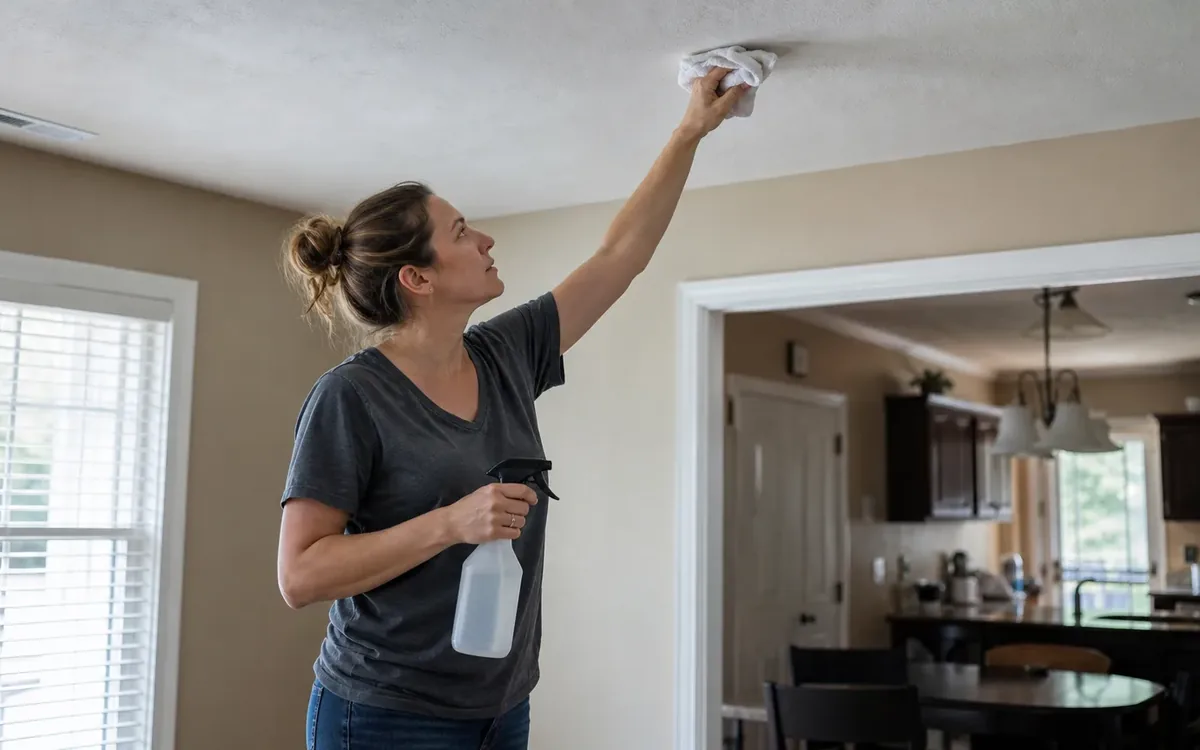
Preparing a home with smoking residue for listing starts with identifying every affected room, removing odor-holding contents, and documenting what remains before cosmetic work begins. The household can decide what to keep, sell, donate, store, or discard. A practical cleanout or move team may discuss sorting, contents removal, and listing preparation, while testing, remediation, repairs, disclosures, valuation, and compliance decisions belong to the appropriate professionals or authorities.
Quick answer: Empty and inspect the affected areas before painting or adding fragrance. Remove porous belongings that hold odor, clean suitable hard surfaces, track stains and recurring smells, and ask qualified specialists about contamination, HVAC concerns, coatings, or repairs outside ordinary cleanup. In South Carolina, plan ventilation around humidity because bringing damp outdoor air inside may slow drying or create additional moisture concerns.
What counts as smoking residue in a home?
Smoking residue is more than a noticeable smell. Smoke-related particles and films can settle on walls, ceilings, trim, doors, cabinets, windows, flooring, furnishings, and household contents. Residue may also collect in areas that are easy to overlook, including closet shelves, the tops of cabinets, light fixtures, and return-air grilles.
Begin with observation rather than assumptions. Signs that deserve attention include:
- Yellow, amber, or brown discoloration on pale surfaces
- Sticky or oily films on walls, doors, and cabinet faces
- Odor that becomes stronger when a room is warm or closed
- Uneven staining where pictures or furniture once covered a wall
- Odor in fabrics, paper, unfinished wood, carpet, or padding
- Discoloration near vents, windows, switches, or ceiling edges
- A smell that returns after basic cleaning or ventilation
These clues help define the work area, but they do not establish the type or severity of contamination. The household can record visible and odor-related concerns. A qualified inspector, industrial hygiene professional, restoration specialist, HVAC professional, or other appropriate contractor should evaluate technical questions that require testing or specialized judgment.
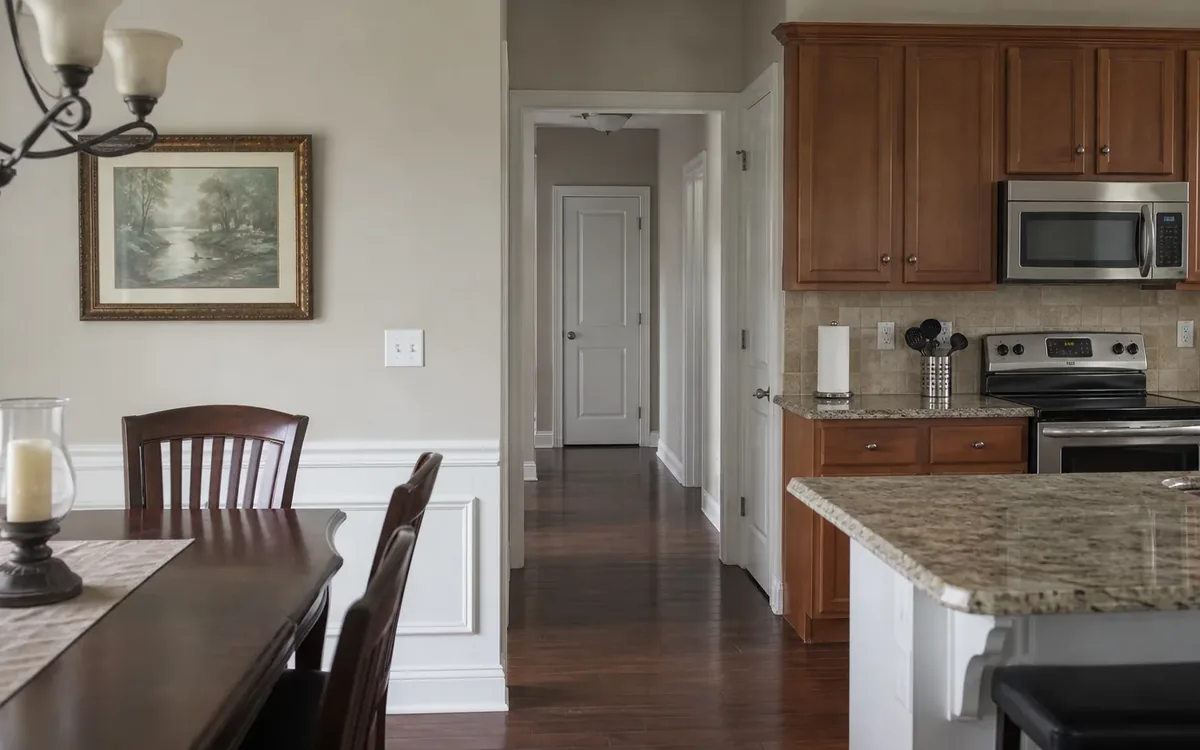
Which rooms and surfaces are actually affected?
Do not limit the review to the room where smoking occurred. Air movement, open doors, shared return paths, and porous contents may have carried odor or residue elsewhere. Inspect the house systematically while it is still furnished, then repeat the review after contents have been removed.
Create a room-by-room record with four categories:
- Visible residue: Note stains, films, or color changes and identify the surface.
- Odor: Record whether it is faint, obvious, localized, or strongest in enclosed spaces.
- Porous contents: List fabrics, rugs, books, cardboard, mattresses, upholstered pieces, and unfinished wood.
- Building components: Flag flooring, walls, ceilings, cabinets, vents, filters, and other fixed materials for further review.
Photograph concerns in neutral lighting before cleaning or moving items. Label images by room and surface. This documentation can help the household compare conditions after contents removal and give contractors clearer information when requesting an evaluation.
Avoid destructive investigation unless the property owner and an appropriate professional agree it is needed. Opening walls, removing flooring, or disturbing suspect materials can create unrelated safety and compliance issues.
Why should contents be removed before cosmetic work?
Porous belongings can absorb and release odor. If they stay in place, it becomes difficult to determine whether a smell is coming from the structure, the contents, or both. Furniture and boxes also hide walls, flooring, baseboards, and closet surfaces that may need attention.
A contents-first approach creates a clearer work area. Clutter Cleaner of South Carolina’s home sale preparation service may be relevant when a household needs practical help organizing contents and preparing the property for the next stage. Service scope should be discussed directly for the specific home.
Separate belongings into decision groups rather than moving everything to another room:
- Keep and clean, if the item can be handled safely and effectively
- Sell, subject to honest condition descriptions and the chosen seller’s policies
- Donate, only if the receiving organization accepts the item in its condition
- Store, using a separate storage provider selected by the household
- Discard, following local facility rules and material restrictions
- Set aside for specialist advice when value, material, or cleaning risk is uncertain
Do not place affected contents into a clean home, vehicle, or storage unit without considering odor transfer. Storage is a household choice and a separate provider relationship. The storage company should answer questions about prohibited items, packaging, insurance, and facility requirements.
When smoking residue is part of a larger inherited-property project, the guide on the best way to clean out an estate offers a useful framework for decisions, records, and family coordination.
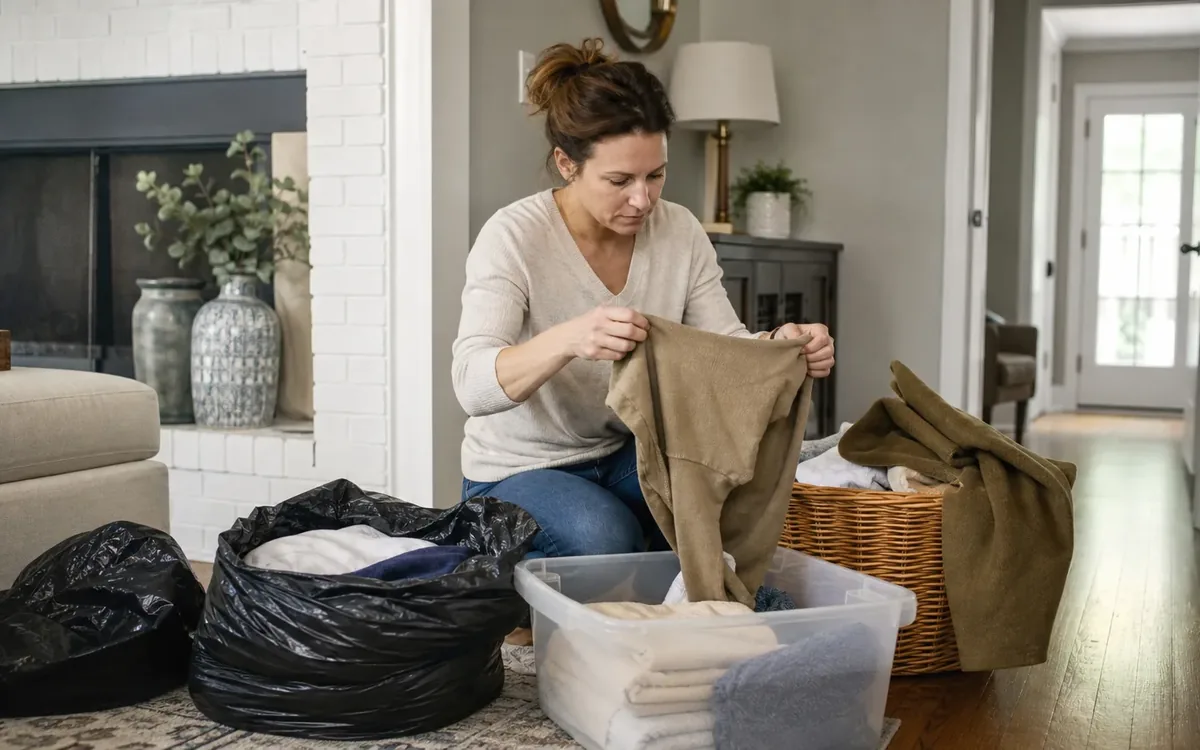
How should odor-holding belongings be sorted?
Use material and condition, not sentiment alone, to guide the first pass. Some belongings may tolerate appropriate cleaning. Others may retain odor, stain nearby items, or cost more to address than the household wishes to spend.
Consider these questions for each item:
- Is it porous, washable, sealed, or unfinished?
- Does it have visible residue or only an odor concern?
- Is the odor localized or present throughout the material?
- Would cleaning change its color, finish, structure, or value?
- Is it valuable enough to justify advice from a conservator, appraiser, or specialty cleaner?
- Could moving it spread residue into an unaffected area?
Textiles, upholstered furniture, paper files, books, rugs, cardboard, and mattresses warrant careful decisions because they can hold odor. Electronics, artwork, antiques, collectibles, and delicate finishes may be damaged by household cleaners or moisture.
The household controls retention and disposal decisions unless an estate representative, court order, contract, or other legal arrangement assigns that authority elsewhere. An appraiser determines value. An estate-sale or auction professional decides what they will accept and how an item should be represented. Specialty cleaners and conservators determine appropriate treatment within their fields.
Keep financial records, legal papers, identification documents, photographs, medications, firearms, and potentially hazardous materials out of general sorting piles. Route them to the responsible person or suitable professional.
What cleaning belongs in ordinary preparation, and what may require a specialist?
Ordinary preparation may include emptying rooms, dust removal, cleaning appropriate washable surfaces according to product and material instructions, and replacing owner-maintained filters when suitable. The exact approach depends on the finish, condition, ventilation, and presence of other hazards.
Specialized evaluation may be appropriate when:
- Residue is heavy, widespread, sticky, or repeatedly reappears
- Odor remains after affected contents leave the property
- HVAC components or ductwork appear involved
- Carpet, padding, drywall, insulation, or unfinished wood may be affected
- Cleaning could disturb asbestos-containing, lead-painted, mold-affected, or otherwise suspect material
- Occupants experience symptoms or have health-related concerns
- Sealing, demolition, encapsulation, or specialty equipment is being considered
A cleanout or move team can discuss access, staging, sorting, and removal logistics. It should not substitute for a qualified remediation assessment, medical advice, laboratory testing, or contractor judgment.
Get product and method recommendations from the professional responsible for the material. Mixing cleaning chemicals can be dangerous. Applying paint or primer over an unassessed film can also lead to poor adhesion or odor returning through the finish. A painting contractor should determine surface preparation and coating compatibility.
How does South Carolina humidity affect ventilation and odor work?
Ventilation can help exchange indoor air, but opening every window is not automatically the best choice in humid conditions. Damp outdoor air may slow the drying of cleaned surfaces and increase indoor moisture. That can complicate odor evaluation because a room may smell different as temperature and humidity change.
Use weather-aware judgment:
- Check outdoor humidity and weather before opening the house widely
- Avoid leaving windows open during rain or when moisture is entering
- Keep cleaned materials from remaining damp
- Follow equipment instructions for dehumidifiers, air movers, and HVAC systems
- Recheck enclosed rooms after they return to ordinary indoor conditions
- Ask an HVAC or moisture-control professional about system operation when uncertain
The household can choose when to ventilate and can monitor visible condensation or dampness. An HVAC professional should decide whether equipment needs inspection, cleaning, repair, or altered operation. A qualified moisture or mold professional should assess suspected moisture damage or microbial growth.
Fragrance is not a substitute for evaluation. Strong sprays, candles, or plug-in products may temporarily cover smoke odor and can make it harder for the owner, contractor, or real-estate professional to judge the result.
Document what remains after contents and surface cleaning
After contents removal and appropriate basic cleaning, close the home under normal conditions and reassess it. Walk through with a fresh room sheet rather than editing the original notes. This preserves a clear before-and-after record.
Document:
- Rooms where odor is no longer noticeable
- Rooms where odor remains or returns
- Fixed surfaces with visible staining
- Flooring, cabinets, closets, or vents that need professional review
- Materials removed and where they went
- Work completed by outside providers
- Receipts, reports, product records, and contractor recommendations
- Areas that were inaccessible or intentionally left untreated
Do not describe a concern as resolved solely because it is less noticeable on one visit. Conditions can vary with heat, moisture, closed doors, and HVAC operation. If the issue matters to the listing strategy, ask the relevant professional how it should be evaluated and recorded.
Documentation does not replace seller disclosures, inspection findings, or legal advice. It helps the responsible parties understand what was observed and what actions were taken.
Who decides repairs, disclosures, value, and listing readiness?
Different decisions belong to different parties. Keeping those roles separate reduces confusion and prevents a cleanout plan from becoming an unsupported claim about property condition.
The household or authorized estate representative can decide:
- Which belongings to retain, sell, donate, store, or discard
- The budget and preferred order of preparation work
- Which providers to contact
- Whether to pause work for an appraisal, inspection, or legal review
- What records to preserve for the transaction team
A practical cleanout, organizing, or move team may discuss:
- Sorting zones and decision workflows
- Access and removal logistics
- Staging retained items away from affected areas
- Sequencing contents removal before cleaning or contractor work
- Preparing cleared rooms for evaluation
Responsible professionals or authorities decide within their roles:
- A real-estate agent advises on market presentation and listing strategy
- An attorney advises on legal obligations, authority, and contract questions
- A home inspector reports conditions within the inspection scope
- A qualified remediation or environmental professional assesses specialized concerns
- Contractors specify repairs, materials, and work methods
- An appraiser determines value within an appraisal assignment
- Local or state authorities interpret applicable disposal, building, or compliance requirements
Clutter Cleaner of South Carolina offers home-transition services statewide, with its physical business location in Mount Pleasant and Charleston as its primary market. That does not make the company the decision-maker for legal disclosures, environmental conclusions, appraisals, inspections, repairs, or regulatory compliance.
Build the listing plan in the right sequence
Once the affected areas are understood, coordinate the remaining work so that one provider does not undo another’s progress. A practical sequence has six stages:
- Confirm authority. Identify who can approve disposal, spending, repairs, and listing decisions.
- Inventory concerns. Record affected rooms, surfaces, contents, and inaccessible areas.
- Remove contents thoughtfully. Separate retained property from sale, donation, storage, and disposal groups.
- Obtain specialist input. Request assessments for persistent odor, HVAC involvement, suspect materials, or significant residue.
- Complete approved work. Let each contractor define and document work within that contractor’s scope.
- Reassess for listing. Review the property with the real-estate professional and preserve records for disclosure or buyer questions.
Schedule appraisal decisions before discarding potentially valuable property. Keep repair estimates distinct from cleanout records. If code or permit questions arise, the responsible contractor and governing authority should clarify requirements before work begins.
The goal is not to make unsupported promises that the home is odor-free. It is to present a cleared, evaluated property with a credible record of what was found, removed, cleaned, repaired, or left for further attention.
FAQ
Should the home be painted before all contents are removed?
Usually, clearing affected contents first gives the owner and painting contractor better access to walls, ceilings, trim, and flooring. The painter should determine cleaning, preparation, primer, and coating requirements. Painting should not be used to conceal an unresolved condition.
Can smoke odor be handled with an air freshener?
Air fresheners may mask odor temporarily but do not remove residue from contents or building surfaces. They can also interfere with an honest assessment of remaining conditions. Focus on source removal, suitable cleaning, and professional evaluation where needed.
Should carpet always be removed?
That decision depends on its condition, odor retention, padding, subfloor, household goals, and professional recommendations. A flooring, cleaning, or remediation specialist can assess the material. The household can then weigh replacement against other listing priorities.
Who decides whether the property is ready to list?
The authorized owner or representative makes the final business decision with guidance from the real-estate professional. Inspectors, contractors, attorneys, appraisers, and remediation professionals contribute findings within their own scopes. A cleanout team can prepare access and contents but does not certify the property’s condition.
What records should be kept?
Retain dated photos, room notes, disposal or donation records when available, contractor scopes, invoices, inspection reports, product information, and unresolved-concern lists. Ask the real-estate professional or attorney which documents are relevant to the transaction and disclosure process.



