

To stage outdoor spaces for a South Carolina home sale, remove distracting belongings, make walking routes easy to follow, and give each porch, patio, or yard area one clear purpose. Prioritize a welcoming entrance and usable outdoor seating over elaborate decoration. Address visible maintenance concerns through the appropriate professionals rather than hiding them with furniture or plants.
Quick answer: Clear the approach to the front door, reduce outdoor furniture to a comfortable arrangement, contain garden equipment, and simplify planting beds. Choose weather-tolerant staging items and keep drains, gates, and access points unobstructed. Ask your real-estate professional which changes will help the listing; leave repair, inspection, appraisal, and compliance determinations to the responsible specialists.
Start with the outdoor story buyers should see
Outdoor staging helps buyers understand how the property works. A front porch can suggest a pleasant place to sit. A patio can show where people could eat outside. A yard can feel useful without being furnished in every corner.
Start at the street or normal arrival point and follow the route a buyer will take. Notice what competes with the entrance: stacked pots, extra chairs, hoses across paving, unused planters, or stored equipment. Then look from the porch toward the yard and from the patio toward the house.
Pick a simple purpose for each visible area:
- Front entrance: easy arrival and a clear view of the door.
- Porch: a small, inviting seating spot if space permits.
- Patio: dining or lounging, rather than crowded versions of both.
- Yard: open space framed by manageable planting.
The household decides what stays, moves, sells, or leaves. A real-estate professional can help prioritize changes for the listing. Clutter Cleaner of South Carolina’s home sale preparation service is a starting point for discussing support with organizing belongings and preparing the property, without treating staging advice as a repair assessment.
What should you remove before staging a porch or patio?
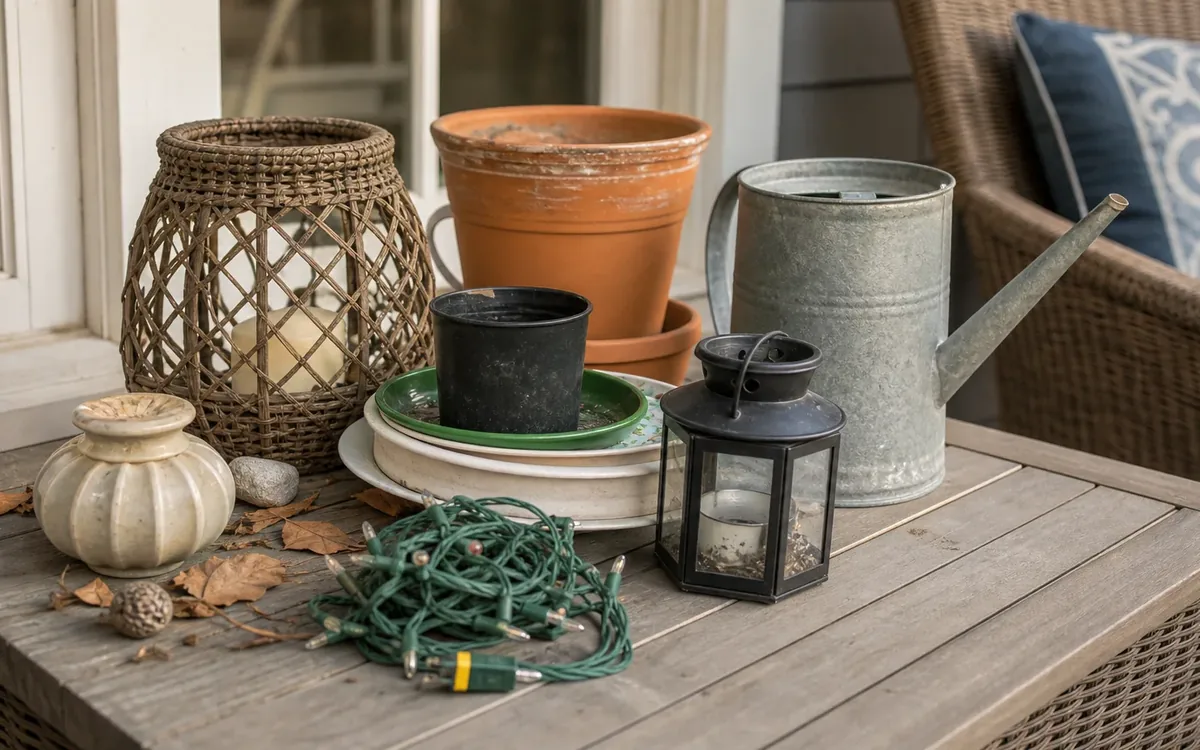
Remove anything that makes the outdoor space look like overflow storage before buying accessories. Duplicate furniture, broken planters, empty containers, old grills, and unused play equipment can distract from the area’s size and function.
Separate possessions by decision, not just by location:
- Keep for staging: stable furniture and a few clean, suitable accessories.
- Move with the household: items you still use but do not need displayed.
- Consider for sale or donation: usable pieces the household no longer wants.
- Review for disposal: damaged items and materials needing appropriate handling.
- Hold for another decision-maker: belongings whose ownership is unresolved.
A practical cleanout or move team may discuss carrying routes, item volume, packing needs, and where authorized items should go. The household should approve the disposition of belongings. Storage arrangements and disposal destinations remain separate choices, with acceptance requirements confirmed by the relevant provider.
For inherited outdoor belongings, the guide to the best way to clean out an estate offers a broader framework for sorting possessions. Confirm who has authority to decide before selling or removing property from an estate.
Make the front approach welcoming without overdecorating
The entrance deserves attention because buyers encounter it before the patio or backyard. A clear route and an uncluttered door usually communicate more than a collection of seasonal decorations.
Remove objects that narrow the steps or walkway. Position planters so they frame the entrance without interfering with the door swing, railing, or handrail. Check whether a doormat lies flat and whether decorative items could shift underfoot.
Useful finishing touches include:
- A clean, appropriately sized doormat.
- One restrained grouping of healthy plants.
- A visible, unobstructed entrance.
- Porch furniture that leaves room to pass comfortably.
Look at the entrance from the buyer’s arrival direction. A large pot may seem attractive beside the door but hide the approach from that angle. Likewise, an oversized bench can make a generous porch appear cramped.
If house numbers, lighting, steps, or railings need attention, ask the relevant professional what is appropriate. Electrical work, structural repairs, and safety judgments are not staging decisions. Avoid arranging decorations to conceal damaged surfaces or unstable features.
How do you stage a small porch or patio?
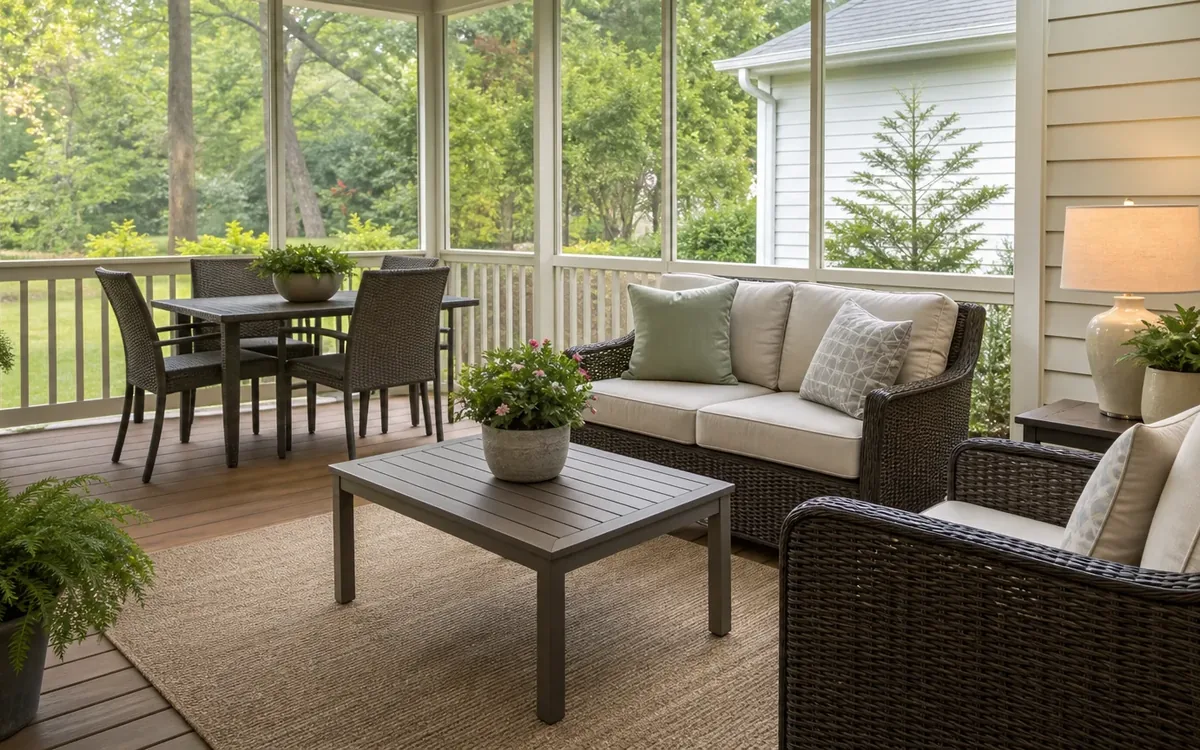
Choose fewer pieces and preserve open floor area. A small outdoor space does not need to imitate a full living room. Two suitable chairs and a modest table may explain the space better than a sofa, multiple side tables, and a large rug.
Arrange furniture around the activity you want buyers to recognize. For a dining patio, show a usable table arrangement with room to move around it. For a narrow porch, place seating along a side rather than directly across the path to the door.
Before settling on the layout, check that:
- Doors and gates can open without hitting furniture.
- Chairs can be pulled out without blocking the main route.
- Furniture does not cover drains or utility access.
- The arrangement looks coherent from the listing-photo angle.
Avoid filling an awkward corner merely because it is empty. Breathing room helps buyers judge the footprint. If an outdoor rug curls, traps moisture, or conceals a questionable surface, remove it and address the underlying concern separately.
Keep personal accessories limited. A lantern or planter can support the setting, but scattered ornaments, collections, and fragile tabletop items can make the space harder to maintain between showings.
Prepare the yard without promising a landscape makeover
A staged yard should look understandable and cared for, not newly redesigned at any cost. Begin by removing unrelated objects and making existing landscape boundaries easier to see.
Gather loose pots, garden supports, abandoned edging, and equipment into decision groups. Keep active garden tools in a suitable household-selected storage location. Do not push unwanted items behind a shed or into a corner that buyers will still inspect.
Focus on visible order:
- Clear loose debris from the main viewing areas.
- Tidy planting-bed edges where appropriate.
- Remove empty or deteriorated containers.
- Keep paths, gates, and drainage features accessible.
- Reduce decorative objects that compete with the landscape.
Healthy existing plants often provide enough visual interest. Additional planting is a household choice, ideally informed by someone who understands the site and maintenance needs. Avoid buying plants simply to cover bare spots without considering sunlight, watering, or drainage.
Tree work, grading, irrigation changes, and drainage correction belong with suitable contractors or specialists. If a yard has standing water, erosion, or a potentially hazardous tree, staging cannot establish that the condition is acceptable. Discuss evaluation and any disclosure questions with the responsible professionals.
What works for outdoor staging in South Carolina’s climate?
Choose a setup that can remain presentable through heat, humidity, rain, and changing weather. South Carolina properties vary by exposure and location, so assess the actual porch or yard instead of assuming one arrangement fits every home.
Use accessories that are manageable for the household. Fabric cushions may need to be brought inside when not in use. Lightweight decorations can move in wind. Containers need an appropriate watering arrangement, and shaded areas may stay damp.
A practical weather plan includes:
- A designated place for removable cushions and delicate accessories.
- Secure placement of lightweight objects.
- Clear drainage paths around staging items.
- A simple check for wet seating and slippery walking surfaces.
For an autumn listing, use current conditions rather than a summer-themed setup that requires constant attention. Remove faded seasonal decorations and replace struggling plants only if the household can maintain the replacements.
Be cautious with pressure washing or strong cleaning products. Surface materials, runoff, nearby plants, and manufacturer guidance matter. A qualified cleaning or maintenance provider can advise on an appropriate method. Outdoor cleaning and contractor work should be arranged separately rather than assumed to be part of cleanout support.
Treat grills, play equipment, and pet areas deliberately
Large outdoor objects deserve individual decisions because they can dominate a listing photo. A grill may fit a dining patio, while several unused cooking appliances can make the same area look congested.
Keep a retained grill in a sensible location with a tidy exterior, following applicable manufacturer and safety guidance. Do not relocate it into an unsuitable position just to improve the photograph. Fuel containers and related materials need appropriate handling, not ordinary clutter disposal assumptions.
For play equipment, consider condition, scale, and whether it will remain with the property. The household and real-estate professional should clarify any intended exclusions or inclusions through the appropriate sale documents. Do not assume a staged item automatically conveys.
Pet areas also need a clear plan. Store loose toys, manage waste, and keep bowls or equipment from obstructing buyer routes. Avoid masking persistent odors with fragrances. If fencing, gates, or an enclosure have defects, seek appropriate advice rather than using plants to hide them.
Separate staging choices from repairs and compliance
Staging controls presentation. It does not certify that a deck, porch, fence, retaining wall, or outdoor electrical installation is safe or compliant.
The household can choose furniture, reduce clutter, authorize removal of belongings it controls, and set a preparation budget. A cleanout or move team may discuss access, item handling, organization, and sequencing around other providers.
Other decisions remain with their responsible parties:
- A real-estate professional advises on listing presentation and sale strategy.
- An inspector or relevant specialist evaluates conditions within their scope.
- An appraiser makes appraisal judgments, including value conclusions.
- Contractors assess and perform agreed repair work.
- Attorneys or authorized estate representatives address legal authority questions.
- Local authorities interpret and enforce applicable requirements.
Clutter Cleaner of South Carolina offers code compliance support, but that does not replace an authority’s determination or a specialist’s evaluation. Ask what support is appropriate to the situation and who must approve the underlying work.
Keep the setup ready for photos and showings
Once the layout works, avoid continually adding decorations. Take reference photos for the household so furniture and accessories can return to the same positions after use or bad weather.
Before photography or a showing, check the visible outdoor areas for recently added packages, hoses, toys, fallen plant material, and damp cushions. Open the route from the entrance to the yard where access is intended. Coordinate any restricted areas with the real-estate professional.
Clutter Cleaner of South Carolina is physically based in Mount Pleasant, serves all of South Carolina, and has Charleston as its primary market. To discuss home sale preparation, downsizing and organizing, or move management, call (843) 972-7020. Confirm the work scope, item decisions, and any separate provider arrangements before preparation begins.
Short FAQ
Should every outdoor area have furniture?
No. Furnish only where it clarifies a useful activity. An open yard or uncluttered porch can communicate space better than an unnecessary seating arrangement.
Should we rent storage for outdoor belongings?
That is a household choice. Consider what you will actually keep, transport needs, and the storage provider’s rules before moving items out of sight.
Can staging hide a worn deck or drainage problem?
It should not. Keep concerns visible for appropriate evaluation, and ask your real-estate professional about disclosure obligations. Furniture, rugs, and planters are presentation tools, not repairs.



