
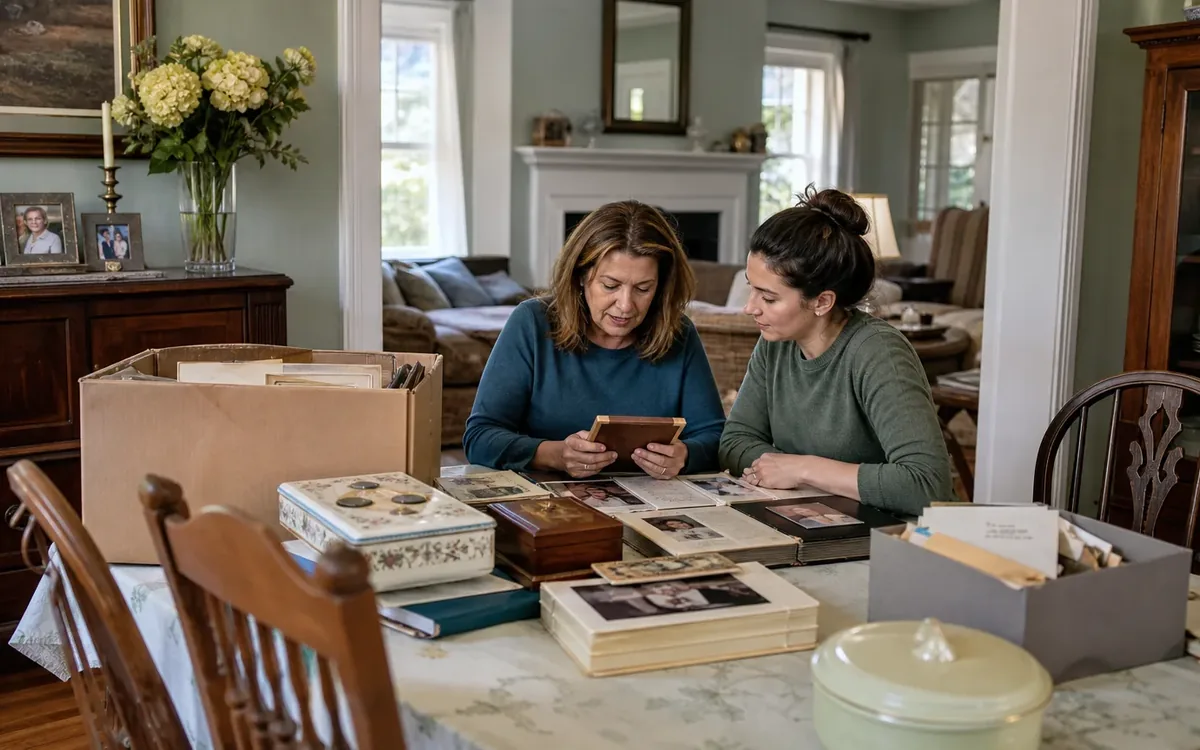
Sorting keepsakes during an estate cleanout works best when the household separates meaning from market value, delays irreversible decisions, and labels every retained item with its story and intended recipient. Begin with documents and clearly personal objects, create a temporary review category for uncertain items, and involve the estate’s authorized representative before anything is distributed, donated, sold, or discarded.
Quick answer: Set up five categories: keep, offer to family, professional review, release, and undecided. Photograph each likely keepsake, record who owned it and why it matters, then place it in a labeled container. The household can discuss sentimental preferences, but the executor, personal representative, trustee, or other authorized party controls estate property according to applicable instructions and legal requirements.
Start With Authority, Not With Boxes
A careful keepsake process begins by identifying who is allowed to make decisions. Grief, distance, and family history can make an estate cleanout feel informal, but the contents may still be controlled by a will, trust, court process, or authorized representative.
Before sorting, confirm:
- Who is the executor, personal representative, trustee, or otherwise authorized decision-maker?
- Are there written instructions naming specific recipients?
- Has the family been told to preserve any records or property?
- Are any rooms, cabinets, safes, or containers off-limits?
- Is there a deadline related to the residence, insurance, probate, or a sale?
- Who may approve donation, sale, recycling, or disposal?
Household members can identify objects they recognize, express preferences, and provide family history. They should not quietly remove items or promise them to others without approval. If ownership, inheritance rights, creditor issues, or the meaning of estate documents is unclear, the responsible attorney, probate authority, trustee, or personal representative should resolve it.
A practical estate cleanout service may discuss sorting zones, labeling systems, packing needs, donation preparation, and the physical sequence of a cleanout. It does not decide who legally owns an item or interpret a will.
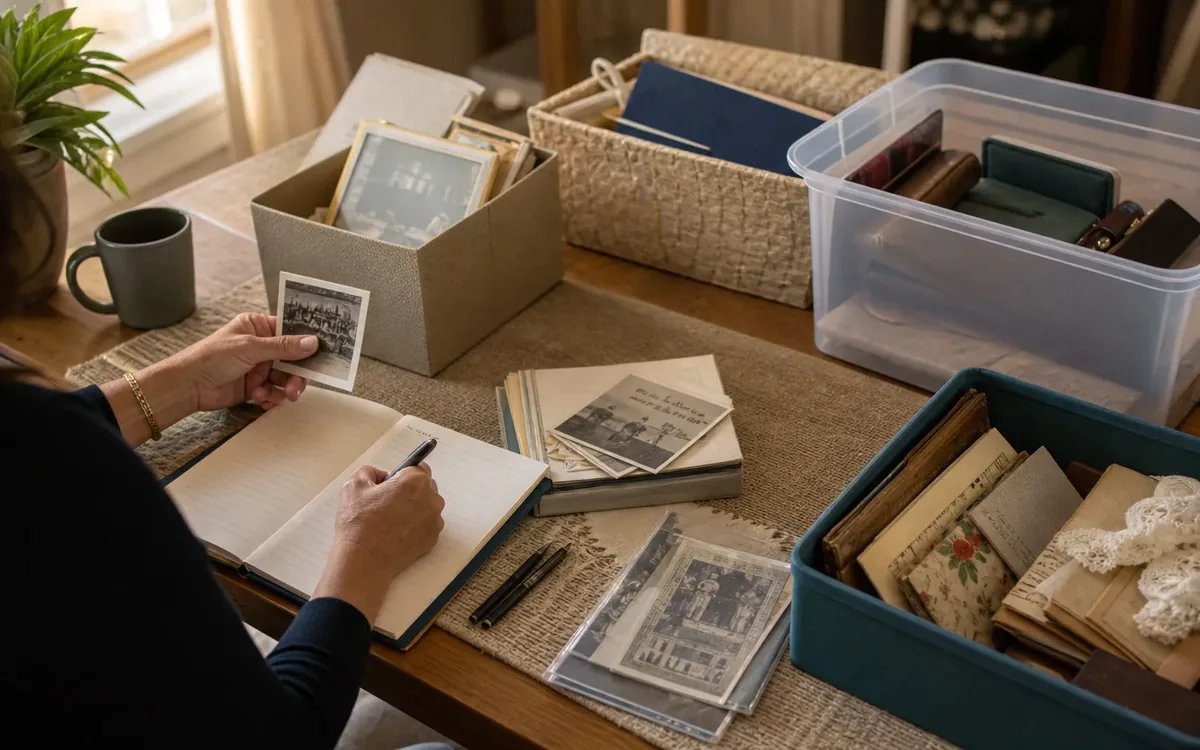
Build a Keepsake Station Before Sorting
Do not make sentimental decisions in every room. Create one controlled keepsake station where potential mementos can be reviewed, documented, and packed. A dining table, cleared bedroom, or other secure area can work if the authorized person approves it.
Gather simple supplies:
- Acid-free tissue for delicate paper, textiles, or photographs
- Archival-quality photo sleeves or folders when available
- Small resealable bags for jewelry, medals, keys, and loose parts
- Sturdy boxes in several sizes
- Painter’s tape or removable labels
- Permanent markers for containers, not original objects
- Index cards or plain paper for written histories
- A phone or camera for reference photographs
- A notebook or shared digital inventory
- Gloves for dirty objects, not necessarily for every old document
Assign each container a number, such as K-01 or K-02. Write that number in the inventory beside the item’s description. Avoid labels such as “miscellaneous family things.” A useful label says what is inside, who it belonged to, and what happens next.
For example:
- K-04: Grandmother’s recipe cards, kitchen drawer, family review
- K-09: Military photographs and letters, professional preservation advice needed
- K-12: Children’s artwork, offer first to named relatives
This system keeps context attached to the object even if boxes are moved.
Use Five Categories Instead of Keep or Toss
A two-choice system creates pressure. People often keep too much because discarding feels final, or release too much because the volume becomes exhausting. Five categories make decisions more precise.
1. Keep
Use this category for an item with an approved recipient and a clear reason for retention. Add the recipient’s name, subject to authorization from the person responsible for the estate.
2. Offer to family
Use this for meaningful items without a confirmed recipient. Photograph each object and set a response deadline approved by the authorized representative. Keep requests in writing to reduce confusion.
3. Professional review
This category is for objects that may need appraisal, conservation, legal review, hazardous-material guidance, inspection, or another qualified opinion. It is not a claim that an item is valuable.
4. Release
Use this only after authorization. “Release” may later mean sale, donation, recycling, or disposal, depending on condition and estate instructions.
5. Undecided
This is a temporary holding category, not permanent storage. Mark a second-review date. If every uncertain item goes here, use narrower questions during the next review.
Additional planning ideas for household transitions can be found in the Clutter Cleaner of South Carolina resource library.
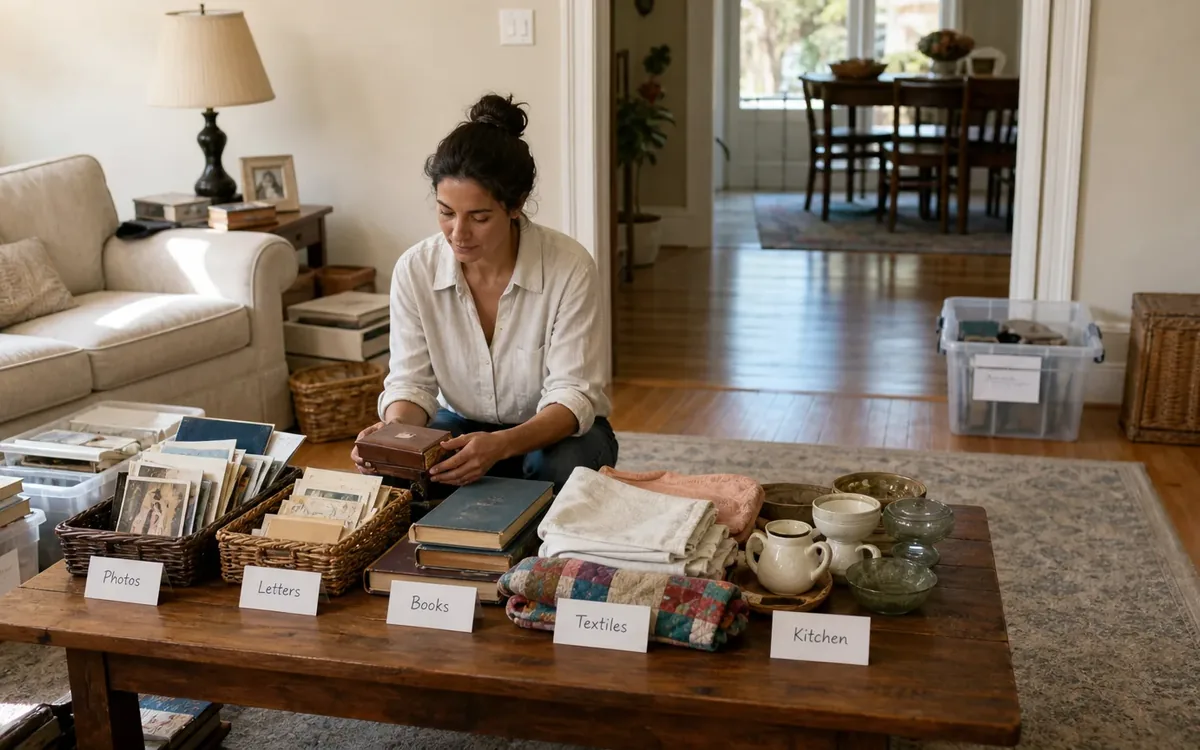
Find Meaningful Objects That Do Not Look Valuable
Keepsakes are often modest. A chipped bowl may matter because it appeared at every holiday meal. A handwritten list may preserve a relative’s voice better than a formal portrait. Monetary value and emotional importance should be evaluated separately.
Look carefully in places associated with routine life:
- Recipe boxes, cookbooks, and kitchen drawers
- Desks, address books, calendars, and stationery
- Sewing baskets, toolboxes, and hobby cabinets
- Nightstands, coat pockets, purses, and wallets
- Photo albums, frames, and the backs of pictures
- Bibles, yearbooks, scrapbooks, and sheet music
- Garment bags, uniform pockets, and jewelry boxes
- Holiday decorations and labeled storage tubs
- Boxes of schoolwork, cards, and children’s art
- Digital devices and removable storage media
Before releasing furniture, check drawers, taped envelopes, false bottoms, and papers tucked under liners. Inspect books for photographs, letters, currency, or notes. Do not dismantle locked or unfamiliar objects if doing so could cause damage or create a safety issue.
Treat identity documents, financial records, medical information, passwords, and legal papers as sensitive records rather than keepsakes. The authorized representative, attorney, accountant, or other appropriate professional should determine retention and destruction requirements.
Preserve the Story, Not Just the Object
An unlabeled keepsake can lose much of its meaning within one generation. Documentation does not need to be elaborate. A few accurate sentences are more helpful than an ornate but uncertain family legend.
For each significant object, record:
- The owner’s full name
- A plain description of the item
- Where it was found
- Approximate date, if genuinely known
- People or events connected with it
- Why the family considers it meaningful
- The intended recipient, if authorized
- Any uncertainty about the story or identification
Use phrases such as “believed to be” when information has not been confirmed. Do not turn guesses into facts.
Take at least three photographs when useful: the whole object, an identifying detail, and any inscription or label. For albums and framed photographs, record names from trustworthy written notes before separating anything.
Never write directly on photographs, letters, artwork, furniture, or textiles with permanent marker. If an object already has a label, photograph it before attempting any cleaning. Adhesive tape, household cleaner, lamination, and amateur repairs can cause permanent damage.
If an object appears fragile, moldy, pest-damaged, water-damaged, or historically significant, isolate it appropriately and ask a qualified conservator or relevant specialist for guidance. A cleanout or move team may identify the need for cautious handling, but conservation treatment belongs with a trained professional.
Reduce Volume Without Erasing Memory
Keeping every object is rarely necessary to preserve a person’s story. The better goal is a representative collection that relatives can identify, store, and revisit.
Try these methods:
- Keep one or two examples from a large collection.
- Photograph bulky objects before authorized release.
- Retain a handwritten original rather than many photocopies.
- Choose a small set of photographs that represents different life periods.
- Save the story of a damaged object even if the object cannot be retained.
- Place related small items in one clearly labeled memory box.
- Digitize selected papers for access while preserving important originals appropriately.
Set physical limits before making final selections. One archival box per branch of the family, one folder per person, or one display shelf can help. The limit should fit the recipient’s actual home and willingness to care for the items.
Digitization is not automatically preservation. File formats, storage devices, passwords, and cloud accounts can become inaccessible. Keep organized file names, create more than one backup, and record who controls the account. Consult an appropriate records or technology professional when an archive is large, sensitive, or technically complex.
Divide Keepsakes With a Transparent Process
Conflict often grows when relatives believe decisions were made privately. A visible process cannot eliminate disagreement, but it can reduce misunderstandings.
First, circulate photographs or an inventory rather than allowing unsupervised removal. Ask each interested person to rank a limited number of choices. The authorized representative can then select a fair method consistent with estate instructions.
Possible discussion methods include:
- Taking turns choosing from an approved group
- Drawing names to establish selection order
- Rotating the first choice across item categories
- Grouping objects by family branch when appropriate
- Copying photographs while assigning the original to one person
- Using written explanations when several people request the same object
These are household discussion tools, not rules of inheritance. A will, trust, court instruction, or decision by the authorized fiduciary may control the outcome. Questions about whether a selection method is legally proper should go to the responsible attorney or probate authority.
Do not assume silence means consent. Give relatives a defined response window and preserve the written record. If emotions rise, stop the session. Rushed decisions made during conflict are difficult to reverse.
Separate Sentimental, Financial, and Property Decisions
An object can be emotionally important, financially valuable, both, or neither. Keep those judgments distinct.
The household can decide or discuss:
- Which memories and relationships an object represents
- Who can explain unidentified photographs or documents
- Whether a recipient has room and interest
- Which ordinary items deserve a family review
- How to label and photograph approved keepsakes
A practical cleanout or move team may discuss:
- Creating sorting zones and inventories
- Packing and labeling approved belongings
- Sequencing rooms to reduce accidental disposal
- Preparing authorized items for donation, sale, or removal
- Flagging objects that may warrant specialist attention
Other decisions belong with qualified professionals or authorities:
- Legal: ownership, probate procedure, will or trust interpretation, and distribution authority
- Appraisal: market value, authentication, and appraisal reports
- Real estate: listing strategy, disclosures, and transaction advice
- Inspection: building defects, environmental concerns, and safety conditions
- Compliance: government requirements, permits, code determinations, and official deadlines
- Conservation: treatment of fragile documents, art, textiles, photographs, or artifacts
An auction professional or estate-sale provider may discuss whether authorized property fits a particular sale method. A qualified appraiser determines value when a formal or independent valuation is needed. These roles should not be treated as interchangeable.
Protect Privacy and Safety During Review
Keepsake sorting can expose information that should not circulate. Before sharing photographs or inviting helpers, remove visible account numbers, medical records, passwords, keys, and identifying documents.
Pause and seek appropriate guidance if you encounter:
- Firearms or ammunition
- Unknown chemicals, fuel, or pesticides
- Medication or controlled substances
- Suspected asbestos-containing or lead-painted materials
- Mold growth or significant animal contamination
- Human remains or cremated remains
- Valuable-looking coins, jewelry, art, or collectibles
- Locked safes or containers with uncertain ownership
- Tax, banking, estate, or identity records
Do not place questionable materials in ordinary donation or disposal piles. The appropriate authority or qualified professional should advise on handling, transfer, or disposal. A cleanout team may help isolate an area or adapt the work plan, but it should not make legal, environmental, medical, or regulatory determinations.
In South Carolina, estate circumstances can vary according to the documents, property, and probate status involved. Families should use instructions specific to their situation rather than assuming that another household’s process applies.
Pack Retained Keepsakes for Their Next Home
Final packing should protect both the object and its identity. Use containers that the recipient can safely lift and store. Avoid overfilling large boxes with books, albums, or framed pieces.
Pack with these priorities:
- Keep each person’s approved items together when practical.
- Put a copy of the inventory inside and outside the container.
- Wrap fragile pieces individually and fill empty space.
- Store photographs and papers away from moisture, heat, and direct sunlight.
- Keep textiles clean, dry, and loosely supported.
- Place small components in labeled bags inside the main box.
- Mark fragile containers clearly, without labeling an item as valuable.
- Record who received each box and when.
Do not use newspaper directly against delicate objects because ink may transfer. Avoid long-term storage in damp garages, attics, sheds, or areas with major temperature swings. If specialized storage is needed, ask a conservator or archival-supply professional about appropriate materials and conditions.
Finish With a Decision Record
Before the remaining contents leave the home, compare the room-by-room sorting notes with the keepsake inventory. Confirm that undecided boxes have a review date and that every retained container has a destination.
A simple closing record should include:
- Container number
- General contents
- Decision status
- Authorized recipient or destination
- Date transferred
- Person who approved the action
- Items still awaiting professional guidance
This record is not a substitute for probate, tax, legal, appraisal, or transaction documentation. It is a practical tool for preventing boxes from becoming anonymous and decisions from being forgotten.
Clutter Cleaner of South Carolina serves households statewide with estate cleanouts, downsizing and organizing, auctions and estate sales, move management, home sale preparation, and code compliance support. The household and its authorized representative remain responsible for distribution decisions. When legal rights, formal value, property condition, real-estate obligations, or compliance requirements are involved, the corresponding qualified professional or authority should direct that part of the transition. For a related planning question, see our guide to dividing estate belongings among siblings.



