
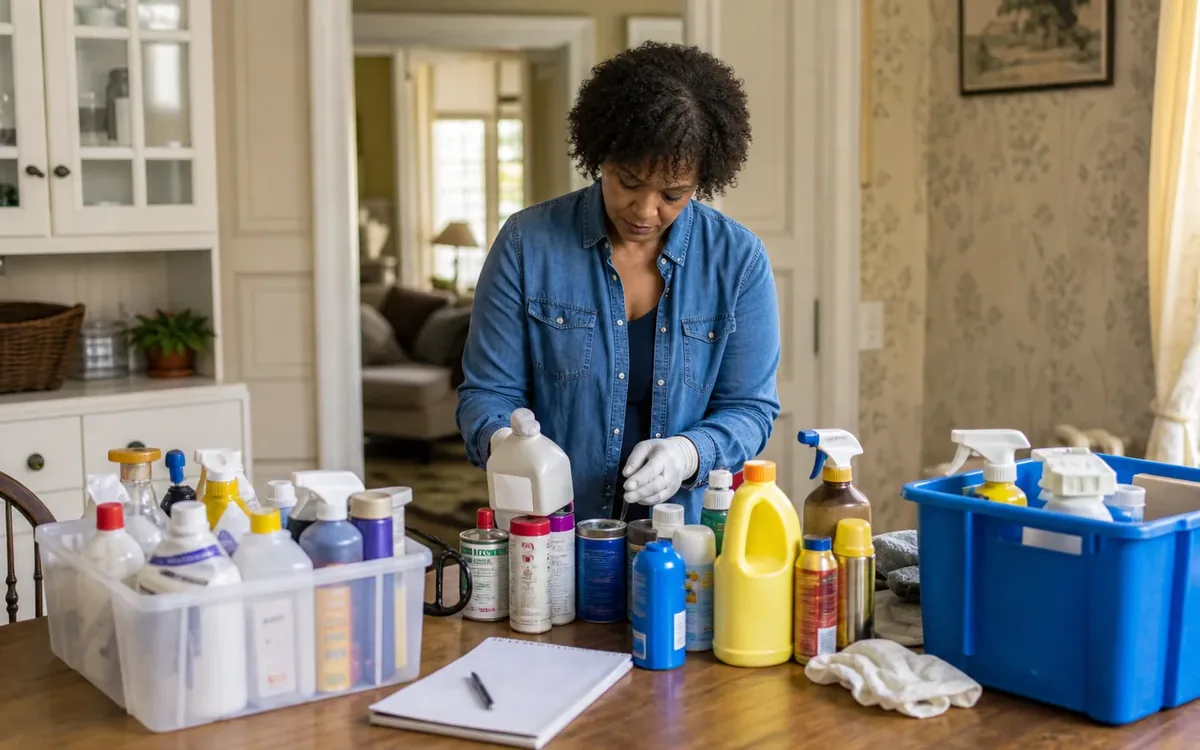
Household chemicals should be identified, left in their original containers when possible, and separated from ordinary trash, donations, food, medicines, and incompatible products before an estate cleanout begins. Do not open, smell, mix, pour, or transport an unknown substance. The household can organize clearly labeled, intact products, while disposal requirements and hazardous-material decisions belong to the appropriate waste authority, facility, contractor, or emergency agency.
Quick answer: Pause work in any area containing leaking, bulging, corroded, unlabeled, pressurized, or reactive products. Keep people and pets away. Photograph labels from a safe distance, make an inventory, and ask the relevant South Carolina local government or disposal facility how each category must be handled. A cleanout team may discuss access and item separation, but acceptance, transport, and disposal depend on the product and the receiving facility’s rules.
Why do chemicals need attention before an estate cleanout?
Estate cleanouts often uncover products stored across a garage, shed, utility room, kitchen, bathroom, workshop, pool area, or garden building. Some are easy to recognize. Others may have faded labels, damaged containers, or no reliable identification.
Treating these materials as ordinary clutter can create several problems:
- Containers may leak when boxes are moved.
- Products that should remain apart may be packed together.
- Pressurized cans or cylinders may be placed in an unsuitable load.
- Liquids may contaminate reusable furniture, papers, clothing, or donations.
- A disposal site may reject material that was not identified or prepared according to its rules.
- Workers, relatives, buyers, and visitors may enter an unsafe area without warning.
Chemical sorting should therefore happen before broad removal work. If the property also contains ordinary possessions, furniture, and papers, use a separate plan for those items. The guide to the best way to clean out an estate explains the wider decision process without replacing chemical-specific precautions.
The goal is not to identify every formula yourself. It is to recognize potentially hazardous material, prevent casual handling, and route questions to the party qualified to answer them.
What counts as a household chemical?
The phrase covers more than bottles labeled poison. A property may contain cleaners, fuels, coatings, pesticides, automotive fluids, and maintenance products that need special review.
Look for these categories:
- Paint, stain, varnish, thinner, stripper, and solvent
- Gasoline, kerosene, fuel mixtures, and lighter fluid
- Motor oil, antifreeze, brake fluid, and other automotive products
- Weed killer, insecticide, fungicide, fertilizer, and pest-control products
- Pool and spa chemicals
- Drain opener, oven cleaner, bleach, ammonia products, and strong disinfectants
- Aerosol cans, propane cylinders, fire extinguishers, and other pressurized containers
- Adhesives, resins, epoxies, and workshop chemicals
- Batteries of any size or chemistry
- Fluorescent lamps and devices that may contain mercury
- Unknown powders, liquids, crystals, or containers with unreadable labels
Medicines, medical sharps, ammunition, fireworks, radioactive materials, and suspected illegal substances are not simply another chemical-sorting category. Keep them separate and seek instructions from the appropriate pharmacy program, law-enforcement agency, health authority, fire department, or other responsible entity. Do not place them into a household chemical box unless an authorized program specifically directs you to do so.
How should you inspect the property without handling chemicals?
Begin with observation, not removal. One responsible household representative should control access and record what is present. If an executor, personal representative, trustee, or property owner has decision-making authority, confirm who can approve disposal before anything leaves the property.
Use this five-step visual review:
- Walk through likely storage areas. Check garages, sheds, cabinets, utility spaces, workshops, crawl-space entrances, and outdoor storage without reaching into crowded shelves.
- Read visible labels from a safe position. Note product names, hazard words, container condition, and approximate container size. Do not turn a leaking bottle to find its label.
- Photograph intact labels. Photos can help a waste facility understand what you have. Avoid moving containers solely to improve a picture.
- Mark restricted areas. A closed door, visible note, or controlled access point can keep helpers from packing the wrong items.
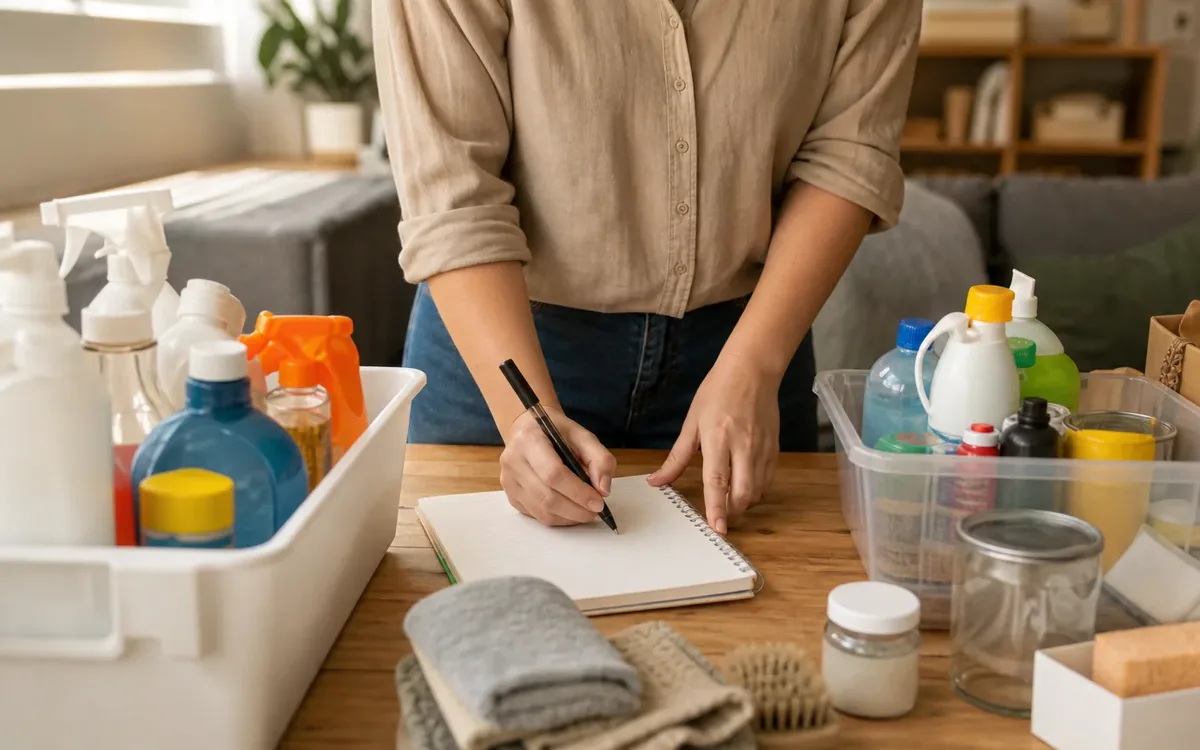
- Create an inventory by category. List cleaners, fuels, pesticides, paints, pool products, batteries, aerosols, and unknowns separately.
Avoid sniffing a container to identify it. Do not test the contents, remove caps, or transfer a product into another bottle. Never assume a beverage container holds the liquid shown on its original label.
For help understanding where chemical preparation fits into the overall project, review how estate cleanouts work. A practical sequence keeps hazardous questions from becoming mixed with donation, sale, and ordinary disposal decisions.
How do you separate incompatible household chemicals?
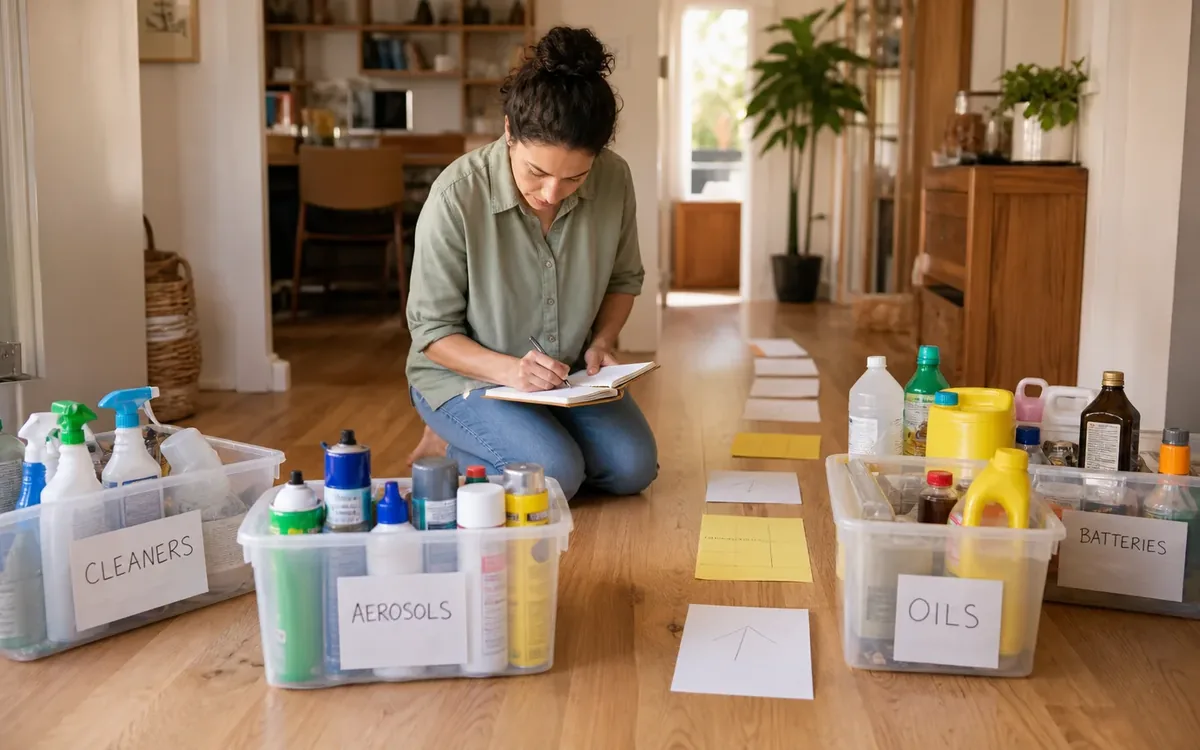
Separation means creating distinct, clearly identified groups without combining contents. It does not mean repackaging products or improvising chemical storage systems.
Keep these groups apart:
- Bleach products and ammonia products
- Acids and alkaline or caustic cleaners
- Pool chemicals and all other products
- Oxidizers and fuels, oils, solvents, or other combustible material
- Pesticides and food, medicine, clothing, or household goods
- Wet or leaking containers and clean, reusable property
- Batteries and loose metal objects that could contact terminals
- Unknown substances and all identified products
Leave an intact product in its original labeled container. Keep caps closed if they are already securely closed, but do not force a damaged closure. Preserve any manufacturer label, safety information, or original packaging that remains with the item.
Do not place incompatible containers into the same tote merely because both are destined for disposal. Do not stack heavy objects over chemical containers. Avoid cardboard boxes for leaking material, and do not improvise absorbents or secondary containment unless a receiving facility or qualified professional has provided instructions appropriate to that substance.
Outdoor relocation is not automatically safer. Heat, rain, drains, soil, ignition sources, and public access can create new hazards. Ask a qualified authority before moving questionable material from its current location.
What should happen when a container is damaged or unknown?
Stop routine sorting around any container that is leaking, swollen, corroded, hissing, warm, crystallized, or otherwise unstable. Also stop if you notice strong fumes, eye or throat irritation, dizziness, smoke, or an active reaction.
Take these immediate precautions without touching the material:
- Keep people and animals out of the area.
- Do not operate switches, tools, vehicles, or flames near suspected flammable vapors.
- Do not mop, vacuum, sweep, neutralize, or dilute a spill.
- Avoid walking through residue and spreading it to other rooms.
- Contact emergency services for an active fire, serious exposure, dangerous fumes, or an immediate threat.
- For a stable but questionable item, contact the relevant local waste program, fire authority, environmental agency, or qualified hazardous-material provider for direction.
An old jar or unmarked bottle should be treated as unknown, even if a relative believes they remember its contents. Visual appearance is not a reliable chemical identification method.
If a professional responder gives instructions, follow those instructions rather than a general cleanout plan. Cleanup methods, protective equipment, transport packaging, and disposal classifications depend on the substance and circumstances.
Who decides what can be moved or discarded?
Different parties have different roles. Keeping those roles clear prevents a cleanout crew or family helper from being asked to make decisions outside their responsibility.
The household or authorized estate representative
The responsible person can decide who has access, which clearly safe possessions should be retained, and whether work should pause. They can build the inventory, collect estate documents, and contact disposal programs. They should also confirm that they have authority before authorizing removal from an estate.
A practical cleanout or move team
A team may discuss project sequencing, room access, separation of ordinary contents, and how chemical concerns affect the cleanout plan. Clutter Cleaner of South Carolina lists estate cleanout services within a statewide service territory, with a physical business location in Mount Pleasant and Charleston as its primary market.
The team should be told about chemical storage areas before work starts. Whether a particular item can be handled, loaded, transported, or accepted is a separate question that depends on the material, provider capabilities, and destination requirements.
Waste facilities and local authorities
The receiving facility or relevant government program decides what it accepts, from whom, in what condition, and under what preparation rules. Requirements can vary across South Carolina and can change, so confirm current instructions directly rather than relying on an old flyer or a neighbor’s experience.
Specialized professionals
Qualified hazardous-material contractors, fire officials, environmental authorities, medical-disposal programs, or law enforcement may need to address certain substances. Storage vendors decide what their facilities permit. Contractors decide how products connected to their work are managed. None of these choices should be assumed to be part of an estate cleanout.
Legal authority over estate assets belongs with the authorized representative and, when needed, an attorney or court. Appraisers determine value. Real-estate professionals advise on listing matters. Inspectors evaluate conditions within their scope. Compliance determinations remain with the responsible authority.
How should you contact a disposal program?
Prepare useful information before making the call. A concise inventory helps the facility determine whether it can provide instructions.
Ask these questions:
- Does the program serve the address where the material originated?
- Is proof of residency or an appointment required?
- Which product categories are accepted?
- Are unknown, leaking, or damaged containers excluded?
- Must products remain in original containers?
- Are there quantity, container-size, or vehicle restrictions?
- How should categories be separated during transport?
- Are business, agricultural, or contractor-generated materials handled differently?
- Where and when is material received?
Follow the facility’s current directions exactly. Do not transport chemicals until the receiving location confirms acceptance and preparation requirements. Household status may matter, especially if the property was used for farming, a trade, a home business, or commercial storage.
Never pour products onto soil, into a storm drain, down a sink, or into a toilet unless the relevant authority and product guidance explicitly permit that exact method. Do not burn chemicals or leave them beside ordinary waste containers.
Preparing the cleanout after chemical risks are addressed
Once qualified guidance has resolved the chemical items, update the cleanout plan. Record what was removed, what remains restricted, and who is responsible for the next action.
Use a simple status list:
- Cleared for ordinary household sorting
- Retained by the estate
- Awaiting facility instructions
- Assigned to a specialized provider
- Restricted due to leakage, instability, or unknown contents
- Removed through an authorized program
Tell every person entering the property which rooms, cabinets, or outbuildings remain off-limits. Remove warning notes only when the issue has actually been resolved.
Keep chemical decisions distinct from appraisal and sale decisions. A valuable-looking vintage container may still present a hazard. An appraiser can address possible value without deciding safe handling. Likewise, a real-estate agent may identify a sale-preparation concern, but disposal compliance belongs to the relevant authority or qualified provider.
If repairs are planned, tell each contractor about affected areas before work begins. The contractor must decide whether the work falls within its capabilities and requirements. Do not assume painters, movers, storage companies, or general cleanout workers accept hazardous products.
Common mistakes to avoid
Rushed estate projects create pressure to make everything fit into keep, donate, sell, or trash. Chemicals need a separate decision path.
Avoid these mistakes:
- Combining small amounts to reduce the number of containers
- Pouring contents into unlabeled jars or bottles
- Packing bleach beside ammonia-based cleaner
- Putting fuel, propane, batteries, or pool products into general debris
- Assuming dried residue is harmless
- Transporting an unknown product without advance approval
- Leaving chemicals in a hot vehicle
- Donating opened, damaged, recalled, or questionable products
- Asking untrained helpers to clean a spill
- Treating an estate sale as a disposal route for unsafe material
Also avoid making promises to a buyer, landlord, municipality, or family member about compliance before the responsible professional or authority has reviewed the issue. Documentation of disposal may be useful, but whether it satisfies a legal, contractual, or property requirement is a question for the person or agency responsible for that requirement.
FAQ
Can unopened chemicals go in ordinary trash?
Do not assume so. Packaging condition does not determine local acceptance. Check the product label and ask the local waste authority or receiving facility about that exact category.
Should chemicals be moved outside before sorting?
Not without product-specific guidance. Outdoor heat, moisture, drains, ignition sources, and access by children or animals may increase risk.
Can a cleanout company identify an unknown liquid?
Chemical identification should be left to a qualified authority or specialist. A cleanout team may flag and isolate the area from routine work, but appearance or odor is not a reliable identification method.
What if chemicals are found after removal work begins?
Pause work in that area, keep others away, and reassess the plan. Contact the appropriate facility, authority, or qualified provider before moving the item.
Who decides whether an old chemical has collectible value?
An appraiser or appropriately knowledgeable market professional can advise on value. Safe handling, legal transfer, and disposal remain separate questions for the relevant authorities and qualified providers.
Where should planning begin?
Start with an authorized estate representative, a room-by-room visual inventory, and current instructions from the facility or authority that would receive the material. For coordination of the broader project, Clutter Cleaner of South Carolina can be reached at (843) 972-7020 to discuss estate cleanout planning and whether the nonhazardous portions fit its services.



