

Before a South Carolina home showing, remove portable valuables, sensitive documents, medications, and keys from visitor-accessible spaces. Put them in secure storage chosen by the household, and agree with your real estate agent on access, photography, and post-showing checks. A drawer, decorative box, or closed closet is not a substitute for controlled storage.
An open house can bring multiple visitors through a property at once. Rather than guessing who might attend, create a repeatable system that keeps important belongings outside the showing route. The goal is temporary protection while buyers view the home, not a rushed sale, donation, or disposal of personal possessions.
Quick answer: Inventory your highest-priority belongings privately, choose an appropriate off-site or secured on-site location, and record who may move or access them. Keep storage locations out of listing photos and visitor instructions. Ask your agent how showings will be supervised, then check the home after each access period.
What should you remove before buyers enter the home?
Start with items that are portable, difficult to replace, sensitive, or essential to daily life. Their importance is not limited to resale value. A family letter or backup drive may deserve stronger protection than an expensive furnishing.
Build a private removal list around these categories:
- Small valuables: Jewelry, watches, coins, cash, collectible cards, and compact electronics.
- Identity and financial records: Passports, birth certificates, tax files, checkbooks, account statements, and estate documents.
- Access items: Spare house keys, vehicle keys, garage remotes, access cards, and written alarm information.
- Health-related belongings: Prescription medications, medical records, and portable devices containing personal information.
- Sentimental objects: Family photographs, keepsakes, handwritten records, and irreplaceable heirlooms.
- Digital information: Laptops, tablets, external drives, and papers displaying passwords or recovery codes.
Do not assume a buyer will avoid drawers or cabinets. Discuss with your agent which storage features buyers may reasonably inspect and which personal areas should remain inaccessible.
Firearms require a separate safety plan. Follow applicable law and appropriate secure-storage practices, and obtain qualified guidance when needed. Do not include them in ordinary mixed packing boxes or ask an unqualified helper to handle them.
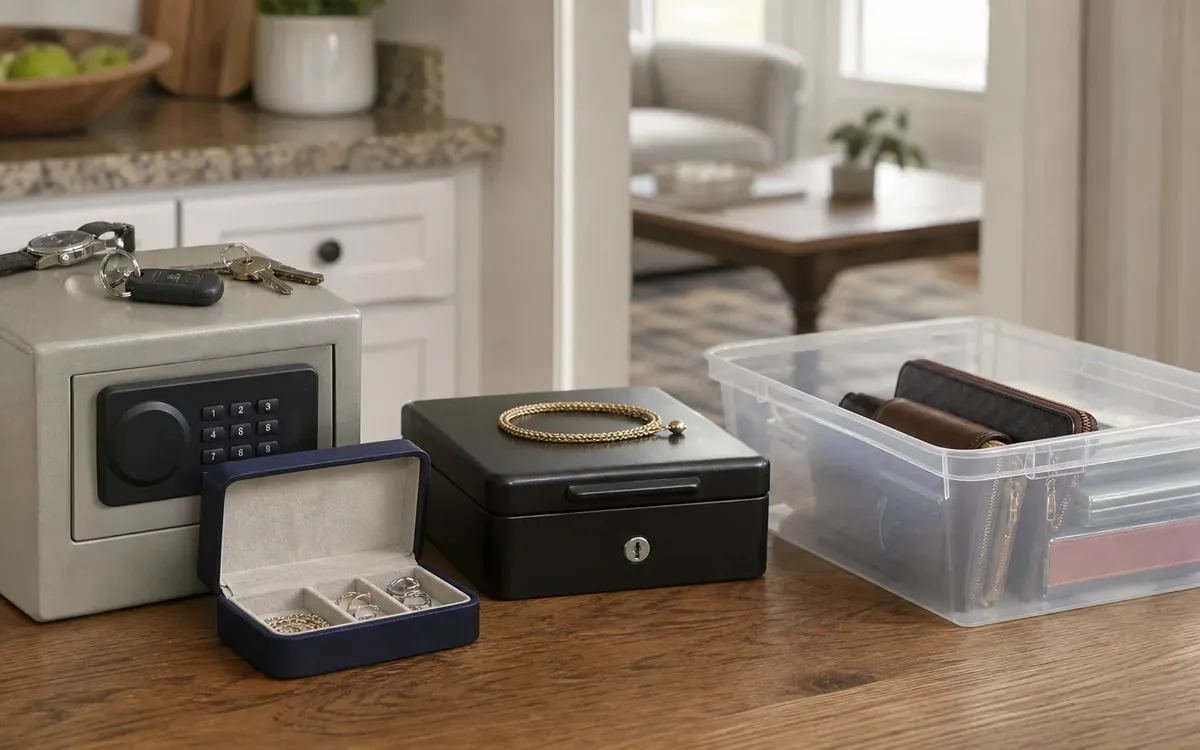
Choose temporary storage according to the item, not convenience
The household decides where belongings will go and who can access them. Compare options by security, environmental conditions, insurance requirements, and your need to retrieve items while the home is listed.
Keeping items with you can work for essential documents and a small amount of jewelry. Use a closed container and maintain direct control. Do not leave the container in an unattended vehicle while a showing takes place.
A trusted person’s home may be suitable when that person agrees to the responsibility and has an appropriate secure location. Confirm exactly what they are receiving and how you will retrieve it. Friendship alone does not establish insurance coverage or suitable storage conditions.
A safe-deposit box may suit certain documents or small valuables, subject to the provider’s rules and access arrangements. Check availability, permitted contents, coverage, and whether you can retrieve essential records when needed.
A self-storage facility may suit boxed collections or larger belongings. Ask the separate storage provider about access controls, environmental conditions, prohibited contents, and insurance obligations. Ordinary storage may be unsuitable for jewelry, original documents, delicate artwork, or heat-sensitive materials.
A secured location inside the home may be practical for items that cannot be relocated. Consider the container’s suitability and anchoring, who holds the keys, and whether its location will appear in photographs. A locked room should not be the only protection for highly portable valuables.
For coordinating belongings with the broader sale process, review home sale preparation services. Temporary storage selection and any storage agreement remain separate household and provider decisions.
How do you make an inventory without exposing private information?
Create a record that helps you account for belongings without publishing sensitive details. Keep it somewhere that visitors, contractors, and unrelated helpers cannot access.
For each important item or grouped collection, record:
- A plain-language description and, where useful, a photograph.
- A serial number or distinguishing feature, if applicable.
- Its assigned container and destination.
- The person authorized to move or retrieve it.
- Its condition before packing and after return.
Use neutral container labels such as “Personal Box B” rather than “Jewelry” or “Financial Records.” Store the label key separately. Photographs should document the item, not inadvertently capture account numbers, passwords, or the location of a safe.
An inventory is not an appraisal. If monetary value matters for insurance, division of property, or a potential sale, consult the appropriate insurer or qualified appraiser. Ask your insurer what documentation and storage arrangements affect your policy rather than assuming every destination is covered.
When a listing involves inherited property, establish authority before moving or distributing belongings. The guide to the best way to clean out an estate provides related preparation guidance. Ownership, fiduciary duties, and disputed property decisions remain with the authorized representative and appropriate legal professionals.

Set a showing-access plan with your real estate agent
Securing belongings works best when it matches how people will enter and move through the property. Ask your agent to explain the proposed showing arrangements before access begins.
Useful questions include:
- How will appointments and open-house access be managed?
- Which rooms and storage areas should buyers be able to inspect?
- How will visitors be directed away from private containers or excluded spaces?
- Who will check doors and access points afterward?
- What should the household do if an item appears missing?
For an open house with several visitors present, prioritize removing valuables rather than relying entirely on someone watching every room. Agent supervision and household storage solve different problems; neither should be treated as a guarantee against loss.
Discuss photography separately. Listing images, video tours, mirrors, and visible desk surfaces can reveal documents, collections, or security equipment. Review the spaces to be photographed and flag sensitive details before the photographer arrives.
Ask your agent about buyer photography and any proposed recording or monitoring arrangements. Privacy, disclosure, and legal requirements should be addressed by the responsible professionals. Do not install covert recording equipment based on informal advice.
Pack and hand off valuables without losing accountability
A practical move or cleanout team may discuss packing order, container labeling, access routes, and which belongings the household will handle personally. Clearly identify items excluded from routine packing or removal before work begins.
Keep valuable-item handling distinct from ordinary boxes headed for donation, disposal, or a sale. Temporary removal does not authorize anyone to sell, discard, or redistribute the contents.
For an authorized handoff, use a simple record:
- Identify the container and its intended destination.
- Name the person releasing it and the person receiving it.
- Confirm whether the contents were checked together.
- Note any handling restrictions or visible damage.
- Confirm where the household keeps the private inventory.
For especially sensitive belongings, household members may prefer to pack and transport them themselves. Tell helpers that a sealed personal container should remain sealed unless the authorized person gives permission.
Fragile artwork, antiques, and specialized collections may require advice from a separate qualified packing, conservation, or transport provider. Avoid treating ordinary packing materials as suitable for every object.
Clutter Cleaner of South Carolina provides services statewide and is physically located in Mount Pleasant, with Charleston as its primary market. When discussing home sale preparation or move management, ask about the specific coordination needed. Storage, appraisals, specialized transport, and insurance are separate arrangements, not assumed parts of that work.
What should stay accessible while valuables are stored?
Protecting everything in one locked container can create a different problem: losing access to something you urgently need. Separate daily-use essentials from items that can remain stored throughout the listing period.
Keep an accessible, household-controlled set of essentials:
- Identification needed for appointments or transactions.
- Necessary medications and medical information.
- Keys and access devices used by current occupants.
- Contact details for the agent, storage provider, and authorized helpers.
- Records needed for the pending sale, as advised by the responsible professional.
Do not remove every document simply because it contains personal information. Your attorney, closing professional, or agent may need particular records. Ask which originals must remain available and whether a secure copy will serve your immediate needs.
After a showing, return daily-use items to their designated place rather than scattering them across the home. Keep stored valuables in their chosen location between showings when that is practical, so each appointment does not require a complete repacking effort.
Check the home afterward and handle concerns calmly
Agree on who will perform the post-showing check. Walk the visitor route, confirm that designated storage remains secure, and check that doors and windows are in the expected condition.
Compare important containers with the private inventory. Avoid opening and recounting every collection unnecessarily, but investigate a broken seal, moved container, or unexpected access promptly.
If something appears missing, first check whether an authorized household member relocated it. Record what you observed and notify your agent. Preserve relevant records or recordings lawfully, without editing away potentially useful context.
For suspected theft or an immediate safety concern, contact the appropriate authorities. Notify your insurer when appropriate and follow its reporting instructions. Do not accuse a visitor publicly, confront someone based on speculation, or circulate sensitive inventory details.
A damaged lock or door may require a separate contractor. Questions about required disclosures, property condition, or inspection findings belong with your agent, inspector, attorney, or relevant authority. A practical preparation team can discuss access and belongings, but it does not decide legal obligations or certify security.
Short FAQ
Is hiding jewelry in a dresser enough?
No. Hiding changes visibility, not access. Use an appropriate secured location or remove jewelry from the property, and keep its destination private.
Can a locked closet hold valuables during an open house?
It may provide a boundary, but it is not automatically suitable protection. Discuss buyer access with your agent and use stronger storage for portable valuables or sensitive records.
Should I leave valuables in my car during a showing?
Avoid making an unattended vehicle your temporary storage plan. Choose a destination suited to the belongings, or maintain direct control of a small essentials container.
Who decides whether an inherited item can be sold or moved?
The person with proper authority must make that decision, with legal guidance when needed. A preparation or move team should follow documented instructions, not resolve ownership disputes.



