
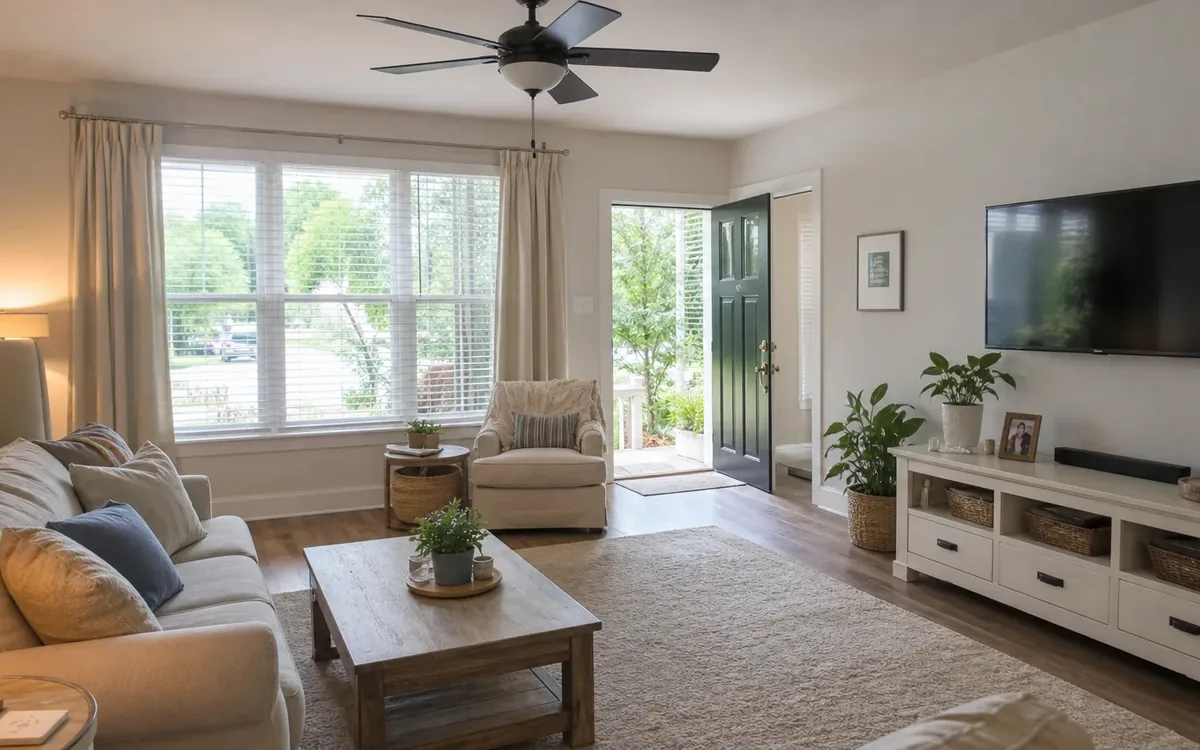
An occupied home can remain show-ready during extreme heat when the household treats each showing as a short operational event, not a full cleaning project. Prioritize safe indoor conditions, remove odor and moisture sources, protect pets and temperature-sensitive belongings, and create a simple departure routine. Let the real-estate professional control showing access and buyer instructions, while qualified HVAC, inspection, legal, and compliance professionals handle decisions within their fields.
Quick answer: Before a hot-weather showing, confirm that the cooling system is operating normally, close off outdoor heat, remove food and trash that can produce odors, prepare pets for a safe departure, and store sensitive items in an appropriate location. Keep counters and floors clear enough for visitors to move comfortably. Report cooling, moisture, or property-condition concerns to the appropriate professional rather than hiding them or making unsupported claims.
Why do extreme-heat showings need a different routine?
Hot, humid South Carolina weather can amplify small household issues. A nearly full trash can may smell stronger. Damp towels may stay musty. Pet bedding, litter boxes, food scraps, and sink drains can become more noticeable. Direct sunlight can heat rooms unevenly, while repeated door openings can make an occupied home harder to keep comfortable.
The goal is not to make the property unnaturally cold or erase every sign of occupancy. It is to maintain a safe, orderly environment in which buyers can assess the home without heat, odors, clutter, or hurried household activity dominating the visit.
This requires coordination because several decisions belong to different people:
- The household decides what to remove, secure, pack, donate, discard, or place in storage.
- The listing professional manages showing procedures, access expectations, and presentation advice within the real-estate relationship.
- A practical cleanout or move team may discuss sorting, removal planning, room sequencing, and departure logistics.
- HVAC contractors, inspectors, appraisers, attorneys, and authorities make decisions within their own professional or official roles.
For broader support beyond daily heat routines, review home sale preparation services across South Carolina. Households handling inherited belongings can also use the guide to the best way to clean out an estate when sale preparation overlaps with an estate transition.
Build a short-notice heat plan before requests arrive
A showing request is easier to handle when the household has already decided who does what. Write a compact routine that works on ordinary days and can be shortened when notice is limited.
Use these five operating zones:
- Climate: Check for ordinary cooling operation, close windows and exterior doors, and manage blinds or curtains consistently.
- Odor and moisture: Empty problem trash, hang damp items, address pet areas, and remove food residue.
- People and pets: Identify where every occupant and animal will go during the showing.
- Sensitive property: Secure medicine, documents, electronics, candles, artwork, food, and other heat-sensitive items.
- Access: Clear walkways, entry points, utility areas, and any spaces buyers are expected to view.
Assign each zone to a household member where possible. Keep a small departure container near the exit for keys, wallets, medications, pet supplies, chargers, and other items that must leave with you.
Avoid using the vehicle as overflow storage for objects that heat can damage. Cars can become unsafe for people and pets and unsuitable for many medicines, electronics, foods, cosmetics, candles, photographs, and documents with adhesives. If an item needs controlled storage, the household should choose a suitable storage provider or another appropriate location rather than assuming a cleanout or moving service provides climate-controlled protection.
How should you manage temperature without masking a problem?
Operate the cooling system as you normally and safely would, following manufacturer guidance and any instructions from the property owner or qualified HVAC professional. Do not make unfamiliar system changes just before visitors arrive. Confirm that supply and return vents are not blocked by boxes, furniture, rugs, or packed belongings.
Reduce avoidable heat gain by checking that exterior doors and windows are closed. Blinds or curtains may help in rooms with strong direct sun, but avoid making the interior so dark that buyers cannot comfortably evaluate it. Your real-estate professional can advise on presentation preferences.
Fans can improve occupant comfort, but they should not become trip hazards or conceal a cooling concern. Remove extension cords from walking routes. Make sure portable units are stable and used according to their instructions.
If the home is not cooling as expected, shows signs of leaking or condensation, or has unexplained hot and cold zones, notify the property owner and appropriate HVAC professional. An inspector determines property-condition findings within the scope of an inspection. A real-estate professional or attorney can explain disclosure responsibilities within their role. A cleanout or move team should not diagnose equipment, certify performance, or decide what must legally be disclosed.
Never conceal water with rugs, boxes, furniture, or staging. If moisture is near electrical components or creates an immediate hazard, keep people away and contact the appropriate qualified professional or emergency authority.
Control humidity, odors, and food before they spread
In humid weather, odor control starts with removing the source. Strong fragrances can combine with household smells and may bother visitors. Scented sprays also do not resolve moisture, food residue, or pet waste.
Focus on these source areas:
- Kitchen trash, recycling, and food packaging
- Sink strainers, disposals, and dirty dishwater
- Damp bath mats, towels, laundry, and cleaning cloths
- Pet bedding, litter, waste bags, and feeding stations
- Shoes, sports equipment, and work clothing
- Overwatered plants or standing water in saucers
- Packed boxes containing pantry items or liquids
Move perishable food back to refrigeration promptly. Wipe spills and remove opened food from counters. Do not leave groceries, prepared dishes, pet food, or lunch bags in a hot vehicle merely to clear the kitchen.
Before leaving, check faucets, toilets, appliance connections visible to the household, and areas where condensation has collected. The household can dry a small ordinary spill if it is safe to do so. Recurring moisture, staining, active leaks, suspected mold, or structural concerns belong with the property owner and qualified inspection, remediation, plumbing, or other relevant professionals.
Keep air pathways open. Boxes packed against vents or stacked tightly in small rooms can obstruct airflow and trap odors. A practical organizing or move team may help discuss room sequencing and reduce excess contents, but HVAC performance and indoor environmental assessments remain separate professional matters.
What is the safest plan for occupants and pets?
Decide the departure destination before a showing request arrives. It should be safe in current weather and suitable for the needs of children, older adults, people with medical conditions, and anyone sensitive to heat. The household remains responsible for medications, mobility aids, hydration, transportation, and care arrangements.
Never leave a person or pet waiting in a parked vehicle during a showing. If the planned destination becomes unavailable, contact the listing professional about access or scheduling rather than improvising an unsafe wait nearby.
For pets, prepare a dedicated go-kit containing appropriate essentials, such as:
- Leash, carrier, or other secure restraint
- Water and a suitable bowl
- Waste bags or litter supplies
- Necessary medicine and written care information
- A familiar towel or comfort item
- Current identification information
Do not rely on a note saying a pet is friendly. Buyers, agents, inspectors, and contractors may open doors or enter unfamiliar rooms. Ask the listing professional how animal access should be coordinated, then remove or secure pets according to the agreed plan.
Aquariums, terrariums, birds, and other animals with environmental needs require species-appropriate care. Seek guidance from a veterinarian or qualified animal-care professional when temperature, transport, or equipment changes could affect the animal. A move or cleanout team should not make veterinary decisions.
Protect temperature-sensitive and private belongings
Occupied homes often contain items that cannot simply be packed into the garage or loaded into a car. Heat, humidity, and direct sunlight may damage some possessions even when the showing itself is brief.
Review these categories before choosing a temporary location:
- Prescription and over-the-counter medicine
- Computers, batteries, cameras, and other electronics
- Photographs, albums, papers, and adhesive labels
- Candles, cosmetics, art materials, and musical instruments
- Wine, specialty foods, and refrigerated products
- Family records, financial documents, keys, and identification
- Firearms or other regulated items
Follow manufacturers’ storage instructions for products and medication guidance from a pharmacist or medical professional. The household decides what to secure and where it should go. Legal requirements for firearms, controlled substances, estate property, or regulated materials should be addressed with the responsible attorney, authority, or qualified professional.
Do not create a last-minute pile in the attic, shed, garage, or vehicle without considering heat and access. Buyers may expect to view those spaces. Ask the listing professional which areas must remain accessible.
If off-site storage is being considered, compare providers based on the actual needs of the contents, including environmental controls, access, insurance questions, and prohibited items. Storage is a separate household and provider decision, not a guaranteed part of home preparation or cleanout work.
Keep daily reset work narrow and repeatable
Extreme-heat preparation should concentrate on conditions that change during the day. Large projects, such as emptying an entire garage or repainting several rooms, do not belong in the final rush before visitors arrive.
Use this six-step departure reset:
- Put food away and remove odor-producing waste.
- Hang damp items and clear wet surfaces.
- Confirm pets and essential supplies are ready to leave.
- Secure private and temperature-sensitive belongings.
- Clear entries, walkways, vents, and expected viewing areas.
- Check doors, windows, lights, and access instructions before departure.
Keep cleaning supplies together, but store them safely and out of children’s and pets’ reach. Avoid mixing products. Follow label directions and ventilate only when weather, security, and product instructions make that appropriate.
If excess contents repeatedly block the routine, the household can decide whether to pack, donate, discard, sell, or store them. A practical cleanout or move team may discuss sorting categories, removal order, donation or disposal preferences, and how to keep important rooms usable. Auctions and estate sales require separate suitability and property decisions. Appraisers determine value, and disposal facilities or local authorities determine acceptance and compliance rules.
Coordinate repairs, access, and professional boundaries
A showing routine can reveal problems that deserve attention, but discovering an issue does not authorize an unqualified person to diagnose or repair it. Separate the immediate household response from the professional decision.
For example:
- Blocked vent: The household may move ordinary loose items if safe. HVAC concerns go to a qualified contractor.
- Loose threshold: Keep the route clear and notify the owner or listing professional. Repair scope belongs to an appropriate contractor.
- Active leak: Protect people from the area and contact the responsible property owner and qualified professional.
- Suspected code issue: A support team may help organize access or remove approved contents, but the relevant authority determines compliance.
- Question about market impact: The real-estate professional discusses marketing strategy; an appraiser handles appraisal conclusions.
- Disclosure or ownership question: Consult the responsible attorney or real-estate professional rather than relying on cleaning or moving guidance.
Get household approval before removing property. When an estate, trust, divorce, tenancy, or shared ownership is involved, confirm who has authority to direct work. Cleanout logistics do not establish legal ownership or decision-making rights.
Make the post-showing return part of the plan
The routine is not finished when visitors leave. On return, first account for all people and pets. Then check that exterior doors, windows, gates, and any agreed access points are secure.
Look for obvious changes such as lights left on, blinds moved, doors closed over vents, or a faucet running. Do not disturb documents or materials left by a real-estate professional, inspector, or contractor. Direct access concerns to the listing professional.
Restore pet stations and refrigerated items promptly. Return medicines and sensitive belongings to their correct storage conditions. If an item was exposed to heat outside its storage instructions, consult the manufacturer, pharmacist, veterinarian, or other appropriate professional rather than guessing that it remains safe.
Record recurring trouble spots, such as a room that is continually cluttered before departure or a pet station that produces odor quickly. Adjust the next reset around those specific problems. This keeps the process focused on daily heat operations instead of restarting a whole-home checklist for every showing.
Short FAQ
Should the home be made unusually cold before a showing?
Not necessarily. Use the cooling system safely and normally, based on owner instructions and qualified HVAC guidance. Do not overcorrect, make unfamiliar adjustments, or imply that equipment performance has been professionally verified when it has not.
Can candles or plug-in fragrances solve summer odors?
They may add scent but do not remove the source. Address food waste, damp textiles, pet areas, standing water, and dirty surfaces first. Strong fragrance can also distract or bother visitors.
Where should pets go during a hot-weather showing?
Choose a safe, temperature-appropriate destination in advance. Coordinate access expectations with the listing professional, and never leave pets waiting in a parked vehicle. Ask a veterinarian about species-specific heat or transport concerns.
Can packed belongings be stored in the garage?
The household can choose the location, but should consider heat, humidity, security, buyer access, and item-specific storage instructions. Climate-sensitive contents may require an appropriate off-site storage provider or another controlled setting.
Who decides whether a heat-related issue must be repaired or disclosed?
Qualified contractors diagnose and propose repairs within their trades. Inspectors report findings within their scope. Real-estate professionals and attorneys address transaction and disclosure questions within their roles. Authorities decide applicable compliance matters.
How can Clutter Cleaner of South Carolina fit into the preparation?
Clutter Cleaner of South Carolina, physically located in Mount Pleasant and serving households statewide, may discuss home sale preparation, downsizing and organizing, move management, estate cleanouts, auctions and estate sales, and code compliance support as applicable. The household still controls property decisions, while legal, appraisal, inspection, real-estate, contractor, disposal, and compliance determinations stay with the responsible professionals or authorities. Call (843) 972-7020 to discuss the household’s situation.



