

An estate cleanout at a home with a septic system should be planned around the tank, access lids, distribution components, and drain field before vehicles or containers enter the property. The household can identify records, approve work areas, and decide what happens to belongings. A cleanout or move team can discuss access, staging, loading, and areas to avoid. A septic professional, inspector, contractor, appraiser, real-estate professional, or public authority must handle decisions within that person’s field.
Quick answer: Locate the septic system before cleanout activity begins, mark a conservative no-traffic zone, keep vehicles and heavy loads on established hard surfaces, preserve access for septic professionals, and stop work if the system’s location or condition is uncertain. Do not place a dumpster, storage container, debris pile, trailer, or moving truck on the drain field or over buried components.
This issue can arise at rural and suburban properties across South Carolina, including homes in the Charleston market. Every site is different, so a practical plan should reflect the property layout rather than assumptions about where a septic system is usually found.
Why does a septic system change an estate cleanout plan?
A cleanout can bring more activity to a property than its normal household use. Vehicles may arrive to remove furniture, family members may create staging piles, and separate providers may handle storage, repairs, appraisals, sales, or waste. Without a site plan, that activity can drift onto vulnerable ground.
A septic tank is only one part of the system. Buried lines, lids, distribution components, and the drain field may occupy a larger area than people expect. Soil over those components is not an appropriate substitute for a driveway, loading pad, or storage area.
Heavy vehicles or concentrated loads can compact soil and may damage buried infrastructure. Even foot traffic can become an operational concern if workers repeatedly cross soft ground while carrying bulky items. Wet conditions can increase the risk of rutting or losing control of carts and equipment.
The goal is not for a cleanout team to evaluate the septic system. The goal is to organize the work so no one accidentally interferes with it. Families considering professional help can review the statewide estate cleanout service while keeping septic inspection, repair, and compliance questions with qualified professionals or the responsible authority.

How can the household locate the septic tank and drain field?
Begin with reliable property information rather than visual guesswork. A yard may have changed since the system was installed, and landscaping can hide lids or other indicators.
Useful sources may include:
- Septic installation, pumping, inspection, or repair records
- Property documents retained by the owner or personal representative
- Diagrams supplied by a septic contractor
- Information available from the relevant public authority
- Clearly identified lids, inspection ports, or other system features
- Guidance from a qualified septic professional who examines the site
Do not treat greener grass, shallow depressions, or the direction of an indoor drain line as proof. These may offer clues, but they do not establish the full system layout.
If records conflict or the location remains uncertain, postpone vehicle and equipment placement near the suspected area. A septic professional can discuss appropriate methods of locating components. The family or legally responsible person should authorize that separate work.
Once the layout is reasonably established, create a simple property map. It can identify the driveway, approved parking, building entrances, septic components, drain field, gates, slopes, soft soil, overhead obstructions, and loading area. Share the same map with each provider so instructions remain consistent.
For broader estate sequencing beyond the septic issue, see what is the best way to clean out an estate. That guide can help place removal work in context without replacing site-specific septic planning.
What should be marked before crews or vehicles arrive?
Mark more than the tank lid. The protected area should account for the known or professionally identified system layout, including the route between components where relevant.
A visible site setup may include:
- Stakes, cones, flags, or temporary tape around the no-traffic area
- A sign at the driveway directing vehicles to approved parking
- A designated loading zone on a stable hard surface
- A hand-carry route that avoids the septic area
- A separate staging location for items awaiting family decisions
- Clear access to septic lids or inspection points
- A turnaround plan that does not require driving across the yard
Use markings that visitors can understand immediately. A few small flags may be overlooked by drivers backing a truck or carrying a large cabinet. Explain the boundary during the arrival briefing and identify who can approve any change.
Do not use the protected zone for temporary convenience. A pile that will “only be there during loading” can still apply concentrated weight or obstruct professional access. This applies to furniture, bagged material, pallets, appliances, portable storage units, trailers, and waste containers.
Weather should also affect the daily plan. The household and team can decide to use a safer established route or pause yard access when surfaces are soft. Whether the septic system itself is functioning correctly remains a question for a qualified septic professional.
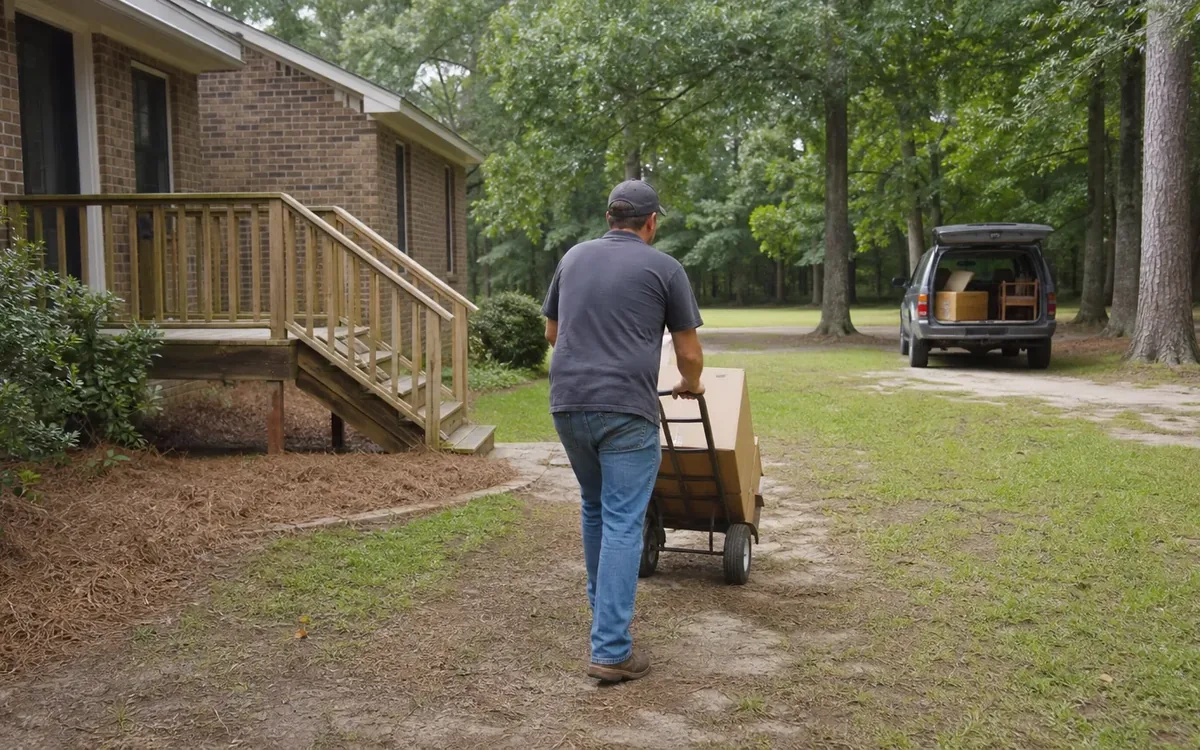
Plan vehicle access and loading without crossing the system
Loading strategy matters because a truck does not need to park beside the door for a cleanout to proceed. A longer carrying route may be preferable to driving over an uncertain or protected area.
Before removal begins, discuss four site decisions:
- Arrival and parking: Identify where each vehicle may stop without blocking emergency access, neighboring property, or septic service access.
- Loading position: Choose a stable surface that does not sit over known or suspected septic components.
- Carrying route: Select a route with manageable steps, turns, slopes, gates, and door clearances while avoiding the drain field.
- Departure sequence: Decide how vehicles can leave without backing into protected ground or requiring another vehicle to relocate across the yard.
A practical cleanout or move team may discuss carrying methods, crew flow, room order, and loading logistics. It should not certify soil-bearing capacity, identify septic defects, or guarantee that unverified buried infrastructure can support a vehicle.
If a driver, container company, contractor, or other provider controls its own equipment, that provider must make its operational decisions within the approved site restrictions. The responsible household representative should communicate those restrictions before scheduling, not after equipment reaches the property.
Keep disposal, storage, and specialty work separate
Estate projects often involve several providers, and each one can create a different ground-access issue. Treat these arrangements as separate decisions instead of assuming the cleanout plan covers everything.
Disposal: The household chooses permitted disposal pathways and authorizes what may leave the estate, subject to legal responsibility. A cleanout team may discuss removal categories and loading access. A waste or container provider controls its equipment and should receive the no-traffic map before placement. Questions about accepted materials belong with the receiving facility or appropriate authority.
Storage: Family members may choose off-site storage or hire a storage provider. If a portable storage unit is considered, its placement must be evaluated separately. Do not assume an open lawn is suitable simply because the unit is temporary.
Contractor work: Repair contractors may bring vans, trailers, lifts, excavation equipment, or material deliveries. Each contractor should plan access around the marked system. Septic excavation or repair belongs to an appropriately qualified septic provider, not the cleanout team.
Appraisals and sales: A qualified appraiser determines value within the scope of the appraisal. Auction or estate-sale professionals advise on sale strategy within their work. Families should avoid discarding items that still require appraisal, fiduciary review, beneficiary agreement, or sale decisions.
Real-estate preparation: A real-estate professional advises on listing strategy and disclosures within that professional’s role. Inspectors assess conditions covered by their inspection. A cleanout team can discuss access and presentation tasks but does not decide whether a property satisfies sale, inspection, or septic requirements.
This separation prevents an access decision made for one task from quietly becoming permission for every later provider.
What can the family decide, and what requires a professional?
Clear responsibility is especially important when several heirs, an executor, a personal representative, or an agent are involved.
The household or legally authorized representative can generally decide:
- Who may enter the property
- Which belongings are retained, sold, donated, stored, or discarded, when legally authorized
- Which rooms or exterior areas are open for work
- Where staging occurs within known safe areas
- Who serves as the on-site contact
- Whether work pauses because access conditions have changed
- Which independent providers to contact for advice or service
A practical cleanout or move team may discuss:
- The sequence for removing approved contents
- Safe carrying paths based on visible conditions
- Vehicle and loading positions consistent with the site plan
- Ways to keep doors, halls, and exits usable
- Separation of items by the household’s approved destination
- Coordination concerns involving scheduled providers
Decisions that remain with responsible specialists or authorities include:
- Locating, inspecting, pumping, repairing, or altering a septic system
- Determining whether soil or buried components can bear a particular load
- Interpreting permits, setbacks, environmental rules, or local requirements
- Appraising property or authenticating valuables
- Giving legal advice about ownership, probate, fiduciary duties, or beneficiary rights
- Performing professional home inspections
- Advising on real-estate disclosures, contracts, or listing requirements
- Approving disposal of regulated, hazardous, or otherwise restricted materials
When authority over belongings is unclear, stop disposition decisions until the appropriate legal representative or attorney resolves the issue. Physical access to a house does not necessarily establish authority to sell or discard its contents.
Coordinate the cleanout with septic service or inspection
A cleanout and septic appointment may affect one another even though they are separate services. The septic provider may need clear access to lids, room to park, or an unobstructed route for equipment. Furniture, bags, containers, and vehicles should not block that access.
Ask the septic professional what areas need to remain open for the specific appointment. Then incorporate those requirements into the property map and loading plan. Do not infer equipment needs on the provider’s behalf.
If the property is being prepared for sale, the responsible parties should coordinate the sequence with the real-estate professional and relevant inspectors. The household may prefer to remove enough contents to provide access before inspection, but the inspector determines what can be evaluated. The real-estate professional handles advice about transaction strategy and disclosure, while the septic professional addresses system condition within that provider’s scope.
Cleanout activity should never conceal suspected septic symptoms. If workers notice sewage odors, unusual wet areas, surfacing wastewater, damaged lids, or unstable ground, keep people away and notify the responsible property representative. That person can contact a qualified septic professional or appropriate authority. A cleanout team should not diagnose the cause.
Use a site-specific cleanout briefing
Before work starts, gather everyone for a concise walk-through. The briefing should focus on the property’s actual restrictions rather than a generic reminder to “stay off the grass.”
Cover these points:
- The visible boundary of the septic no-traffic zone
- Approved parking and loading surfaces
- The carrying route from each active room
- Areas that remain closed pending legal or family decisions
- The location of items reserved for appraisal or sale
- Who can authorize disposition changes
- What to do if markings move or ground conditions change
- Which contact handles septic questions
Keep one decision-maker available during active work. Conflicting directions from multiple relatives can result in items being moved to the wrong place or vehicles being redirected into a restricted area.
Update the briefing when another provider arrives. An appraiser walking into the house may need little exterior setup, while a contractor delivering materials may require a specific access conversation. The same map can support both visits, but the operational instructions will differ.
Clutter Cleaner of South Carolina is physically located in Mount Pleasant and serves households across South Carolina, with Charleston as the primary market. Property access still needs to be evaluated for the individual home. Statewide scope does not make every yard, road, driveway, or septic layout suitable for the same setup.
Finish without creating a new septic access problem
The final walk-through should cover both the house and the grounds used during the project. Remove temporary staging from approved areas, confirm that access points are not blocked, and collect cones or tape only after all scheduled vehicle movements are complete.
The household representative can verify that retained belongings went to their approved destinations and that providers have removed their own equipment. If a storage unit, contractor material, or sale setup remains, confirm that its placement still respects the septic boundaries.
Document any observed concern without trying to characterize its cause. Notes and photographs can help the property representative explain visible conditions to a septic professional, insurer, attorney, real-estate professional, or authority as appropriate. They are not a substitute for an inspection or formal report.
If later work is planned, preserve the map and restrictions for the next provider. A safe route used during the estate cleanout should not be forgotten when repairs, landscaping, listing preparation, or moving activity begins.
Short FAQ
Can a moving truck drive over a septic tank or drain field?
Do not plan vehicle travel over a tank, drain field, or other known septic components. If the exact layout or load risk is uncertain, keep the vehicle on established hard surfaces and consult a qualified septic professional about site-specific concerns.
Can a dumpster or portable storage unit sit on the drain field?
It should not be placed on the drain field or over buried septic infrastructure. Coordinate an alternative location with the relevant container or storage provider and the responsible property representative.
Who should locate the septic system?
Start with reliable records and information from the responsible authority. When location remains uncertain, a qualified septic professional should address locating methods. A cleanout team can follow a marked plan but should not certify the system layout.
What if septic damage or wastewater is noticed during the cleanout?
Stop activity in the affected area, prevent people and vehicles from entering it, and notify the property representative. That person should contact a qualified septic professional and, when appropriate, the relevant authority. Do not move lids, excavate, or attempt a repair as part of ordinary cleanout work.
Should the estate cleanout happen before a septic inspection?
The sequence depends on property access, transaction needs, and professional advice. The household can coordinate scheduling, while the septic professional determines inspection access and the real-estate or legal professional advises within the sale or estate process.



