
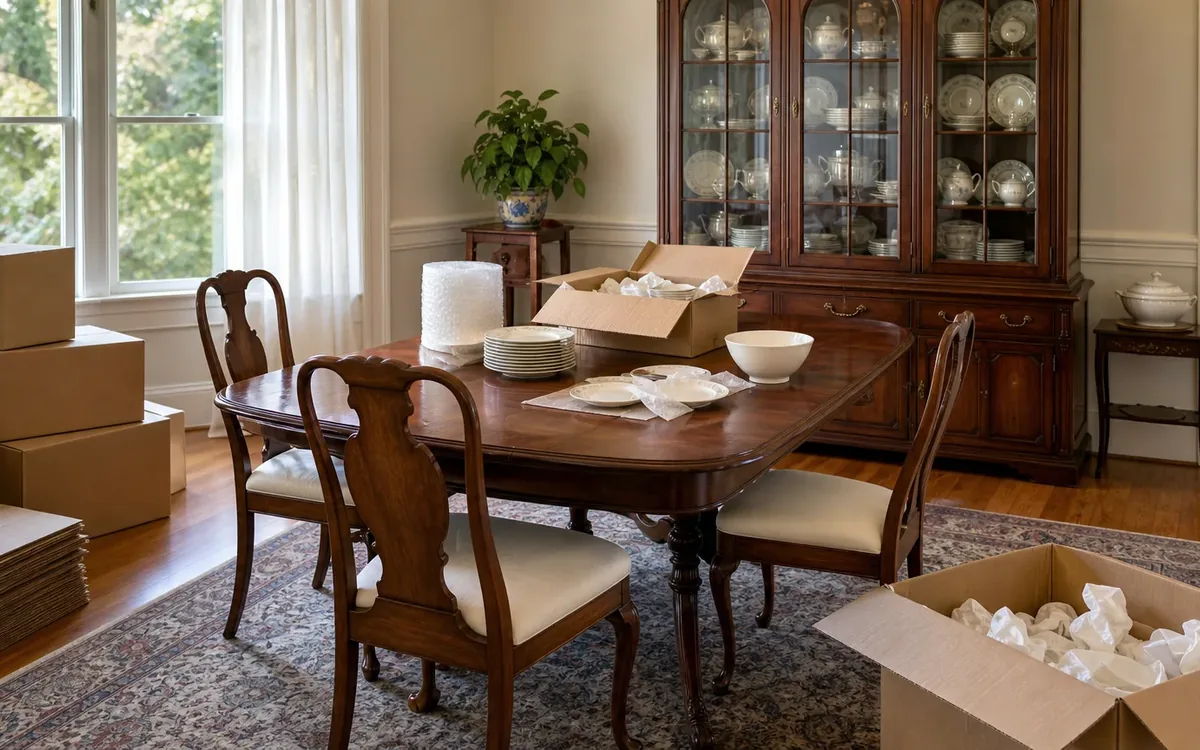
Heirloom china should be inventoried, wrapped piece by piece, packed upright in small sturdy boxes, cushioned on every side, and kept in a dry, climate-controlled setting when possible. For an estate move in coastal South Carolina, the plan should also limit exposure to humidity, rain, hot vehicles, and sudden temperature changes. The household can decide what to keep or distribute, while appraisers, insurers, movers, storage providers, and estate professionals should handle decisions within their specialties.
Quick answer: Photograph each piece, separate damaged or unusually valuable items, use clean packing paper rather than newspaper, cushion the box bottom, wrap every item individually, place plates upright, fill all gaps, and label each box clearly. Keep packed china dry and avoid leaving it in an uncontrolled vehicle or damp storage area. Ask an appropriate professional about valuation, insurance, conservation, shipping, or disputed ownership.
Why does heirloom china need a separate packing plan?
China is vulnerable to several different kinds of damage. A plate can crack from direct impact, but it can also chip when two wrapped pieces shift against each other. Handles, finials, rims, and applied decorations are especially exposed.
Age introduces other concerns. Older pieces may already have hairline cracks, repaired areas, worn gilding, or crazing in the glaze. Tape, ink, moisture, and rough wrapping materials may affect delicate finishes. A piece that looks stable on a shelf may not tolerate pressure inside a tightly packed box.
Coastal travel adds practical complications. Humid air can weaken ordinary cardboard, and rain can reach boxes during loading. Condensation may form when items move between strongly air-conditioned rooms and warm outdoor conditions. Humidity does not automatically ruin china, but it can affect boxes, labels, old repairs, metal trim, and any paper records packed nearby.
China should therefore be treated as its own project rather than mixed into a general kitchen box. If the household is also sorting furniture, clothing, and other estate contents, an estate cleanout service may help coordinate the broader property process. Valuation, conservation, insurance, and specialty transport remain separate professional matters.
What should you decide before wrapping the first piece?
Packing is easier when ownership and destination decisions come first. The household, executor, personal representative, trustee, or another authorized decision-maker should identify who has authority to direct the move. A packing team should not resolve inheritance disagreements or interpret estate documents.
Make these five decisions before packing:
- What is being moved? Separate pieces that will stay, transfer to family, be evaluated, sell, donate, or be discarded.
- Where is each group going? Assign a destination such as a new home, temporary storage, an appraiser, an auction provider, or another recipient.
- Which pieces need professional review? Set aside items with signatures, maker’s marks, provenance, unusual decoration, historic interest, or suspected high value.
- Who may handle the collection? Limit access when ownership is disputed or when the estate representative requires an inventory trail.
- What records must travel with it? Keep appraisals, receipts, family notes, photographs, and ownership documents together, but not loose inside boxes of china.
Do not use sentimental importance as a substitute for financial valuation, or vice versa. Family members may decide that an item is personally irreplaceable even if it has modest market value. A qualified appraiser should address value, authenticity, maker attribution, and appropriate sale categories.
For help separating the china project from the rest of the property work, review the guide to the best way to clean out an estate. It explains the broader sequence without replacing legal or appraisal advice.
How do you inventory heirloom china without creating confusion?
Create the inventory before wrapping because identifying patterns and condition becomes harder after pieces enter boxes. Use a spreadsheet, notebook, or shared digital document that the authorized household representative can access.
Assign each piece or matching group an inventory code. Record:
- Item type, such as dinner plate, saucer, tureen, or cup
- Quantity in the matching group
- Pattern, color, and visible maker’s mark
- Existing chips, cracks, stains, repairs, or missing components
- Intended recipient or destination
- Box number after packing
- Any instruction to obtain an appraisal or conservation opinion
Take clear photographs of the front, back, maker’s mark, and existing damage. Include group photos that show how many matching pieces were present. Do not apply adhesive inventory labels directly to china, gilding, decals, or old paper maker labels. Put the code on a soft paper sleeve, tied tag, or exterior wrapping instead.
Photographs document visible condition, but they do not establish legal ownership, authenticity, or value. Questions about estate authority belong with the estate’s attorney or responsible legal professional. Questions about valuation belong with a qualified appraiser. A conservator can advise whether an old repair or fragile surface needs special handling.
Which packing materials protect china best?
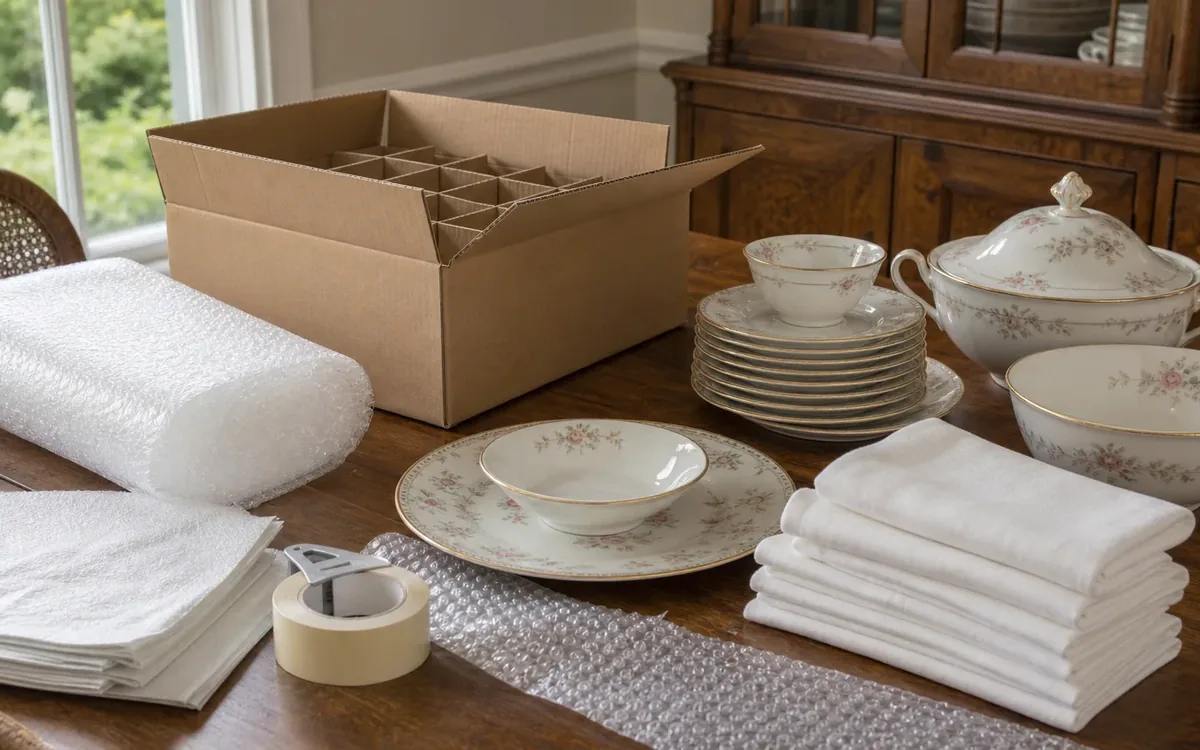
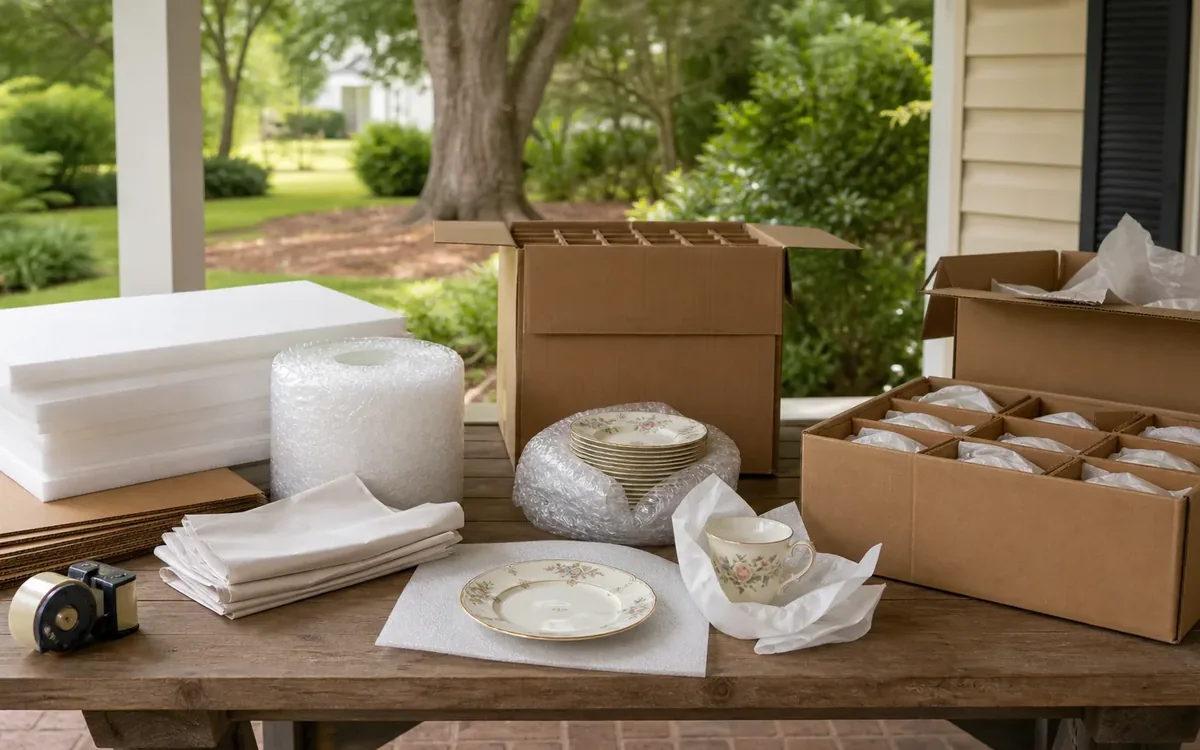
Use clean, dry materials that cushion without rubbing aggressively against decorated surfaces. Gather supplies before opening cabinets so uncovered pieces are not left on crowded counters.
Useful materials include:
- Small, sturdy corrugated boxes in good condition
- Dish-pack boxes or cell-divider cartons when appropriate
- Plain, ink-free packing paper
- Soft tissue suitable for delicate surfaces
- Bubble cushioning for outer protection
- Corrugated pads or cardboard dividers
- Foam sheets or foam pouches
- Strong packing tape for box exteriors
- Permanent markers and large destination labels
- Resealable bags for detached hardware or non-fragile accessories
- Plastic sheeting or weather-resistant covers for exterior protection during loading
Avoid newspaper against china because ink may transfer. Do not let packing tape touch a piece. Towels and clothing can snag projections, conceal damage, retain moisture, and make consistent cushioning difficult. They may be useful in another part of a move, but they are not the clearest choice for documenting and protecting an heirloom set.
Plastic can help keep rain off the outside of a box during transfer, but sealing damp items or humid air inside plastic may trap moisture. Pack only clean, fully dry china. If a piece needs cleaning, restoration, or removal of an old adhesive, ask a conservator rather than experimenting during a hurried move.
How should plates, bowls, cups, and serving pieces be wrapped?
Set up a stable table with enough room for one piece at a time. Keep finished pieces away from the table edge. Work over a padded surface, but maintain firm footing so the wrap does not create an unstable pile.
Follow these seven steps:
- Inspect the piece. Compare it with the inventory and note any damage not previously recorded.
- Protect the surface. Place soft tissue against delicate decoration or gilding when suitable, without using adhesive.
- Wrap individually. Cover the entire item with clean packing paper, folding corners inward and adding layers around rims and projections.
- Add cushioning. Use foam or bubble cushioning outside the paper layer. Keep bubbles from pressing directly against sensitive decoration if a conservator has not approved that contact.
- Reinforce vulnerable parts. Give handles, spouts, feet, lids, and finials extra space and cushioning. Never use a handle as a lifting point.
- Mark the bundle. Add its inventory code to the wrapping, not the china.
- Place it carefully. Do not throw finished bundles into a staging box or stack them where they can roll.
Wrap lids separately from tureens, sugar bowls, teapots, and covered dishes. A lid left in place can rattle against the rim or place pressure on a finial. Keep each lid’s inventory code linked to its base.
For cups, protect handles without stuffing them so tightly that outward pressure is created. Nesting cups or bowls may seem efficient, but pressure can transfer through the stack. If nesting is unavoidable, each piece needs complete separation and cushioning, and the stack should remain modest and stable.
How should china be arranged inside each box?
Start with a generous, even cushion at the bottom. Plates and saucers generally travel more safely on edge, like records, rather than lying flat in a tall stack. Use dividers and cushioning so they cannot lean, slide, or touch.
Place heavier pieces toward the bottom and lighter pieces above them, but do not load heavy serving pieces on top of plates. Bowls and cups need individual wrapping and stable compartments. Oddly shaped pieces may need their own box.
Fill every void with crumpled packing paper or another suitable material. The goal is to prevent movement without forcing items together. Close the flaps and gently test for shifting. If anything moves, reopen the box and add cushioning. Do not shake a box containing heirlooms.
Keep box weight manageable for the people who will lift it. Several smaller boxes are often easier to control than one oversized carton. Reinforce box seams with tape, then label the top and multiple sides with:
- FRAGILE CHINA
- THIS SIDE UP
- Box number
- Room or destination
- General contents
- Handling restrictions
Do not advertise value on the box exterior. Keep the detailed inventory separately so a lost or damaged label does not erase the record.
How can South Carolina humidity and coastal travel affect the move?
Plan for the full route from cabinet to destination, including doorways, porches, driveways, loading areas, vehicles, and storage. A brief uncovered transfer may expose cardboard to rain or wet pavement.
Before moving boxes outdoors, check that the route is clear and dry. Use a covered staging point if available. Keep cartons off grass, bare ground, garage floors, and other surfaces that may hold moisture. Weather-resistant covers can protect boxes during transfer, but they should not become long-term sealed storage around potentially damp cardboard.
Avoid leaving heirloom china in a hot, humid, or uncontrolled vehicle when another practical option exists. Sudden environmental changes may be a concern for old repairs, decorated surfaces, and accompanying documents. A mover or specialty art-and-antiques carrier can explain vehicle conditions and handling methods. The household should confirm those details rather than assume climate control is included.
A storage provider can explain unit conditions, access rules, pest controls, shelving restrictions, and insurance requirements. The household decides whether storage is acceptable. A conservator can advise on sensitive objects, while an insurer determines available coverage and claim requirements.
What should a cleanout or move team discuss with the household?
A practical team may discuss the inventory system, staging zones, packing materials, box labels, loading sequence, destination plan, and which objects require restricted handling. It may also help coordinate china packing with downsizing, move management, home preparation, or an estate cleanout.
Before work begins, the household should clarify:
- Who has authority to approve packing and removal
- Which cabinets or rooms are included
- Which pieces must not be moved
- Which items await family decisions or appraisal
- Whether any old damage has been documented
- Where finished boxes will be placed
- Who will transport and receive them
- Whether stairs, narrow doors, or wet exterior paths affect handling
A cleanout or move team should not decide ownership, divide inheritance, authenticate china, establish market value, approve insurance coverage, or determine legal compliance. Those issues stay with the executor or authorized household representative and the appropriate attorney, appraiser, insurer, conservator, mover, real-estate professional, inspector, contractor, or public authority.
Disposal is also a household decision. Broken pieces may still have sentimental, pattern-matching, craft, or restoration value. The authorized person should approve discarding them. Contractors address repairs to cabinets, flooring, walls, or the property itself under their own scope, separate from packing china.
What should happen when the china arrives?
Compare box numbers with the inventory before opening anything. Place cartons on a dry, stable surface away from foot traffic. If a box is wet, crushed, punctured, or unusually noisy, photograph its condition before unpacking and follow any applicable mover or insurer instructions.
Unpack one box at a time. Lift each bundle rather than pulling it by a protruding edge. Compare each piece with pre-move photographs and document any new damage. Save packing materials until the household confirms that the shipment is complete and understands any claim procedures.
Do not immediately wash very cold or very warm china. Allow pieces to adjust in a stable indoor environment, particularly after travel through coastal heat or strong air conditioning. Ask a conservator about cleaning antiques, stained crazing, flaking decoration, or repaired pieces.
For storage, use stable shelving that can support the load. Avoid crowding pieces or hanging cups by delicate handles unless an appropriate specialist has approved the method. Keep the inventory and photographs in a separate, backed-up location.
Short FAQ
Can several plates be wrapped together?
Each plate should first be wrapped individually. Wrapped plates may share a properly cushioned box when they stand upright, remain separated, and cannot shift. Unwrapped plates should not touch.
Should valuable china go on the moving truck?
That depends on value, fragility, route, insurance, and the carrier’s handling conditions. Ask the mover or specialty carrier what it accepts and how it protects fragile items. Ask the insurer what coverage applies. A qualified appraiser can help establish value before the move.
Can bubble cushioning touch antique china?
Use clean paper or suitable soft tissue as the first layer, especially around gilding, decals, or fragile decoration. A conservator should advise on unusually sensitive surfaces. Bubble cushioning can then provide outer protection.
Who decides whether chipped china is discarded?
The authorized household or estate representative decides, subject to estate documents and professional legal guidance. A packing or cleanout team should not make that decision independently.
Can Clutter Cleaner help with the broader estate transition?
Clutter Cleaner of South Carolina provides estate cleanouts, downsizing and organizing, auctions and estate sales, move management, home sale preparation, and code compliance support across South Carolina. Its physical business location is Mount Pleasant, with Charleston as the primary market. Call (843) 972-7020 to discuss the requested scope. Appraisal, legal advice, inspections, contractor work, storage terms, insurance, and regulatory decisions remain with the relevant providers or authorities.



