
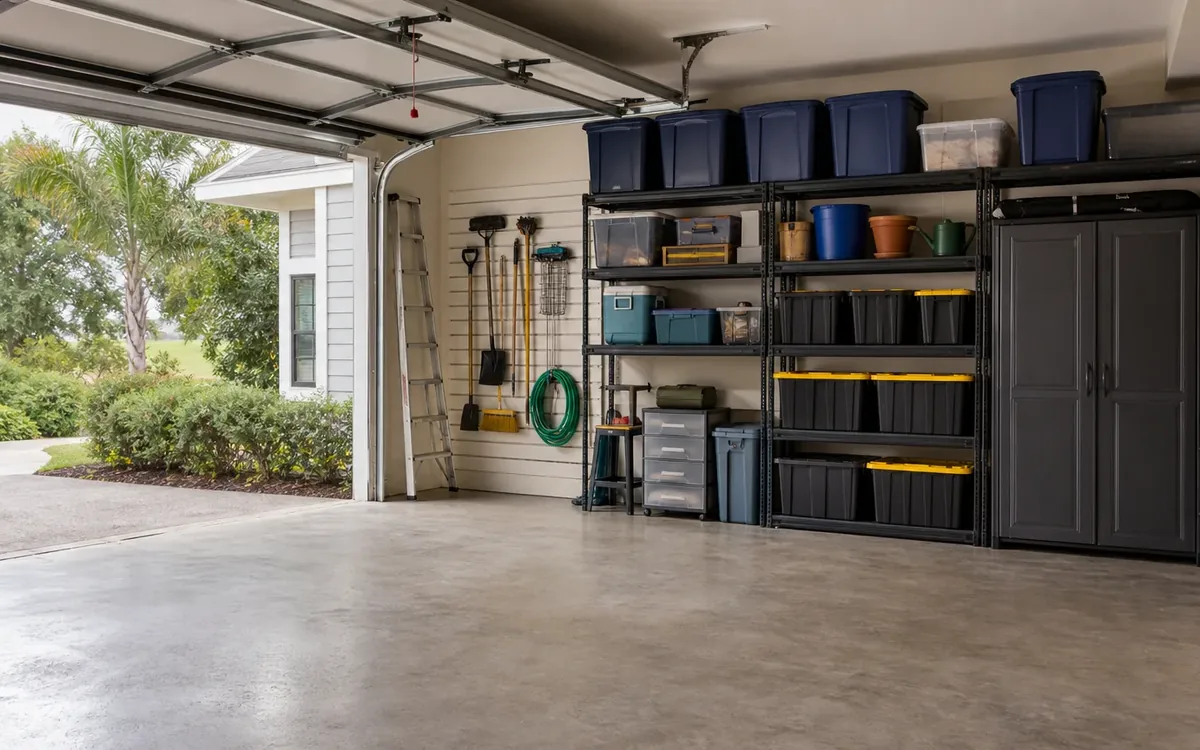
Organize garage storage before listing your home by removing items you no longer need, grouping the rest by use, and keeping parking space, walkways, and important equipment accessible. For South Carolina households with sports, boating, and yard gear, the goal is not an empty garage. It is a garage that buyers can understand without looking past piles, loose tools, or overloaded shelves.
Quick answer: Decide what will move with you, separate anything that needs a household or professional decision, and give the remaining gear a defined storage zone. Keep frequently used items reachable, remove private information from view, and ask your real-estate professional how the garage should appear in listing photos and showings.
Start with the garage buyers need to see
A garage can look crowded even when everything in it is useful. Long fishing rods, folding chairs, coolers, bicycles, and lawn equipment take up space in different ways. Organizing them by shape and frequency of use is often more effective than simply buying more containers.
Start by identifying the garage’s working features: parking area, entry door, storage shelves, workbench, and access to equipment. Those features should remain visible and usable. Do not assume every open wall is suitable for new storage or every corner can safely hold a stack of boxes.
Walk through the garage with your listing goals in mind. Ask whether someone unfamiliar with the space can see where a vehicle would go, how to reach the house door, and what storage is already available.
Clutter Cleaner of South Carolina’s home sale preparation service is a relevant starting point for discussing practical preparation needs. The household should set the keep-or-remove priorities, while the real-estate professional advises on presentation and listing strategy.

What should stay in the garage while your home is listed?
Keep items that support daily life, scheduled activities, or necessary property upkeep. Remove items you have already decided will not come with you, and consider packing belongings you will not need before the move.
Use clear categories before rearranging shelves:
- Use during the listing: Yard tools, current sports equipment, household repair supplies, and regularly used bicycles.
- Keep for the next home: Seasonal gear, spare coolers, specialty tools, and hobby materials you still want.
- Release from the household: Duplicates, unwanted equipment, and items with no place in your next home.
- Decision pending: Borrowed belongings, inherited tools, disputed property, and anything whose ownership or value is uncertain.
Keep the decision-pending group small and labeled. Otherwise, it can become the new version of the original pile.
If inherited belongings are holding up the garage sort, the guide What Is the Best Way to Clean Out an Estate? offers a broader framework for estate-related decisions. Keep that process separate from ordinary garage organizing: ownership, authority to sell, and distribution questions belong with the responsible parties and legal professionals.
Avoid discarding someone else’s equipment simply because it has been stored at your home. Identify the owner and agree on a pickup or transfer plan before treating it as available space.
Build storage zones around garage-specific gear
Create zones based on how items are used and handled. A good zone keeps related equipment together without making heavy, dirty, sharp, or damp items share unsuitable storage.
Sports equipment
Group balls, helmets, rackets, protective pads, and team bags by activity or user. Use existing baskets or containers where they fit, and label them so equipment returns to the right place.
Keep bicycles accessible without blocking a door or pedestrian route. If wall-mounted storage is being considered, attachment suitability and installation should be evaluated by someone qualified for that work.
Boating and fishing equipment
Store rods where they will not be bent or knocked over. Keep tackle containers closed and hooks protected. Separate wet or dirty equipment from cardboard boxes, paperwork, and fabric items.
Check that gear is dry before enclosing it. Fuel containers, batteries, and other potentially hazardous items need handling and storage decisions based on product instructions and applicable requirements, not on what looks best in a photograph.
Yard equipment
Group long-handled tools, hoses, pots, and gardening supplies. Keep sharp edges protected and heavy equipment stable. Do not balance tools against walls where a buyer or household member could dislodge them.
Set aside products you cannot identify. Unknown liquids and damaged containers should not be mixed, transferred, or thrown into ordinary waste just to clear a shelf.
Workshop supplies
Separate tools from small parts, consumables, and unfinished projects. Close drawers and label containers with useful descriptions such as “socket set” or “irrigation fittings.”
A workbench can remain functional without being bare. Remove unrelated boxes and loose packaging so the work surface is easy to recognize.
How much should you clear out for listing photos?
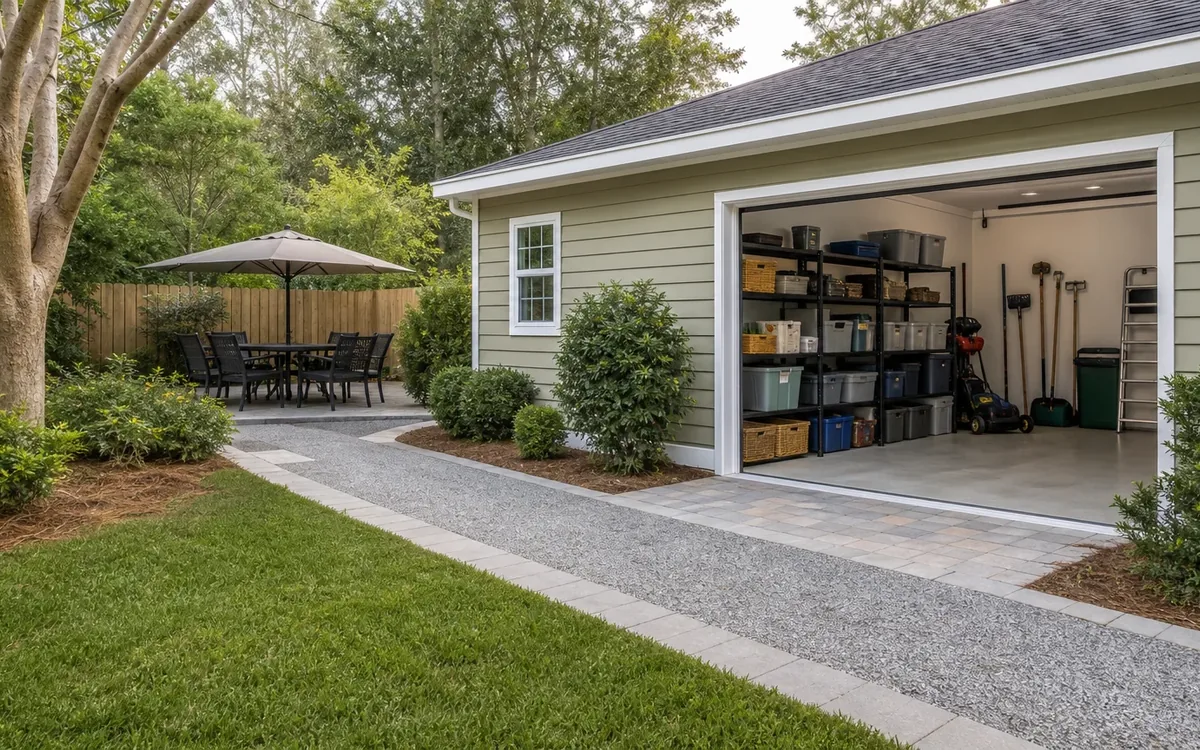
Clear enough space to show the garage’s function honestly. There is no universal amount that every household needs to remove, and a garage used for daily parking has different priorities from one used primarily for storage.
Ask your real-estate professional what should be visible in the listing photographs. They can advise on presentation, photo selection, and whether a particular arrangement distracts from the property’s features.
Useful adjustments include:
- Moving loose floor storage onto suitable existing shelves.
- Consolidating partially filled containers without making them too heavy.
- Removing empty packaging and items already approved for release.
- Keeping doors, parking areas, and equipment access points unobstructed.
- Turning sensitive labels away from the camera or removing those items.
Do not hide a stain, damaged surface, or other concern behind newly arranged storage. Cosmetic tidying is not a substitute for evaluation, repair, or any applicable disclosure responsibilities.
Avoid creating an arrangement that only works for the photo appointment. If every showing requires unloading a bicycle, moving lawn equipment, and rebuilding a stack of tubs, the storage plan needs to be simpler.
Keep access and safety separate from appearance
A tidy garage is not automatically a safe or compliant garage. Storage decisions should preserve access to doors, controls, utilities, and equipment according to applicable instructions and requirements.
Pay attention to garage-door movement and its operating components. Do not place belongings where they interfere with the door, sensors, or controls. Avoid using overhead storage unless its capacity, mounting, and suitability are known.
Check these practical details as you arrange items:
- Heavy containers sit on suitable, stable supports rather than precarious stacks.
- Shelving is used within its documented capacity.
- Sharp tools and fishing hooks are protected from accidental contact.
- Cords do not cross walking routes.
- Containers are closed and their contents identifiable.
- Household members can reach regularly used equipment without climbing over belongings.
Questions about structural loading, electrical conditions, required access, fire safety, or code compliance belong with the appropriate contractor, inspector, manufacturer, or authority. A practical organizing or cleanout team may flag an obstacle and discuss clearing it, but that does not establish that the garage meets legal or technical requirements.
If you discover a leak, damaged wiring, pest evidence, or another condition needing evaluation, separate the storage task from the repair decision. Give the responsible professional room to inspect rather than covering the area again.
Should you use off-site storage before selling?
Off-site storage can make sense when you are keeping bulky garage items but do not need them during the listing period. It is less useful when it postpones decisions about unwanted belongings.
Before choosing a separate storage provider, consider what will go there, how it will be transported, and whether you will need access before moving. Check the provider’s rules for equipment, fuels, batteries, chemicals, and other restricted materials.
Also consider the destination home. A large garage at your current property does not mean the next one will accommodate the same workbench, shelves, or collection of sports gear.
Compare the practical options:
- Keep essential equipment in a compact, accessible garage zone.
- Pack approved belongings for the move and store them where suitable.
- Choose off-site storage for items you are definitely keeping.
- Arrange donation, sale, recycling, or disposal through appropriate separate channels.
The household decides what it wants to retain. Appraisal questions belong with an appropriate appraiser, and sale or disposal choices require the relevant owner’s approval. Do not assume a cleanout or move team supplies storage, handles every material, or determines an item’s market value.
Make the garage easier to maintain during showings
Once the main sort is complete, build a reset routine around the way your household actually uses the garage. The aim is to return items to their zones without repeating the entire organizing project.
Give daily-use gear the easiest locations. Reserve less convenient storage for things you have already packed or do not expect to use before moving. Keep one defined place for items awaiting a decision rather than allowing new piles throughout the garage.
A practical showing reset can include:
- Returning sports bags and loose balls to their assigned containers.
- Putting yard tools back after property maintenance.
- Clearing the path between the garage and house.
- Removing new delivery packaging.
- Checking that private documents and valuables are out of view.
Store keys, access devices, identifying paperwork, and valuable portable equipment securely according to your household’s needs. Discuss showing access and security arrangements with your real-estate professional.
Avoid relying on unstable stacks or temporary hiding places. A buyer may walk through the space, and the household still needs to use it between appointments.
Decide who handles each part of the preparation
Garage preparation works better when decisions and physical tasks are clearly separated. Before requesting help, identify which belongings are approved to move, which must stay, and which require further review.
A practical cleanout or move team may discuss sorting categories, packing priorities, staging areas, access routes, and the sequence for moving approved belongings. Ask what assistance is available for your specific scope rather than assuming every related task is included.
Keep these responsibilities distinct:
- Household: Keep-or-release decisions, priorities, private belongings, and approval of the working plan.
- Real-estate professional: Listing presentation, showing arrangements, and advice within their role.
- Legal professional or authorized representative: Ownership, estate authority, disputes, and applicable legal obligations.
- Appraiser: Valuation when a qualified assessment is needed.
- Contractor, inspector, or authority: Repairs, technical conditions, inspections, and compliance determinations.
- Separate storage or disposal provider: Acceptance rules, handling requirements, and arrangements for those services.
Clutter Cleaner of South Carolina is physically located in Mount Pleasant and serves all of South Carolina, with Charleston as its primary market. To discuss garage-related organizing or home sale preparation needs, call (843) 972-7020. Describe the equipment involved, any access concerns, and the decisions that remain unresolved.
Short FAQ
Do I need matching storage bins?
No. Suitable containers, clear labels, and a consistent arrangement matter more than matching colors. Avoid buying bins before you know what you are keeping and where it will fit.
Can the garage still hold lawn and boating gear?
Yes. Keep necessary gear in defined zones that preserve access and show how the space functions. Handle potentially hazardous materials according to applicable instructions and requirements.
Should I remove shelves before listing?
Ask your real-estate professional how existing storage affects presentation and clarify any sale-related questions about what stays. A qualified person should address removal or installation concerns.
What if one pile still needs decisions?
Label it, identify who must decide, and keep it separate from approved move or release items. Do not let photo preparation override ownership, valuation, safety, or legal questions.



