

Managing a South Carolina code compliance cleanup from out of state starts with obtaining the written notice, confirming requirements with the issuing authority, and appointing one local point of contact. The household can approve cleanup priorities and property access, while code interpretations, deadlines, inspections, title questions, and legal decisions remain with the appropriate officials or professionals.
Quick answer: Get the complete notice, contact the named authority, separate cleanup work from repairs, document the property’s condition, and authorize a reliable local contact in writing. Ask for photos and removal records, but do not treat cleanup documentation as proof that a violation has been cleared. Only the responsible authority can confirm compliance.
What should you do first after receiving a notice?
A code notice can feel especially urgent when you cannot visit the property. Resist the temptation to begin ordering work based on a brief phone call, a forwarded photograph, or a neighbor’s description. Start by establishing what the notice actually says and who issued it.
Use this five-step opening sequence:
- Obtain every page of the notice. Ask for the original document, envelopes, attachments, photographs, case numbers, and prior correspondence.
- Confirm the property and recipient. Check the street address, parcel information if shown, owner name, mailing address, and contact information.
- Call the issuing office directly. Use contact details from an official government source rather than relying only on a number in a forwarded message.
- Ask what conditions are at issue. Find out which items are alleged violations, what documentation is accepted, and whether an inspection or reinspection is required.
- Record the conversation. Note the person’s name, department, date, instructions, and any questions that remain unresolved.
Do not assume the notice requires removal of everything visible on the property. It may address specific outdoor debris, unsafe accumulation, blocked access, overgrowth, abandoned materials, or another defined condition. The exact interpretation belongs to the issuing authority.
If belongings from an estate are involved, review the guide on what happens if you get a code enforcement violation before authorizing broad removal. It explains the practical stages of sorting and clearing without treating all contents as waste.

How do you build a workable remote cleanup plan?
A remote plan should translate the notice into separate decisions, responsible parties, and evidence requirements. A single instruction such as “clean up the property” is too vague for an owner, family representative, contractor, or cleanout team to follow safely.
Create a written scope with these categories:
- Items specifically identified in the notice
- Areas that must remain accessible
- Personal property that must not be removed
- Materials requiring a specialized provider
- Possible repair or contractor work
- Documents, photographs, or receipts to preserve
- Questions awaiting an official answer
- Authority required before approving additional work
Assign one person to give instructions. Multiple relatives or stakeholders may contribute, but conflicting messages can stop progress or lead to the wrong property being removed. If the property is part of an estate, trust, divorce, foreclosure, business entity, or guardianship, confirm who has authority to approve access and removal before work begins. An attorney or other responsible professional should resolve disputed authority.
A practical cleanout or move team may discuss access, sorting categories, removal logistics, donation preferences, areas of concern, and photo updates. Clutter Cleaner of South Carolina offers code compliance support across South Carolina, but the issuing agency determines whether its requirements have been satisfied.
Who should be allowed onto the property?
Remote coordination requires controlled access. Before sharing keys, lockbox codes, alarm details, or gate instructions, verify both the worker’s role and the decision-maker’s permission to grant entry.
Prepare an access sheet covering:
- Property address and entry point
- Owner or authorized representative
- Local emergency contact
- Alarm, gate, or lockbox instructions
- Occupied or restricted rooms
- Pets, utilities, or known physical hazards
- Items that are never to be removed
- Approved work areas
- Where keys must be returned
Do not conceal unsafe conditions. Unstable floors, fire damage, exposed wiring, biological hazards, sharp objects, pests, unsecured weapons, chemicals, or structural concerns may require assessment by an appropriate specialist before routine cleanup can proceed.
Access permission does not settle ownership. A key holder, tenant, neighbor, real-estate agent, or relative may not necessarily have authority to discard belongings. When possession or ownership is uncertain, pause removal and seek legal guidance.
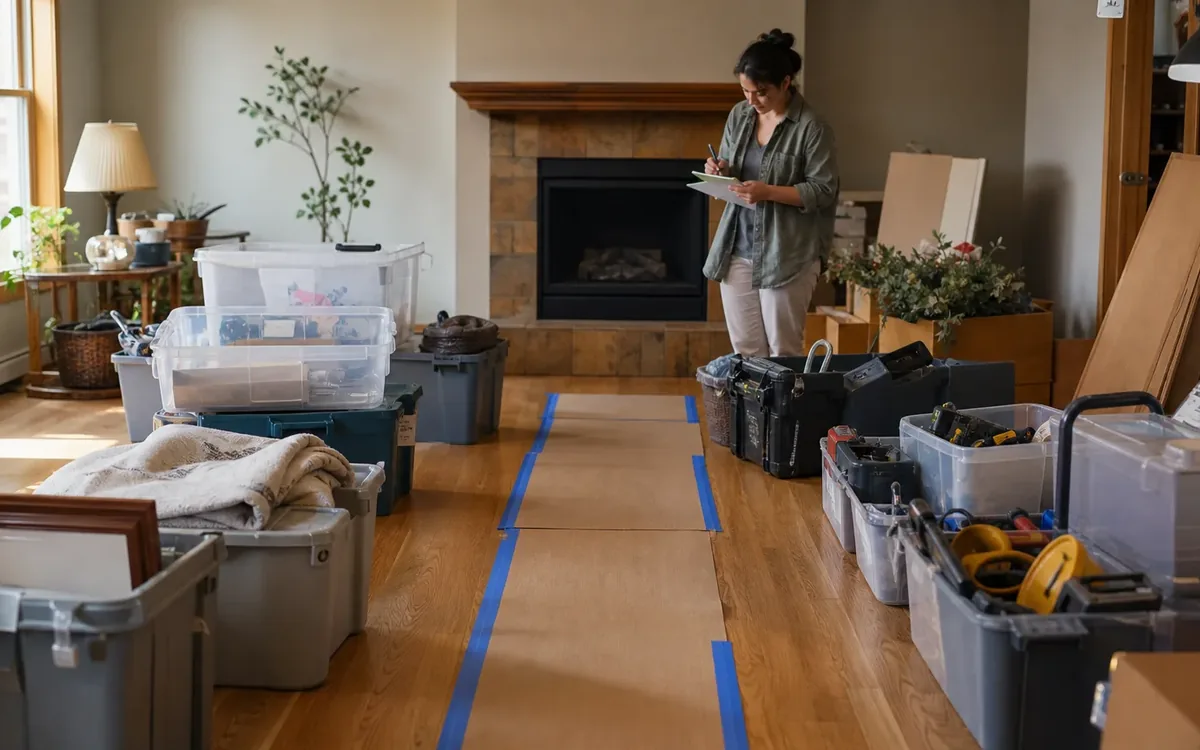
Separate cleanup from repairs and official compliance
One of the most important remote-management decisions is dividing the project into distinct scopes. Cleanup, repairs, appraisal, sale preparation, legal review, and government inspection are not interchangeable.
Household decisions
The owner or authorized household representative can usually decide:
- Which clearly owned items to retain
- Whether usable property should be donated, sold, stored, or discarded
- Who may enter the property
- The cleanup priorities within the approved scope
- Whether to obtain separate bids from contractors or specialists
- How often progress updates should be provided
Those choices remain subject to ownership disputes, court orders, leases, insurance requirements, liens, and applicable law.
Cleanout or move-team discussions
A practical team may discuss:
- Room-by-room sorting
- Removal sequencing
- Furniture and household-item handling
- Access for hauling or loading
- Areas that appear to need a specialist
- Photo documentation before and after cleanup
- Coordination with an authorized local representative
The team should not decide whether a structure is safe, interpret an ordinance, declare a property compliant, or determine legal ownership.
Professional or official decisions
Keep these questions with the appropriate party:
- Code interpretation and closure: The issuing authority
- Legal authority and ownership disputes: A qualified attorney or court
- Structural, electrical, plumbing, or trade repairs: Properly qualified contractors and inspectors
- Value of real or personal property: An appropriate appraiser
- Listing strategy and disclosure questions: A real-estate professional and, when needed, an attorney
- Hazardous or regulated materials: The relevant specialist, facility, or authority
- Permits and required inspections: The responsible government office
Cleaning visible debris may improve conditions, but it does not automatically resolve a structural, permitting, occupancy, sanitation, or land-use issue.
How can you prevent valuable or disputed items from being removed?
Remote owners need a retention process before removal begins. Do not rely on general instructions such as “keep anything important.” Importance is subjective, particularly in an inherited or long-unoccupied home.
Use three clear controls.
1. Create a no-remove list
Name specific objects and locations. Examples include family photographs, financial records, jewelry, military records, firearms, vehicle titles, tax files, artwork, collections, and items belonging to another person.
2. Establish a decision zone
Ask that uncertain objects be placed in a designated room or clearly marked area. Nothing in that zone should leave without written approval from the authorized decision-maker.
3. Use appraisal holds
If an item could have meaningful value, keep it out of the disposal stream until an appropriate appraiser or auction professional reviews it. A cleanout team can isolate an object, but valuation is a separate professional decision.
Storage is also a separate household choice. Decide who will select the facility, sign the agreement, pay ongoing charges, maintain insurance if desired, and control access. Moving something into storage postpones the final decision rather than resolving it.
For inherited contents, how to prepare a compliance checklist offers a useful framework for preserving records and separating sentimental, sale, donation, and disposal decisions.
What documentation should a remote owner request?
Documentation lets you track work, answer questions, and prepare for official follow-up. It should be organized around the cited condition rather than a collection of random photographs.
Request the following where appropriate:
- Wide photos showing each affected area before work
- Closer photos of cited materials or obstructions
- Images of items set aside for review
- Progress photos at agreed checkpoints
- Final photos taken from similar angles
- A written summary of what was removed or retained
- Available disposal, donation, or hauling records
- Notes identifying work that could not be completed
- Copies of messages sent to the issuing office
Photographs should be dated or accompanied by a dated project log. Keep original files when possible, since screenshots and compressed copies may omit useful detail.
Documentation has limits. Photos do not prove that hidden conditions were corrected, that repairs meet code, or that an official case is closed. Ask the authority what evidence it accepts and whether someone must request a reinspection.
Coordinate disposal without making assumptions
Not every item can enter the same disposal stream. Ordinary household contents, construction debris, electronics, paint, fuel, chemicals, medication, tires, appliances, biological material, and potentially hazardous substances may have different handling requirements.
Before removal, identify:
- What the receiving site accepts
- Whether any item requires a specialist
- Whether contractor-generated debris is included in a contractor’s scope
- Whether confidential documents need secure destruction
- Whether donation recipients have acceptance rules
- Whether vehicles, trailers, or titled property require separate authorization
Do not instruct a cleanout team to transport unidentified chemicals or unsafe materials without first determining an appropriate handling path. The household may choose among lawful options presented by providers, while disposal facilities and relevant authorities determine their acceptance and compliance requirements.
If repair work creates debris, clarify whether the contractor or property representative is responsible for it. This prevents construction waste from being mixed into an unrelated cleanout scope.
Keep communication controlled and auditable
Remote projects become confusing when decisions are scattered among texts, voicemails, and family group chats. Use one written decision log that identifies the issue, available options, decision-maker, approval, and date.
A concise update format can include:
- Work completed
- Areas still inaccessible
- Items awaiting approval
- Conditions requiring another provider
- Questions for the authority
- Next authorized action
Choose one household representative and one on-site contact. If a real-estate agent, attorney, property manager, contractor, or government official is involved, state each person’s role. Do not ask one provider to speak beyond that role.
Any change to the cleanup scope should be confirmed in writing. This is particularly important when an on-site condition differs from the original notice or when a family member requests additional removal.
Plan for reinspection and case closure
The final step is not merely finishing the cleanup. It is confirming what the issuing authority requires next.
Ask the office handling the case:
- Who may request the follow-up inspection?
- Is a form, email, phone call, or online request required?
- Must photographs or receipts be submitted?
- Are all cited conditions ready for review?
- Will the authority issue written confirmation of closure?
- What happens if a separate repair remains open?
Keep cleanup completion and case closure as two different milestones. A team can report that its authorized scope is complete. Only the authority can determine whether the cited violation has been corrected and the matter is closed.
If an inspector identifies additional work, request the finding in writing. Then determine whether it belongs to cleanup, contractor repair, specialist assessment, legal review, or another category. Avoid authorizing unrelated work until responsibility and scope are clear.
A practical handoff for an out-of-state owner
Before work starts, send the local point of contact a compact project packet. It should include the notice, property access information, approved scope, no-remove list, photographs, agency contact, and your written authorization limits.
The packet should also state what the local contact cannot approve. For example, that person may be able to confirm access and receive updates but not authorize demolition, sell property, discard legal records, or expand contractor work.
For South Carolina properties, Clutter Cleaner of South Carolina can be contacted at (843) 972-7020 to discuss practical code compliance cleanup support. The business is physically located in Mount Pleasant, with Charleston as its primary market and statewide service territory. Any proposed role should still be matched to the notice, property conditions, and authority of the person requesting work.
Short FAQ
Can a cleanup team speak directly with the code officer?
It may be practical if the property owner authorizes communication and the official agrees. The owner should remain copied on substantive instructions. A cleanup team can clarify access or completed cleanup tasks, but it should not interpret legal obligations or represent that the case is closed.
Can I rely on before-and-after photos instead of traveling?
Photos are useful for oversight, but they may not reveal structural issues, hidden waste, boundary questions, or conditions behind locked areas. They also do not replace a required inspection. Ask the issuing authority whether photographs are accepted and whether a local representative should attend.
What if the property contains belongings from several relatives?
Pause removal of disputed items. Create a segregated hold area and obtain written decisions from the person with legal authority. An attorney should address contested ownership or estate authority.
Should repairs and cleanout happen under one scope?
Not automatically. Cleanup and contractor repairs involve different skills, responsibilities, disposal paths, and approvals. Separate the scopes, identify dependencies, and let qualified professionals make trade-specific or inspection decisions.
Who confirms that the violation is resolved?
The government authority responsible for the notice. A property owner, cleanout team, contractor, agent, or photographer can document completed work, but none should substitute their judgment for official confirmation.



