
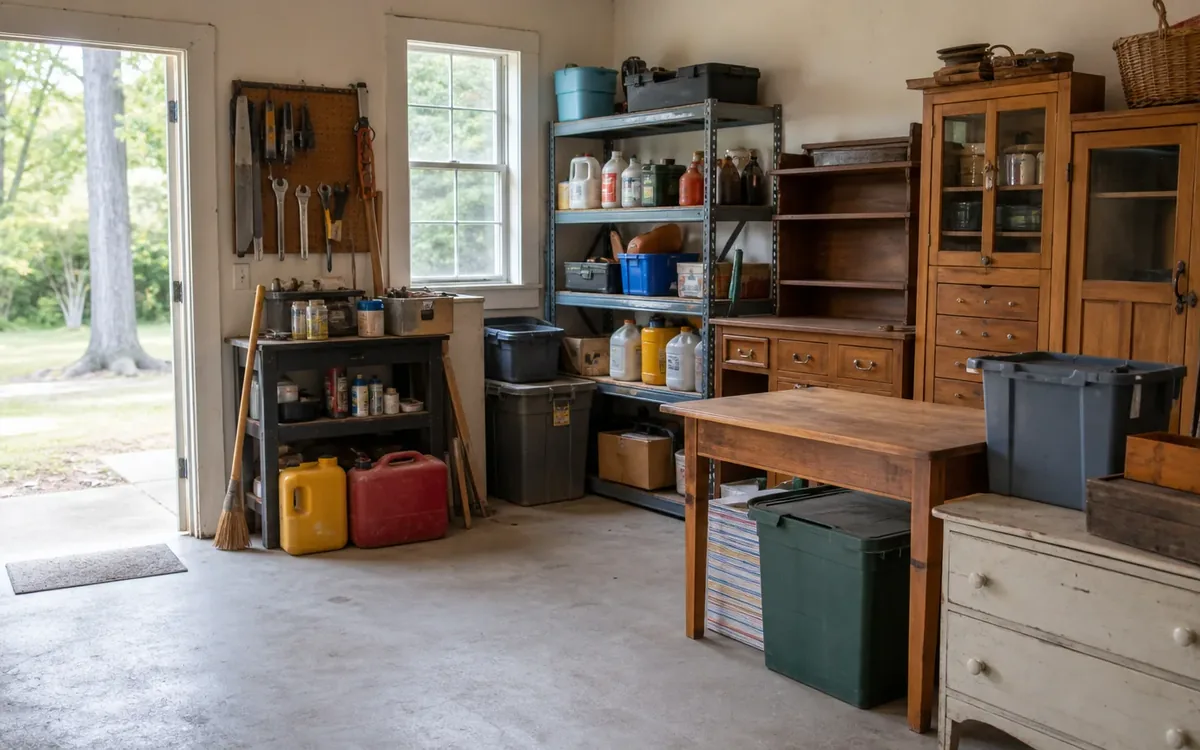
Hazardous materials in an estate cleanout are best identified by their labels, containers, location, condition, and warning signs. Do not open, smell, mix, pour, or move an unknown substance to identify it. Instead, pause work, keep people away, photograph the item from a safe distance, and ask the appropriate waste authority, environmental professional, contractor, or emergency responder what should happen next.
Quick answer: Treat unlabeled chemicals, pesticides, fuels, compressed cylinders, leaking batteries, ammunition, medical sharps, and suspect building materials as potentially hazardous. Leave each item in place unless remaining there creates an immediate danger. Separate the surrounding work area, record what you can see without touching it, and obtain direction from the responsible professional or authority.
This issue deserves special attention in older South Carolina homes, where garages, sheds, utility rooms, workshops, barns, and cabinets may contain legacy chemicals or pesticides. Identification is not the same as disposal. This guide focuses on recognizing concerns and separating the work area, not choosing a disposal method or resolving code violations.
Why are estate hazards easy to overlook?
An estate often holds materials accumulated across decades. Products may be stored far from their original use, transferred into unmarked jars, or hidden behind ordinary household goods. A rusted can in a shed may be mistaken for trash, while a bottle in a kitchen cabinet may no longer have a readable label.
Risk also comes from condition. A familiar product can become unsafe when its container is swollen, corroded, leaking, crystallized, heat-damaged, or missing a cap. Several individually recognizable products can create another concern if they spill or are packed together.
Grief and deadline pressure make careful sorting harder. The person managing the estate may also lack information about hobbies, property maintenance, medical care, or agricultural activities that produced the stored materials.
Before broad sorting begins, review the scope of the property. Clutter Cleaner of South Carolina offers estate cleanout support throughout South Carolina, but hazardous-material decisions may require separate direction from qualified providers or public authorities.
What warning signs suggest a material may be hazardous?
Start with observation rather than handling. A recognizable brand name can help, but the complete label, container condition, and storage context matter more than appearance alone.
Look for these warning signs:
- Words such as danger, warning, poison, toxic, corrosive, flammable, combustible, reactive, oxidizer, or pesticide
- Hazard pictograms, skull symbols, flame symbols, or corrosion symbols
- Instructions requiring ventilation, protective equipment, or special disposal
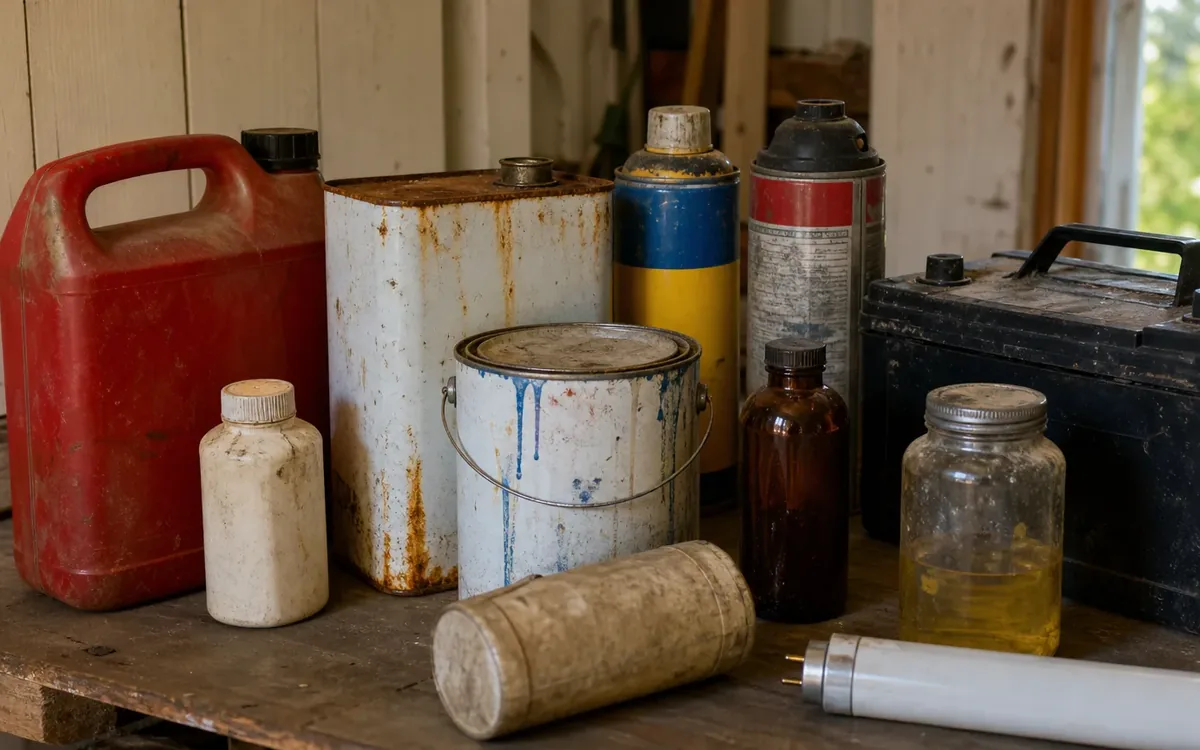
- A container that is bulging, rusted, cracked, wet, hissing, unusually warm, or heavily stained
- Powder, residue, crystals, dead vegetation, or damaged flooring around a container
- Strong or unusual odors noticed without deliberately approaching or sniffing
- Missing labels, handwritten labels, or a household product stored in a food or drink container
- Multiple chemicals packed loosely together
- Items stored near heat, direct sunlight, ignition sources, or standing water
Do not rely on color or odor to decide that a substance is harmless. Some dangerous materials offer little sensory warning, and intentional sniffing can cause exposure.
If you need a broader framework for sequencing the property, the guide on how estate cleanouts work explains the general cleanout process. Hazard screening should happen before routine packing, donation sorting, or debris removal reaches suspect areas.
Which household items deserve extra scrutiny?
Hazards do not always look industrial. Many appear among ordinary belongings, especially in garages, sheds, workshops, utility spaces, bathrooms, and under sinks.
Paints, solvents, and workshop products
Check for old paint, paint thinner, stripping compounds, wood preservatives, adhesives, epoxy components, degreasers, stains, varnishes, and automotive fluids. Keep lids closed and do not consolidate partial containers.
Oily rags also deserve caution. Do not bury them in bags or mix them with paper, fabric, or other combustible material. If a rag pile is hot, smoking, or giving off fumes, move away and contact emergency services.
Pesticides and lawn products
Older homes in South Carolina may contain insecticides, herbicides, fungicides, rodent-control products, fertilizers, or unidentified powders. Labels may use outdated product names, and ingredients can differ from modern versions.
Do not assume a product is safe because it was intended for a yard or garden. Avoid touching residue, sweeping powders, or transferring liquids. Keep children and animals away from the area.
Fuels and compressed containers
Gasoline, kerosene, camp fuel, propane cylinders, aerosol cans, fire extinguishers, and welding cylinders require attention. A cylinder should be treated cautiously if it is rusted, damaged, unlabeled, or has a compromised valve.
Never test a valve or ignition source. Do not place fuel containers or cylinders in an enclosed vehicle until an appropriate authority or receiving provider confirms safe handling requirements.
Batteries and mercury-containing items
Look for vehicle batteries, rechargeable battery packs, loose lithium batteries, button cells, and damaged electronics. Swelling, heat, leakage, punctures, or scorched surfaces are warning signs.
Older thermostats, switches, thermometers, fluorescent lamps, and some specialty devices may contain mercury. Do not break or shake them to investigate.
Medical and biological concerns
Needles, lancets, medication, oxygen equipment, medical waste, and bodily-fluid contamination should not enter ordinary sorting piles. Do not recap a needle or reach blindly into drawers, bags, bedding, or boxes.
Medication identification and disposal instructions should come from an authorized take-back resource, pharmacist, law-enforcement program, or relevant public authority. Medical oxygen cylinders require guidance from the supplier or another qualified provider.
Ammunition and explosive items
Fireworks, ammunition, gunpowder, blasting materials, military souvenirs, and suspicious devices are not ordinary household debris. Do not unload, dismantle, transport, or test them. Create distance and contact law enforcement or emergency services for direction when an item is unstable, unknown, or potentially explosive.
How should you screen a property without disturbing hazards?
A visual screening pass helps the household understand where routine work can proceed and where it should stop. Use the following four-stage approach.
-
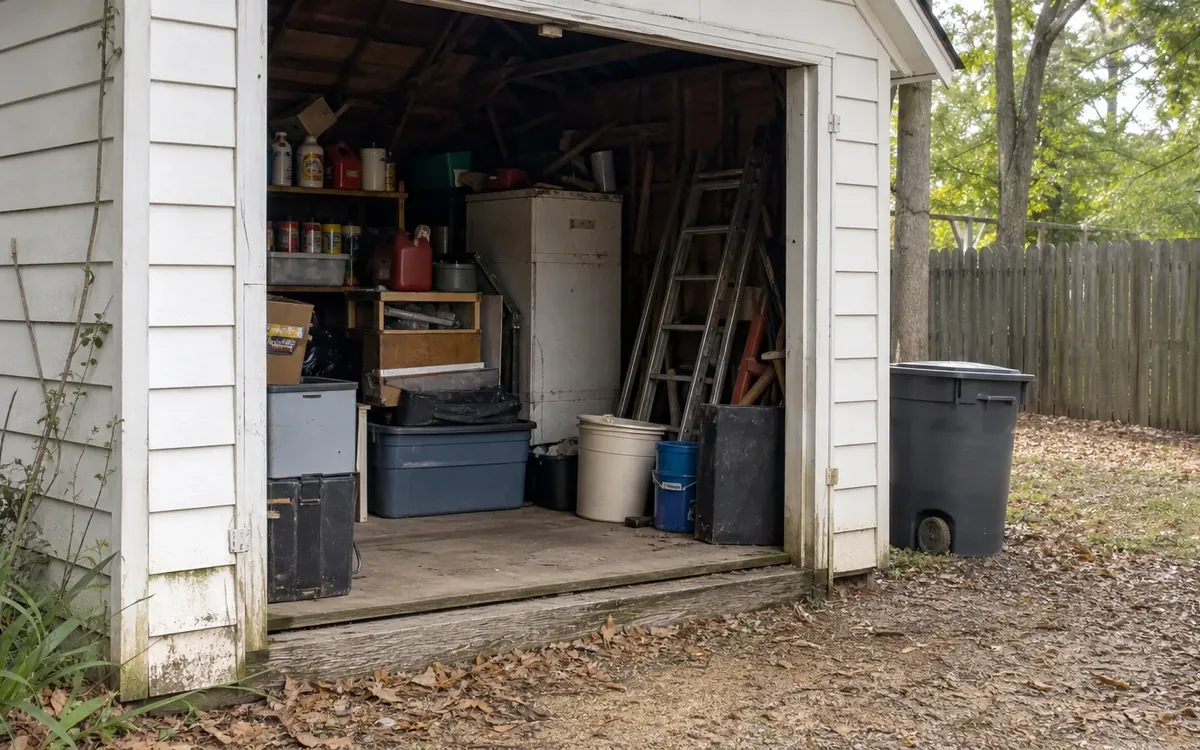
Review likely storage zones. From a safe position, inspect garages, sheds, workshops, utility rooms, crawl-space entrances, cabinets, and areas near lawn equipment. Do not enter a space with heavy fumes, visible vapor, active leaking, fire, or an unknown airborne hazard.
-
Mark restricted areas. Close a door if that can be done safely, or establish a visible boundary outside the affected area. Tell family members, movers, cleaners, buyers, and contractors not to disturb it.
-
Document visible information. Photograph the front and back of intact labels from a safe distance. Record the room, container type, approximate size, visible condition, and nearby materials. Do not scrape a label clean or rotate a failing container.
-
Request item-specific direction. Provide the observations to the appropriate waste authority, environmental specialist, fire department, law-enforcement agency, medical provider, or qualified contractor. Follow that source’s instructions rather than improvising.
A visual inventory is not a chemical analysis. If the identity remains uncertain, keep it classified as unknown until a responsible professional or authority determines otherwise.
What does safe separation mean during a cleanout?
Separation means keeping routine cleanout activity away from a suspect item. It does not mean picking up every questionable container and creating a household hazardous-waste pile.
When it is safe to do so without touching the item:
- Stop sweeping, vacuuming, drilling, cutting, or moving boxes nearby.
- Prevent people and pets from entering the area.
- Keep ignition sources away from suspected flammable materials.
- Avoid turning switches or equipment on or off if flammable vapor may be present.
- Keep incompatible-looking products from being packed together.
- Preserve labels and original containers.
- Note whether heat, water, structural damage, or pests are affecting the area.
- Tell every arriving worker about the restricted zone before work starts.
Do not use household trash bags as universal containment. Bags can tear, hide warning labels, trap vapors, or bring incompatible materials into contact. Similarly, a storage unit is not automatically an appropriate place for chemicals, fuels, cylinders, pesticides, or leaking batteries. The household must verify a storage provider’s written rules and any applicable requirements.
If active leaking, smoke, fire, strong fumes, physical symptoms, or an unstable container is present, leave the immediate area and call 911 or the appropriate emergency authority. Do not remain inside to complete documentation.
Which building materials may require professional assessment?
Some hazards are part of the house rather than stored belongings. Examples may include suspect asbestos-containing materials, lead-based paint, mold growth, contaminated insulation, refrigerants, damaged fuel systems, and residue associated with pests or sewage.
Age alone does not confirm that a building material contains a hazardous substance. Appearance alone may not rule one out either. Avoid sanding, scraping, drilling, demolishing, or collecting a casual sample from suspect material.
An appropriately qualified inspector, environmental professional, laboratory, or contractor should determine whether testing is warranted and how the material may be disturbed. A practical cleanout or move team may point out visible concerns and discuss how to pause or reroute work. It should not substitute a visual guess for a professional inspection.
Contractor work is a separate household decision. The property owner or authorized estate representative selects the contractor, reviews scope and credentials, and approves the work. Any permitting, remediation, transport, or compliance requirements remain with the responsible professional and relevant authority.
Who decides what happens to a questionable item?
Clear roles help prevent unsafe assumptions.
The household or estate representative can decide
- Which rooms and contents are included in the cleanout
- Who is authorized to approve work
- Which nonhazardous belongings should be kept, donated, sold, stored, or discarded
- Whether to hire an inspector, appraiser, contractor, or specialty waste provider
- Whether ordinary work should pause while guidance is obtained
- Which documents and photographs should be preserved
The representative should not direct workers to ignore labels, combine substances, or transport questionable materials contrary to professional or official guidance.
A practical cleanout or move team may discuss
- The order of ordinary sorting and packing
- Visible items that warrant a pause
- Restricted work zones
- Access needs for a separately hired specialist
- How nonhazardous contents can be kept apart from unresolved materials
- How the hazard issue may affect the broader moving or home-preparation plan
These discussions support logistics. They do not establish a chemical identity or authorize disposal.
Other decisions stay with responsible professionals or authorities
Environmental testing and remediation decisions belong with qualified environmental providers. Appraisers determine value within their professional scope. Real-estate professionals advise on listing and transaction matters. Inspectors evaluate property conditions within the scope of their inspection.
Local or state authorities determine applicable waste, transport, code, and compliance requirements. Fire departments, law enforcement, medical providers, and emergency responders direct situations within their authority. Attorneys advise on estate powers, ownership disputes, disclosure obligations, and legal responsibility.
A cleanout company should not be treated as the legal, appraisal, inspection, real-estate, or environmental authority merely because it is coordinating work at the property.
How can families protect important property while hazards are reviewed?
Hazard screening should be narrow enough that it does not cause indiscriminate disposal. Important papers, jewelry, photographs, collections, and sale candidates may be close to a restricted area without being contaminated.
Do not retrieve nearby property until a qualified source says the area can be entered and explains any precautions. Once access is cleared, keep the following categories distinct:
- Estate documents and personal records
- Sentimental belongings
- Items awaiting appraisal
- Property intended for auction or estate sale
- Items selected for off-site storage
- Ordinary donation or disposal contents
An appraiser decides value, not the cleanout crew. An auction or estate-sale provider decides what fits its process. A storage provider decides what its facility accepts. The estate representative makes final household choices unless legal authority rests elsewhere.
If contamination is suspected, a qualified environmental professional should advise whether an item can be cleaned, handled, retained, or moved. Sentimental or monetary value does not make unsafe handling appropriate.
Common identification mistakes to avoid
Several shortcuts can turn a manageable concern into an exposure or spill:
- Opening a container to identify its contents
- Smelling an unknown liquid or powder
- Pouring several partial containers together
- Moving leaking products through occupied rooms
- Sweeping or vacuuming unidentified dust
- Throwing loose batteries into a mixed metal pile
- Placing propane cylinders, fuel, or chemicals in a donation load
- Assuming an empty-looking container has no residue
- Disturbing suspect insulation, flooring, siding, or pipe wrap
- Using an online image match as definitive identification
The safest working label for an uncertain substance is simply unknown material, do not disturb. That description preserves the uncertainty and signals that further direction is needed.
Short FAQ
Can an unlabeled container go into household trash?
Do not assume that it can. Leave it closed and obtain instructions from the relevant local waste authority or qualified hazardous-material provider. Acceptance rules can depend on the substance, container, and jurisdiction.
Should family members transport old pesticides themselves?
They should first ask the appropriate authority or receiving program about eligibility, packaging, transport, and appointment requirements. Do not place leaking or unstable products in a vehicle without explicit professional direction.
Is mold automatically a hazardous-material emergency?
Not every visible patch creates the same conditions. Avoid disturbing significant or unexplained growth. A qualified inspector or remediation professional should evaluate the situation, while emergency services are appropriate for immediate health or safety danger.
Can a cleanout continue in another part of the house?
Possibly, if the questionable area is safely isolated and no fumes, dust, leaks, shared ventilation issue, or other condition threatens adjacent spaces. The responsible professional or authority should guide that determination when the risk is uncertain.
Who handles code or legal questions about the property?
The relevant government authority determines code and compliance requirements, while an attorney handles legal questions. A real-estate professional, inspector, or contractor may provide guidance only within that person’s professional role.
Keep identification separate from disposal
A safe estate cleanout starts by recognizing what should not enter the ordinary sorting stream. Labels, damaged containers, unknown residues, legacy pesticides, fuels, cylinders, batteries, medical sharps, ammunition, and suspect building materials all justify a pause.
The household can organize records, identify decision-makers, preserve valuable property, and set boundaries around questionable areas. A cleanout or move team may coordinate routine work and discuss logistics. Identification that requires testing, disposal direction, legal interpretation, appraisal, inspection, real-estate advice, or compliance judgment belongs with the appropriate professional or authority.
For estate cleanout planning in South Carolina, Clutter Cleaner of South Carolina can be reached at (843) 972-7020. Its physical business location is Mount Pleasant, with Charleston as the primary market and service territory extending statewide. Any hazardous-material issue should be disclosed before cleanout work is planned so its role, limitations, and need for separate specialists can be addressed clearly.



