
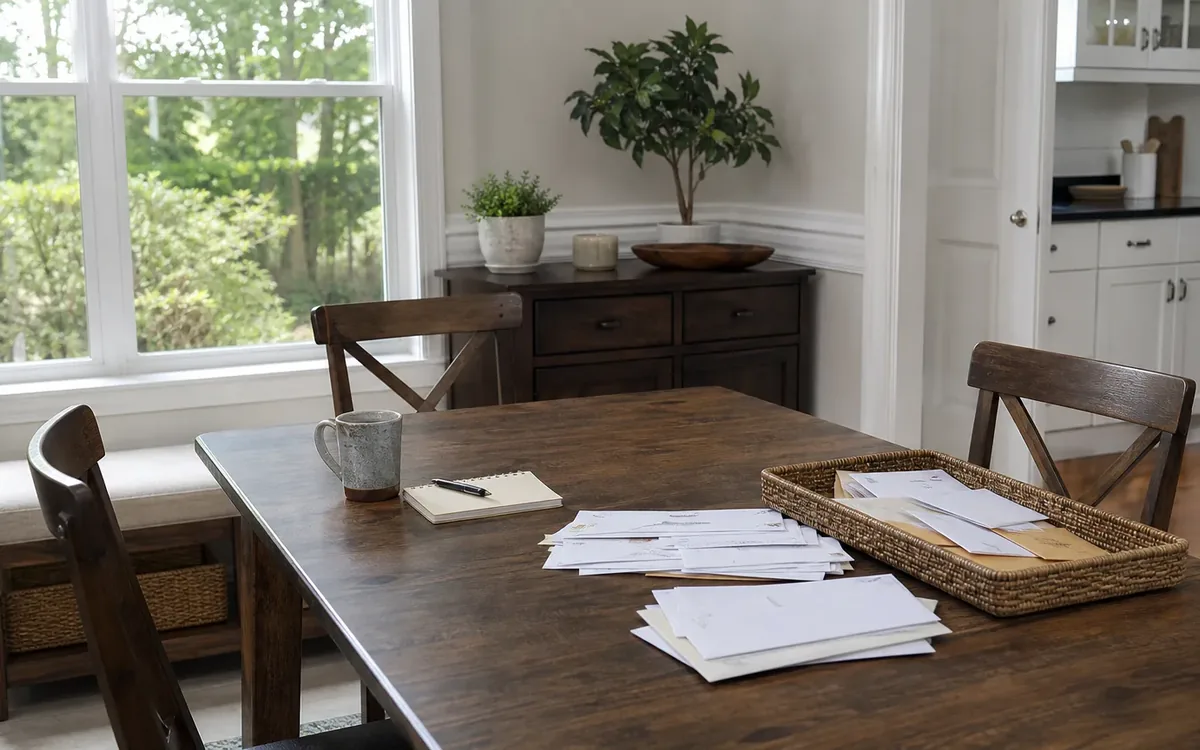
After a loss, secure all mail and documents in one controlled location, keep envelopes with their contents, and sort papers by purpose rather than immediately discarding them. The household can organize and flag records, but the executor, personal representative, attorney, accountant, appraiser, financial institution, or relevant authority should decide what has legal, tax, financial, or evidentiary value.
Quick answer: Do not open mail unless you are authorized to handle it. Gather loose documents without changing their order, create categories for urgent review, legal and financial records, property matters, personal papers, and likely recycling, then route each category to the appropriate decision-maker. When uncertain, retain the item and label it for professional review.
Grief can make even a small stack of envelopes difficult to face. Estate paperwork also creates a special problem: an ordinary-looking envelope may contain a bill, insurance notice, tax form, account statement, refund, court communication, or information needed to protect property. The goal is not to read and resolve everything at once. It is to prevent loss, preserve context, and place decisions with the right person.
Who is allowed to open the deceased person’s mail?
Family relationship alone does not necessarily establish authority to open, redirect, or act on someone else’s mail. The person appointed to administer the estate should confirm what authority they have and what documentation an institution requires. If there is uncertainty, leave envelopes sealed and ask the estate attorney or the appropriate postal or legal authority.
Household members can still protect unopened mail without interpreting it. They can:
- Move it away from moisture, pets, food, and household traffic
- Keep mail in the order in which it was found
- Note where each group of papers came from
- Place sealed envelopes in a clearly labeled container
- Give the container to the authorized representative
- Photograph the outside of an envelope if its condition or discovery location matters
Avoid signing the deceased person’s name, endorsing checks, completing account forms, or contacting a creditor while presenting yourself as an authorized representative unless that authority has been confirmed. Those are legal or financial actions, not organizing tasks.
Mail addressed to another living person should be separated and given to that person without being opened. Misdelivered mail should remain distinct from estate papers so it does not enter the estate review process.

Start by securing the paper trail
Before sorting, choose one controlled work area and a secure holding location. A locking file box, cabinet, or room may be appropriate depending on the property and who has access. The household decides who may enter the space. An estate attorney or responsible authority should advise on any formal document-control requirements.
Gather paper from places that are easy to overlook:
- Entry tables, kitchen counters, and desk trays
- Handbags, briefcases, and vehicle compartments
- Bedside tables and dresser drawers
- Filing cabinets, safes, and lockboxes
- Boxes marked for taxes, banking, or warranties
- Calendars, address books, and notebooks
- Shredders and recycling bins not yet emptied
- Mailboxes and parcel areas
Do not remove staples, discard envelopes, rearrange signed originals, or write notes directly on documents. Use removable notes, folders, or a separate tracking sheet instead.
If the home also requires broader property sorting, Clutter Cleaner of South Carolina’s estate cleanout service explains the practical scope of clearing household contents. Paper authority remains separate. A cleanout team may discuss work zones, items to protect, and materials excluded from removal, while the estate representative controls access and retention decisions.
What should be reviewed first?
Prioritize papers according to possible consequences, not apparent emotional importance or the thickness of the envelope. A plain postcard can require attention, while a formal-looking solicitation may require none.
Create an urgent review folder for the authorized representative. Flag, without acting on, items such as:
- Court, government, or tax correspondence
- Insurance notices and claim-related documents
- Mortgage, rent, utility, or property notices
- Financial institution communications
- Checks, refunds, or payment demands
- Vehicle, business, or benefits correspondence
- Documents with response dates printed on them
- Certified-mail notices or tracked delivery records
A household member can record the sender, addressee, date received, and any visible response date. The executor or personal representative decides who should review it. Attorneys address legal significance, accountants and tax professionals address tax records, and financial institutions set their own procedures for account matters.
Potential urgency does not mean the family should immediately pay every bill from personal funds or promise payment. The responsible representative and qualified advisers should determine whether a debt is valid, who is responsible, and how estate funds may be used.
For a broader sequence of household decisions, see the guide to the best way to clean out an estate. Keep its physical-property steps separate from the document review described here.
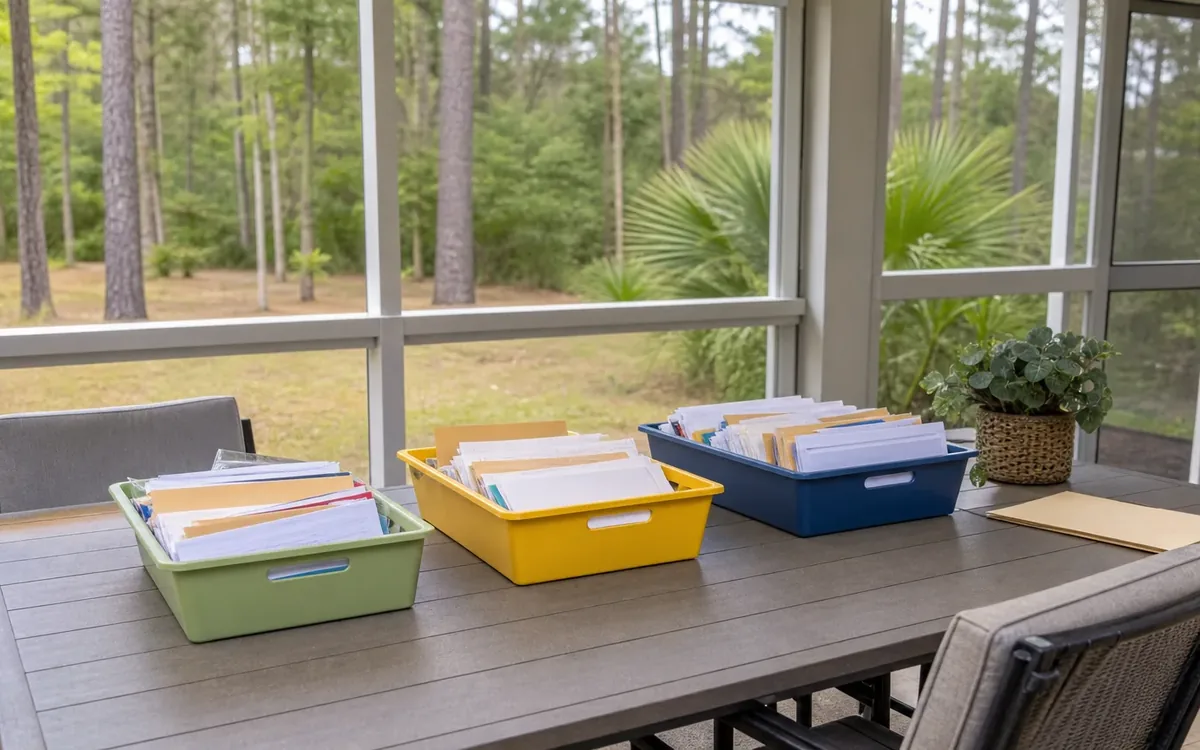
Use a document triage system without making final decisions
Triage should make the paper understandable while preserving anything that may matter. Use folders or boxes with clear labels. A practical system has seven categories:
-
Authority and estate administration: Wills, trust papers, court documents, death certificates, attorney correspondence, and documents naming representatives belong here. Disputed or duplicate documents should still be retained for legal review.
-
Money and taxes: Bank and investment statements, tax forms, loan records, checkbooks, receipts, and payment notices go together. An accountant, tax professional, attorney, or institution determines relevance and retention.
-
Insurance and benefits: Separate life, health, home, vehicle, business, pension, and other benefit records. The applicable provider determines claim procedures and required documentation.
-
Real estate and household property: Keep deeds, surveys, title materials, leases, repair records, warranties, inventories, and contractor documents. A real-estate professional, attorney, inspector, insurer, or contractor handles conclusions within their field.
-
Identity and personal records: Secure passports, Social Security-related records, certificates, military papers, medical information, and employment records. These require restricted access because they may contain sensitive data.
-
Personal and family material: Letters, photographs, cards, journals, recipes, and genealogical records may have little administrative value but substantial family importance. Heirs should decide how these are shared.
-
Possible discard after approval: Duplicates, blank forms, routine advertisements, and obsolete publications can wait here. Nothing should be shredded or recycled until the authorized person approves it.
Do not create a miscellaneous pile. When an item is uncertain, place it in a folder labeled Needs professional review and note the question. This prevents uncertainty from becoming accidental disposal.
How should digital statements and online documents be handled?
Paper mail may point to digital accounts, automatic payments, paperless statements, cloud storage, or electronic tax files. Finding a reference to an account does not grant permission to access it.
Preserve visible clues such as provider names, account fragments, email addresses, and customer-service correspondence. Do not guess passwords, bypass device security, impersonate the deceased, or use saved credentials without confirmed authority. The estate representative should obtain legal guidance when access rights are unclear and follow each provider’s required process.
For records the authorized person can lawfully access, use a consistent file structure. For example:
- Estate administration
- Banking and investments
- Taxes
- Insurance
- Real estate
- Vehicles and personal property
- Household accounts
- Family archive
Name files with a date, sender, and document type. Store them in an access-controlled location and maintain a backup chosen by the estate representative. Avoid placing sensitive records on shared household devices or sending identity documents through informal group messages.
Digital organization is not the same as closing accounts, valuing assets, filing taxes, or canceling coverage. Those decisions remain with the authorized representative and relevant professional or institution.
Preserve context while reducing duplicate paper
A document’s surroundings can explain why it was kept. Papers clipped together may relate to one transaction. Notes on an envelope may identify a contact. A receipt stored with a warranty may establish what property it covers.
During the initial pass:
- Keep attachments with their cover letters
- Keep envelopes when postmarks or addresses may matter
- Preserve handwritten annotations
- Do not separate pages with signatures or initials
- Place small items such as keys or cards in labeled sleeves
- Record the room or drawer where unusual documents were found
Duplicate copies can often be grouped, but do not assume that similar pages are identical. Check names, dates, signatures, account periods, and attachments. The authorized representative or adviser should approve destruction after identifying what must be retained.
If heirs disagree about personal letters or family records, pause the sorting decision. Make a simple inventory and place the material in secure storage selected by the household. Storage is a separate household or provider choice, not an automatic part of a cleanout.
What can a cleanout or move team discuss?
A practical cleanout or move team may help the household plan around paperwork without deciding its significance. The conversation can cover:
- Rooms or cabinets that are off limits
- A protected paper-review station
- Containers that must not be moved
- Labels for retain, review, and approved removal areas
- The order in which rooms will be addressed
- Who can authorize physical removal
- How newly discovered papers should be set aside
- Whether work should pause when sensitive records appear
The household can decide which rooms are ready, who receives found papers, and whether furniture or boxes should remain until files are checked. Clutter Cleaner of South Carolina may discuss practical estate cleanout, downsizing and organizing, move management, home sale preparation, auctions and estate sales, or code compliance support within an agreed scope.
Those discussions do not replace professional judgment. A cleanout or move team should not determine whether a will is valid, whether a debt must be paid, how long tax records must be retained, whether a house is ready to list, or what an item is worth.
An appraiser handles valuation. A real-estate professional advises on listing strategy. An inspector evaluates property conditions within the inspection scope. Contractors quote and perform repair work under separate agreements. Attorneys, courts, agencies, and other responsible authorities address legal or compliance questions. Disposal and storage also require separate household approval and provider arrangements.
Coordinate paperwork with the property transition
Document review and property clearing affect each other, but they should not collapse into one task. A desk may be ready for removal only after every drawer has been checked. A filing cabinet may stay until the representative confirms its contents have been transferred. A box of old statements may need professional review before recycling.
Use visible status labels such as:
- Not reviewed
- In review
- Retain securely
- Family decision needed
- Professional review needed
- Approved for disposal
Only the designated decision-maker should apply the final disposal label. This is especially important when several relatives, contractors, movers, or property professionals enter the home.
If the property may be sold, keep document review independent from decisions about repairs, staging, inspections, and disclosure. The household and estate representative can collect invoices and property records. Licensed or otherwise responsible professionals determine what those records mean within their roles. Relevant authorities determine applicable compliance requirements.
Protect private information during disposal
Paper approved for disposal may contain account numbers, signatures, medical details, identification data, or information about living relatives. Separate sensitive paper from ordinary recycling. The household should choose an appropriate secure-destruction provider or method and confirm what materials are accepted.
Before destruction, create a written approval record showing:
- The category of material
- Who authorized disposal
- The date of authorization
- Any professional guidance relied upon
- Where or how the material was routed
Do not record unnecessary account details in the disposal log. The purpose is accountability, not creation of another sensitive file.
Ordinary packaging, blank envelopes, and nonsensitive inserts may follow local disposal rules once approved. The responsible local authority or waste provider should answer questions about accepted materials. A code compliance support discussion can help identify property-related concerns, but the relevant authority makes compliance decisions.
Short FAQ
Should every unopened envelope be saved?
Save it during the initial collection. The authorized representative can later identify obvious advertising or misdirected mail and approve its disposal. When an envelope may relate to taxes, accounts, property, insurance, benefits, or legal matters, retain it for appropriate review.
Can family members forward the mail?
Mail forwarding and estate-mail procedures should be handled by the authorized representative according to the postal service’s requirements. Other relatives should not assume that shared residence or family status grants authority.
What if cash, checks, or valuables are found with documents?
Stop sorting that group, record where the item was found, secure it, and notify the estate representative. Do not deposit, endorse, divide, value, or distribute it without proper authorization.
Should old tax returns be shredded?
Not until the executor or personal representative receives retention guidance from a qualified tax professional, attorney, or relevant authority. Age alone does not establish that a record is disposable.
Can papers be scanned and the originals discarded?
Scanning may improve access, but it does not prove that an original can be destroyed. Signed, certified, notarized, title-related, tax, court, and identity documents may require special handling. Ask the responsible professional before disposal.
Where can South Carolina households discuss the cleanout portion?
Clutter Cleaner of South Carolina is physically located in Mount Pleasant, with Charleston as its primary market and statewide service territory. Households can call (843) 972-7020 to discuss practical estate cleanout needs. Legal authority, appraisal, inspection, real-estate, contractor, disposal, storage, tax, and compliance decisions remain with the appropriate household decision-maker, provider, professional, or authority.
A careful paper process protects more than records. It gives the estate representative a traceable path from discovery to review, keeps private information controlled, and reduces the risk that an important document disappears during the physical transition of the home.



