
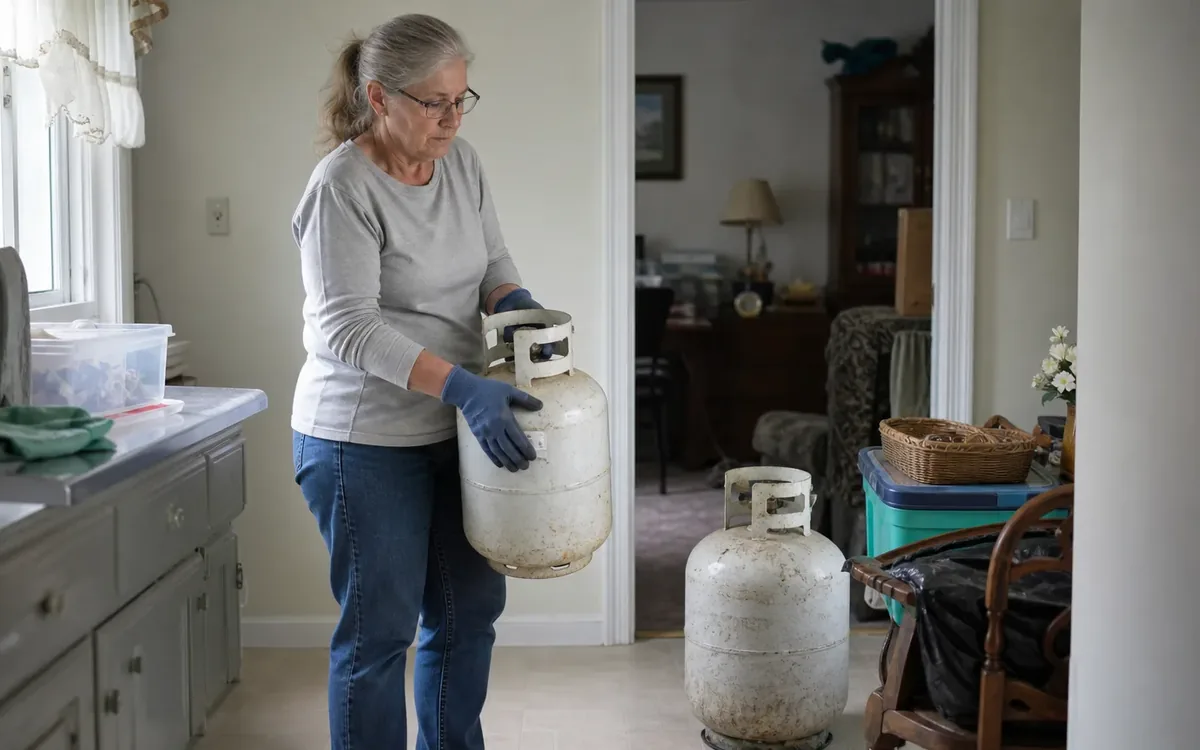
Propane tanks found during a South Carolina estate cleanout should be treated as pressurized containers, not ordinary trash or scrap metal. Keep each cylinder upright in a ventilated area away from heat and ignition sources, avoid testing or emptying it yourself, document its visible condition, and ask an appropriate propane supplier, household hazardous waste program, or receiving facility how it must be handled.
Quick answer: Do not put a propane cylinder in a dumpster, curbside trash, recycling cart, or mixed debris pile. Do not open the valve to release fuel. Isolate the cylinder without tampering with it, record identifying details and visible damage, then obtain instructions from a qualified recipient before moving or transporting it.
This issue deserves its own plan during an estate cleanout. Cylinders may be beside a grill, under a porch, behind a workshop, or buried among shed contents. Some look empty but still contain vapor or pressure. Others may belong to a propane company rather than the estate.
Why propane tanks require a separate cleanout process
A propane cylinder is not just another bulky metal item. Its contents may be flammable, its interior may remain pressurized, and its valve may be vulnerable to damage. An apparently empty cylinder can still require controlled handling.
Mixed cleanout methods can create avoidable risks. A cylinder tossed into a debris container may be crushed, punctured, or exposed to sparks. A tank placed in a scrap-metal pile may be rejected because the receiving facility cannot verify that it is safe. A cylinder left inside a closed vehicle can be exposed to heat and poor ventilation.
For these reasons, propane should have a separate decision path from furniture, household goods, ordinary recycling, and general waste. Families planning a broader project can review the South Carolina estate cleanout service to understand how household contents may be sorted while specialized materials are identified for separate routing.
The household or estate representative can decide which clearly safe areas may be accessed, who may receive information, and whether a usable household-owned cylinder should be retained. A practical cleanout or move team may discuss segregation, labeling, photographs, access, and coordination questions. Acceptance, transportation, disposal, ownership, and regulatory decisions remain with the propane supplier, receiving facility, fire authority, waste program, attorney, or other responsible professional.
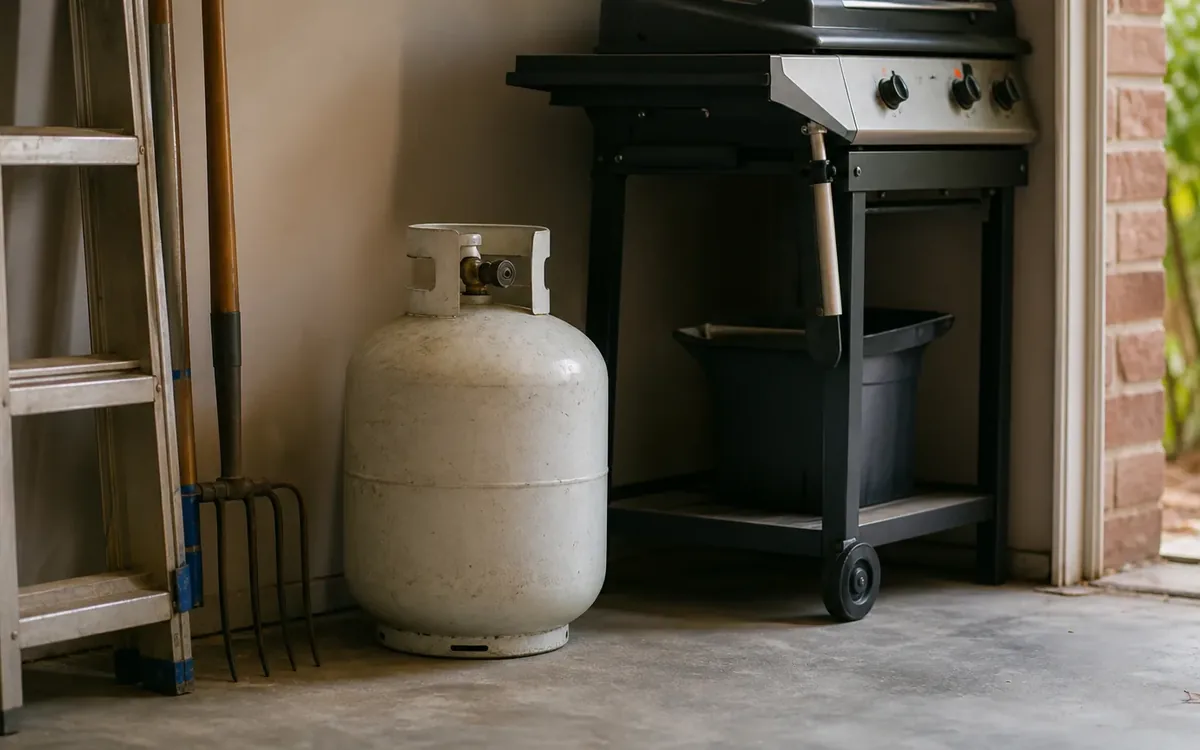
Where are propane cylinders commonly found on an estate property?
Begin by asking people familiar with the property where fuel-powered equipment was used. Do not start by moving every container. A visual survey can reveal cylinders that need to be addressed before general clearing begins.
Common locations include:
- Beside or beneath outdoor grills
- Inside detached garages and workshops
- In sheds with lawn equipment or tools
- Near patio heaters, camp stoves, or outdoor kitchens
- In barns, utility buildings, or rural outbuildings
- On porches, decks, and screened outdoor areas
- In boats, campers, trailers, or recreational equipment
- Near generators or construction equipment
- Behind stored furniture, scrap, or moving boxes
Small camping cylinders also count. Their size does not make them suitable for household trash. Likewise, a large stationary propane tank is not part of ordinary contents removal. It may be connected to the home, subject to a supplier agreement, or considered part of the property transaction.
If the cleanout is part of a larger estate project, the guide to the best way to clean out an estate can help establish decision authority and sorting priorities before specialized items are disturbed.
How should you identify an unfamiliar tank?
Do not assume every cylinder is propane. Similar containers may hold refrigerant, oxygen, acetylene, carbon dioxide, helium, or another compressed gas. A missing or unreadable label makes professional identification more important, not less.
Record details that can help a recipient identify the container:
- Labels, stamped markings, and manufacturer information
- Cylinder size and general shape
- Valve type and any protective cap
- Attached hoses, regulators, or appliances
- Company names, decals, barcodes, or asset tags
- Rust, dents, bulges, fire exposure, or valve damage
- Whether you hear hissing or notice a strong unusual odor
- The precise location where it was found
Take photographs from a safe distance without rotating a compromised cylinder merely to expose a label. Photograph the container, valve area, markings, and surrounding location. This record can help a propane vendor or waste program determine whether it accepts that type of cylinder.
Do not scrape, sand, repaint, drill, cut, puncture, or dismantle a cylinder to identify or prepare it. Do not rely on shaking it or opening the valve to decide whether it is empty. A gauge, if present, may provide information, but the receiving professional should determine whether the cylinder can be accepted and how its contents or pressure will be addressed.
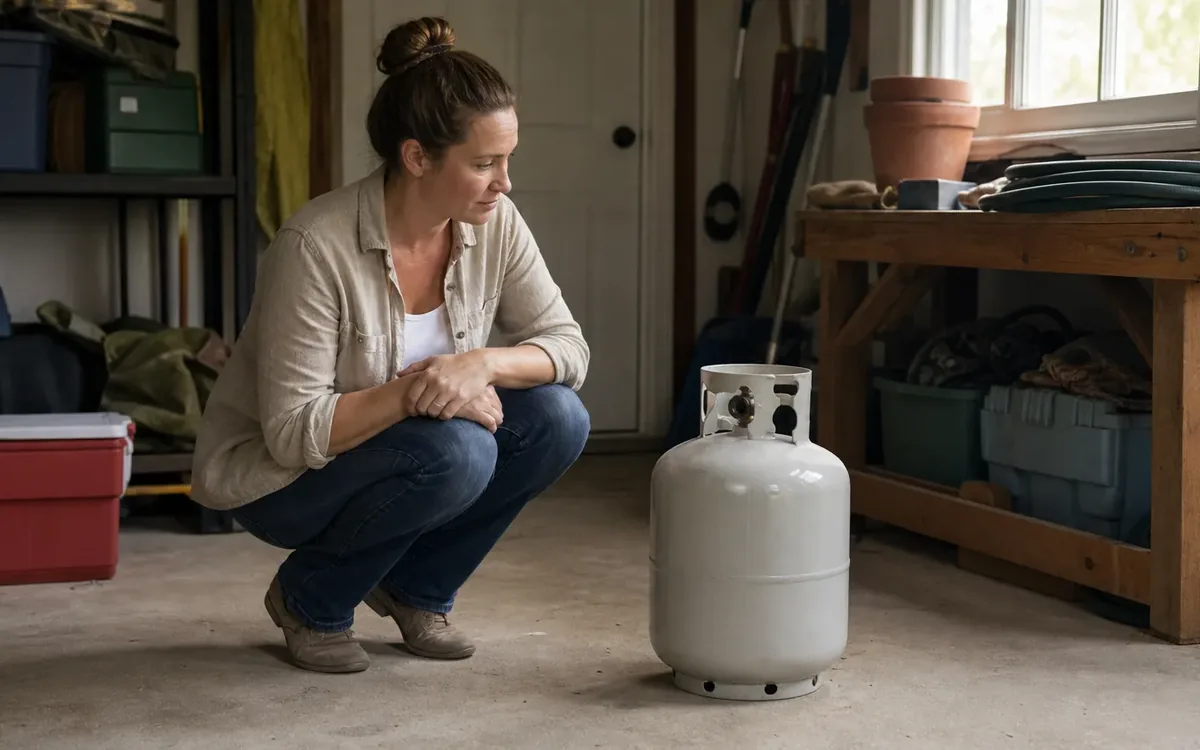
What should you do if a cylinder appears damaged or is leaking?
A suspected leak, active hissing, strong propane odor, fire exposure, severe corrosion, or damaged valve changes the situation from routine sorting to a potential emergency. Do not handle the cylinder as normal cleanout material.
Take these precautions without putting anyone at additional risk:
- Keep flames, cigarettes, engines, electrical switches, and other ignition sources away.
- Do not operate the valve or try to repair the cylinder.
- Keep people and animals out of the immediate area.
- Do not carry a leaking cylinder through an occupied building.
- Leave the area if conditions appear unsafe.
- Contact emergency services or the appropriate fire authority when there is an active leak, fire, immediate danger, or uncertainty about safe evacuation.
Propane is heavier than air and can collect in low or enclosed spaces. A cylinder in a basement, crawl space, vehicle, or tightly closed shed calls for particular caution. Do not improvise ventilation by operating electrical equipment in an area where gas may be present.
A cleanout crew should not be expected to diagnose a leaking container, certify it as empty, repair its valve, or decide that an emergency has ended. Those judgments belong to emergency personnel, the propane supplier, or another qualified authority.
Separate and document cylinders before ordinary debris moves
Once an area is considered safe to enter, create a propane-specific inventory. The goal is to prevent cylinders from disappearing into general sorting piles and to give prospective recipients accurate information.
Use a simple record with fields for:
- Item number
- Found location
- Apparent type and size
- Brand or supplier markings
- Visible condition
- Connected equipment
- Ownership clues
- Photograph file name
- Vendor or authority contacted
- Instructions received
- Final recipient and transfer record
Place stable, non-leaking portable cylinders upright in a well-ventilated location away from traffic, heat, open flames, sparks, drains, low spots, and combustible piles. Protect them from being struck or tipped. Do not store them in living areas or create a crowded holding zone where valves can contact other objects.
Use a visible note such as “Pressurized cylinder: do not place in debris.” The note is a sorting control, not a declaration that the cylinder is safe or empty.
Keep questionable containers separate from cylinders that appear intact. If a container cannot be safely moved, mark the area from a distance and ask the responsible vendor or authority what to do. Do not let the momentum of furniture removal override the need for specialized direction.
Who decides whether a propane tank is kept, returned, or discarded?
The estate representative can make decisions about household-owned property within the authority granted by the estate plan, probate process, or other governing documents. If authority or ownership is unclear, an attorney or probate professional should resolve it.
Supplier branding matters. Some large tanks and cylinders may be leased, exchanged, or otherwise owned by a propane company. A logo alone does not settle ownership, but it provides a reason to contact the named company before treating the container as estate property.
Several routing options may be discussed, subject to recipient approval:
- Return to a propane supplier: A supplier may identify its own equipment or explain whether it accepts a particular customer-owned cylinder.
- Cylinder exchange: An exchange operator decides which portable cylinders it accepts and under what condition.
- Household hazardous waste program: The relevant county or local program determines residency, appointment, quantity, cylinder, and condition requirements.
- Approved disposal or recycling facility: The facility decides whether it accepts pressurized containers and what preparation it requires.
- Retention by an heir or buyer: The estate representative decides whether the item may transfer, while the recipient assumes responsibility for safe use, inspection, and transport.
Never promise that a vendor will take a cylinder before confirming its rules. Programs can distinguish among refillable grill cylinders, disposable camping canisters, damaged tanks, unidentified cylinders, and commercial containers.
How can you prepare for vendor-directed routing?
Call the prospective recipient before loading anything. Describe the cylinder accurately and mention rust, dents, missing labels, questionable valves, suspected contents, and whether the cylinder is attached to equipment.
Ask these practical questions:
- Do you accept this exact type and size of cylinder?
- Do you accept cylinders that are partly full, apparently empty, expired, rusty, or damaged?
- Must the valve, regulator, or protective cap remain in place?
- Is proof of residency, ownership, or an account required?
- Does the cylinder require an appointment or a specific drop-off location?
- What transport and unloading instructions must be followed?
- Will you provide a receipt or other transfer record?
That seven-question call can prevent rejected loads and unsafe improvisation. Write down the recipient’s name, instructions, and any reference number provided.
Transport is a separate decision from cleanout labor. A household may use a qualified provider or follow a recipient’s lawful instructions. A practical move or cleanout team may discuss access, staging, and coordination, but the carrier and receiving facility determine whether they can lawfully and safely handle a specific cylinder.
Do not conceal a propane tank inside a box, bag, furniture load, or mixed trailer. Do not assume a waste hauler or scrap buyer accepts it merely because it accepts metal. The recipient needs an opportunity to identify the pressurized container before transfer.
Stationary tanks and home-sale decisions
A stationary tank connected to a house should remain outside the ordinary contents-removal plan. It may supply heating, cooking, a fireplace, a generator, or another system. Disconnecting it can affect building systems and the sale of the property.
The household can locate account records, invoices, fuel agreements, and supplier contact information. A cleanout or move team may keep access around the tank clear and flag it in the project notes. It should not disconnect lines, move the tank, estimate remaining fuel, or characterize ownership unless separately qualified and authorized to do so.
Responsibility should be divided clearly:
- A propane supplier addresses tank ownership, fuel, disconnection, pickup, and equipment requirements.
- A licensed contractor addresses related appliance or building-system work within that contractor’s scope.
- A home inspector reports observed property conditions within the inspection agreement.
- A real-estate professional discusses listing, disclosure, and transaction coordination within that professional’s role.
- An appraiser determines whether and how relevant property features affect an appraisal.
- An attorney resolves contracts, estate authority, title, liability, and disputed ownership.
- A code or fire authority interprets and enforces requirements under its jurisdiction.
Removing a stationary tank without checking these roles can create property damage, contract disputes, or an incomplete home-sale record. Keep supplier communications and transfer documents with the estate file.
Build propane decisions into the cleanout sequence
Propane discovery should happen before dumpsters, scrap loads, donation pickups, or heavy furniture movement begin around garages and outbuildings. It does not need to dominate the entire cleanout, but it should be resolved as its own workstream.
A focused sequence is:
- Confirm who can make estate decisions.
- Survey likely storage and equipment areas visually.
- Stop and isolate any suspected emergency condition.
- Inventory cylinders without testing or altering them.
- Separate portable cylinders from ordinary contents where safe.
- Verify ownership clues and connected systems.
- Obtain instructions from the intended recipient or authority.
- Arrange compliant transport with an appropriate provider.
- Record the transfer, rejection, return, or retained ownership.
This nine-step sequence keeps pressurized containers visible throughout the project. It also reduces the chance that one person assumes someone else handled them.
For a broader explanation of project roles and sorting stages, see how estate cleanouts work. Clutter Cleaner of South Carolina, based in Mount Pleasant and serving households across South Carolina, can discuss estate cleanout planning at (843) 972-7020. Any propane-specific acceptance, emergency response, transport, inspection, or disposal decision must still be confirmed with the responsible provider or authority.
Short FAQ
Can an empty propane cylinder go in household trash?
Do not assume so. A cylinder that feels empty may retain vapor or pressure. Ask the relevant waste program or approved receiving facility whether it accepts the cylinder and what preparation, if any, it requires.
Should I open the valve to get rid of leftover propane?
No. Intentionally releasing propane can create a fire, health, and environmental hazard. A propane supplier or other qualified recipient should direct how remaining contents are handled.
Can a rusty cylinder be transported to a drop-off site?
Not without instructions. Explain the corrosion and any valve damage to the intended recipient first. If it is leaking, hissing, fire-damaged, or otherwise presents immediate danger, keep away and contact emergency services or the appropriate fire authority.
What if the tank has a propane company’s name on it?
Contact that company or its successor before disposing of it. The marking may indicate leased or company-owned equipment, but the supplier or legal documentation must resolve ownership.
Can propane cylinders be included in an estate sale?
The estate representative can consider a transfer only after confirming authority and ownership. The auction or estate-sale provider decides what it will offer, while applicable fuel, transport, inspection, and sale requirements remain with the relevant professionals and authorities.
Who handles a tank connected to the house?
Contact the propane supplier first. A qualified contractor may be needed for connected appliances or building systems. Real-estate, inspection, appraisal, disclosure, and legal questions should go to the professionals responsible for those decisions.



