
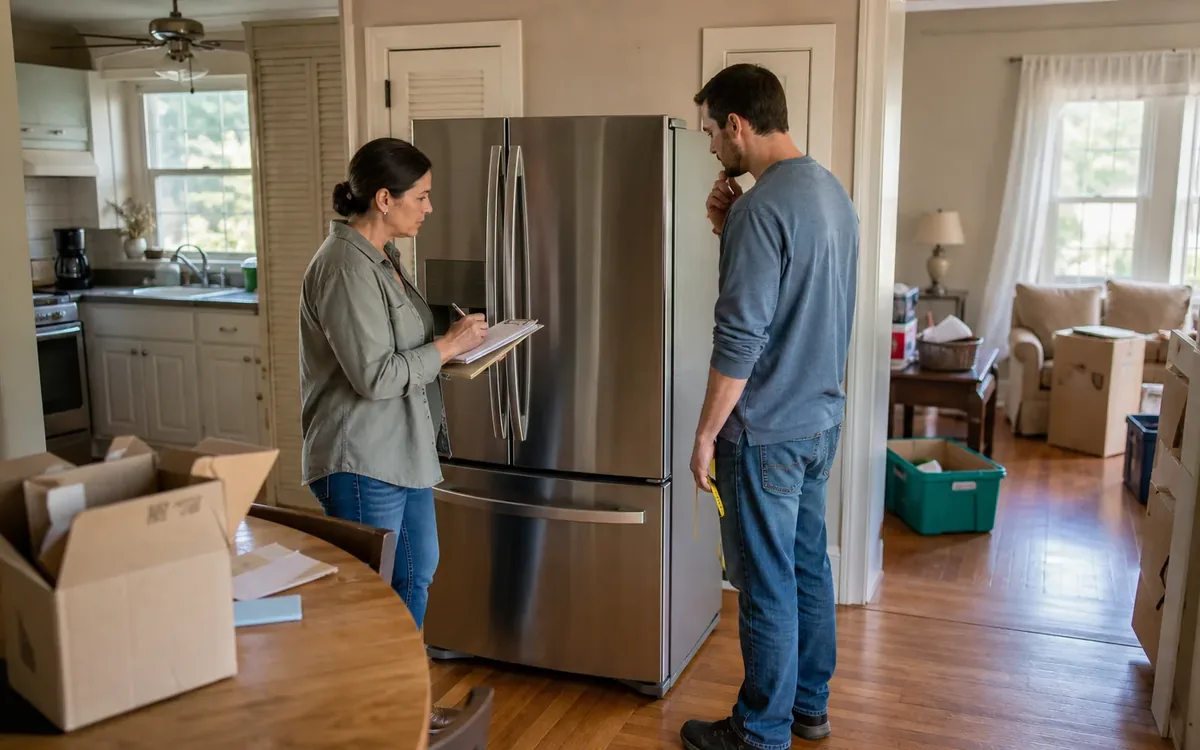
Large appliances should be handled as a separate workstream during an estate cleanout. The household first decides which appliances will remain, transfer, sell, donate, recycle, or be discarded. Then the responsible parties arrange valuation, disconnection, access, transport, and lawful disposal. Electric, gas, plumbing, refrigerant, title, and property-sale questions should go to the appropriate professional or authority rather than being folded casually into general cleanout work.
Quick answer: Inventory every appliance before moving anything. Confirm estate authority and any sale-related obligations, choose a destination for each item, and identify who will disconnect and transport it. Use qualified tradespeople where gas, hardwiring, plumbing, refrigerant, or installation conditions require them. A practical cleanout or move team may discuss sequencing, access, sorting, and removal coordination, but legal, technical, valuation, inspection, and compliance decisions remain with the responsible professional or authority.
Why do appliances need their own estate cleanout plan?
A refrigerator, washer, dryer, range, freezer, or built-in dishwasher is not simply another bulky possession. It may be connected to electricity, water, drainage, gas, cabinetry, ventilation, or the house itself. It may also be included in a real-estate agreement, claimed by an heir, or worth more in place than after removal.
Treating appliances separately helps prevent several avoidable problems:
- Removing an appliance that was supposed to stay with the property
- Damaging floors, walls, counters, doors, or utility connections
- Creating leaks or unsafe open lines
- Moving an item before an appraiser or estate-sale professional sees it
- Paying to move an appliance that a buyer, donor, or recycler will not accept
- Blocking other cleanout work with an unplanned pickup
For a broader view of sequencing household contents, read the guide to the best way to clean out an estate. If the property needs hands-on sorting and removal planning, review the statewide estate cleanout service.
The goal is not to make the appliance decision complicated. It is to separate household choices from work that requires legal authority, market expertise, or technical qualifications.

Who has authority to decide what happens to an appliance?
Before anyone sells, gives away, or discards an appliance, confirm who is authorized to act for the estate. That may be a personal representative, executor, trustee, surviving owner, or another person recognized by the relevant documents and legal process.
Family members can share preferences, but preference does not necessarily equal authority. If ownership is disputed or instructions in a will, trust, court order, or agreement are unclear, consult the estate attorney or other responsible legal professional. A cleanout team should not interpret those documents or decide who owns an item.
Real-estate arrangements matter too. Some appliances may be included in a listing, contract, repair agreement, or buyer negotiation. The authorized decision-maker should ask the real-estate professional or attorney what must remain before authorizing removal. An inspector can report conditions, but the parties and their appropriate advisers decide how those findings affect a transaction.
Create a written decision record for each appliance. Include:
- Appliance type and location
- Make, model, and serial number when accessible
- General visible condition
- Whether it is freestanding, built in, or connected
- Who has authority to decide its destination
- Whether an heir or beneficiary has requested it
- Whether a sale, appraisal, inspection, or donation review is pending
- Final destination and responsible provider
Photographs can support identification and condition records. Avoid shifting or pulling out an appliance solely to find a serial number if doing so could damage the property or strain a connection.
What should the household decide before disconnection?
The household or authorized estate representative can decide the intended outcome, subject to estate documents, ownership rights, and property-sale obligations. Useful destination categories are keep with house, transfer to a person, sell, donate, recycle, discard, or undecided.
Keep it with the property
Leaving an appliance in place may reduce moving work, but first confirm that it belongs with the property and that no beneficiary has a valid claim. Ask the real-estate professional how the appliance should be described in listing or contract materials. Questions about required condition, disclosures, or negotiated repairs belong with the appropriate real-estate or legal professional.
Transfer it to an heir or another home
Confirm that the recipient wants the exact item and has measured the destination. Record who will arrange disconnection, transport, installation, and any needed parts. The receiving household should consult qualified providers about compatibility with its utilities and space.
Sell it
Do not assume an appliance has meaningful resale value because it appears clean or was expensive when purchased. Age, condition, configuration, demand, transport difficulty, and missing parts can affect the outcome. An appraiser, auction professional, estate-sale professional, or appliance reseller can advise on marketability within their field.
Donate it
Donation acceptance is the recipient organization’s decision. Ask about age limits, working-condition standards, cosmetic requirements, pickup boundaries, and disconnection rules before preparing the item. Never treat a hoped-for donation as the only removal plan until acceptance is confirmed.
Recycle or discard it
A recycler, waste facility, municipal or county program, or hauling provider can explain what it accepts and how the appliance must be prepared. Refrigerant-containing appliances may have special handling requirements. Requirements can differ across South Carolina, so verify them with the relevant provider or local authority rather than relying on assumptions.
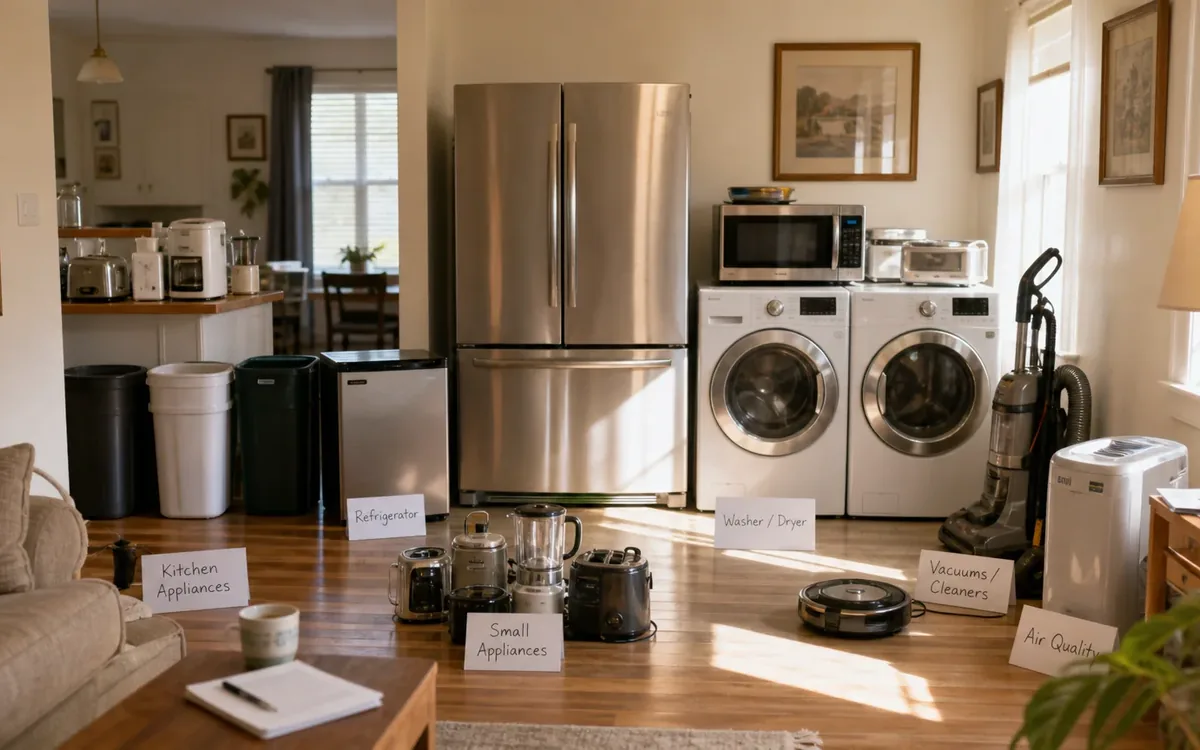
Which appliances need specialized attention?
The connection and installation matter more than the appliance’s size. The following categories deserve an early review.
Refrigerators and freezers
These units may contain refrigerant and can leak water from supply lines, drain pans, or melting ice. Empty all food and identify whether an ice-maker or water connection exists. Ask the receiving recycler, disposal facility, or service provider about preparation and refrigerant requirements.
If the unit will be stored or transported, obtain handling guidance from the mover or appliance professional. Do not assume it can be plugged in immediately after being carried at an angle.
Ranges, ovens, and cooktops
Determine whether the appliance is electric, hardwired, or gas-connected. Gas disconnection and line treatment should be assigned to a properly qualified professional where required. Hardwired units may also require an electrician. Built-in ovens and cooktops can affect cabinets and counters, so removal may involve a contractor or installer.
Washers
Washers connect to supply valves and a drain. Old valves, hoses, and drain components may fail when disturbed. A plumber or qualified appliance professional can evaluate uncertain or deteriorated connections. The household should also decide whether hoses and accessories stay with the machine or property.
Dryers
Identify whether the dryer is electric or gas and how it is vented. A qualified provider should address gas connections or questionable electrical conditions. The household can arrange vent cleaning or repair separately if needed, but that contractor work is distinct from moving the appliance.
Dishwashers and built-in units
Dishwashers commonly involve plumbing, electricity, mounting hardware, flooring, and adjacent cabinetry. Removing one can leave an opening that affects presentation or buyer expectations. Discuss the property impact with the real-estate professional, contractor, or installer before authorizing removal.
Window or portable air conditioners
Ask the receiving facility whether it accepts units containing refrigerant. A window unit may also be secured to the building or affect weatherproofing. A qualified contractor should address uncertain installation or building-envelope issues.
How should disconnection and removal responsibility be assigned?
Assign responsibility by task rather than asking one party to “take care of the appliances.” That phrase can conceal gaps between disconnection, lifting, transportation, installation, and disposal.
Use these six assignments:
- Decision authority: Name the person authorized to approve the outcome for each appliance.
- Technical review: Identify the plumber, electrician, gas professional, appliance technician, installer, or contractor who will assess and perform regulated or specialized work when needed.
- Property protection: Decide who will protect floors, doors, counters, stairs, and walls during removal.
- Physical transport: Confirm who will lift, load, secure, and transport the appliance, and whether they accept its size and condition.
- Destination acceptance: Obtain approval from the recipient, buyer, donation organization, recycler, or disposal facility.
- Post-removal condition: Assign capping, repair, cleaning, cabinet work, inspection follow-up, or installation to the proper provider.
A practical cleanout or move team may discuss which items are leaving, access constraints, staging areas, removal order, and coordination with outside providers. The team may also flag visible concerns such as a narrow doorway, attached line, damaged floor, or unknown connection.
That discussion is not a substitute for trade expertise. The electrician decides electrical work within their professional scope. The plumber addresses water, drain, or applicable connection work. A qualified gas professional handles gas-system questions. Contractors or installers evaluate cabinetry and built-in conditions. The relevant authority or facility determines disposal compliance.
How do you prepare the path without damaging the home?
Plan the exit route before disconnection. A technically disconnected appliance can still become a problem if it cannot clear a doorway or turn on a landing.
Check the route for:
- Appliance width, depth, and height
- Door and hallway dimensions
- Handrails, trim, thresholds, and tight turns
- Steps, slopes, gravel, or soft ground
- Flooring that needs suitable protection
- Exterior doors that may need approved removal
- Vehicles or stored items obstructing access
- Children, pets, or visitors entering the work zone
Measurements should include protruding handles, control panels, hinges, and connections. If door removal or partial appliance disassembly is proposed, confirm who is qualified and responsible for that work.
Do not use appliance doors, knobs, hoses, or cords as lifting points. Keep loose components controlled according to the mover’s or manufacturer’s guidance. If an appliance shows severe corrosion, broken glass, pest contamination, unstable parts, or signs of leakage, notify the responsible provider before movement.
The household can clear small belongings and decide which route is acceptable. Movers or removal providers decide whether they can safely handle the item under site conditions. Contractors decide whether structural or finish work is necessary.
What order keeps appliance work from disrupting the cleanout?
Appliances should not automatically be removed first. Their proper position in the sequence depends on valuation, access, utility work, and the home’s next use.
A practical sequence is:
- Record the appliance and confirm decision authority.
- Check estate, beneficiary, and real-estate obligations.
- Obtain appraisal, auction, resale, or donation input where relevant.
- Select a confirmed destination.
- Inspect the removal route and connection type.
- Schedule any qualified disconnection or contractor work.
- Remove surrounding contents needed to create safe access.
- Complete transport and document the destination.
- Arrange any capping, repair, cleaning, or property preparation.
This sequence prevents valuation from occurring after an item has already been hauled away. It also reduces the chance that a cleanout crew arrives while a refrigerator is still connected or that a mover arrives before an estate-sale professional has completed a review.
Keep appliances labeled while decisions are pending. Simple labels such as “stays,” “claimed,” “sale review,” and “do not move” help, but they should match the written inventory. Remove or update labels when a decision changes.
What should be discussed with a cleanout or move team?
Give the team accurate information rather than assuming it will discover every connection on arrival. Useful discussion points include:
- Which appliances are staying and leaving
- Who approved each decision
- Known gas, water, drain, electrical, or vent connections
- Built-in or secured components
- Pending appraisal, sale, donation, or pickup decisions
- Stairs, narrow access, delicate flooring, and parking limits
- Known leaks, broken parts, odors, pests, or contamination
- Outside professionals scheduled to disconnect or repair
- The expected condition of the space after removal
Clutter Cleaner of South Carolina has a physical business location in Mount Pleasant and serves households across South Carolina, with Charleston as its primary market. Estate cleanout and move-management discussions can address organization, staging, access, and coordination. Any requested work still needs a clear scope, and licensed-trade, legal, appraisal, inspection, real-estate, and regulatory questions remain with the appropriate party.
Storage is also a separate household and provider choice. If an appliance lacks a confirmed destination, the authorized representative can compare storage with sale, transfer, recycling, or disposal. The storage operator sets acceptance and access terms, while the mover determines transport requirements. A cleanout plan should not send an appliance into storage by default simply because the estate decision is unfinished.
Final appliance handoff record
When an appliance leaves, update the inventory. Record the recipient or destination, the person who approved the release, and any related receipt or transfer document. Keep records with the estate file according to guidance from the estate’s legal or financial professionals.
Walk through the vacated area without altering questionable connections. Look for visible water, floor damage, uncapped openings, exposed wiring, or unfinished cabinetry. If a concern appears, stop access to the area when appropriate and contact the relevant qualified professional.
For appliances remaining in the home, confirm that they are empty or appropriately maintained, clean enough for the property’s next phase, and accurately reflected in any sale-related plan. Decisions about disclosures, repairs, credits, and contract obligations should be made with the responsible real-estate and legal professionals.
Short FAQ
Can family members take an appliance before the rest of the cleanout?
Only after the authorized estate representative confirms the transfer and any appraisal, beneficiary, or property-sale issues are resolved. Record the decision and identify who is responsible for disconnection and transport.
Should an old refrigerator automatically be discarded?
No. First confirm ownership, the home’s sale plan, condition, possible value, and destination acceptance. A recycler or disposal facility can state its requirements, while a valuation professional can advise on potential market value.
Can a cleanout crew disconnect a gas range or hardwired appliance?
Do not assume so. Discuss the connection in advance and assign regulated or specialized work to a properly qualified professional where required. Keep that scope separate from lifting and hauling.
Who decides whether an appliance can be donated?
The authorized estate representative decides whether to offer it, but the donation organization decides whether it will accept the item. Confirm standards and pickup or drop-off requirements before relying on donation.
What if an appliance is built into cabinetry?
Pause removal until an installer or contractor evaluates how it is secured and what removal will leave behind. Ask the real-estate professional whether removing it affects the property’s marketing or transaction obligations.
What if no one knows whether an appliance works?
Describe it as untested rather than making a claim. An appliance technician can assess operation if the authorized representative decides that evaluation is worthwhile. Do not energize a questionable or disconnected unit merely to test it.



