
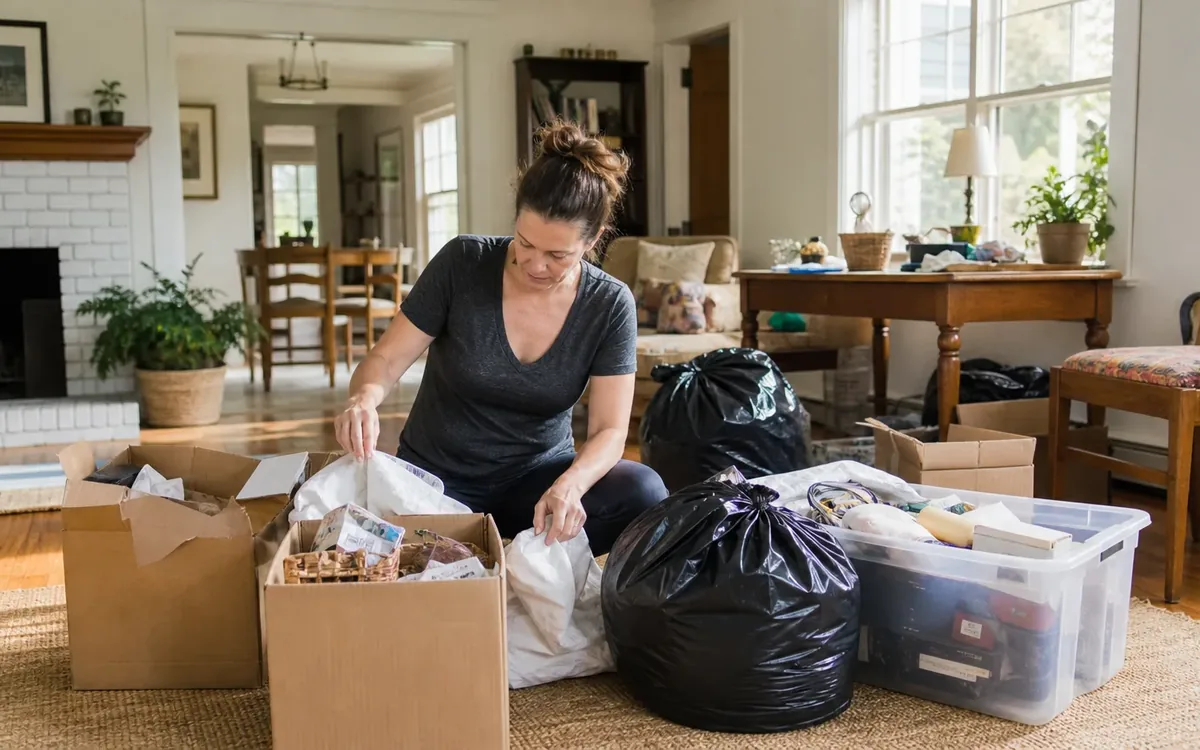
When a donation outlet rejects an item during a house cleanout, the next step is to classify it before deciding where it goes. Separate items that may be sold, recycled, handled as household hazardous waste, destroyed for privacy, or discarded. In the Charleston area and elsewhere in South Carolina, acceptance rules vary by facility and can change, so confirm requirements directly with the appropriate program, recycler, retailer, waste provider, or local authority before loading a vehicle.
Quick answer: Do not put every rejected donation into one trash pile. Create separate zones for resale, specialized recycling, hazardous materials, confidential records, ordinary household waste, and items that require professional guidance. Photograph questionable items, identify their materials, and call the intended destination before transport.
Start With the Reason the Item Was Rejected
A donation rejection does not always mean an item has no remaining value. It usually means the outlet cannot accept that particular item because of its condition, safety concerns, storage limits, recall risk, sanitation policy, or current operating rules.
Ask the outlet for a brief reason if it is practical to do so. The answer can point toward the correct next step:
- An item rejected because of limited floor space may still be suitable for resale elsewhere.
- A broken metal item may have recycling value even though it has no reuse value.
- A stained or pest-affected item may need disposal rather than redistribution.
- A recalled product should not be sold, donated, or passed informally to another household.
- A container with an unknown liquid may require guidance from a waste authority or hazardous-material program.
- A device containing personal data should be cleared or physically destroyed before recycling.
For a large or sensitive property transition, an estate cleanout service can help organize the physical sorting and removal process. The household still decides what may leave the property unless an executor, personal representative, court order, contract, or other lawful authority assigns that decision to someone else.

Build Disposal Zones Before Anything Leaves
Mixing rejected goods creates extra work and can cause unsafe materials to end up in ordinary waste. Set up clearly labeled zones in a garage, driveway, room, or other controlled area. Keep walkways open and protect items from rain.
Useful zones include:
- Possible resale: Clean, functional items worth evaluating for a sale or auction.
- Material recycling: Metal, cardboard, approved electronics, and other materials accepted by a verified recycler.
- Special handling: Paint, chemicals, batteries, fuel, fluorescent lamps, and unidentified substances.
- Privacy-sensitive: Tax records, medical papers, storage drives, phones, computers, and labeled media.
- Bulky disposal: Damaged furniture, ruined mattresses, carpeting, and large household goods.
- Ordinary waste: Items allowed by the household’s waste provider that have no reuse or recycling path.
- Decision pending: Objects with uncertain ownership, value, safety, or legal significance.
Use sturdy containers rather than loose floor piles. Never combine liquids, powders, cleaners, fuels, or yard chemicals. Keep children and pets away from the sorting area.
A practical cleanout or move team may discuss labor, access, lifting concerns, sequencing, container needs, and potential destinations. It should not decide legal ownership, declare an item hazardous without appropriate expertise, or guarantee that a third-party facility will accept a load.
Decide Whether Resale Is Worth the Delay
Some donation-rejected objects may be sellable, but resale is not automatically the best choice. The household should weigh potential return against time, storage, cleaning, advertising, and transaction effort.
Items that may justify evaluation include:
- Antiques or recognizable vintage pieces
- Collectibles with identifiable makers or series
- Quality furniture in usable condition
- Jewelry, coins, art, or specialty tools
- Working appliances with model information
- Farm, workshop, or commercial equipment
- Vehicles, trailers, or powered equipment with ownership records
Do not estimate value from appearance alone. Online asking prices do not establish what an item will sell for, and sentimental value is different from market value. For potentially significant property, consult a qualified appraiser, auction professional, estate-sale provider, or relevant specialist.
Clutter Cleaner of South Carolina lists auctions and estate sales among its services, so that option can be discussed as part of a broader transition. Whether a particular item is appropriate for sale, what it may be worth, and what disclosures or documents are required should be determined by the responsible sales, appraisal, legal, or regulatory professional.
If a sale is not practical, set a firm decision deadline. Indefinite storage can interfere with repairs, closing preparation, lease turnover, or family distribution. For related planning topics, households can review the company’s what are the basic steps for a cleanup.
Separate Recyclables by Material and Destination
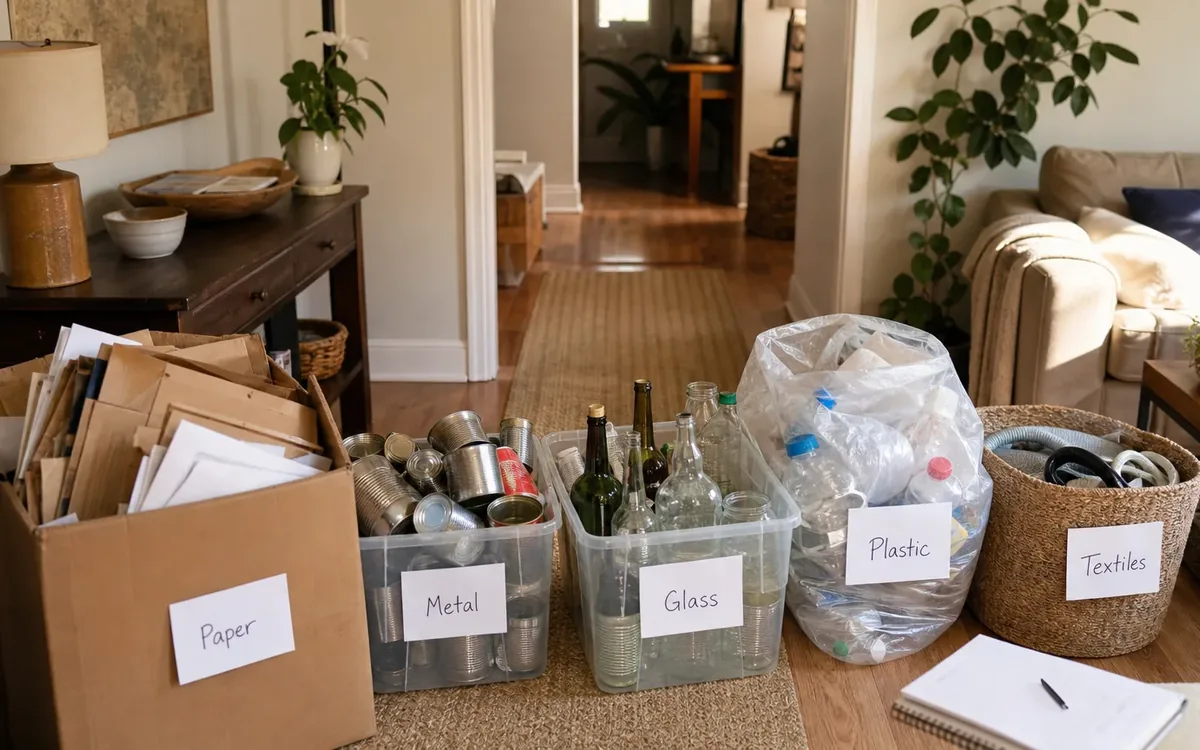
Recycling is often the next option for rejected household goods, but an item is not recyclable merely because it contains metal, plastic, glass, or wiring. Programs accept specific materials in specific forms.
Before transport, identify:
- The main material and any mixed components
- Whether batteries, refrigerants, oil, or fuel remain inside
- Whether the item must be disassembled
- Whether identification or proof of residency is required
- Whether the facility accepts residential drop-offs
- Whether quantity, size, or weight limits apply
- Whether fees or scheduled collection rules apply
Common candidates for specialized recycling include scrap metal, certain electronics, rechargeable batteries, cardboard, and some appliances. Acceptance varies across South Carolina, and curbside recycling rules are not the same as drop-off or commercial recycling rules.
Do not place electronics, batteries, propane cylinders, or chemical containers in a recycling bin unless the applicable program expressly allows them. A recycling symbol on packaging also does not guarantee local acceptance.
For appliances, confirm whether refrigerants, compressors, mercury switches, or other regulated components need professional handling. A cleanout team can help separate and move an appliance, but refrigerant recovery and other regulated work belong with an appropriately qualified provider.
Treat Chemicals and Unknown Substances Cautiously
Garages, sheds, kitchens, workshops, and utility rooms often contain materials that should not enter an ordinary donation or disposal stream. Examples include:
- Paints, solvents, stains, and thinners
- Pesticides, herbicides, and fertilizers
- Gasoline, kerosene, oil, and mixed fuels
- Pool and automotive chemicals
- Corrosive or reactive cleaners
- Aerosol cans with remaining contents
- Propane or other compressed-gas cylinders
- Unlabeled bottles, jars, powders, or cans
- Medical sharps or certain healthcare waste
Keep products in their original labeled containers when possible. Do not smell, taste, burn, pour out, or combine an unknown substance. Do not transfer it into a food or beverage container. If a container is leaking, avoid direct contact and seek instructions from the appropriate local authority, fire-safety contact, waste program, or qualified environmental professional.
South Carolina households should verify current instructions with the authority or program serving the property’s location. Rules may differ among counties, municipalities, collection providers, and facilities. A Charleston-area property should not be managed on the assumption that another South Carolina jurisdiction uses the same process.
A cleanout crew may identify materials that need to be isolated and pause work around them. The crew should not make technical chemical determinations or transport regulated substances unless that activity is within its confirmed capabilities and all applicable requirements are satisfied.
Protect Personal Information Before Recycling or Disposal
A rejected item can expose more than clutter. Papers and electronics may hold identity, financial, medical, employment, or account information.
Set aside documents containing:
- Social Security or taxpayer identification numbers
- Bank, investment, credit, or insurance details
- Medical information
- Signatures or copies of identification
- Passwords, account numbers, or security answers
- Information about clients, tenants, patients, or employees
The person responsible for the records should determine applicable retention obligations before destruction. Estate documents, tax files, business records, property records, and litigation-related papers may need to be retained. An attorney, accountant, records professional, or responsible authority should answer legal retention questions.
For electronics, signing out of an account is not necessarily the same as removing data. Phones, tablets, computers, external drives, cameras, gaming systems, printers, and smart-home equipment may store personal information. Follow the manufacturer’s reset instructions and consider qualified data-destruction assistance for sensitive devices.
Keep privacy-sensitive material under supervision. Do not place it in an open curbside pile while deciding what to do.
Handle Upholstered Goods, Mattresses, and Damaged Furniture
Upholstered furniture and mattresses are commonly rejected because of stains, odors, tears, structural damage, moisture, pests, or sanitation concerns. Once rejected, inspect them before moving them through the house.
Look for:
- Live insects, shed skins, eggs, or spotting
- Mold-like growth or extensive dampness
- Rodent contamination
- Broken frames, springs, or sharp fasteners
- Heavy smoke, pet, chemical, or decomposition odors
- Saturation from sewage or floodwater
Do not move a suspected pest-infested item into another room, storage unit, resale location, or family member’s home. Ask a qualified pest-control professional how it should be contained and removed. Mold, sewage, or other biological contamination may also require an appropriate remediation professional.
If an item is simply worn out, confirm bulky-waste or disposal requirements with the relevant provider. Do not leave it at a donation site after rejection or place it beside a collection point without authorization. Illegal dumping can create hazards and may violate local requirements.
Use Extra Care With Appliances, Tools, and Powered Equipment
Refrigerators, freezers, lawn equipment, generators, grills, and power tools can contain stored energy, fuel, oil, batteries, refrigerants, or sharp parts. A nonworking item is not automatically safe to handle.
Before moving powered equipment:
- Disconnect it only if this can be done safely.
- Do not cut unknown wiring or lines.
- Avoid draining fuel or oil onto the ground or into plumbing.
- Secure loose blades, doors, cords, and attachments.
- Keep keys and ownership documents with the responsible person.
- Confirm whether a recycler requires fluids, batteries, or tanks to be removed.
Firearms, ammunition, explosives, fireworks, and military ordnance require a separate response. Do not place them in a cleanout pile, transport them casually, or assume they can be discarded. Contact the appropriate law-enforcement authority, licensed dealer, bomb squad, or other responsible authority for instructions suited to the item and situation.
The household can identify known equipment and provide manuals or records. A practical move team can discuss access, weight, stairs, and loading constraints. Technical disconnection, regulated material recovery, ownership transfer, and safety determinations remain with qualified professionals or authorities.
Do Not Discard Items With Unclear Ownership or Estate Status
During an estate cleanout, physical possession does not always establish authority to sell, give away, or discard property. Pause when an item may be:
- Specifically named in a will or trust
- Claimed by a family member or beneficiary
- Leased, rented, or borrowed
- Subject to a lien or financing agreement
- Part of a business or professional practice
- Relevant to insurance, taxes, probate, or litigation
- A fixture that may transfer with the real estate
- Historically, culturally, or archaeologically significant
The executor, personal representative, trustee, property owner, or other authorized decision-maker should approve removal. Disputes and questions about title, probate authority, beneficiary rights, abandoned property, or contract obligations belong with a South Carolina attorney or the appropriate court or agency.
Likewise, whether an attached object is a fixture or personal property may affect a home sale. A real-estate professional or attorney should address that question under the applicable agreement. A cleanout team can follow a documented keep-and-remove plan, but it should not interpret the contract.
Coordinate Disposal With Property Repairs and Sale Preparation
The order of work matters when a property is being prepared for sale, inspection, renovation, or code review. Removing everything too quickly can discard useful parts, manuals, warranties, matching materials, or items needed for an inspection. Waiting too long can block contractors and delay cleaning.
A practical sequence is:
- Confirm who has decision-making authority.
- Mark items that must remain with the property.
- Separate records, valuables, and disputed belongings.
- Identify hazardous or technically complex materials.
- Allow appraisers or sale professionals to review selected goods.
- Remove approved items by destination.
- Complete repairs, detailed cleaning, and final walkthroughs.
A home-transition team may discuss room order, staging areas, truck access, elevator or parking constraints, and deadlines. Home inspectors determine inspection findings. Real-estate professionals advise on listing and transaction strategy. Contractors define repair methods. Code officials and other authorities determine compliance, approvals, and enforcement outcomes.
Clutter Cleaner of South Carolina lists move management, home sale preparation, and code compliance support among its services. Support can help coordinate the physical project, but it does not replace legal advice, an appraisal, an inspection, a real-estate opinion, or an authority’s compliance decision.
Create a Final Destination Record
For a small cleanout, a simple note may be enough. For an estate, business property, disputed household, or major move, keep a more complete record of where significant items went.
A useful log can include:
- Item or category description
- Who authorized removal
- Intended destination
- Date removed
- Sale, recycling, disposal, or transfer status
- Photographs of high-value or unusual items
- Receipts or facility documents when available
- Unresolved questions and the person responsible for them
This record helps families avoid repeated questions and shows which decisions are still open. It can also help the project lead confirm that hazardous, confidential, or high-value categories were not mixed into general debris.
Do not treat a disposal receipt as proof of legal ownership or full regulatory compliance. Keep any records requested by the executor, property owner, attorney, accountant, insurer, real-estate professional, or authority.
A Practical Rule for Every Rejected Item
For each item that cannot be donated, ask four questions: Who has authority to decide? What risk does the item carry? Is there a realistic resale or recycling route? Which verified destination will accept it?
The household or authorized estate representative can set priorities, approve ordinary belongings for removal, choose among verified options, and decide how much time to allow for resale. A cleanout or move team can help organize categories, plan lifting and access, document instructions, and coordinate the physical transition.
Questions involving ownership, estate authority, market value, contracts, inspection findings, hazardous materials, regulated disposal, or code compliance should go to the relevant attorney, appraiser, real-estate professional, inspector, qualified contractor, environmental specialist, facility, or government authority.
For help discussing an estate cleanout or broader home transition anywhere in South Carolina, contact Clutter Cleaner of South Carolina at (843) 972-7020. Confirm the property’s needs, the types of items involved, and any destination or handling restrictions before work begins. For a related planning question, see our guide to routing estate items.



