How to declutter when everything is sentimental is a memory problem before it is a storage problem. The work gets easier when you name what each object represents. You can preserve a story without keeping every item connected to it. Start with ordinary belongings and save the hardest group for later.
Quick answer: Declutter sentimental belongings by working in small categories, keeping representative objects, and recording the stories behind them. Use a limited review area for uncertain choices. Do not begin with the most emotional box. Protect documents separately, ask before giving items to relatives, and confirm every outside destination.
How to declutter when everything is sentimental?
Declutter sentimental items by separating memory from quantity. Choose a few objects that carry a clear story, photograph or describe others, and place uncertain pieces in a limited review area. Work for short periods. The goal is not to become less caring. It is to keep meaning in a form your next home can hold. For the related service scope and planning steps, review our downsizing and organizing support and room-by-room downsizing planner.
Begin with a low-emotion category. Extra towels, duplicate kitchen tools, or unused cleaning supplies help you practice the decision process. Do not open family letters on the first day. A simple category gives the household a finished result and shows how much time one shelf really takes.
When you reach a meaningful object, ask three questions. What person or event does it represent? Do you use or display it now? What is the smallest honest way to preserve that connection? There is no automatic right answer. The questions turn a wave of feeling into a choice you can describe.
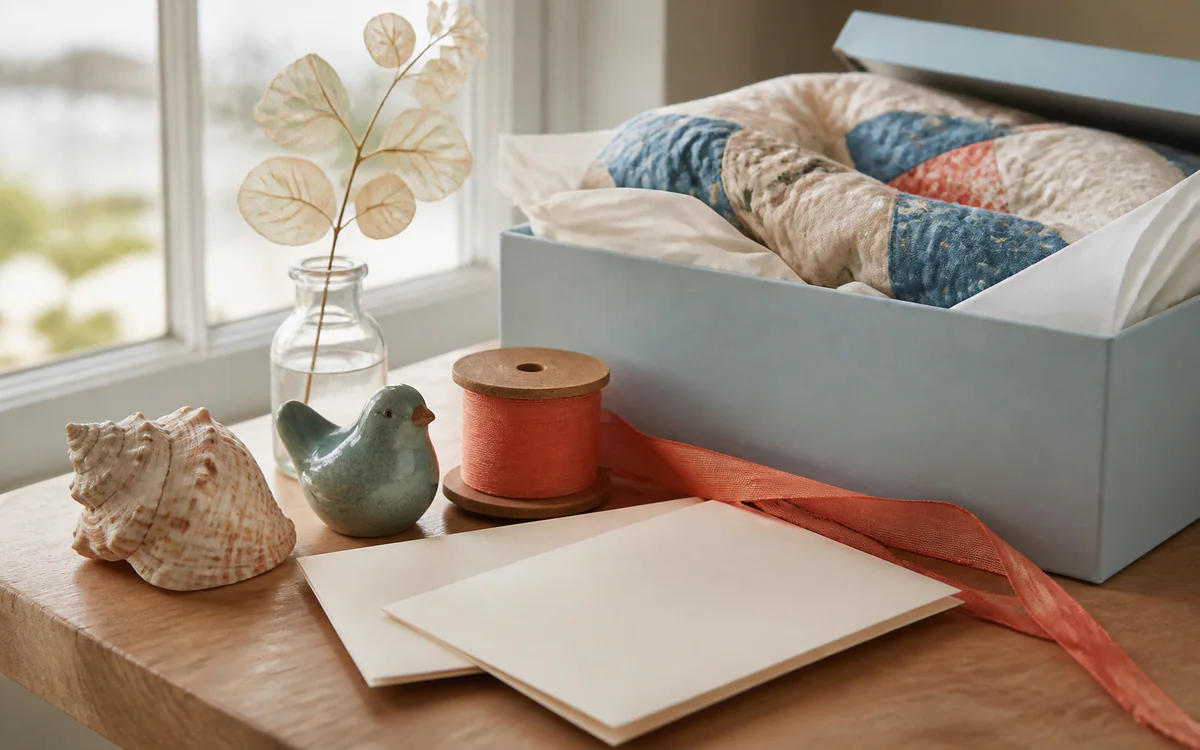
Keep representative pieces. One holiday ornament can stand for a full set. A single recipe card may carry a relative’s handwriting and the memory of many meals. Choose the object that tells the clearest story, not the one that is largest or hardest to move.
Make a memory record for items you release. Take a plain photo in good light. Add a name, date, place, or two-sentence story. Store the file in a protected folder with a clear name. A digital record is useful only if the right people know where it is and can access it.
Create a review limit before sorting. One carton, one shelf, or ten objects gives uncertainty a safe place without allowing it to spread. Add a review date. If the area is full, review an existing item before placing another one inside.
Do not ask family members to decide while standing over an open box. Send a photo and a short description. Give them a clear reply date. Silence should not be treated as consent, and an unrequested shipment transfers the storage problem rather than solving it.
The room-by-room downsizing planner can record keepers, questions, and intended destinations. Downsizing and organizing support can help structure the agreed work. Personal choices remain with the household or authorized decision-maker.
What is the 90 90 rule to declutter my sentimental items?
The 90/90 rule asks if you used an item in the last 90 days or may use it in the next 90. It can guide goods. Keepsakes, records, and seasonal items need other tests, so treat it as a prompt. Related South Carolina planning tools include our downsizing and organizing support and room-by-room downsizing planner.
The rule is useful for ordinary possessions that hide inside emotional categories. You may not need three serving trays simply because they came from a relative. Ask whether one tray can carry the memory and serve the household. The other two can receive separate decisions based on condition and possible destinations.
Adjust the time frame to the object. Seasonal decorations may need a one-year view. Special-event clothing may call for a specific future event. A family document may need a retention decision, not a use test. The point is to interrupt automatic keeping, not to force every object into the same calendar.
Add a space question: where will this item live in the next home? “In storage” is not a complete answer unless the storage location, size, and access are known. A named shelf or wall makes the decision real. If the item has no place, consider whether the story can be kept another way.
Use a four-part note:
- Last used or displayed
- Next likely use
- Meaning or person connected
- Planned place in the home
An item can pass the meaning test and fail the space test. That does not make the choice easy. It tells you where more thought is needed. Compare it with other objects carrying the same story rather than judging it alone.
Avoid using a popular rule to overrule another person. The owner or authorized decision-maker sets the final choice. A family helper can ask questions and record answers. They should not turn a 90-day guideline into permission to remove property.
For items cleared to leave, condition and local rules still matter. The AARP guide to household-item options discusses possible sale, gift, donation, recycling, and disposal paths. Confirm requirements with the actual recipient before moving anything.
Is it best to declutter one room at a time?
One room at a time is usually helpful when each room has clear boundaries and a defined purpose. Finish one small zone before opening another. Some categories, such as documents or family photographs, may span several rooms and need a separate project. Choose the boundary that reduces repeated decisions. To turn this answer into a practical plan, compare downsizing and organizing support with the room-by-room downsizing planner.
A room gives the work a visible edge. You can see what is left, clear the floor, and close the door at the end. Yet “the whole bedroom” may still be too large. Start with one dresser or one closet rail. A smaller finish is better than six half-open areas.
Do a no-decision walkthrough first. Note where sentimental objects appear and which categories repeat. Photographs may be in the desk, attic, and guest room. Dishes may be in the kitchen and garage. The walkthrough helps you decide whether a room or category is the safer unit of work.
Keep the daily function of the room intact. In a bedroom, protect the bed, clothing needed this week, medication, and a clear path. In a kitchen, leave a basic set for meals. Decluttering should not make the home harder to use while the project continues.
Set one staging surface and remove it at the end of the session. A folding table can hold keep, review, and destination labels. Do not use the bed or dining table if the household needs it later that day. The project must fit around normal life.
Record cross-room choices. If you keep one family quilt in the bedroom, note that before opening a linen chest elsewhere. The note prevents each room from starting the same decision again. A simple inventory can save emotional energy.
Finish the room in a practical order:
- Return the chosen keepers
- Secure the review group
- Remove obvious household waste
- Confirm outside destinations
- Clear floors and doorways
- Write the next starting point
Do not carry uncertain boxes to the next room. That merges two projects and makes progress hard to see. If a decision needs another person, label it and keep it in the limited review area.
What is the 3-3-3 rule for decluttering?
There is no official 3-3-3 rule for decluttering. The label has several meanings. One version uses three items from three areas for three days. Define the method first, give each item a next step, and stop if choices seem rushed. For additional planning context, see downsizing and organizing support and the room-by-room downsizing planner.
The value comes from a small commitment. A person who freezes at “clear the house” may be willing to choose three obvious duplicates. The count creates a finish line. It should not become a quota that forces emotional decisions.
Choose areas with different effort levels. One kitchen drawer, one bathroom shelf, and one coat hook may work. Avoid selecting three memory boxes. The routine should build confidence, not collect the hardest decisions into a daily test.
Give every selected item a real status. Keep means it has a place. Review means it fits inside the limited question area. A possible donation or recycling label means the outside rule still needs confirmation. Nothing should leave solely because the daily count needs to be met.
Track what you learn rather than only what leaves. Maybe paper takes longer than clothing. Perhaps evening sessions are tiring. You may discover that a sibling needs to answer photograph questions. Adjust the next three-day cycle around that information.
Stop if the method increases anxiety or causes rushed choices. A catchy rule is optional. The household’s authority, energy, deadline, and next-home plan matter more. Another routine, such as one shelf per session, may fit better.
Small routines can help between larger planning sessions. They cannot replace measurement, document protection, or a clear handoff plan. Use the rule for ordinary decisions. Set aside property, records, valuables, and disputed objects for the right review.
Where can I store my important documents?
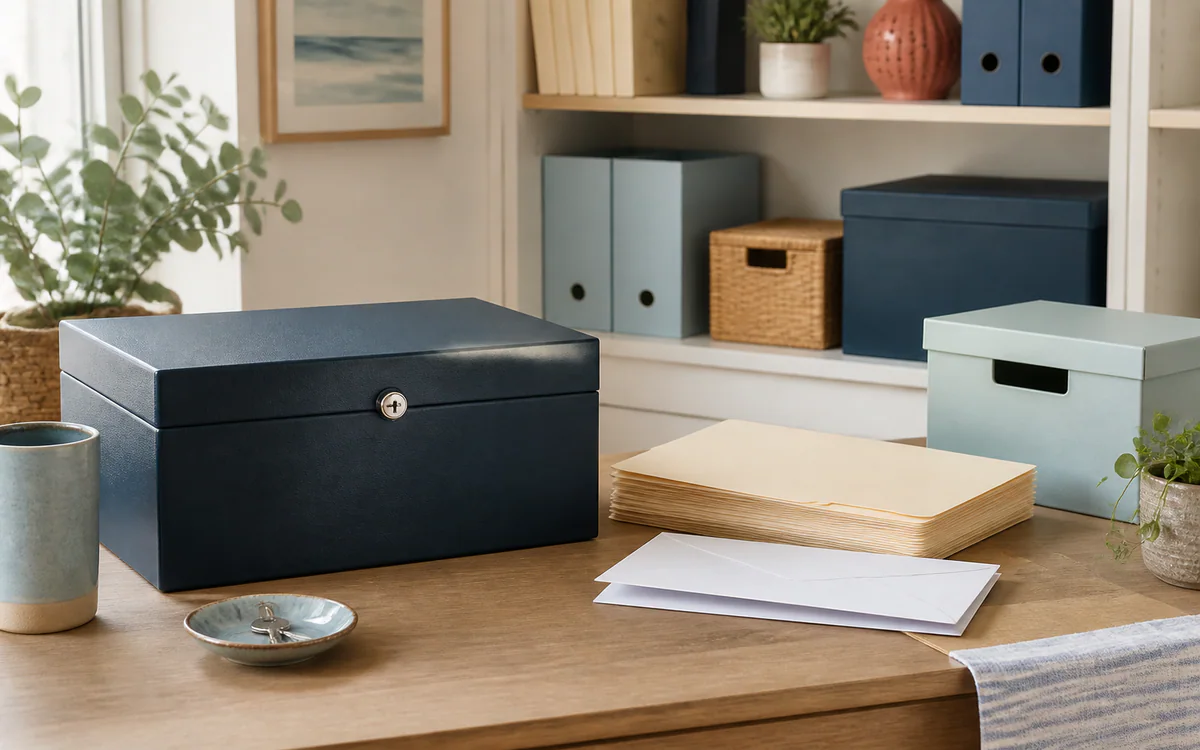
Store important documents in a secure, dry place that the authorized person can access when needed. Protect originals based on replacement difficulty and professional guidance. Keep digital copies behind strong access controls. Do not place the only copy in general storage, a moving carton, or an unlabeled family box. The next steps connect to our downsizing and organizing support and room-by-room downsizing planner.
Separate documents before sentimental sorting. Identity records, property papers, current legal documents, insurance information, tax records, medical information, and financial papers should not share a table with greeting cards or photographs. Their privacy and retention needs are different.
Create three working groups: current action, long-term secure storage, and professional review. Add a fourth group for approved destruction. Never write full account numbers on folder tabs or an inventory. Use plain labels that help the responsible person find the right category.
Ask the issuing agency or a qualified adviser how long a document should be kept. Do not rely on a general decluttering rule for tax, property, estate, legal, medical, or financial records. When unsure, retain the paper until the right source answers.
Make secure copies where appropriate. Check that scans are complete and readable. Use file names with the document type and date, but no sensitive number. Backups should follow the household’s approved security plan. A photo sitting in an unprotected phone gallery may not be enough.
Tell one authorized person how the system works. A locked container with no access plan can create a different problem. Record the general location, responsible person, and review date. Keep passwords, combinations, and account details in a separate protected system.
Paper cleared for destruction may still contain private data. Use an appropriate secure method. The EPA’s general recycling guidance encourages checking local programs and accepted materials. Privacy comes first, and local programs set the final rules.
Sentimental papers need their own choice after sensitive records are safe. Keep selected letters or cards in archival-quality materials if the family chooses. Photographing a note may preserve its words, while the original handwriting may be the meaningful part. Decide which quality matters.
The best storage system is one the household can use with ease. Name the folders. Limit copies. Review them on a set date. Memory needs care, and so does the private data tucked between the pages.
End with a kind check. Ask if the saved items still tell the right stories. Make sure each one has a safe place. Write down the names or dates that may fade with time. A small, clear set can be rich with meaning. The aim is not less at any cost. The aim is room for what the person most wants to keep.