
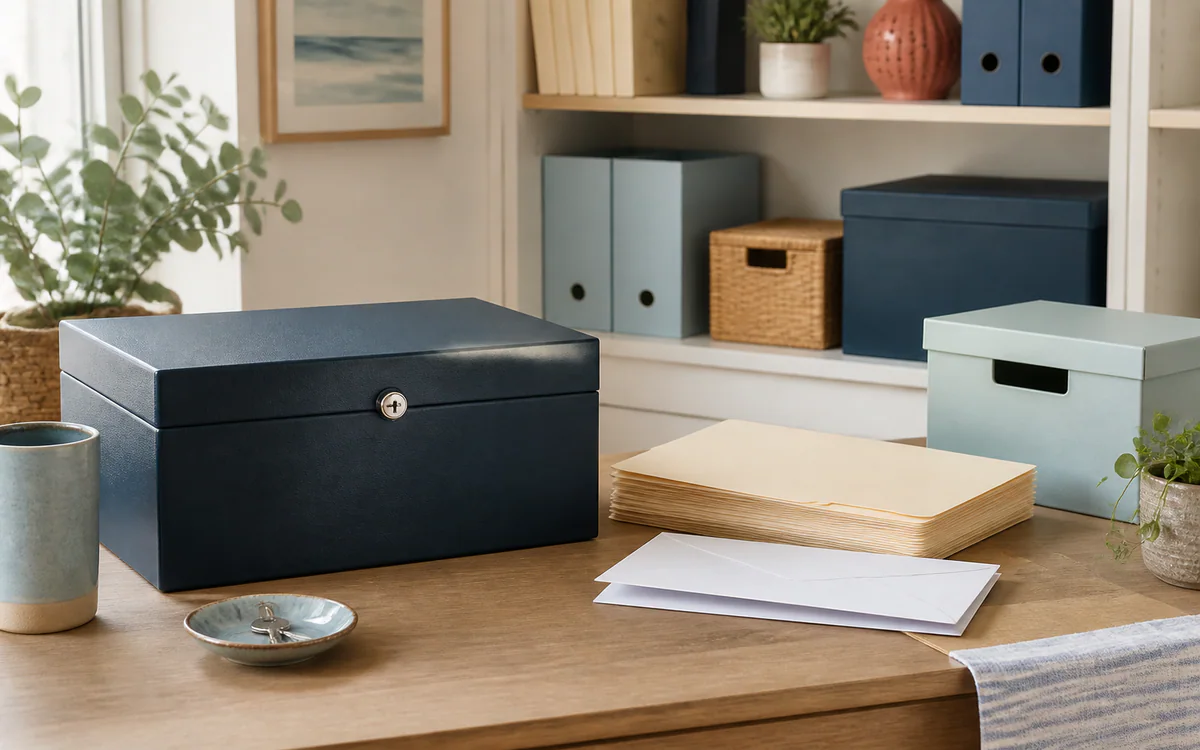
How do you keep important documents safe and organized? Start with their own plan before a move. They can be hard to replace and easy to lose. They are not safe in a common sort pile. A clear file plan guards private facts and helps the person in charge find the right paper fast.
Quick answer: Gather important documents in one safe work area. Group them by use and give each folder a plain name. Keep source copies in a safe place, make guarded scans when useful, and list where each group lives. Ask the issuing office or a qualified adviser before you destroy a record with an unclear keep time.
How do you keep important documents safe and organized in a move? Start early. Keep paper apart from clothes, chairs, gifts, and waste. One file in the wrong box can cause far more harm than a lamp that has no set path.
This is a file plan, not law, tax, health, online safety, or money advice. Keep times vary by paper and by home. If the answer is not clear, keep the paper safe. Ask the office that sent it or the right adviser.
How do you keep important documents safe and organized?
Keep important documents safe and organized with one safe paper zone, clear folders, and a list of where each group is kept. Let only named people see private files. Hold any paper with an unclear keep time. Ask the office that sent it or a qualified adviser before you shred it. For the related service scope and planning steps, review our downsizing and organizing support and room-by-room downsizing planner.
Choose the paper zone before opening boxes. It may be a locking cabinet, a desk in a private room, or a portable file case that stays with the authorized person. It should be dry, away from outgoing items, and unavailable to visitors or unassigned helpers. Do not use the donation table as a temporary paper surface.
Gather papers from predictable places first. Check desks, filing cabinets, bedside drawers, kitchen counters, safes, briefcases, and boxes labeled for taxes or family history. Do not search private property without permission. If a locked container appears, ask the person with authority how it should be handled.
Create broad categories before reading every page:
- ID and birth records.
- Home and land papers.
- Current money records.
- Tax files.
- Insurance papers.
- Health files.
- Law and estate papers.
- Bills and deals still in force.
- Family keepsakes.
- Ask an expert.
Broad groups help prevent a final choice too soon. Add folders for current, old, action, and copy review. Use short labels. Do not put account numbers, ID numbers, or health facts on the front.
Build a short index. The home inventory worksheet can list the group, safe place, person in charge, and next task. It should help that person find a folder. It should not copy the private facts kept inside.
Decide who has access. In a family project, the person moving may want one relative to handle bills and another to scan family photographs. Those roles should be explicit. Physical help does not automatically grant permission to read financial, medical, or legal papers.
Keep active papers apart from old files. Papers for the move, a current ID, recent bills, insurance contacts, and records needed at the next home may belong in a carry-with-you folder. Do not place the only copies in a moving truck, parked car, or checked bag. The person in charge should know where this folder is at all times.
Review the system at the end of each work period. Count sensitive folders, return originals to secure storage, and clear the table. Write down questions rather than leaving uncertain pages exposed. A five-minute closeout routine can prevent papers from drifting into unrelated boxes.
How to store old important documents?
Store old important documents based on why they matter, how hard they are to replace, and how long they must be kept. Place key source copies in a safe, dry spot. Use the right sleeves or boxes for frail family papers. Make safe scans when useful. Do not toss a file just because it is old. Related South Carolina planning tools include our downsizing and organizing support and room-by-room downsizing planner.
“Old” can describe very different papers. An expired coupon and an original family record may be the same age but need opposite treatment. Sort by purpose and value rather than year alone. If a document proves identity, ownership, a legal decision, or a financial event, confirm its requirements before acting.
Look before you touch. Check for damp spots, bugs, mold-like marks, weak paper, fade, or stuck sheets. Set a harmed file apart. Ask a paper care expert what to do. Do not brush, spray, seal, or pull pages apart on a guess.
Family papers may need archival storage. Acid-free folders and suitable boxes can help, but the correct choice depends on the material. Keep papers away from direct sunlight, damp floors, hot attics, and spaces with large temperature changes. Label the outer container by general category, not sensitive details.
Photos, letters, and notes can hold both facts and deep ties. Ask the owner what must stay as it is, what may be copied, and who may get it. A scan can aid access. It may not replace the worth or legal role of the source page.
Pick one file name style before you scan. A name can list the year, group, and short note. Do not place a Social Security number, account number, health fact, or full birth date in it. File names may show up in search, backup, or shared views.
Scans need care too. Use a trusted safe place, firm sign-in rules, and a backup the person in charge knows. Test each file. A box of blank drives or an old cloud file with no known sign-in is not a sound plan.
Make a review note when no one knows how long to keep a paper. List the group, the question, who to call, and who will call. Leave private facts out. This turns “keep it for now” into a set next step.
When an old paper is cleared to go, match the method to its risk. Clean plain paper may go to a local recycle plan if it is allowed. Private files may need a safe shred step. Check local rules. Never put clear personal facts in an open bin.
How should I store my important documents?
Store important documents in a safe, dry file plan that fits each paper’s use. Keep day-to-day files apart from source copies that are hard to replace. Guard scans and back them up. Give the person in charge a short index. Do not keep all copies in one place. To turn this answer into a practical plan, compare downsizing and organizing support with the room-by-room downsizing planner.
Think in three levels. First is an action file for papers needed soon. Next is the home file for use through the year. Last is a safe spot for source copies that are hard to replace. Not each paper needs the top level. Each private paper needs care.
An action file may hold the move plan, power notes, current insurance contacts, an ID needed for the move, and key phone numbers. Check it often. Remove tasks once they are done. That keeps the folder useful.
The home file can use folders by group. Use the same names for paper and scans when you can. If the paper says “Home insurance,” use that name for the scan folder. The same words help a person find a file when stress is high.
Key source copies may need more care from fire or water. A bank box or other safe place may fit some files. Each choice has limits and access rules. Ask the source office or an adviser what fits. Make sure the named person can get the paper when it is truly needed.
Keep location information concise:
- Group name.
- Main file place.
- Named contact.
- Copy on hand.
- Next check date.
Do not put passwords or full private numbers in a plain index. Keep sign-in facts in a safe way. A plan is weak if one person must recall it all. Ask the right adviser how to plan for safe access when needed.
Review documents on a steady schedule and after major life events. Remove obvious working duplicates only after comparing them. A photocopy with handwritten notes may not be a true duplicate. Mark the review date on the folder or index, not on an irreplaceable original.
The downsizing and organizing service can help a home set file groups, list boxes, plan the pack, and keep to the agreed sort steps. Clutter Cleaner does not set keep times, read files for the client, or give law, tax, health, money, or online safety advice.
What are the mistakes people make when downsizing?
Common paper mistakes include a late start, files mixed with waste, too many people with access, and a shred step before the keep time is checked. Key source copies also get lost in packed boxes. Vague tags, repeat piles, and one person’s memory make the plan hard to use. For additional planning context, see downsizing and organizing support and the room-by-room downsizing planner.
The first mistake is treating paper as a final-day task. A crowded desk looks smaller than a garage, but each page may require context. Start paper review while there is time to contact an agency, adviser, or family decision-maker. Short sessions are easier to check than one rushed marathon.
Another mistake is sorting by appearance. An old envelope may hold a current record. A blank-looking folder may contain a deed, title, or signed instruction. Open and review materials only with proper authority. Keep a “professional review” folder for anything the sorting team should not decide.
Do not claim that a paper can go in a recycle bin. The EPA’s recycling guidance says to check local plans and cut waste when you can. Local rules vary. Privacy comes first. Clean paper and private files may need two paths.
Avoid letting outgoing furniture leave unchecked. Desks, filing cabinets, nightstands, books, bags, and jacket pockets can contain documents or personal data. Use a documented check before an item moves to sale, donation, recycling, or disposal. If the owner is not available, hold the piece until authority is clear.
The AARP guide to getting rid of household items describes several release paths, but no path should receive personal records by accident. Confirm acceptance terms for the item, remove private contents, and record the decision before it leaves.
Buying elaborate supplies too soon is another common error. Start with existing folders, a protected box, labels, and an index. Once the categories and volume are known, choose storage that fits. Containers should support the system, not hide unsorted paper.
Last, a neat file does not grant the right to act. A helper may know the plan but lack the right to shred, share, or move a paper. Stop when the owner or legal role is in doubt. The right adviser can help. A sort team cannot.
What can I do if my aging parents expect too much?
If aging parents ask for more help than you can give, name the tasks, your true limits, and who else may help. Agree on what comes first, the time you can give, and who may decide. A small promise you can keep is kinder than a broad one you cannot. The next steps connect to our downsizing and organizing support and room-by-room downsizing planner.
Begin with curiosity. “Which paper problem worries you most?” is easier to answer than “What do you need?” The concern may be finding a will, paying current bills, protecting family photographs, or clearing a room. Different concerns need different people and timelines.
Write the work into small units:
- Gather papers from one desk
- Label five broad folders
- Call one issuing agency
- Scan one approved category
- Review one box together
Choose what you can do and when. A two-hour Saturday session is a real commitment. “I will handle all the paperwork” has no boundary and may mean something different to each person. Put the agreement in writing so neither side has to rely on memory.
Name the decisions your parent keeps and the tasks you can support. They may decide what is private, which relative may see a folder, and which keepsakes matter. You may offer to label, carry, scan, or schedule. If another person has legal authority, confirm the role rather than assuming it.
Share work by skill and trust. One family member might sort old photos. One might make calls. A paid sort team can aid the hands-on work. Questions on law, tax, health, money, paper care, and online safety belong with the right expert.
If the expectations remain unworkable, say what you can do without arguing about what a caring child “should” do. Offer a narrower choice: one box together, an inventory session, or help identifying outside support. Do not remove documents or force decisions to prove progress.
Close each session with a handoff. Return secure folders, update the index, list open questions, and choose the next date. That routine makes a modest amount of help dependable. It also lets an older parent see that important papers are being treated with care, privacy, and respect.