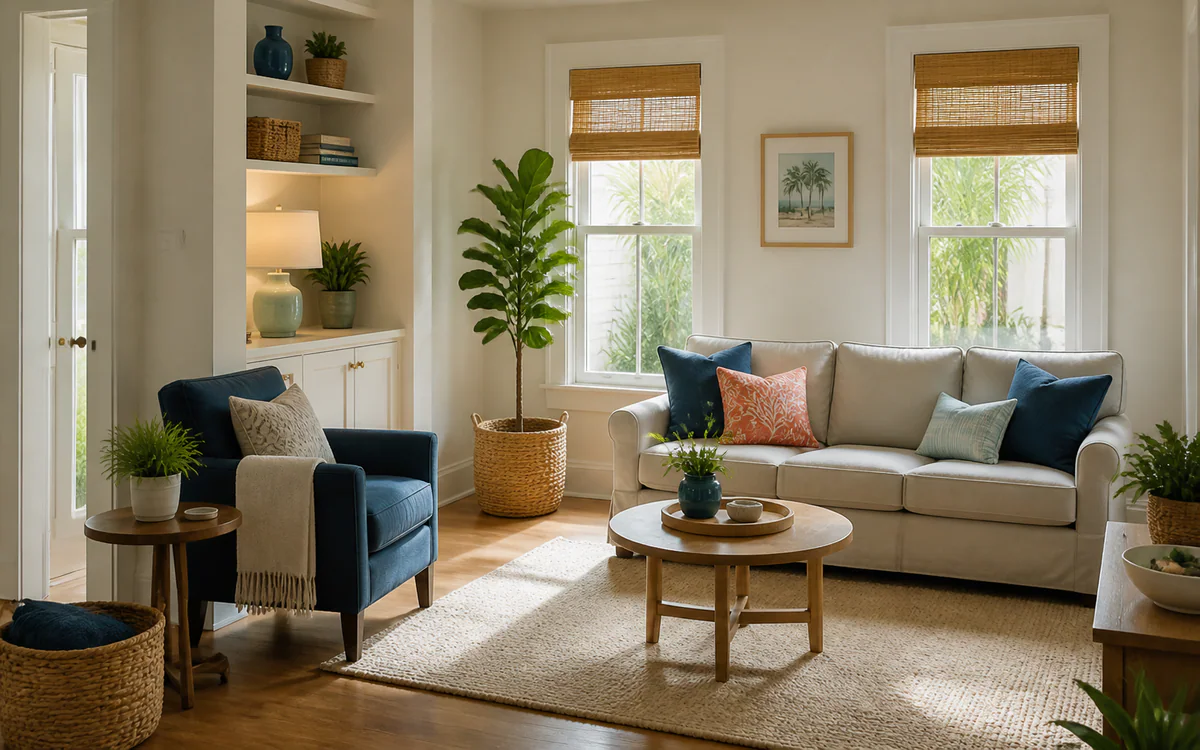
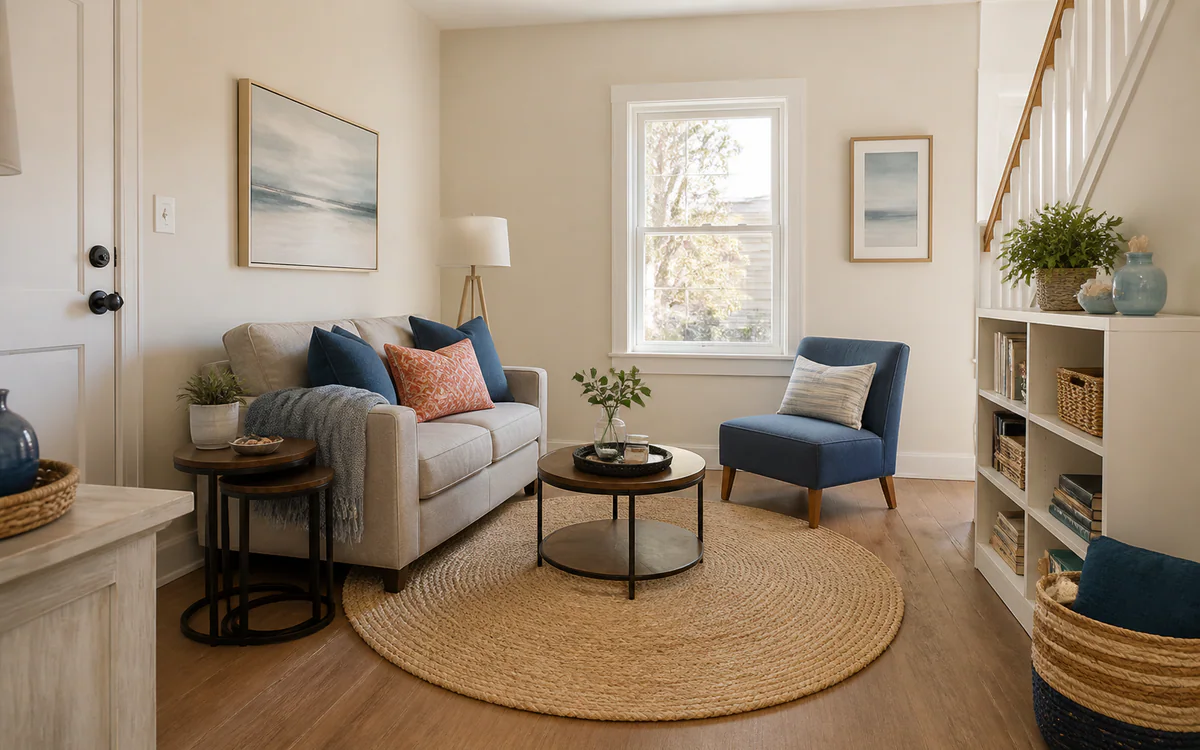
How to arrange furniture in a small home starts with measurements, daily routines, and clear walking paths. A good plan gives the most useful pieces room to work while letting go of furniture that blocks doors, crowds storage, or belongs to a room the new home does not have.
Quick answer: Measure the rooms, doors, halls, and furniture before moving anything. Place the pieces that support daily life first, protect clear routes between doors, and leave enough space to open drawers and cabinets. Test the plan on paper, then remove pieces that do not have a safe, useful place.
This is not a decorating contest. A room can feel warm and personal without holding every piece from the former home. The goal is a layout that supports how the household lives now. In Charleston and across South Carolina, that may also mean keeping entries clear when rain arrives, allowing room for guests, or making sure outdoor doors are easy to reach.
The person moving should keep control of the decisions whenever possible. Family members can measure, draw, label, and move lighter objects. They should not quietly decide that a favorite chair is too old or that a table is no longer needed. Furniture often carries memories, routines, and a sense of home.
How to arrange furniture in a small home?
Arrange furniture in a small home by mapping the room, choosing one main function, and placing the largest essential piece first. Keep doors, windows, vents, cabinets, and walking routes open. Add only the pieces that have a clear use, then test the room before bringing in anything else. For the related service scope and planning steps, review our downsizing and organizing support and room-by-room downsizing planner.
Start with exact room dimensions. Measure wall lengths, ceiling height where tall pieces may go, door swings, window locations, outlets, vents, and built-in storage. Note narrow halls, stairs, elevators, and exterior doors too. A sofa that fits the living room can still fail if it cannot reach the room.
Measure each likely piece of furniture. Record width, depth, and height. Include the extra room needed to pull out a dining chair, open a dresser drawer, recline a chair, or unfold a sleeper sofa. A dimension list should show the furniture in use as well as at rest.
Use graph paper, painter’s tape, or simple paper rectangles to test layouts. The room-by-room downsizing planner can keep the room measurements, furniture decisions, and open questions together. Mark each piece as definite, possible, or release. Do not place every possible piece into the first plan.
Choose the room’s main job. A living room may be for conversation, television, reading, or a mix of those activities. A spare room may need to serve as an office and guest space. Once the main job is clear, choose the furniture that directly supports it. Pieces with no defined purpose should wait outside the plan.
Place the largest essential piece first. That may be a bed, sofa, dining table, or desk. Face it toward the room’s focal point or the activity it supports. Then add smaller pieces while keeping a direct route through the room. People should not need to turn sideways around a table or step over cords.
Check these clearances during the paper test:
- Doors open without hitting furniture
- Drawers pull out fully
- Chairs move without blocking a route
- Lamps reach outlets safely
- Windows remain usable
- Vents stay uncovered
- Daily items stay within reach
Storage furniture earns space when it holds items that are actually used. A large cabinet can be valuable if it replaces several smaller pieces. It can also overwhelm a wall if most of its contents are no longer needed. Review the contents before assuming the cabinet must move.
Avoid lining every wall by habit. A small room sometimes works better with a compact seating group and open space behind it. Other rooms need furniture against the walls to preserve a central path. Let the room shape and routine decide. There is no single layout that works for every home.
Take photographs of the planned layout and label furniture before moving day. A simple label such as “living room, long wall” gives helpers a clear destination. It reduces heavy rearranging after the truck arrives. Keep one alternate layout in case an overlooked outlet, trim piece, or door swing changes the plan.
Live with the first layout for days before adding more. Notice where bags land, which chair is chosen, and whether a route feels tight. Move small pieces first. If the room feels crowded, remove one item and test again instead of shifting everything at once.
What is the 2 3 rule for furniture?
The 2 3 rule is a flexible guide to size, often written as two-thirds. A sofa may be about two-thirds of its wall, or art two-thirds of the piece below it. It is a starting point, not a safety rule. Related South Carolina planning tools include our downsizing and organizing support and room-by-room downsizing planner.
The phrase can mean different things in different design sources. That is why the underlying measurement matters more than the label. If someone recommends a two-thirds rule, ask which objects are being compared and whether the remaining space supports doors, traffic, and daily use.
For a sofa wall, begin with the usable wall width. Exclude the area needed for a swinging door, floor vent, or built-in feature. A sofa near two-thirds of that remaining width may look balanced, but it is only a starting point. A room with an off-center doorway or an accessible walking route may need a smaller piece.
The same idea can help with a coffee table. A table that is roughly two-thirds the sofa length may feel proportional. Still, the distance between the sofa and table matters more. People need room to sit, stand, and pass. A visually balanced table is a poor fit if it creates a trip hazard.
Artwork and rugs are also discussed with proportion rules. Those choices should come after the essential furniture and pathways are settled. Do not keep an oversized cabinet just because its scale matches a wall. Function comes before a decorating formula in a downsizing plan.
Use three questions whenever a rule suggests keeping or buying a piece:
- Does it fit the measured space?
- Does it support a current routine?
- Can people move around it comfortably?
If any answer is no, try a smaller piece or a different layout. A proportion guideline can help the room feel calm, but it cannot replace real measurements. It also should not pressure someone to replace furniture that already works safely and comfortably.
What not to do when downsizing?
Do not release furniture before the next home’s measurements are confirmed. Avoid packing every piece by default, filling rooms before daily paths are tested, or deciding for the person who owns the belongings. Protect essential seating, sleeping furniture, medications, papers, and disputed items until the plan is clear. To turn this answer into a practical plan, compare downsizing and organizing support with the room-by-room downsizing planner.
A listing floor plan can help with early comparisons, but it may omit door swings, trim, radiator covers, low windows, or unusual corners. Verify room and access measurements before treating the drawing as a moving plan. A sofa can fit the room and still fail at the stair, hall, or doorway.
Do not design the room around storage alone
Start with daily needs: a suitable bed, comfortable seating, a dining or work surface, task lighting, and necessary storage. The exact list belongs to the household. Add furniture only after those pieces have safe positions and clear paths between them.
Avoid buying organizers before you know what will stay. A new shelf does not solve an oversized inventory. It may consume the space that a useful chair, mobility aid, or open route needs.
Do not hide uncertainty inside a moving label. Mark each piece as definite, possible, or owner review. If ownership or family agreement is unclear, pause that item. A rushed decision can be expensive and hard to reverse.
Once the next home is confirmed, schedule a measuring visit if permitted. Bring the furniture list, tape measure, and floor plan. Photograph only with permission. Record the route from the entrance to each room, including the narrowest opening.
The downsizing and organizing service can help structure inventory, sorting, layout planning, and packing coordination. It does not provide real estate, legal, financial, or appraisal advice. Keeping that boundary clear helps each professional answer the questions within their role.
What to get rid of first when downsizing?
Start with low-emotion items that are clearly duplicated, broken, expired, or not suited to the next home. Sort one small area, confirm who can decide, and choose a real destination before anything leaves. Save photographs, family papers, heirlooms, and disputed property for a slower review. For additional planning context, see downsizing and organizing support and the room-by-room downsizing planner.
Furniture decisions become easier after the new layout is drawn. A third nightstand has a clear answer when the plan has room for two. A twelve-seat table may not fit a four-seat dining area, but the owner may still want time to discuss its history or an alternate destination.
Begin in a low-pressure place such as a linen closet, utility shelf, or guest-room drawer. A short, completed area teaches the household how long decisions take. It also reveals which categories need family input. Do not start with the attic if heat, stairs, dust, or poor lighting make the work unsafe.
Use four plain destination labels:
- Keep for the next home
- Give to a named person
- Release through a confirmed option
- Review again on a set date
“Release” is not one automatic pile. Sale, donation, recycling, and disposal each have different rules. The AARP guide to getting rid of household items outlines several practical paths. Contact the chosen organization or service before promising that it will accept an item.
Broken or worn furniture needs the same verification. Materials, size, condition, and local programs affect the available route. The EPA’s guidance on reducing and recycling encourages reuse and checking local options. It does not guarantee that a municipal program, recycler, or charity accepts a particular item.
Do not remove furniture that holds documents, medication, keys, jewelry, cash, or personal data until it has been checked. Empty every drawer and pocket with the authorized person. Photograph the empty piece if the project record needs confirmation. Keep sensitive material in a protected area away from outgoing items.
Set a limit for the “review later” group. Give each item a label with the owner, question, and review date. That keeps uncertainty visible without allowing it to fill every room. If ownership or authority is unclear, pause. An organizing team should not settle a family or legal dispute.
At what age do most older people downsize?
There is no age when most older adults must downsize. People move when their home, health, support, finances, preferences, or location no longer fit their plans. Readiness and enough planning time matter more than a birthday. Some people move earlier, some later, and some choose to stay. The next steps connect to our downsizing and organizing support and room-by-room downsizing planner.
Age alone says little about which furniture matters. One person may need a large worktable for a daily hobby. Another may prefer open floor space for visitors. Ask how each room will be used rather than assuming an older adult needs a certain style of home or fewer possessions.
If a move is only a possibility, start with reversible planning. Measure favorite furniture. Make a basic inventory. Identify the objects that would go to any future home. Gather floor plans for comparison. These steps are useful even if the person decides not to move.
Look for practical signs that a conversation may help:
- Several rooms remain unused
- Repairs feel hard to manage
- Stairs limit ordinary routines
- Family help is difficult to coordinate
- A simpler space sounds welcome
None of these signs proves that moving is the answer. Home changes, outside support, or a different arrangement may address the concern. Medical, financial, legal, and housing decisions should stay with the person and the appropriate advisers.
Adult children can offer specific help without taking over. Ask whether the parent wants measurements, a furniture list, or a one-room paper plan. Offer two clear times for a short session. Stop when the agreed time ends. A respectful pace can preserve trust better than a dramatic clean-out weekend.
When the move is confirmed, finish the layout before packing all furniture. Mark what goes, what waits for a decision, and what has an approved release path. Keep essential seating and sleeping furniture available until the household no longer needs it. A nearly empty home is not helpful if the move is still weeks away.
A smaller Charleston or South Carolina home should still feel like the person’s home. Keep room for the objects and routines that carry daily meaning. Careful measurements, protected pathways, and a written decision process can make the layout simpler without making it impersonal.