
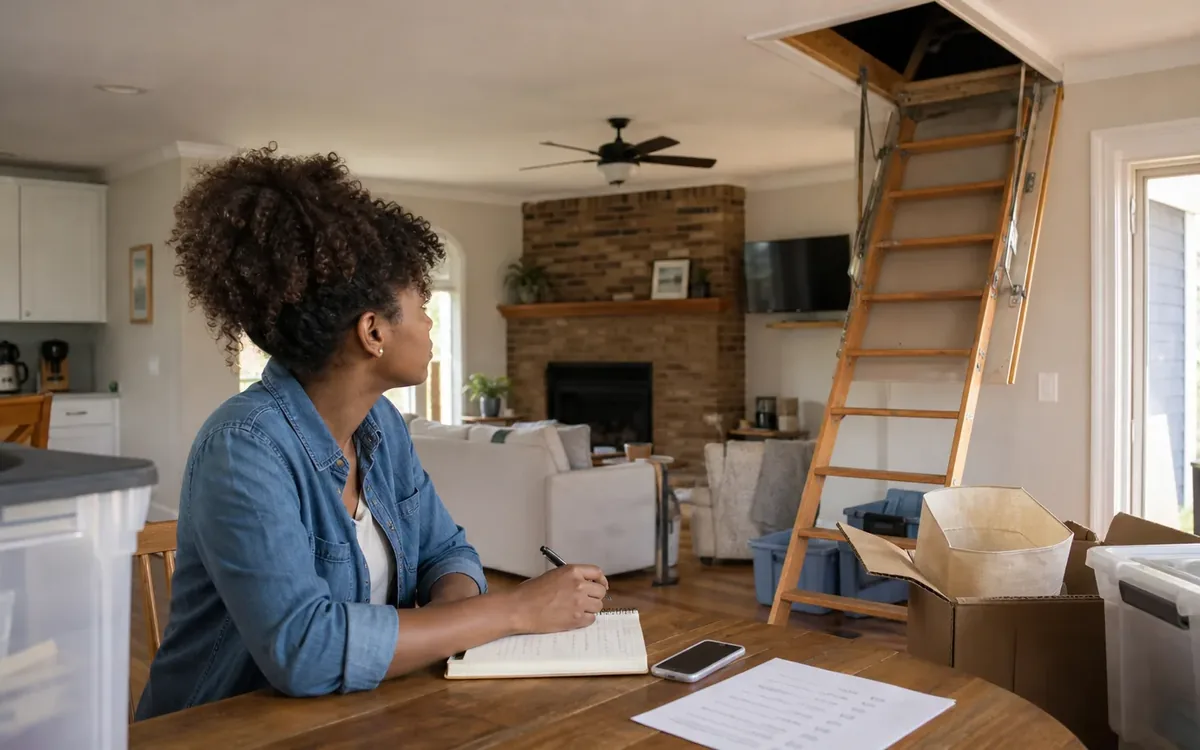
Cleaning out an attic safely starts with deciding whether anyone should enter it at all. Check the access, walking surface, temperature, lighting, wiring, insulation, pests, and structural condition before moving belongings. If you see sagging materials, exposed wiring, droppings, damaged insulation, mold-like growth, or an unsafe floor, stop and send the concern to the appropriate inspector, contractor, pest professional, electrician, or other qualified specialist.
Quick answer: Inspect before entering, work during cooler daylight hours, wear appropriate protective gear, use stable access and temporary lighting, move one small category at a time, and keep a clear route to the exit. Do not disturb suspected asbestos-containing material, extensive droppings, exposed electrical components, unstable framing, or unidentified chemicals. A cleanout team may help plan sorting and removal, but technical safety and compliance decisions belong to qualified professionals or authorities.
Why does an attic cleanout need a separate safety plan?
An attic is not just another storage room. It may have limited headroom, narrow access, unfinished walking surfaces, poor ventilation, extreme heat, hidden nails, and insulation that conceals framing or hazards. Boxes can also block the only exit.
Estate cleanouts add another layer. The attic may contain property that heirs, an executor, a personal representative, or another authorized decision-maker must review. Fast removal can destroy documents, family photographs, collectibles, or information needed for the estate.
Before work begins, identify who has authority to approve sorting, donation, sale, recycling, or disposal. Family members can express preferences, but the authorized person should resolve conflicting instructions. A cleanout company should not determine ownership or interpret a will, trust, court order, or probate requirement.
If the attic is part of a larger transition, review how estate cleanouts work before setting the attic schedule. That guide helps place sorting and removal within the wider estate process.

Step 1: Confirm authority and define the attic’s purpose
Start with the decision structure, not the boxes. Write down the name of the person who may approve what happens to the contents. If authority is uncertain, pause and consult the estate’s attorney, court-appointed representative, or other responsible professional.
The household or authorized representative can decide:
- Which sentimental items relatives may review
- Whether ordinary household goods should be kept, offered for sale, donated, recycled, or discarded
- What deadline applies to the property transition
- Which rooms or zones are included in the project
- Where approved items should be delivered
- Who must be present for sensitive documents or valuables
A practical move or cleanout team may discuss:
- A workable sequence for bringing items downstairs
- Labor, access, staging, and vehicle considerations
- Categories that need separate handling
- Whether the available path appears too restricted for safe removal
- Options for organizing an authorized sale or household distribution
- Coordination with the family’s selected specialists
Other decisions must stay with the appropriate professional. Attorneys and courts address legal authority. Appraisers or qualified specialists assess value when a formal valuation is needed. Real-estate professionals advise on listing strategy. Inspectors and contractors evaluate building conditions. Government authorities or qualified compliance professionals determine applicable code, disposal, and environmental requirements.
Clutter Cleaner of South Carolina offers estate cleanout support across South Carolina. Any scope should be discussed only after authority, access, and known hazards are clear.
Step 2: Inspect access without disturbing the attic
Conduct a visual check from the opening before climbing inside. Do not use stored furniture, boxes, or an improvised stool as a ladder. Check whether the pull-down stair, fixed stair, hatch, or ladder is stable and suitable for use. A damaged access assembly should be evaluated and repaired by an appropriate professional.
From the opening, look for warning signs:
- Sagging roof decking, ceiling material, or framing
- Daylight through unexpected gaps
- Water stains, damp materials, or active leaks
- Burn marks, warm electrical components, or exposed wiring
- Strong chemical, fuel, sewage, or animal odors
- Heavy droppings, nests, insects, or animal activity
- Loose insulation covering all walking surfaces
- Mold-like growth or extensive discoloration
- Boxes stacked against the entry
- No clear route back to the exit
Do not test questionable materials by touching, scraping, smelling closely, or sweeping them. Photographs taken from a safe position may help a qualified professional understand the concern, but photographs do not replace an inspection.
The attic floor also requires caution. Finished flooring is different from joists covered by insulation. Drywall or plaster ceilings below are not walking surfaces. If you cannot identify a secure path intended to support movement, do not enter. Ask an appropriate building professional to assess access and load concerns.
When should you stop and call a specialist?
Stop before removal if the attic contains a condition outside ordinary household sorting. The goal is not to identify the substance or diagnose the building yourself. It is to avoid disturbing the condition until the right person evaluates it.
Specialist review may be appropriate when you encounter:
- Suspected asbestos-containing insulation, pipe wrap, panels, or other material
- Extensive animal waste, carcasses, nests, or active wildlife
- Mold-like growth, widespread moisture damage, or a persistent musty odor
- Frayed, exposed, overheated, or improvised electrical wiring
- Structural movement, damaged trusses, broken joists, or an unstable floor
- Unlabeled chemicals, pesticides, fuels, ammunition, or pressurized cylinders
- Evidence of a recent or active roof leak
- Sharp medical waste or unknown biological material
- Conditions that make breathing, visibility, balance, or escape difficult
A cleanout team may note these visible concerns and discuss how they affect sequencing. It should not declare that material is asbestos-free, certify electrical safety, diagnose mold, authorize wildlife handling, or approve structural access unless it separately holds the relevant qualifications and is acting in that role.
Likewise, disposal rules can vary by material and receiving facility. The responsible authority or qualified waste professional should determine the lawful handling method for regulated or hazardous materials.
Step 3: Prepare people, equipment, and conditions
Attic heat can become dangerous even when the rest of the home feels comfortable. In South Carolina, plan around actual indoor conditions rather than the calendar. Check the attic temperature and ventilation before entry. Postpone work if the space is excessively hot, workers feel unwell, or safe breaks cannot be maintained.
A basic preparation list may include:
- A stable, appropriate ladder or verified attic stair
- Bright portable lighting that does not create a trip hazard
- Work gloves suited to dusty and sharp materials
- Eye protection
- Protective clothing and sturdy, closed-toe footwear
- A suitable respirator when selected and fitted according to professional guidance
- Drinking water and scheduled breaks
- A first-aid kit kept outside the attic
- A charged phone accessible from the work area
- Containers, labels, markers, and an inventory sheet
Ordinary disposable dust masks are not suitable for every airborne hazard. Personal protective equipment does not make an unidentified or regulated material safe to disturb. Ask an occupational safety, environmental, remediation, or medical professional for guidance when conditions warrant it.
Avoid working alone. Keep at least one person outside the attic or near the access. That person can stabilize the workflow, receive lighter items, watch the exit route, and call for assistance if necessary.
Never carry bulky boxes down a ladder when the load blocks your view or prevents three points of contact. Use smaller containers or another professionally planned removal method. Do not rig ropes, pulleys, platforms, or lifts without qualified guidance.
Step 4: Build a one-way sorting route
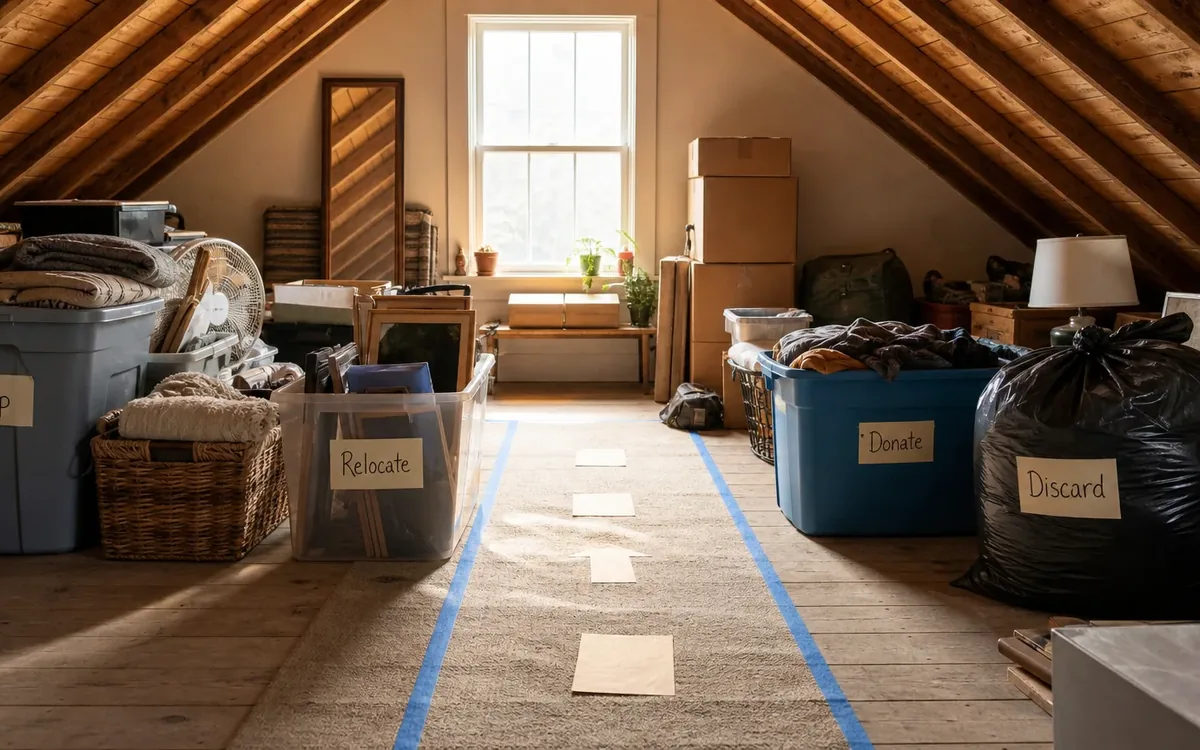
The safest workflow usually moves outward from the access rather than pushing farther into the attic. First clear a small landing and a continuous route to the exit. Do not create multiple open piles that reduce footing and visibility.
Set up labeled zones on the main floor or another safe staging area:
- Keep for the household
- Deliver to a named person
- Documents and photographs for review
- Possible appraisal or specialist review
- Possible sale
- Donation, subject to recipient acceptance
- Recycling, subject to local acceptance
- Disposal
- Hazard or unknown, do not move
Bring down one small category or section at a time. Record where significant items were found, especially during an estate project. Use numbered containers if several family members or professionals will review the contents later.
Do not make value judgments based only on appearance. Old papers, military materials, jewelry, coins, artwork, signed objects, collections, and unusual household items may need review. The family can request an informal sale discussion, but a cleanout or estate-sale team should not be treated as a substitute for an independent appraisal when formal value is required for tax, insurance, probate, equitable distribution, or another legal purpose.
What should be removed first from an estate attic?
Remove items in the order that protects access and preserves decisions. The first objects out should usually be ordinary, lightweight items blocking the route, not the most fragile or important property.
A practical sequence is:
- Photograph the attic and visible groups before movement.
- Remove empty cartons and obvious non-sensitive packing material near the entrance.
- Establish safe lighting and a clear path.
- Pull documents, photographs, labeled family items, and potential valuables for authorized review.
- Move small, stable containers one at a time.
- Separate items needing appraisal, sale discussion, or specialist handling.
- Address large furniture only after measuring the access and planning the carry route.
- Remove ordinary approved donation, recycling, and disposal categories.
- Leave unidentified hazardous or technically sensitive materials untouched.
Do not empty every container onto the attic floor. Open one box in a stable, well-lit review area, keep its contents together, and close or re-box it before starting another. This reduces trip hazards and prevents documents or sets from becoming separated.
For a broader decision framework after the attic has been stabilized, see the best way to clean out an estate. The attic plan should remain a focused part of that larger process.
Step 5: Handle bulky, fragile, and sensitive items deliberately
Large trunks, bed frames, rugs, holiday decorations, and dismantled furniture may not fit through the attic opening in their current form. Measure the object, opening, stair path, turns, doors, and final exit before attempting movement.
Do not dismantle an item until the authorized person approves it and its value or significance has been considered. Save hardware in a labeled bag and photograph the assembly. If cutting or demolition appears necessary, consult the responsible property professional or contractor first. Hidden wiring, pipes, finishes, or structural components may be affected.
Use extra care with:
- Glass, mirrors, ceramics, and framed artwork
- Firearms, ammunition, and weapons
- Tax, banking, medical, legal, and identity documents
- Prescription medication
- Chemicals and pesticides
- Family photographs, film, tapes, and digital media
- Items with mildew, insect damage, or animal contamination
The authorized household representative can direct secure document retention or destruction. An attorney, accountant, records professional, law-enforcement agency, pharmacy, environmental authority, or other qualified organization may need to advise on particular materials. A cleanout team can isolate and label an item for review, but should not make the underlying legal or compliance decision.
Step 6: Finish without hiding building problems
An empty attic is not automatically ready for a home sale or occupancy. Removal may reveal stains, damaged insulation, ventilation problems, pest entry points, or electrical concerns. Document these conditions and route them to the appropriate professional.
The household can choose whether to request inspections, repairs, or estimates. A real-estate agent may discuss how visible attic conditions affect marketing or buyer expectations. A home inspector reports within the scope of the inspection. Contractors propose repairs within their trades. Local or state authorities determine applicable compliance requirements.
A practical cleanout or home sale preparation team may discuss final debris removal, light organization, and access for the household’s chosen professionals. It should not guarantee that an attic passes inspection, satisfies code, is structurally sound, or is free of environmental hazards.
Before closing the project:
- Compare the attic with the initial photographs
- Confirm that no documents or designated property remain
- Remove temporary lighting and supplies safely
- Keep vents and equipment unobstructed
- Record unresolved building or material concerns
- Obtain authorized approval before final disposal
- Secure the attic access without overloading it
How can a cleanout team help without exceeding its role?
A cleanout or move team can make the physical and organizational work more manageable when the space is suitable for ordinary removal. It may discuss staffing, sorting stations, access limitations, item destinations, donation or sale categories, and coordination with other professionals.
For an estate attic, useful questions include:
- Who gives final instructions?
- Has the attic been checked for access and safety concerns?
- Which items require family review?
- Is an appraiser or other specialist involved?
- Are any materials prohibited from ordinary removal?
- Where will kept items go?
- What must remain for inspection or a property professional?
- How will decisions and deliveries be documented?
Clutter Cleaner of South Carolina can discuss attic contents as part of estate cleanouts, downsizing and organizing, move management, auctions and estate sales, home sale preparation, or code compliance support where appropriate to the agreed scope. Technical findings and approvals remain with the responsible qualified professional or authority.
Short FAQ
Can I clean an attic alone?
It is safer to have another person present, even for a small project. Limited access, heat, falls, and hidden hazards can turn a routine task into an emergency. If the walking surface or air quality is uncertain, do not enter until a qualified professional evaluates it.
Can a cleanout crew identify asbestos or mold?
A crew may notice and report suspicious material, but visual observation is not a reliable technical determination. Testing, assessment, remediation, and clearance decisions belong to appropriately qualified professionals and relevant authorities.
Should everything be appraised before removal?
Usually not. The authorized representative can separate ordinary household items from pieces that may warrant specialist review. Formal appraisals should be performed by a suitable appraiser when required for legal, tax, insurance, probate, or distribution purposes.
What is the best first step for a South Carolina attic cleanout?
Confirm who has authority over the contents, then inspect the attic from a safe position without disturbing questionable materials. If ordinary access appears safe, create a written sorting plan. If it does not, obtain the appropriate professional evaluation before scheduling removal.
Who decides whether attic work meets code?
The applicable authority having jurisdiction makes code and compliance determinations. A cleanout provider may help remove authorized contents or support access for corrections, but it cannot issue official approval unless specifically authorized to do so by the responsible authority.



