
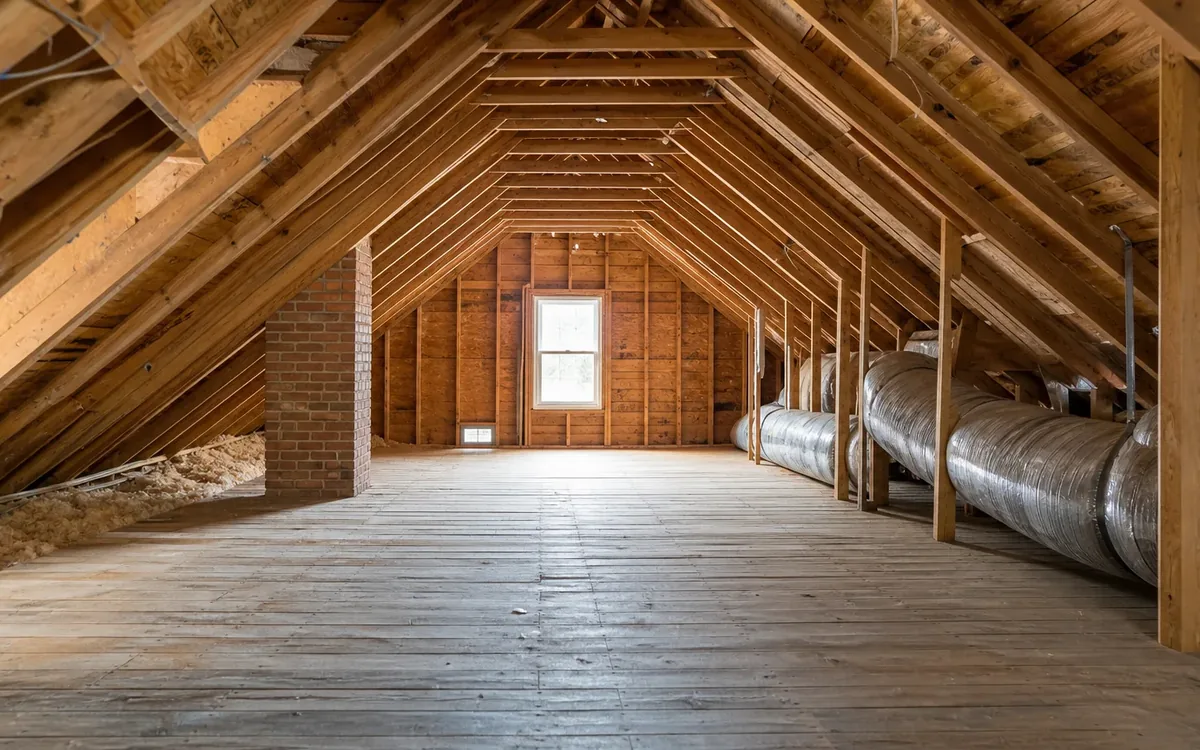
Cleaning an attic before listing a South Carolina home means removing unnecessary belongings, exposing accessible surfaces for inspection, checking stored items for moisture or pest damage, and deciding what must be moved, discarded, evaluated, or repaired. In humid coastal areas, do not hide stains, odors, damaged insulation, or suspected mold behind boxes. Document the condition and refer structural, environmental, electrical, roofing, and disclosure questions to the appropriate professionals.
Quick answer: Empty the attic in controlled sections, sort belongings outside the access path, protect important documents and valuables, and leave mechanical equipment and structural components visible. A cleanout or move team may discuss sorting, removal, donation, packing, and relocation logistics. Inspectors and qualified contractors evaluate building conditions, appraisers determine value, and the seller’s real-estate or legal professionals advise on disclosures and transaction requirements.
Why does an attic matter when selling a home?
An attic may be out of everyday sight, but it can still affect listing preparation. Buyers, inspectors, appraisers, photographers, or contractors may need safe access to areas that reveal the home’s condition. Crowded storage can block views of framing, roof decking, vents, wiring, insulation, ducts, and mechanical equipment.
The goal is not to make an unfinished attic look like a finished room. It is to make the space orderly, accessible, and honest about its condition.
A practical attic cleanout can help a household:
- Find documents, photographs, and keepsakes before a move
- Separate sale items from possessions going to the next home
- Clear access to equipment and visible building components
- Identify belongings affected by humidity, leaks, insects, or rodents
- Reduce loose debris that can create odors or tracking
- Prepare items for movers, storage providers, donation sites, or disposal facilities
Attic work should remain separate from repair decisions. Removing boxes is a cleanout task. Determining whether a roof leaked, insulation must be replaced, wiring is unsafe, or suspected mold needs remediation belongs with the relevant inspector, contractor, environmental professional, or authority.
Households handling inherited property may also benefit from this guide to the best way to clean out an estate. It explains broader decision-making without replacing the attic-specific plan below.
What should you check before moving anything?
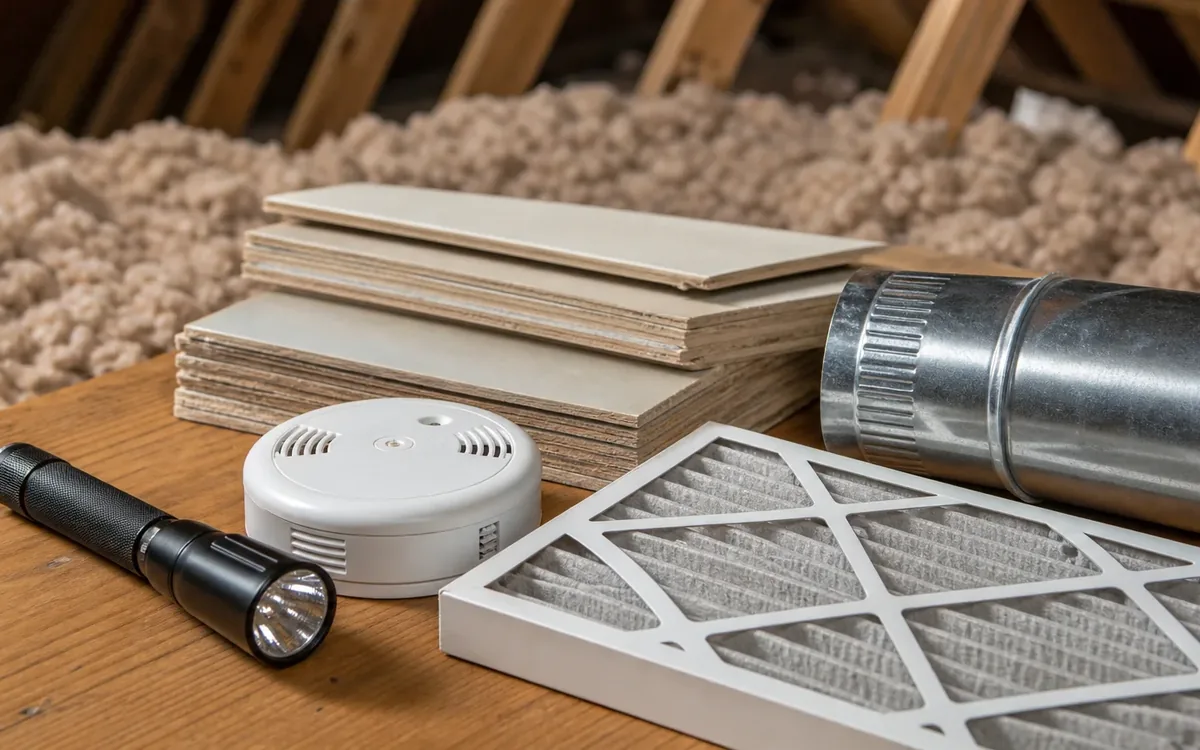
Begin at the access point rather than climbing in with empty boxes. An attic may have limited flooring, low framing, exposed fasteners, loose insulation, heat, poor lighting, or an unstable ladder. Do not assume every visible surface can support a person or a container.
Check these conditions before starting:
- Whether the ladder, stairs, hatch, and nearby floor appear stable
- Whether a clear walking surface exists
- Whether exposed nails, wiring, ducts, fans, or equipment restrict movement
- Whether there are signs of animals, droppings, nests, insects, or contamination
- Whether belongings or insulation appear wet
- Whether daylight, staining, or damaged materials suggest a roof issue
- Whether the temperature and ventilation allow safe work
- Whether another adult can remain nearby while someone accesses the attic
Stop if entry appears unsafe. A home inspector or qualified trade professional should evaluate concerns involving the structure, roof, electrical system, HVAC components, insulation, ventilation, or contamination. A cleanout team may describe what it can safely reach and remove, but it does not replace those evaluations.
Before disturbing possible asbestos-containing material, extensive droppings, suspected mold, or damaged electrical components, seek guidance from an appropriately qualified professional. The homeowner or legally responsible representative decides whom to hire and whether work proceeds.
If the attic belongs to an estate, confirm who has authority to direct the cleanout. Family members should not distribute, sell, donate, or discard disputed property until the executor, personal representative, trustee, attorney, or other responsible party clarifies control.
For help understanding the broader process, review how estate cleanouts work before assigning attic items to different destinations.
How should you sort an attic without creating a bigger mess?
Use a section-by-section approach. Pulling everything down at once can congest hallways, stairs, bedrooms, and exits. It can also mix clean belongings with damp or contaminated materials.
Create five clearly labeled destinations:
- Keep and move: Items approved for the next residence.
- Family or estate review: Belongings that need a decision from an authorized person.
- Sell or appraise: Objects that may warrant evaluation before removal.
- Donate or give away: Usable items the household no longer wants.
- Dispose or recycle: Damaged, unwanted, or non-donatable material.
Match each destination with a staging area below the attic. Avoid balancing containers on attic joists or crowding the access opening. Keep stairs, hallways, doors, and exterior paths open.
Label boxes with both contents and destination. “Attic” alone will not help during a move. Labels such as “family photographs, upstairs closet” or “holiday decorations, storage decision pending” reduce repeated handling.
Use small containers for books, records, tools, and other dense objects. Larger containers are better suited to light items. Do not overfill containers that must pass through a narrow hatch or descend a ladder.
Photograph grouped contents before distribution when several heirs or decision-makers are involved. Images can support communication, but they do not establish ownership, value, or legal authority.
Which attic belongings need special handling?
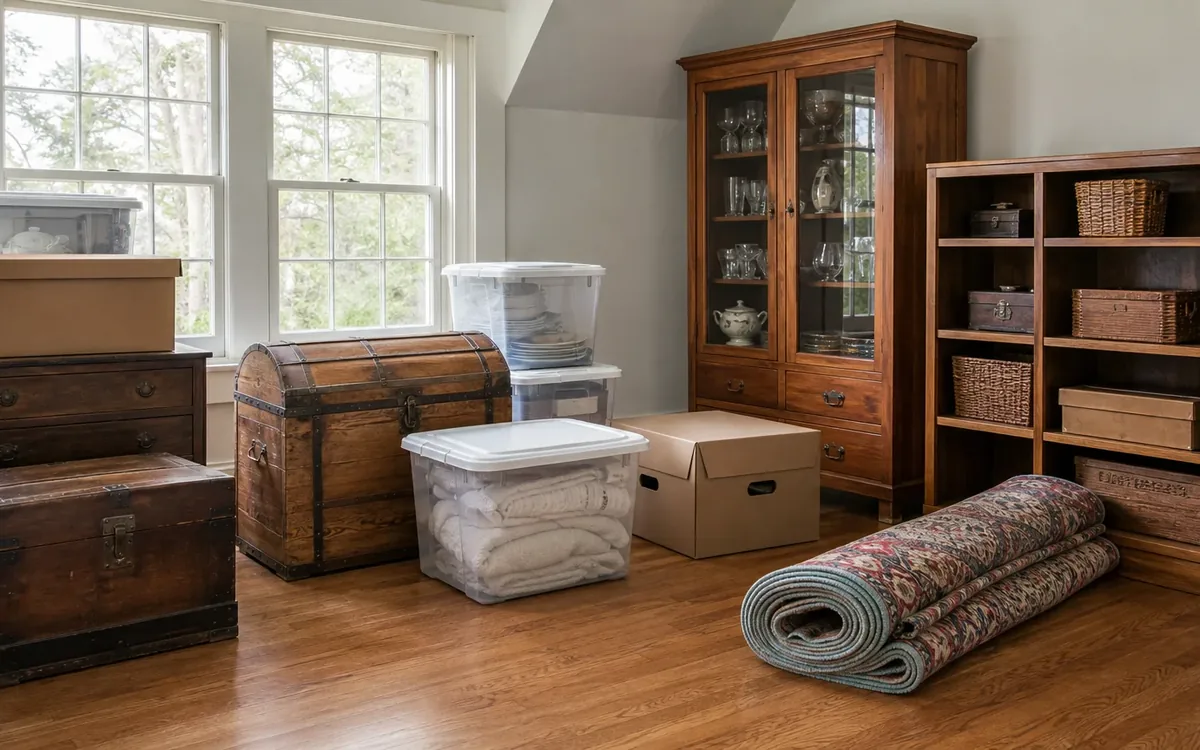
Attics often hold items that should not enter the ordinary donation or disposal stream. Pause when an object has uncertain ownership, possible monetary value, sensitive information, or potential hazards.
Set aside:
- Deeds, wills, tax records, military papers, and insurance documents
- Family photographs, letters, albums, and genealogy records
- Jewelry, coins, collections, art, and signed objects
- Firearms, ammunition, fireworks, fuels, and pressurized cylinders
- Paints, solvents, pesticides, batteries, and unidentified chemicals
- Electronics containing personal data
- Medical records and prescription medications
- Animal remains, droppings, nests, or heavily contaminated materials
The household or authorized estate representative controls keep, gift, sale, and disposal decisions. An appraiser or appropriate specialist determines whether an item has value. Auction and estate-sale professionals can discuss possible sale methods, but the seller decides whether to proceed after reviewing terms.
Hazardous and regulated materials require instructions from the applicable facility, manufacturer, contractor, or public authority. Donation organizations establish their own acceptance policies. Call before transporting questionable items.
For documents, create separate groups for records to retain, records needing professional review, and records approved for secure destruction. An attorney, accountant, financial adviser, or records professional can advise on retention requirements. A cleanout provider should not decide which legal or financial records may be destroyed.
How does coastal humidity change attic preparation?
Warm, humid conditions can affect cardboard, fabrics, paper, wood, leather, photographs, and upholstered items. The main listing-preparation concern is not simply that an attic feels humid. It is whether belongings or building materials show signs of active moisture, past water entry, condensation, or biological growth.
Look without disturbing questionable material. Possible warning signs include:
- Musty or earthy odors
- Soft, warped, or stained cardboard
- Rust on metal objects or fasteners
- Water marks on stored belongings or roof decking
- Damp insulation or visible clumping
- Peeling labels and pages stuck together
- Discoloration or growth on surfaces
- Condensation near ducts, pipes, or equipment
Do not paint over stains or place clean boxes in front of them. Concealment can complicate inspection and disclosure discussions. Photograph the area, note where it is located, and ask the relevant professional what evaluation is appropriate.
A qualified home inspector can report visible conditions within the scope of the inspection. Roofers, HVAC contractors, electricians, insulation contractors, pest professionals, or environmental specialists address their respective fields. The seller’s real-estate agent and attorney can discuss how known conditions relate to the transaction, while the responsible government authority determines applicable code or compliance requirements.
Do not move damp belongings directly into long-term storage without evaluating them. The household chooses a storage company and should ask about prohibited items, climate controls, access, insurance limitations, and packing requirements. Storage does not correct existing moisture or contamination.
What should remain visible for showings and inspections?
Clear the route from the attic entrance to accessible equipment and observation areas. Do not stack belongings against electrical panels, air handlers, ducts, vents, chimneys, plumbing, or other service points.
Aim for these practical outcomes:
- The access hatch or door opens fully
- The ladder or stairs are not blocked
- Designated walking surfaces are clear
- Equipment access panels are reachable
- Vents and fans are not covered by belongings
- Stored items do not press against wiring or fixtures
- Loose trash and packing debris are removed
- Remaining containers are labeled and grouped neatly
Never create a walkway by placing unsecured boards over insulation or framing without qualified guidance. Also avoid compressing, sweeping, or removing insulation merely to make the space look cleaner. Insulation type, depth, placement, and condition are matters for inspectors and qualified contractors.
A seller may choose to leave certain possessions in the attic during marketing, but that decision should be coordinated with the real-estate professional. Photography, showing access, buyer expectations, and the sale contract may affect when remaining property must leave.
When does a cleanout team make sense?
Outside help may be useful when the attic holds a large mixture of household goods, estate property, donation candidates, and move-bound boxes. Clutter Cleaner of South Carolina has a physical business location in Mount Pleasant, serves Charleston as its primary market, and has a statewide South Carolina service territory.
A practical cleanout or move-management conversation may cover:
- Who has authority to approve removal
- Which items must remain for family review
- How categories will be labeled and staged
- Whether sale or appraisal candidates must be held back
- Which belongings are moving to another residence
- Which items may be offered to donation organizations
- What disposal restrictions need confirmation
- Whether access conditions limit what can be handled safely
Ask for a written scope that identifies what is and is not included. The household should also clarify how items will be approved before leaving the property and who will be present to answer questions.
A cleanout team should not diagnose mold, certify structural safety, determine code compliance, appraise antiques, interpret a will, or decide what a seller must disclose. Those matters remain with the appropriate professional or authority.
Contractor work is another separate choice. If inspection reveals roof, electrical, pest, HVAC, insulation, or structural concerns, the responsible owner selects and contracts with the relevant provider. Cleanout access can support that work, but it does not guarantee a repair outcome or inspection result.
Build the attic plan around the home sale
Attic preparation works best when it follows the household’s listing priorities. Ask the real-estate professional which areas need to be accessible for photographs, showings, inspections, estimates, or buyer visits. Then arrange removal and packing around those needs.
Use this four-part plan:
- Confirm authority and destinations. Identify the person approving decisions and where keep, sale, donation, disposal, and review items will go.
- Make access safe. Address entry concerns with the proper professional before beginning removal.
- Sort and document. Work in sections, label containers, and record unresolved moisture or damage concerns.
- Coordinate separate providers. Schedule appraisers, storage companies, movers, contractors, inspectors, or disposal facilities according to their individual roles.
Before declaring the attic ready, conduct a final visual review from safe walking surfaces. Remove empty cartons, loose wrapping, broken containers, and labels containing personal information. Check that nothing moved during cleanup is blocking equipment or ventilation.
The seller retains responsibility for transaction decisions. The inspector determines findings within the inspection scope. The appraiser develops an appraisal. Real-estate and legal professionals advise within their fields. Public authorities decide code and regulatory matters.
Short FAQ
Should an attic be completely empty before listing?
Not necessarily. The household and real-estate professional can decide whether neatly grouped storage may remain. Access to the attic entrance, designated walking areas, equipment, and visible components should not be obstructed.
Can boxes with moisture damage be moved into storage?
The household can choose storage, but damp or contaminated contents should be evaluated before packing. Ask the storage provider about prohibited materials and environmental controls. A storage facility does not assess or repair the source of moisture in the home.
Who decides whether attic items should be sold?
The owner or legally authorized estate representative makes that decision. An appraiser, auction professional, or estate-sale provider may offer valuation or sale guidance under a separate arrangement.
Who handles suspected mold or unsafe wiring?
Qualified environmental, electrical, inspection, or other relevant professionals should evaluate those concerns. Avoid disturbing questionable material or touching damaged electrical components.
Can attic cleanup resolve a code issue?
Clearing access may help a contractor or authority inspect an area, but it does not itself establish compliance. The applicable authority determines code requirements, and qualified contractors address work within their trades.
A well-prepared attic is not one that hides every imperfection. It is one where belongings are controlled, access is practical, unresolved conditions are visible, and each decision is directed to the right person before the home enters the market.



