

To clear interior sightlines before listing your home, start at each entrance and room transition, then move or reduce the objects that hide the next room, a doorway, or a useful architectural feature. The goal is not to empty the house. It is to make the layout easier to understand. South Carolina sellers can review these views with their real estate agent before deciding which furniture and belongings should stay, move, or leave.
Quick answer: Look through the home from the places a buyer will naturally pause. Clear the view toward the next space, preserve safe walking routes, and keep enough furniture to explain each room’s purpose. Ask your agent to review the result before making large removal decisions.
What is an interior sightline, and why does it matter?
An interior sightline is the view from one position through a room or into another space. At a front door, it might extend through the entry into the living room. At a kitchen threshold, it might reveal the dining area and the door to the backyard.
A visual obstruction interrupts that view. Common examples include a tall cabinet beside a doorway, stacked moving boxes, an oversized chair back, or a freestanding screen that conceals a room connection.
The distinction between clutter and an obstruction matters. A room can be tidy yet hard to read because furniture hides its openings. Another room can contain everyday belongings while still making its shape and connections clear.
For listing preparation, focus on what a buyer can understand from the threshold:
- Where does this room lead?
- Is there a clear route through it?
- Which features belong to the house rather than the household?
- How could the space function with ordinary furniture?
Your real estate agent can help identify views worth emphasizing. This is a presentation decision, not proof of room dimensions, permitted use, or property condition.
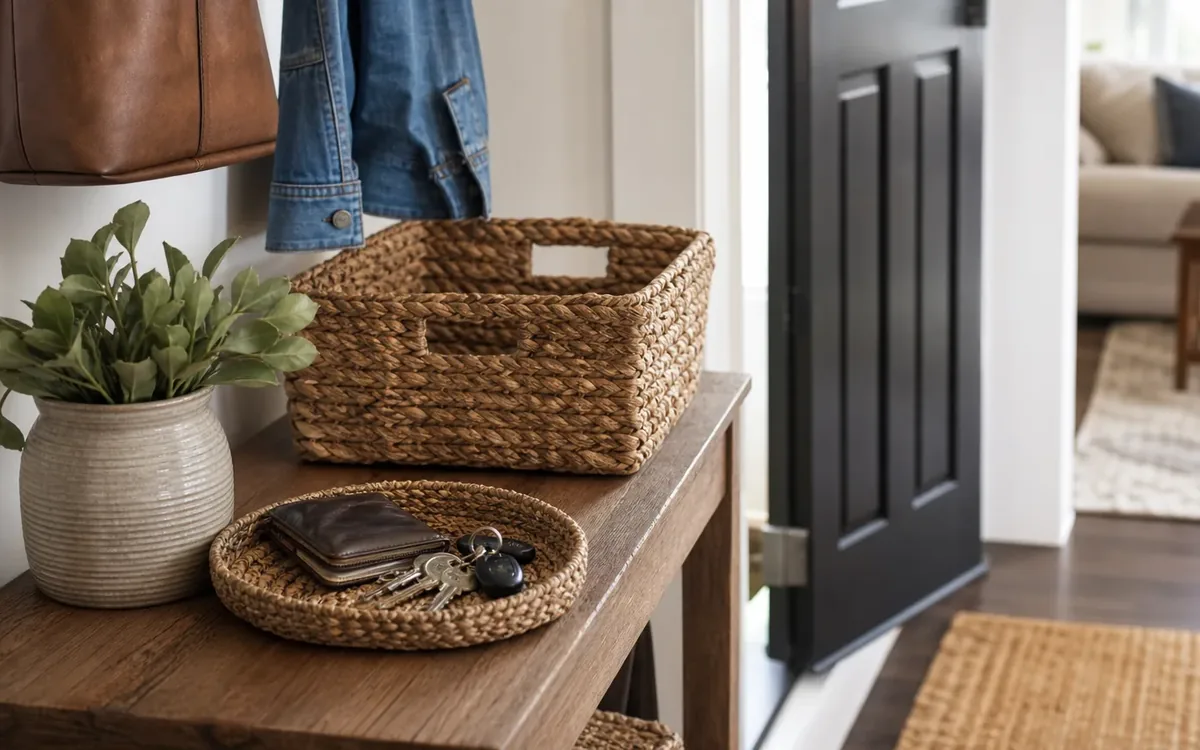
Start with entrances and transitions, not every surface
Begin at the front entrance with the door in its normal open position. Notice the first visible doorway, the nearest furniture edge, and anything that makes the space beyond look blocked or disconnected.
Then repeat the review at transitions: living room to dining room, hall to bedroom, kitchen to utility area, and any doorway connecting indoor and outdoor spaces.
Use a simple observation sheet rather than a whole-house decluttering inventory:
- Standing point: Inside the front door.
- Hidden connection: Opening into the dining room.
- Obstruction: Tall shelving unit near the opening.
- Possible change: Relocate the unit after checking its contents and stability.
- Decision owner: Household, with agent input on presentation.
This keeps the project tied to specific views. A crowded drawer does not need attention for sightline purposes unless its contents are spilling into a visible area.
For help coordinating belongings around listing preparation, review Clutter Cleaner of South Carolina’s home sale preparation service. Discuss the particular furniture, contents, and access concerns involved rather than assuming every listing task is included.
Which objects actually block the view?
Look for height, width, and placement before judging how much stuff a room contains. A single tall object at the wrong threshold may interrupt the layout more than several smaller objects elsewhere.
Identify the connection you want to reveal, then examine what stands between your viewing position and that opening. Useful categories include:
- Tall barriers: Bookcases, wardrobes, display cabinets, and stacked cartons.
- Wide barriers: Sofas or tables positioned across an opening or approach.
- Layered barriers: Several smaller items that collectively conceal the floor or doorway.
- Temporary barriers: Packing supplies, laundry racks, and items awaiting a household decision.
Not every object near a doorway should move. A chair can help explain a seating area without blocking its connection to another room. A console may remain useful if the floor route and doorway are still clear.
Inherited furniture deserves a separate decision process. Do not discard a family piece simply because it interrupts a listing view. If the household is also sorting estate contents, the existing guide on the best way to clean out an estate provides a broader framework for belongings decisions. Legal authority to distribute estate property remains with the authorized person and appropriate legal professionals.

Test a clearer view before committing to removal
Use a reversible test whenever possible. Clear loose items from the obstruction, photograph the current view for your own comparison, and try a safe alternate arrangement before deciding that furniture must leave the property.
The test should answer a narrow question: can someone standing here now recognize the next space?
For example, moving an armchair away from a dining-room opening may reveal the connection without changing the rest of the seating arrangement. Removing cartons from beside a bedroom doorway may show that the room continues beyond the visible corner.
After each change, check both the view and the room’s function:
- Can the door open normally?
- Is the walking route usable without squeezing between pieces?
- Does the furniture still explain the room’s intended everyday use?
- Has the moved item created a new obstruction elsewhere?
Do not attempt heavy or unstable furniture moves without suitable help. Attached shelving, wall-mounted items, and pieces near wiring or plumbing may need assessment by an appropriate contractor. A visual improvement does not justify damaging the home or creating a safety problem.
Keep the room readable without stripping it bare
A clear sightline does not require an empty room. Removing every piece can make it harder to understand how a living area, dining space, or bedroom might work.
Keep furnishings that explain use while reducing pieces that hide connections. In a living room, that may mean retaining a sofa and a useful seating arrangement while relocating a tall cabinet beside the hall opening. In a bedroom, it may mean keeping the bed while moving storage cartons that conceal the closet entrance.
Pay attention to the view into the room as well as the view out of it. A doorway that reveals only the side of a large cabinet can make a room feel visually closed, even when the room itself is orderly.
Avoid solving one sightline by loading an adjacent room with displaced belongings. Buyers may enter that room too. The household needs a destination for each moved item, not just a temporary hiding place behind another door.
Ask your agent whether the revised arrangement communicates the layout accurately. Photographs and showings should help buyers understand the house, not disguise limitations.
Where should displaced belongings go?
Choose destinations based on ownership, future use, and handling needs. Moving an object out of view is only the presentation step; deciding what happens to it is a separate household task.
Create a short destination list:
- Keep in the home: Relocate only where it will not conceal another connection.
- Take to the next home: Set aside for a planned move with a defined destination.
- Store elsewhere: Compare separate storage options and any handling requirements.
- Consider selling: Seek appropriate advice when value or ownership is uncertain.
- Donate or discard: Confirm acceptance, condition requirements, and disposal arrangements with the relevant provider.
A practical cleanout or move team may discuss item volume, access, fragile contents, furniture handling, and how the household’s decisions affect the work. Specific tasks should be confirmed during planning.
Storage rental, appraisal, disposal, and contractor work are separate choices, not automatic parts of Clutter Cleaner’s services. The household or authorized decision-maker determines what can leave. A qualified appraiser addresses valuation questions, while legal professionals address disputed ownership or estate authority.
How can you check sightlines for photographs and showings?
Review the home from ordinary standing positions rather than relying only on a carefully chosen camera angle. A photograph can make a connection appear clear even when a visitor encounters furniture blocking the approach.
Ask your agent to compare the entry view, the likely photography view, and the route a visitor will actually use. These perspectives serve different purposes but should tell a consistent story about the layout.
Use a brief review at each important threshold:
- Look toward the next doorway or room opening.
- Check whether an object hides the connection.
- Walk the route without shifting furniture.
- Confirm that the next room has not become a holding area.
Leave ordinary doors functional. Do not remove doors, fixtures, rails, or other building elements just to improve a photograph without appropriate professional guidance.
If a visible issue involves moisture, damaged flooring, exposed wiring, or a blocked exit, treat it as a condition or safety question rather than a staging inconvenience. Your agent can discuss presentation and disclosure questions; inspectors, contractors, legal advisers, or authorities handle matters within their respective roles.
Separate presentation decisions from professional decisions
The household can decide which owned belongings to retain, relocate, or consider releasing. It can also identify daily-use items that must remain accessible while the home is occupied.
A practical team can discuss how those decisions translate into handling and access needs. Clutter Cleaner of South Carolina is physically based in Mount Pleasant and serves households across South Carolina, with Charleston as its primary market. Its services include home sale preparation, downsizing and organizing, and move management. The scope for a particular project should be agreed before work begins.
Keep other decisions with the responsible professional:
- Real estate agent: Listing presentation, photography coordination, and marketing advice.
- Qualified appraiser: Valuation of belongings when an appraisal is needed.
- Legal professional or authorized estate representative: Ownership, authority, and distribution questions.
- Inspector or contractor: Property condition and proposed building changes.
- Relevant authority: Official code interpretations, approvals, and compliance determinations.
Code compliance support does not replace an official determination. Likewise, improving a view does not establish that a room meets requirements for a particular advertised use.
Short FAQ
Should I remove a large sofa before listing?
Not automatically. First check whether it hides a doorway or interrupts the route between rooms. A safe repositioning may reveal the connection while preserving a useful seating area. Review the result with your agent.
Can I put displaced items in closets?
Only if doing so leaves the closets usable and reasonably viewable. Filling them to conceal a sightline problem can transfer the problem to storage areas buyers may inspect. Give larger displaced items a deliberate destination.
Do open doors solve blocked sightlines?
Sometimes an open door clarifies a room connection, but it cannot fix furniture blocking the approach. Check the door’s normal movement and the walking route together. Keep doors functional and follow your agent’s showing preferences.
What is the best final check?
Return to the entrance and walk through the main room transitions. Look for newly hidden openings, relocated piles, and unclear routes. Then ask your agent whether the layout reads clearly without further removal. The aim is an understandable home, not an empty one.



