
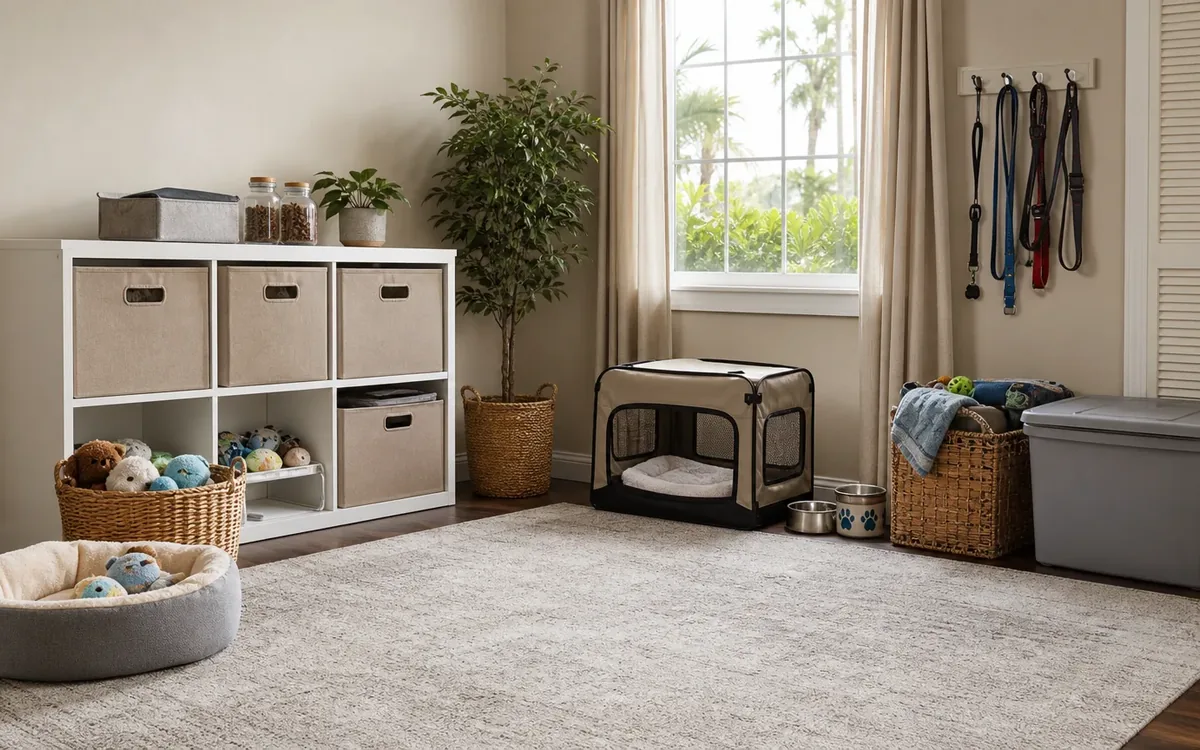
Managing pet belongings while your home is listed works best when you separate essential care items from extras, give each essential item a consistent home, and prepare a portable showing kit. Keep food, water, medication, and safe resting spaces available when your pet needs them. The goal is a repeatable showing routine, not a house that looks as though no animal lives there.
Quick answer: Keep a small everyday care station, pack duplicate and rarely used supplies, and use a labeled tote for items that can leave with your pet during showings. Agree on pet arrangements with your real-estate agent, and keep feeding instructions, medication, and containment equipment accessible rather than buried in moving boxes.
For South Carolina households, this approach keeps everyday care separate from presentation decisions. Whether you are listing in Charleston or elsewhere in the state, the plan should fit your animal, your home, and the showing arrangements your agent coordinates.
What pet belongings should stay accessible while the home is listed?
Start with what your pet actually uses, not what looks easiest to pack. An older dog’s supportive bed, a cat’s familiar scratching surface, or a prescribed food may matter more than having an empty corner.
Create three categories:
- Daily essentials: Food, bowls, medication, leash, litter supplies, waste bags, and necessary containment equipment.
- Comfort and enrichment: A familiar bed, favorite toy, scratching post, or other items that support normal behavior.
- Extras: Duplicate bowls, unused carriers, spare blankets, outgrown accessories, and unopened supplies you do not expect to need while listed.
Leave essentials available. Reduce comfort items thoughtfully rather than removing everything at once. Pack extras only after confirming that they are safe, clean, and worth moving.
If clutter extends beyond pet belongings, home sale preparation services can provide a starting point for discussing organization and preparation needs. A practical team may discuss sorting, access, and item placement; your veterinarian remains the right person for changes affecting health or care.
Use a simple label such as “Pet care: keep accessible” on essential containers. Tell household members that these are not ordinary move boxes. That distinction helps prevent a needed harness or medication supply from disappearing into a stack intended for later unpacking.
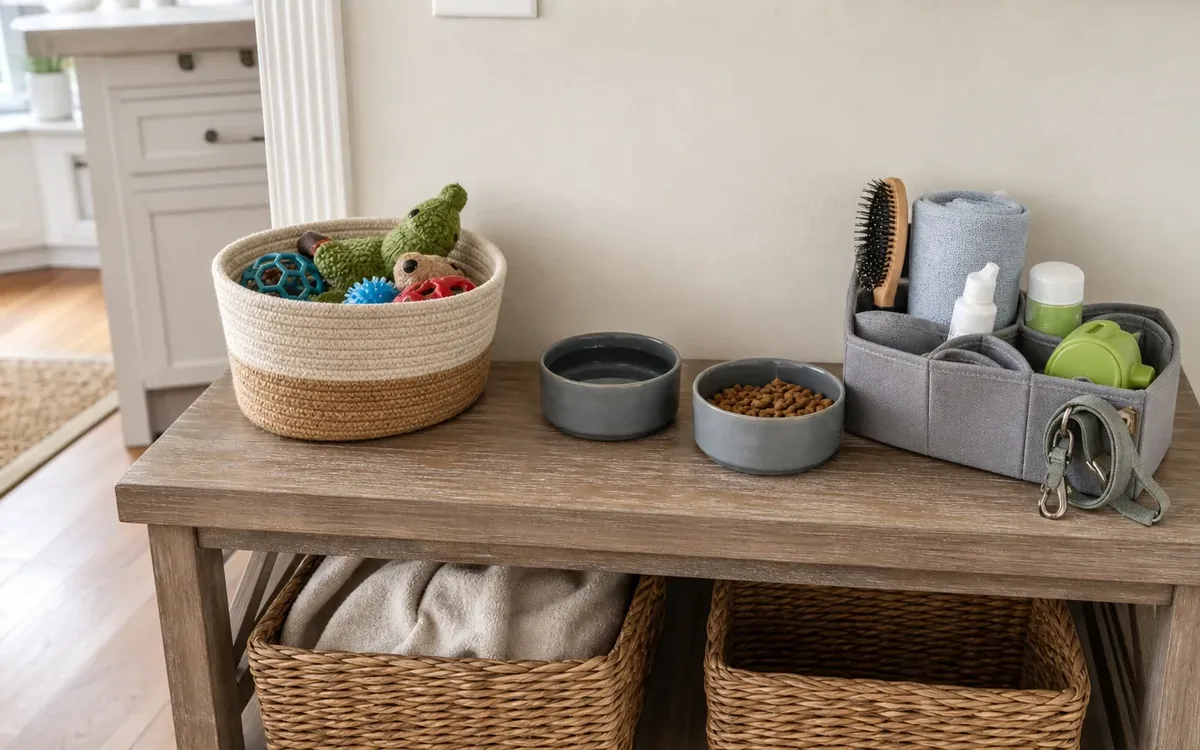
Build an everyday care station, not a hidden supply pile
Choose a care station near the place where the supplies are used. A feeding station should not require carrying heavy food containers across the house. A litter-supply basket should be accessible without blocking a walkway or trapping the animal’s route to its box.
Use washable trays, lidded containers appropriate for the contents, and a modest basket for small accessories. Keep original food or medication labels when those labels contain care instructions, expiration information, or product identification.
A useful station might include:
- Current food and a clearly identified scoop.
- Bowls and a washable mat.
- Waste bags or litter tools in a separate compartment.
- A leash or harness on an accessible hook.
- A written reminder of items that must travel with the pet.
Keep cleaning chemicals separate from food, treats, and medication. Do not assume a decorative container is suitable for food storage or that a high shelf alone makes a product inaccessible to every animal.
If the sale overlaps with an inherited household or a larger sorting project, the guide to the best way to clean out an estate offers broader sorting context. Keep current pet-care supplies out of those donation, sale, and removal categories until their owner has reviewed them.
How can beds, bowls, and crates be handled for showings?
Give each bulky item a specific plan. “We will move it somewhere” usually creates a last-minute pile in a closet, garage, or hallway. Decide whether an item stays, travels with the pet, or moves to a safe designated location.
Beds: Keep one familiar resting place available during normal household use. If a bed travels during showings, choose a carrying method that keeps it separate from food and medication. Wash removable covers according to their care instructions, and let them dry fully before storage.
Bowls: Clean feeding areas after meals, but do not remove needed drinking water merely to simplify a room’s appearance. When the pet leaves for a showing, bring appropriate water and feeding supplies with it. Ask your veterinarian about any care needs that complicate this routine.
Crates and carriers: Do not dismantle an essential safe space simply because it occupies floor area. A carrier needed for transport should remain accessible. A crate that stays in the house should not obstruct doors, circulation, or access to building equipment.
Cat trees and scratching posts: Consider whether the item supports familiar behavior before packing it. Removing a preferred scratching surface without a suitable alternative may work against your goal of protecting the home.
Your household decides which belongings are essential. Your agent can advise on presentation and showing access. Neither a staging preference nor a cleanout plan should substitute for animal-care guidance.
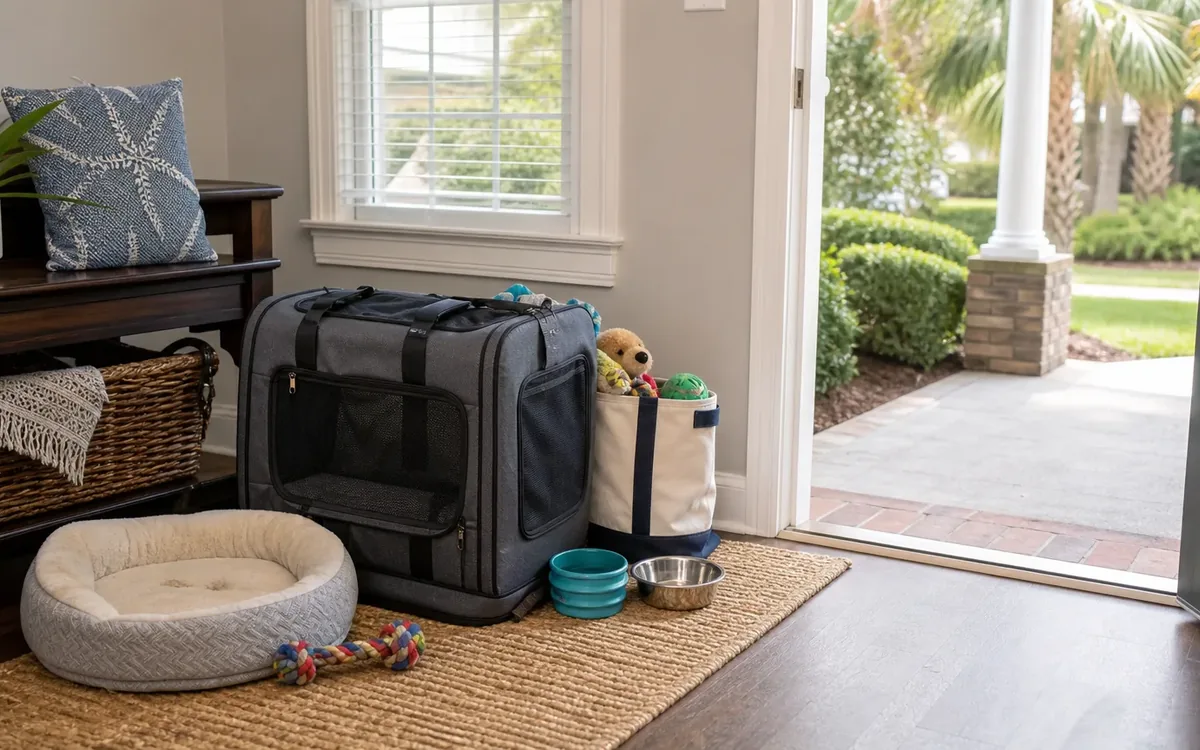
Make a showing kit that travels with the pet
A showing kit reduces repeated decisions. Use a container that is easy to carry and suits the animal’s needs. It should complement appropriate transport equipment, not replace a secure carrier, harness, or other necessary restraint.
Include what your household actually uses:
- Leash, harness, and identification essentials.
- Waste bags or appropriate cleanup supplies.
- Travel bowls and necessary food.
- Medication with its instructions, stored as directed.
- A familiar blanket or comfort item.
- Caregiver contact details and feeding information.
Avoid keeping temperature-sensitive items in a vehicle between outings. Check product storage instructions and ask the veterinarian or pharmacist when conditions are unclear. A parked vehicle is not a substitute for a suitable pet-care location.
Choose the destination separately from the packing plan. A family member’s home, a pet-care provider, or another suitable arrangement may be an option, but availability and suitability must be confirmed. Do not assume that a moving or organizing team provides animal transport, boarding, or supervision.
Keep a household copy of the kit list. Whoever handles the next showing should be able to prepare it without searching through messages or guessing which container holds the current medication.
How do you prepare for a showing without disrupting pet care?
Agree on the pet arrangement before appointments begin. Discuss notice preferences, who will handle the animal, and how your agent will communicate access instructions. Showing logistics vary, so build your routine around the arrangements you actually have rather than an assumed schedule.
Use a short departure sequence:
- Confirm who is responsible for the pet.
- Check the destination and transport equipment.
- Pack essential care items from the written list.
- Clear bowls, toys, and loose supplies only where appropriate.
- Check doors and gates before leaving.
- Let the agent know when the agreed arrangement is in place.
If your pet must remain at home, discuss that situation directly with your agent. Do not rely on visitors to interpret a note, avoid an animal, or maintain a containment system correctly. Ask the appropriate animal-care professional about welfare concerns, and establish clear access arrangements before anyone enters.
After the showing, restore the care station before unpacking unrelated belongings. Return water, bedding, litter access, and required supplies to their normal locations. A predictable reset matters as much as a tidy departure.
For multiple pets, identify supplies by animal where diets or medications differ. A shared tote can work for toys, but it should not create uncertainty about whose prescription or food is whose.
Keep cleaning separate from concealment and repair decisions
Pet belongings can collect hair, tracked litter, food residue, and moisture. Clean the item and the surface beneath it, using products appropriate for the material and safe for your household when used as directed. Keep animals away from treated areas as the product instructions require.
Focus on recurring sources rather than adding fragrance:
- Launder washable bedding and covers.
- Clean bowls, feeding mats, and nearby surfaces.
- Maintain litter areas and dispose of waste appropriately.
- Remove accumulated hair from furniture edges and storage areas.
- Inspect beneath beds and crates for moisture or surface damage.
Strong scents do not resolve underlying problems. If staining, persistent odor, damaged flooring, or suspected building issues remain, a qualified cleaner, contractor, or inspector may need to evaluate them. Those are separate provider choices, not automatic parts of pet-item organization.
Do not move a rug or crate specifically to hide a known problem. Discuss disclosure questions with your real-estate professional or attorney. Inspection findings, repair recommendations, and any compliance determinations belong with the responsible professionals or authorities, not a household sorting plan.
Decide what to pack, donate, store, or discard
Once essentials have a place, review the extras. Keep the decision focused on usefulness, condition, ownership, and the next home. Avoid buying storage containers for supplies you already know you will not keep.
Consider these distinctions:
- Pack: Clean, useful items that are not needed during the listing period.
- Offer for donation: Suitable supplies only after the recipient confirms acceptance requirements.
- Store separately: Bulky belongings worth retaining when suitable space and storage conditions are available.
- Discard appropriately: Damaged or unusable items, following applicable disposal guidance.
Medication, chemicals, electronics, and contaminated items may need different handling from ordinary bedding or toys. Ask the relevant provider or local authority about disposal rather than placing everything in one removal pile.
Storage is a household or separate-provider choice. Consider access, moisture exposure, pests, and product instructions before deciding where supplies belong. Do not store essential pet medication with general household boxes.
A cleanout or move team may discuss sorting categories, box labels, carrying access, and placement for household belongings within an agreed scope. Ask what is included. Animal handling, specialized disposal, contractor repairs, and storage arrangements should not be assumed.
Assign decisions before asking a team to help
Write a brief handoff note identifying what stays accessible, what may be packed, and what requires owner approval. Mark carriers and essential crates clearly. Include any room or cabinet that should remain closed to protect an animal.
Clutter Cleaner of South Carolina is physically based in Mount Pleasant and serves all of South Carolina, with Charleston as its primary market. Households can discuss home sale preparation, downsizing and organizing, or move management needs without treating those services as substitutes for veterinary care or professional property advice.
The household controls possession and sorting choices. An appraiser handles valuation questions, an agent advises on marketing and showings, and an attorney addresses legal questions. Inspectors, contractors, and relevant authorities handle their respective findings, work, and compliance decisions.
Short FAQ
Should every pet item disappear during showings?
No. Prioritize safe care and an orderly presentation. Your agent can help assess visible items, while essential supplies remain available to the pet or travel with it.
Can I pack spare supplies with everyday supplies?
Separate them. Label everyday items for continued access and packed extras for the move. This prevents an urgent search through sealed boxes.
Who decides whether a pet-related stain needs repair?
The household can identify the concern, but appropriate contractors or inspectors should assess the condition. Ask your agent or attorney about any related disclosure obligations.
What makes the plan sustainable?
A fixed care station, a portable kit, and a clear reset routine. Keep the system simple enough that every responsible household member can follow it.



