
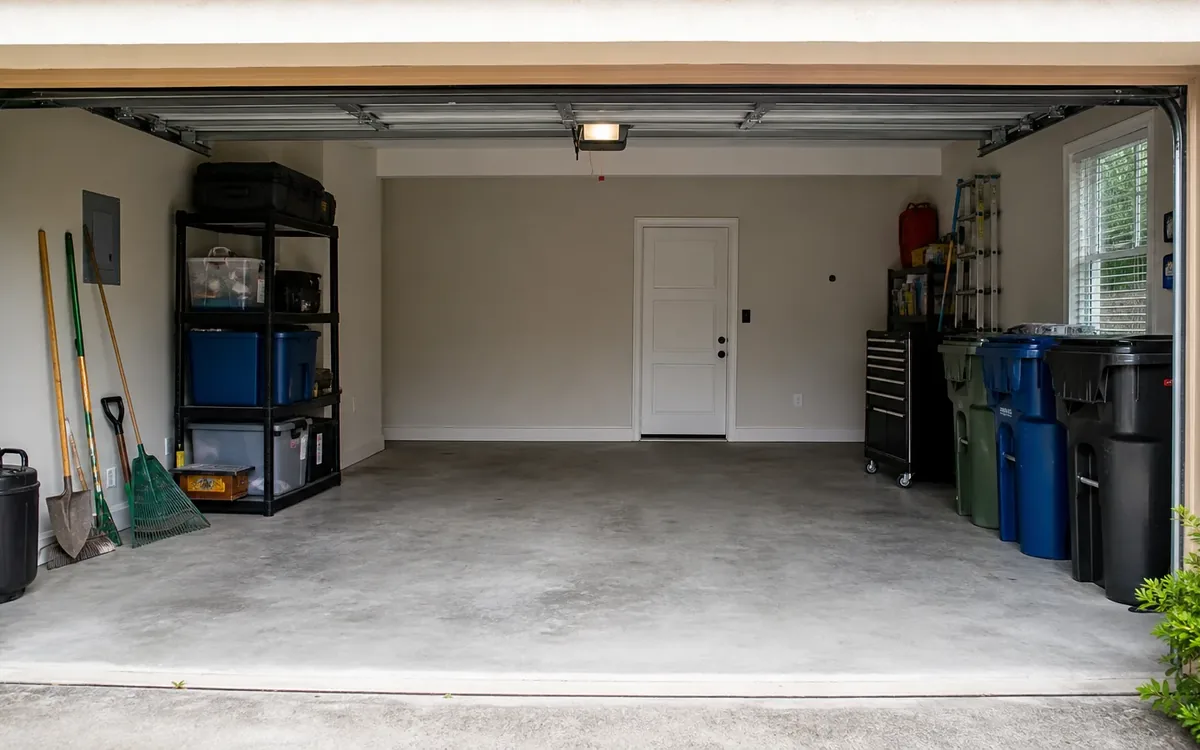
Restoring usable garage parking before listing starts with the vehicle space, not the shelves. Identify the parking area you want buyers to evaluate, clear the route into it, and move belongings that interfere with car doors, garage-door operation, or access to the house. Then address storage and appearance without hiding damage or suggesting the garage fits a vehicle you have not tested.
For South Carolina sellers, this approach keeps the work tied to a practical showing question: can a buyer understand how parking and everyday access would function here?
Quick answer: Define the intended parking position, test it with an appropriate vehicle when safe, and prioritize anything that blocks entry, door opening, or the route into the home. Keep uncertain belongings in a separate decision area. Ask the appropriate professional about repairs, safety concerns, disclosures, and listing claims.
Start with a parking target, not an empty-garage target
A garage does not have to be completely empty to communicate useful parking space. It does need a visible, credible relationship between the vehicle area and everything stored around it.
Choose the parking arrangement you want to evaluate. That might be one vehicle beside retained shelving, or separate parking areas that have become covered by household overflow. Do not assume the garage’s original design guarantees that today’s vehicles fit comfortably.
Identify these functional areas before sorting:
- The approach from the driveway into the garage.
- The intended vehicle footprint.
- Space beside the vehicle for opening doors.
- The walking route between the vehicle and the house.
- Access to controls, equipment, and stored essentials.
Use removable floor markers if they will not damage the surface or create a trip hazard. Measurements can help define a working target, but an actual parking test reveals obstacles that a simple rectangle misses.
Clutter Cleaner of South Carolina offers home sale preparation support throughout South Carolina. The business is physically located in Mount Pleasant, with Charleston as its primary market. A preparation discussion can focus on sorting and organizing around parking access, while repair and property-marketing decisions remain with the responsible professionals.
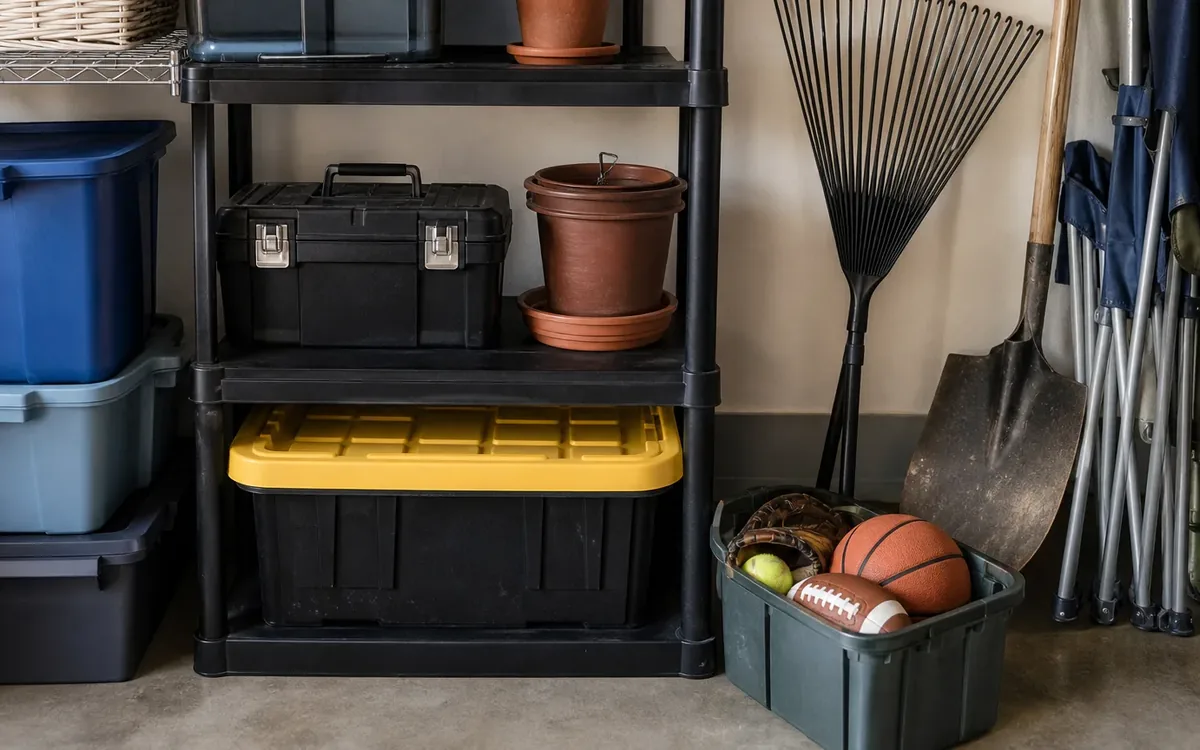
What space does a vehicle actually need?
Vehicle fit involves more than getting the bumper past the garage door. The driver must be able to exit, reach the house, and retrieve necessary belongings without squeezing through an unstable storage corridor.
Start with the household vehicle if it represents how you intend to use the garage. If no suitable vehicle is available, record the available dimensions and discuss how to present them with your real-estate professional. Do not describe an untested arrangement as comfortable parking.
Evaluate clearance at the places where use changes:
- Entry: Can the vehicle approach without maneuvering around stored items?
- Parking position: Are bicycles, cabinets, or boxes projecting into the space?
- Driver’s door: Can the driver get out without striking shelving?
- Passenger access: Can passengers exit, or would they need to unload outside?
- Rear access: Can the trunk or hatch open in the intended position?
- House entry: Can someone carry groceries through the connecting doorway?
Perform a parking test only when people, pets, and loose objects are clear. Do not run a vehicle inside a closed garage. Stop if there are concerns about the door, floor, electrical equipment, or other conditions that need professional evaluation.
The goal is an honest understanding of function, not a demonstration that forces a vehicle into a marginal space.
Sort belongings by what they block
Traditional organizing often begins with categories such as tools, sports equipment, and holiday decorations. For listing preparation, start instead with the belongings that prevent parking or access.
A bulky object near the driver’s door may matter more than several crowded shelves along a wall. Clearing that obstruction first creates a useful decision point: does the proposed parking arrangement work, or is another change necessary?
Use these priority groups:
- Entry blockers: Items in the garage opening or vehicle approach.
- Parking blockers: Objects occupying the intended vehicle footprint.
- Door blockers: Belongings that interfere with vehicle doors or the house door.
- Access blockers: Items restricting routes to equipment or necessary storage.
- Visual clutter: Belongings that look untidy but do not interfere with use.
Work through the functional blockers before polishing the visual clutter. This avoids spending effort arranging small containers while a freezer or workbench still prevents parking.
If the garage contains inherited property, shared family possessions, or estate belongings, permission may need to precede removal. The guide to the best way to clean out an estate is relevant when ownership and family decisions complicate sorting. An authorized person, not a cleanout team, determines who may approve decisions about estate property.
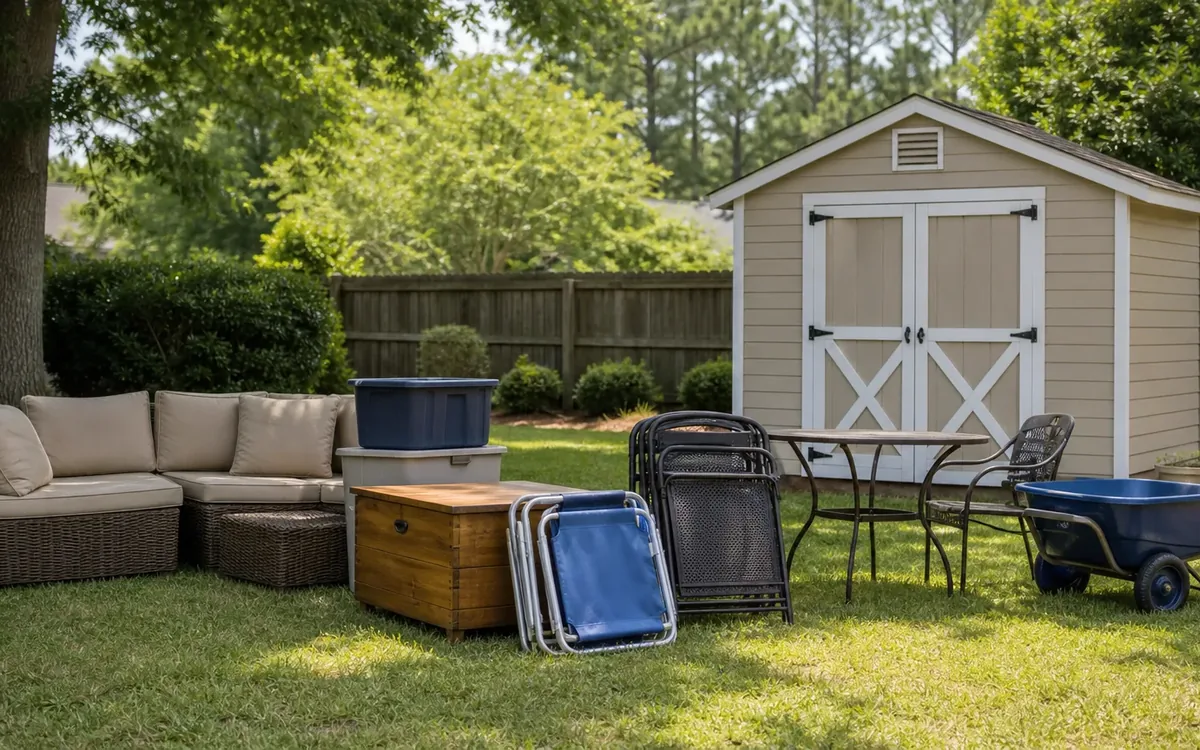
Decide where displaced belongings will go
Restoring parking is not successful if every obstruction simply moves into the hallway, driveway, or another room buyers need to evaluate. Give each displaced item a destination before relocating it.
The household can decide what to retain, subject to ownership rights and any applicable estate authority. A practical organizing or move-management team may discuss categories, packing priorities, and placement options. Those discussions do not establish an item’s value or authorize its sale.
Useful destination categories include:
- Keep in the garage: Items that fit outside the parking and access areas.
- Keep elsewhere at home: Belongings with an appropriate, usable indoor location.
- Pack for the move: Items not needed during the listing period.
- Consider for sale or donation: Property the authorized owner is ready to release.
- Review separately: Items with uncertain ownership, value, or handling requirements.
Off-site storage is a separate household choice. Consider transport, retrieval, access, and whether the contents will still be wanted at the next home. Avoid treating storage as a substitute for decisions about obvious duplicates or unwanted belongings.
An appraiser should address formal valuation questions. A sale provider can discuss suitability for its process. Disposal providers or receiving facilities determine what they accept. None of these outcomes should be assumed merely because an item has left the parking area.
How can you improve door access without creating another hazard?
A narrow path may look clear in a photograph yet remain awkward when someone opens a door or carries a bag. Evaluate access through movement, not just empty floor space.
Open the door between the garage and home and observe where it swings. Check whether a person standing beside a parked vehicle can approach it without stepping over cords, loose equipment, or container lids.
Keep access decisions practical:
- Place frequently used items where retrieval does not require moving the vehicle.
- Keep loose cords and hoses out of walking routes.
- Avoid tall, unstable stacks beside vehicle doors.
- Keep stored objects clear of garage-door tracks and moving parts.
- Leave access to equipment that may require inspection or service.
Do not relocate equipment, alter wiring, or change a door assembly simply to improve the layout. Contractors and qualified technicians should evaluate that work. An inspector or applicable authority addresses questions about required clearances and compliant conditions.
Clutter Cleaner of South Carolina lists code compliance support among its services, but support does not replace an authority’s determination or a contractor’s technical assessment. Separating organizing decisions from compliance decisions prevents a tidy appearance from being mistaken for verified safety.
Keep useful storage without disguising limitations
Once the vehicle and access routes work, assess what storage can reasonably remain. This is where category-based organizing becomes useful, because the garage’s functional boundaries are already established.
Retained storage should have a defined footprint. A shelf full of contained belongings may communicate a workable arrangement better than scattered boxes that gradually expand into the parking space.
Look for practical improvements:
- Group related items so buyers can understand the storage area.
- Close containers that spill contents into walking space.
- Remove items projecting beyond shelf edges.
- Keep heavy belongings in stable, appropriate positions.
- Separate items awaiting decisions from the finished parking area.
New shelving is not automatically the answer. Its depth could reduce door clearance, and installation may require appropriate anchoring or other contractor input. Overhead storage also raises installation, load, and access questions that should not be resolved by appearance alone.
Avoid covering stains, damaged surfaces, or equipment concerns with boxes or display items. Organizing should make the garage easier to evaluate, not make its condition harder to see. Your real-estate professional can discuss presentation and disclosure questions; an inspector or contractor can evaluate suspected defects.
What should buyers be able to evaluate during a showing?
A prepared garage should let buyers understand the parking arrangement without having to mentally remove a wall of belongings. It should also show how the garage connects to daily household use.
Before listing photographs or showings, review the space from the driveway and the house doorway. Both views matter: one explains entry, while the other reveals the route between parking and the home.
Aim to make these features understandable:
- The intended vehicle position.
- Space available beside the parked vehicle.
- The route into the house.
- The location and extent of retained storage.
- Access to visible equipment and controls.
Discuss with your agent whether photographs should show the garage empty of vehicles or with the household vehicle in place. Either choice should represent the available space accurately. Avoid wording that promises a particular vehicle capacity based only on the number of garage doors.
Do not stage a forced fit by folding mirrors, blocking the house doorway, or leaving belongings outside temporarily while presenting the arrangement as normal use. Buyers should be able to assess the real tradeoff between parking and storage.
Maintain the parking boundary until the move
The space can fill again if packed boxes, deliveries, and last-minute sorting have no assigned location. Establish a holding area outside the parking and access boundaries, then keep new belongings within it.
Label packed items by destination rather than leaving anonymous stacks. Keep a separate review container for unresolved small belongings so they do not spread across the floor.
A practical cleanout or move team may discuss packing sequence, retained items, and coordination with household plans. The household still approves what leaves. Separate providers handle contracted storage, repairs, appraisals, or specialized disposal as applicable.
Before a showing, check for new obstructions, unsecured stacks, and doors that no longer open freely. This small functional review matters more than repeatedly reorganizing shelves that already fit within the plan.
Short FAQ
Does the garage need to be completely empty?
No. Retained storage can remain if buyers can clearly evaluate parking, door opening, and access. The useful target is a workable layout, not emptiness.
What if the vehicle still does not fit after sorting?
Document the limitation and discuss accurate presentation with your real-estate professional. Do not imply that additional organizing will resolve a structural or dimensional constraint.
Should uncertain valuables be removed with unwanted belongings?
Keep them separate until ownership and value questions are resolved. The authorized owner makes disposition decisions, and a qualified appraiser addresses appraisal needs.
Who should address garage-door or electrical concerns?
The appropriate qualified technician or contractor should evaluate those concerns. Organizing support can help expose access, but it does not establish equipment safety or compliance.



