
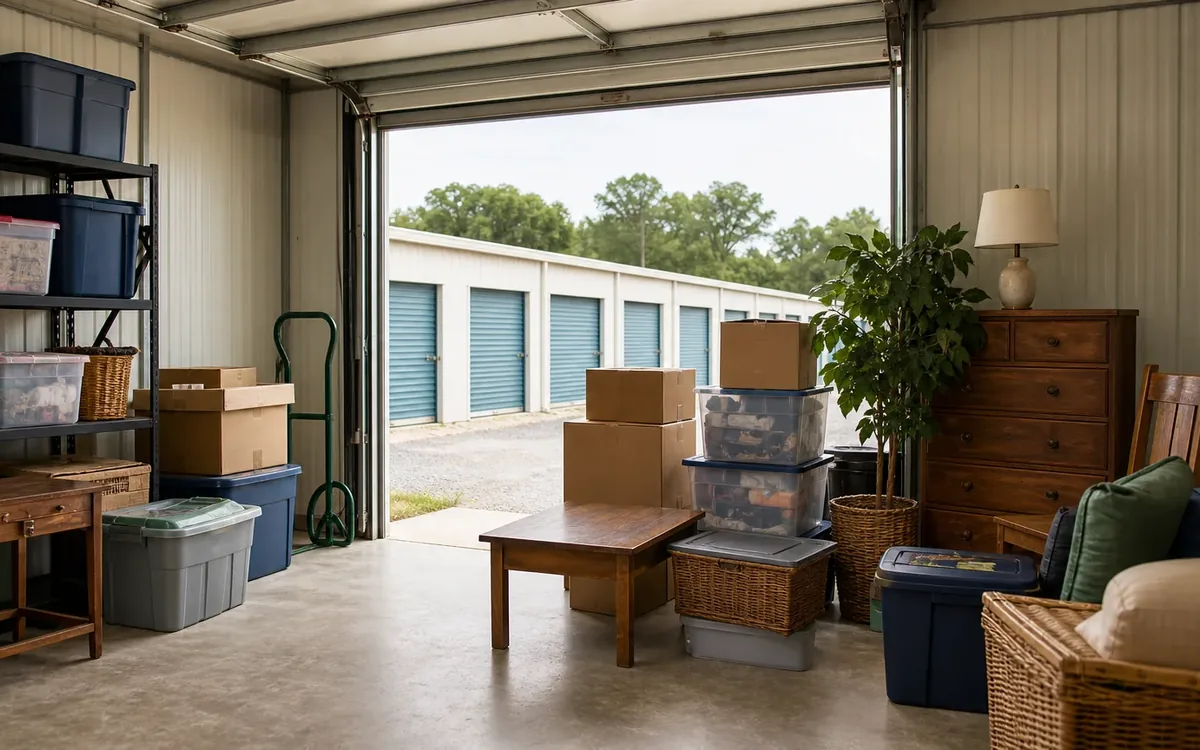
Clear an off-site storage unit before selling your home by confirming access and rental requirements, inventorying what is inside, choosing destinations for the contents, and coordinating removal with your listing and move plans. Treat the unit as a separate project, not an overflow space for everything removed from the house. The goal is to relocate only what you want and end the storage commitment correctly.
Quick answer:
- Review the storage agreement and confirm who can authorize access and cancellation.
- Visit the unit before arranging labor or transportation.
- Sort belongings by their next destination, not simply by whether they leave storage.
- Coordinate decisions with listing preparation and the destination home’s capacity.
- Verify that the unit meets the facility’s move-out requirements and confirm account closure.
For South Carolina homeowners, off-site storage can otherwise become a forgotten part of a home sale. An orderly house does not mean the household is ready to relocate if furniture, records, and boxes remain elsewhere.
Why should the storage unit be part of your home-sale plan?
A storage unit can hide decisions that matter to the move: duplicate furniture, family belongings, seasonal equipment, and papers you may need during the sale. Leaving those decisions until the household move can mean arranging another trip or transferring unwanted contents into another unit.
Start by identifying what role the stored belongings will play in the next home. A dining table might replace the one currently in use. Archived records may need a secure destination. Furniture saved for a larger house may no longer fit a downsizing plan.
Connect the storage project to the household’s home sale preparation planning, but keep its tasks distinct. Preparing rooms for listing photographs and ending a storage rental involve different access, sorting, and confirmation steps.
Your real-estate professional can advise on presentation and sale milestones. The household decides which personal belongings it wants to retain. A practical cleanout or move team may discuss access, sorting assistance, loading conditions, and coordination, subject to its agreed scope.

What should you confirm before opening the unit?
Locate the rental agreement, account information, gate credentials, and lock key. Confirm that the person directing the cleanout is authorized to enter and remove contents. Possessing a key does not necessarily establish ownership of everything inside.
Ask the facility about:
- Access hours and procedures for admitting helpers or outside providers.
- Elevator, loading-area, vehicle, and parking restrictions.
- Whether the account must be current before access or move-out.
- Notice requirements and the method for submitting cancellation.
- Cleaning expectations, lock removal, and final inspection procedures.
Do not assume emptying the unit automatically stops billing. The facility’s contract and instructions govern its account-closeout process. Ask how it documents completion and whether any further action remains after the unit is empty.
If the named renter has died, is unavailable, or shares the unit with someone else, resolve authorization before scheduling removal. Questions about estate authority, disputed ownership, or contractual obligations belong with the facility and, when appropriate, a qualified legal professional.
Inventory forgotten belongings without unpacking everything
Make the first visit a discovery visit. Bring a phone or notebook, labels, and appropriate protective supplies. Record the layout before shifting stacks, especially when heavy objects or unstable boxes block access.
Build an inventory around decisions rather than a perfect catalog. Describe large pieces individually and group ordinary boxes by visible category. Note anything that needs closer review, including documents, valuables, unidentified containers, or belongings claimed by another person.
Useful notes include:
- Item or box description and its location in the unit.
- Apparent condition, including visible moisture or pest evidence.
- Ownership questions or another person’s claim.
- Proposed destination and who will approve it.
- Handling concerns, such as weight or fragile components.
Avoid opening suspicious containers or disturbing unsafe stacks just to complete the inventory. If conditions suggest hazardous substances, significant contamination, or structural danger, stop and seek appropriate guidance. A cleanout plan should not substitute for an inspection or specialized assessment.
When stored contents belong to an estate, the guide to the best way to clean out an estate provides a broader framework for separating family decisions from removal work. Apply that framework to the unit without assuming all estate property can be released immediately.

Give every category a real next destination
Use destination labels that lead to action. “Keep” is too vague if nobody knows whether an item will go to the current house, the next home, or another authorized recipient.
Try these categories:
- Next home: Items the household has chosen and can accommodate.
- Current home for sale preparation: Specific pieces approved for a useful purpose.
- Family or another recipient: Belongings with confirmed acceptance and transfer arrangements.
- Sale or valuation review: Items awaiting a selling decision or professional appraisal.
- Donation inquiry: Items a recipient organization still needs to approve.
- Disposal review: Contents requiring an appropriate disposal route.
- Decision pending: A limited group with a named decision-maker.
Check dimensions before retaining large furniture. Include doorways, stairs, and the destination room, not just the item’s footprint. If the next residence is undecided, compare each piece with realistic needs rather than keeping everything indefinitely.
Set aside a clearly identified review area for uncertain contents. Keep it small enough to revisit meaningfully. Otherwise, the entire unit can become “decision pending,” and removal plans will remain unresolved.
How do you coordinate the cleanout with listing and moving milestones?
Use confirmed milestones rather than an assumed closing date. A listing plan, accepted contract, and actual relocation each create different opportunities and uncertainties. Your real-estate professional should explain which dates are established and which remain conditional.
Before listing, identify any stored furniture or household items that may genuinely help the home’s presentation. Ask your real-estate professional whether bringing them back serves that purpose. Avoid filling cleared rooms with storage boxes simply because the unit needs to be emptied.
As the move plan develops, confirm where retained contents can be received. A mover or move-management provider may discuss sequencing, delivery access, inventory, and coordination. Transportation, temporary storage, and other arrangements should be confirmed with the provider responsible for each task.
Prepare a fallback destination if the next home is not available when the storage rental must end. That might involve a separately arranged storage option or another household-approved location. It is a choice to evaluate, not a guaranteed part of cleanout service.
Prepare access and handling instructions for the work visit
Give anyone assisting a concise plan before they arrive. Include the facility address, unit identifier, authorized contact, permitted access procedure, and destinations. Share credentials only through an appropriate method, and follow the facility’s visitor rules.
Walk through practical constraints:
- Distance between the unit and the loading point.
- Stairs, elevators, corridors, and door widths.
- Facility restrictions on equipment or vehicles.
- Items that must remain untouched until approval.
- Fragile contents and pieces that may require disassembly.
- Separate loads for different destinations.
Confirm what the selected provider has agreed to do. Sorting, packing, loading, transportation, selling, and disposal are not interchangeable tasks. A written scope helps prevent an assumption that every part of the storage exit is included.
The household should retain control over release decisions. Clearly label papers, personal valuables, and unresolved belongings so they are not mistaken for an approved outgoing load.
Keep valuation, donation, and disposal decisions separate
Finding an old collection or substantial furniture does not establish its value. If value affects a family, estate, insurance, or sale decision, consult an appropriate appraiser or other qualified professional. Do not base a required valuation on a casual cleanout estimate.
Auctions and estate sales may be options for selected contents, but suitability and arrangements require discussion. Sale proceeds, acceptance, and timing should not be assumed. The household or authorized representative decides whether to pursue a sale after reviewing the relevant terms.
For donations, ask the recipient organization about condition standards, accepted categories, and delivery or pickup arrangements. Identify a fallback for declined items so one rejected piece does not prevent closing the unit.
For disposal, separate ordinary unwanted belongings from materials requiring special handling. Paint, chemicals, batteries, electronics, and unidentified containers may need different routes. Confirm requirements with the appropriate facility, provider, or authority.
Keep any contractor work, inspection, or compliance question separate as well. A practical team may flag a concern, but the responsible professional or authority determines what assessment or corrective work is required.
Close the rental commitment, not just the door
Once the approved contents have left, check corners, shelves, drawers, and the space behind anything that remained during loading. Compare the empty unit with the facility’s stated move-out requirements.
Complete the closeout steps the facility requires:
- Remove remaining household materials and address required cleaning.
- Follow instructions for locks and any facility-issued access devices.
- Submit cancellation or move-out confirmation through the required channel.
- Request written acknowledgment of the unit’s status.
- Review the account for unresolved charges or billing questions.
Keep dated photographs and correspondence for your records. These can document what you observed and submitted, but they do not replace the facility’s acceptance process or establish a legal outcome.
If billing continues, contact the facility with the agreement and confirmation records. Do not assume deleting a payment method cancels the rental. Contract disputes or questions about financial obligations may require legal advice.
Bring the storage decisions into the final household move plan
Update the household inventory once the unit is cleared. Retained items should now have a destination, an owner responsible for decisions, and a handling plan. Documents and valuables need deliberate custody arrangements rather than placement among general boxes.
Tell the relevant providers when the inventory changes. Removing stored furniture from the move or adding it back can affect planning. Keep accepted donations, sale consignments, and pending pickups visible until each transfer is complete.
Clutter Cleaner of South Carolina is physically located in Mount Pleasant, serves all of South Carolina, and has Charleston as its primary market. Homeowners can call (843) 972-7020 to discuss home sale preparation, downsizing and organizing, or move management needs. Ask specifically how off-site belongings fit the proposed scope; do not assume facility cancellation or separate-provider tasks are included.
Short FAQ
Should I move everything from storage into the house before listing?
Usually, that defeats the purpose of clearing space. Bring back only selected items with a clear use and destination. Discuss presentation choices with your real-estate professional.
What if relatives have belongings in my unit?
Confirm ownership, get decisions from the appropriate people, and document agreed transfers. Resolve disputes before authorizing removal or disposal.
Can I end the rental before my home closes?
Possibly, if contents have confirmed destinations and you satisfy the storage agreement. Base the decision on actual arrangements, not an assumed closing outcome.
Does an empty unit mean the account is closed?
Not necessarily. Complete the facility’s notice, cleaning, inspection, and confirmation requirements, and retain its written acknowledgment.



