
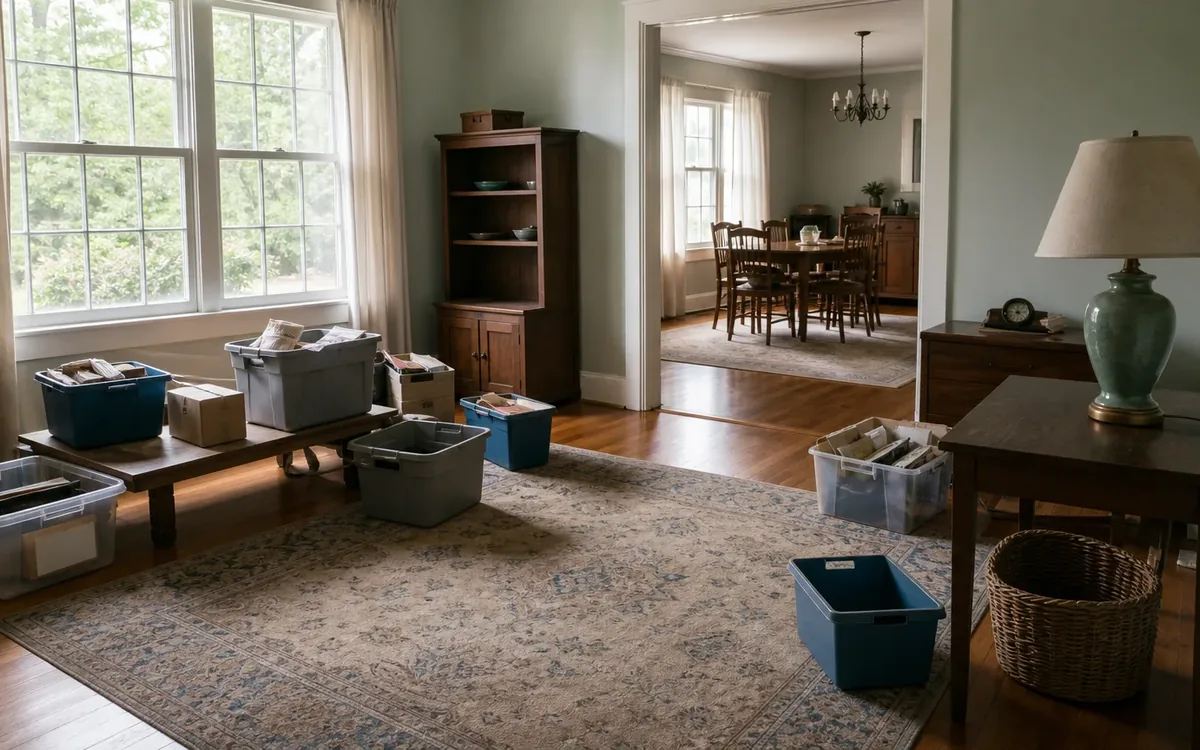
Family photos do not have to be fully identified, scanned, or divided before an estate cleanout can proceed. Separate them from removal items, keep existing groups together, and assign an authorized person to receive them. A small digital preview can help relatives make decisions while detailed preservation continues after the property is cleared.
For a Charleston household with relatives elsewhere in South Carolina or out of state, the goal is a manageable handoff, not a finished family archive. Clear boundaries protect sentimental material without making every unidentified face a reason to stop work.
Quick answer: Create a protected photo holding area, collect albums and loose pictures without reorganizing them, label containers by where they were found, and name a receiving custodian. Digitize only enough material to help relatives understand the collection. Resolve authority and disputed ownership separately before releasing or discarding contested items.
Why photo decisions can stall an otherwise ready cleanout
Photos create two different jobs: removing belongings from the property and interpreting family history. Those jobs can proceed separately. An album can leave the house safely even when nobody knows the names of everyone pictured.
Delays often begin when a family tries to complete both jobs at once. Someone opens an album, another person requests individual scans, and a third wants to review every envelope before anything moves. Meanwhile, the household loses track of which boxes are protected and which are ready for removal.
An estate cleanout plan should give photos a defined route out of the property. The estate cleanout service information is a useful starting point for discussing the broader work. Explain that photo materials need a separate handoff, and ask how that boundary can be reflected in the agreed scope.
A practical cleanout team may discuss collection areas, container labels, access, and handling instructions. Do not assume archival sorting, scanning, storage, or shipping is included unless separately confirmed.
Who can decide where the photos go?
Begin with authority, not sentiment. The person coordinating the house may not be the person authorized to distribute estate belongings. Confirm who can approve the removal, temporary custody, transfer, or disposal of photo materials.
The household can propose a receiving relative, a preservation plan, and preferences about family access. Estate ownership and distribution decisions belong with the authorized estate representative, guided by legal counsel when necessary. If a photograph or album is disputed, keep it separate rather than asking a cleanout worker to choose a recipient.
Write down a simple instruction that distinguishes temporary custody from ownership. For example: “The boxed photo collection goes to the designated custodian for safekeeping and later family review. This transfer does not settle disputed ownership.” Have the responsible person approve the actual arrangement.
Clarify these points before collection begins:
- Who approves transfers from the property?
- Who will receive and safeguard the materials?
- Which relatives may view digital copies?
- Which items must remain on hold pending a decision?
- Who can approve any later discards?
For context on coordinating the rest of the property, the guide to how estate cleanouts work can help keep photo preservation connected to the broader plan without making it the entire project.
Build a protected collection route, not a sorting station
Choose a clearly marked area away from outgoing furniture, donation piles, and disposal containers. Use a label such as “Family photos: hold for approved handoff.” Tell everyone working in the house what that label means.
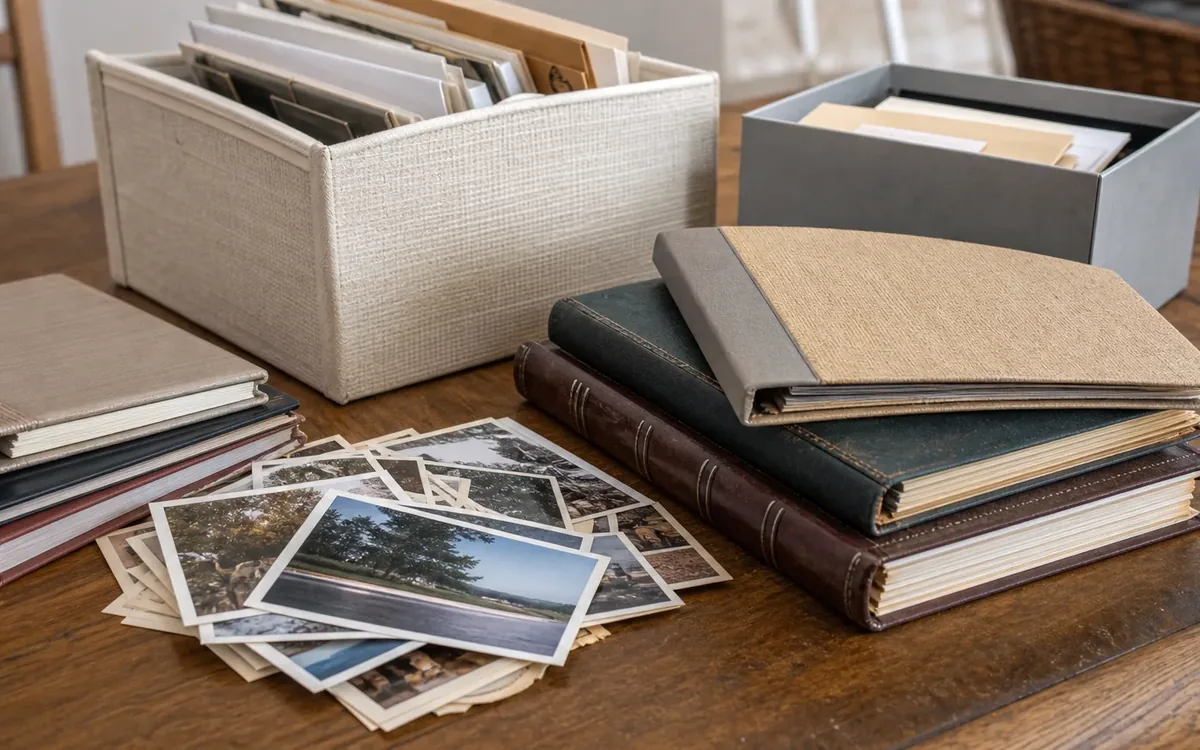
Look for photo materials where they are easy to overlook: desk drawers, books, bedside cabinets, envelopes, framed displays, and boxes mixed with paperwork. Ask helpers to bring discoveries to the holding area without pulling albums apart or rearranging envelopes.
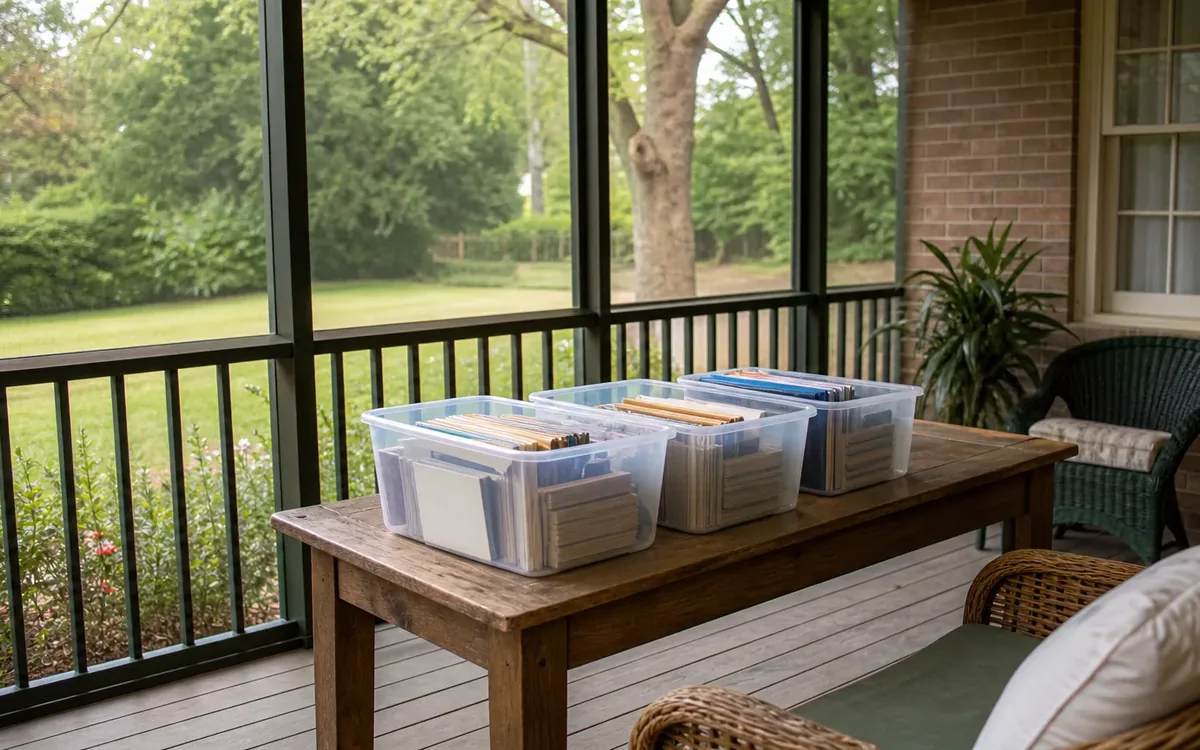
Use containers that are clean, dry, manageable to carry, and appropriate for the contents. Avoid overfilling boxes or letting framed glass press against loose prints. If a container is only for temporary transport, say so on the handoff record rather than treating it as a permanent preservation solution.
Keep recognizable groups intact:
- Albums with their pages and captions together.
- Envelopes with their original prints or negatives.
- Slides in their existing trays or boxes.
- Loose photos found together in a drawer.
- Framed pictures separated from fragile loose material.
Photograph the original arrangement when it may explain context. A quick image of a labeled envelope beside its contents can be more useful than immediately separating every print by subject.
What is the smallest useful sorting system?
Use sorting categories based on handling needs, not family history. The cleanout stage is usually the wrong moment to create categories for every branch of the family, decade, holiday, or person.
A limited system needs three groups:
- Keep together for handoff. Albums, ordinary prints, negatives, slides, and intact photo envelopes go here without detailed identification.
- Needs special attention. Damp materials, broken frames, visibly fragile items, or potentially significant collections receive separate handling instructions.
- Decision hold. Disputed items, uncertain nonfamily material, and anything proposed for disposal stay protected until the authorized decision-maker responds.
Label each container with a unique identifier, its discovery location, and a broad description. “Photo box C: upstairs closet, loose prints and envelopes” is sufficient. Do not promise an exact contents inventory if nobody has made one.
Keep a matching list on paper or in a shared document. Record the container identifier, receiving person, and unresolved concerns. That gives relatives a way to request a box later without reopening the property search.
Avoid discarding apparent duplicates during collection. Similar prints may carry different notes on the reverse, and small differences may matter to relatives. Detailed duplicate review can happen after handoff.
Digitize a preview, not the whole collection
The first digital task is communication. Give distant relatives enough visibility to understand what exists, not a promise that every photograph will be scanned before the house is cleared.
Choose representative material: album covers, readable captions, envelope labels, and selected pictures from each container. Include container identifiers in filenames or in the accompanying list. Keep an unedited image when you also make a cropped or enhanced version.
For loose prints, capture the reverse when it contains writing. Do not peel mounted photographs from album pages just to scan them. Old adhesives, brittle pages, and unfamiliar photographic materials may need advice from a qualified preservation provider.
Set practical limits around the preview:
- Sample each container rather than processing every image.
- Prioritize readable labels and context over cosmetic editing.
- Mark uncertain names as uncertain.
- Keep original digital files separate from edited sharing copies.
- Tell relatives that the preview is incomplete.
If the family wants comprehensive scanning, choose a separate provider or household volunteer and agree on scope, custody, file formats, and payment responsibility. Digitization is a separate choice, not an assumed part of cleanout or move management.
How can relatives review photos without holding up the house?
Give relatives a bounded review request. “Please review this preview and tell us which containers interest you” is easier to answer than “Tell us what to do with all the photos.” Ask for container-level preferences first.
Choose a response deadline that fits the property’s actual obligations and the family’s circumstances. Do not present that deadline as a legal requirement unless the responsible professional confirms it. State the approved fallback: unanswered requests will remain with the custodian for later review, not automatically become disposal instructions.
For relatives across South Carolina and other states, use one shared update rather than separate conversations that produce conflicting directions. Include:
- The container list and preview location.
- The name of the approved custodian.
- How relatives should submit requests.
- Which decisions can wait until after removal.
- Which disputed items remain on hold.
Ask before uploading sensitive images to a broadly shared folder. Photos can reveal private documents, addresses, children, or personal circumstances. Access settings should match the intended audience.
Keep the review separate from physical pickup. A relative can request future access to an album without needing to travel to Charleston before the property is cleared.
Make the physical and digital handoff traceable
Before containers leave, compare their labels with the handoff list. Record who released them, who received them, and any visible concerns. A simple receipt supports coordination but does not replace legal advice or determine ownership.
For a household-arranged pickup, discuss vehicle space, protection from weather, and where the recipient will put the collection on arrival. Avoid an unplanned stop that leaves sensitive materials in unsuitable conditions.
If shipping is chosen, the household should arrange suitable packing and carrier services separately. Fragile framed glass, irreplaceable albums, and unusual formats may call for professional packing advice. Confirm the recipient is prepared to accept the shipment before sending it.
Digital custody also needs clarity. Identify who holds the original files, where a separate backup is kept, and who manages shared access. A preview folder should not be the only copy of newly created scans.
Temporary storage is another separate household or provider decision. Identify an appropriate receiving location before removal so boxes do not simply move from one uncertain pile to another.
Keep specialist decisions outside the cleanout workflow
Some discoveries need more than routine handling. Mold, water damage, stuck photographs, or crumbling album pages should not trigger improvised cleaning. Separate affected materials from unaffected ones where practical and seek qualified preservation advice.
A potentially valuable collection also needs its own decision route. A cleanout team may flag materials for review, but market value should be assessed by an appropriate appraisal or sales professional. Do not assume age alone makes an album valuable, or that an appraisal is included in cleanout work.
Property sale requirements stay with the real-estate professional. Inspection findings and compliance questions stay with the responsible inspector, professional, or authority. Photo preservation does not establish that a property is ready for sale or compliant.
Clutter Cleaner of South Carolina is physically based in Mount Pleasant, with Charleston as its primary market and a statewide service territory. Families can discuss estate cleanout coordination at (843) 972-7020 while confirming which photo-handling tasks fall within the agreed scope and which require separate arrangements.
Short FAQ
Must every person in every photo be identified first?
No. Preserve existing groupings and record available captions. Identification can continue after the authorized handoff without keeping the collection in the property.
What if no relative can take the collection immediately?
The authorized decision-maker should choose a temporary custodian or arrange suitable storage separately. Name the receiving location and responsibility before scheduling removal.
Can we throw away duplicates during the cleanout?
Only with appropriate authorization. The simpler approach is to keep apparent duplicates together for later comparison, especially when handwritten notes differ.
What is the clearest sign the photo handoff is ready?
Each container has a label, an approved recipient, and a recorded status. Unresolved questions are documented, but detailed scanning and identification are no longer conditions for clearing the property.



