
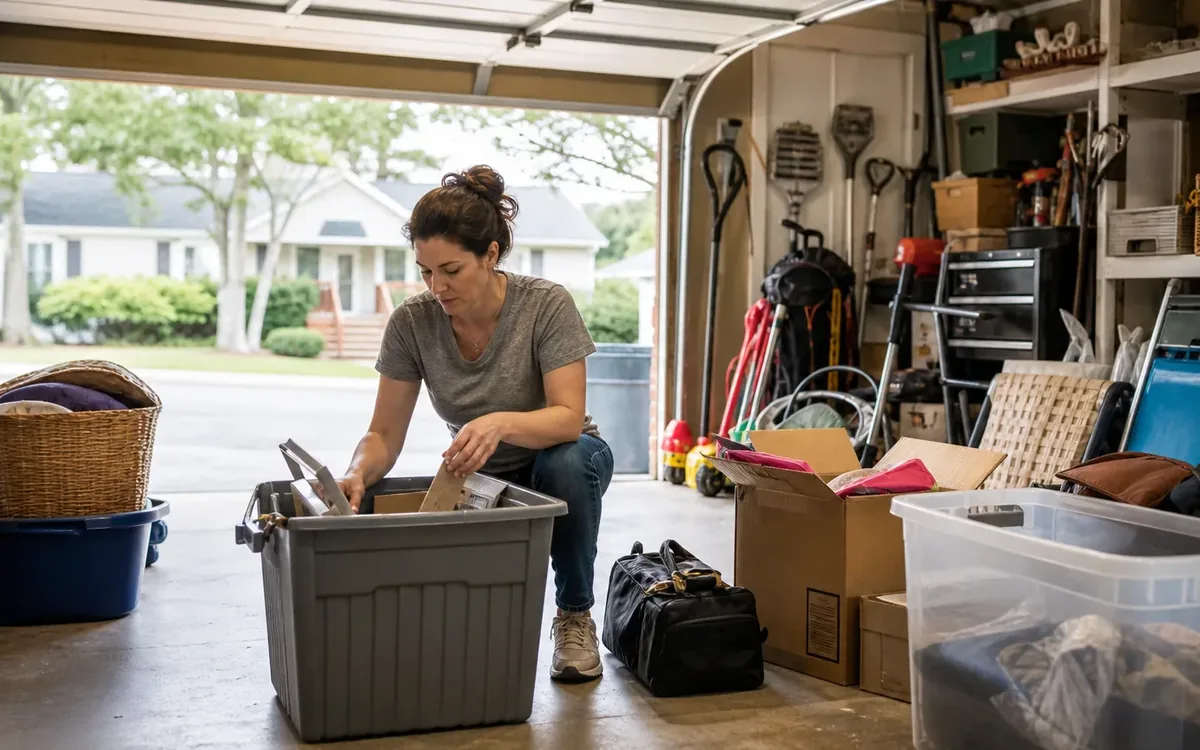
A garage cleanout before a move works best when you first protect documents and valuables, then separate items by destination, address restricted materials, and stage only approved belongings for transport. Start several weeks before packing if possible. The household decides what to keep, sell, donate, recycle, or discard, while movers, cleanout teams, appraisers, and local authorities determine what they can accept or advise within their roles.
Quick answer: Empty the garage by zones rather than moving random objects. Set aside personal records and valuables, identify chemicals and other restricted materials, sort everything into clearly labeled destinations, and confirm mover and disposal rules before loading. Finish with basic cleaning and a final walkthrough.
1. Set the garage cleanout plan before sorting
Choose the garage’s required condition at the end of the project. A homeowner preparing for a move may need an empty room, a small group of labeled items for the buyer, or a staging area for belongings that movers will collect.
Write down the deadline and work backward from it. Leave time between the cleanout and moving day so unexpected chemicals, bulky objects, or disputed belongings do not delay the move.
Gather practical supplies:
- Heavy-duty trash bags
- Boxes in several sizes
- Permanent markers and labels
- Clear bins for small hardware
- Work gloves and closed-toe shoes
- Broom, dustpan, and shop vacuum if available
- Packing tape and resealable bags
- A table or clear surface for sorting
- A phone or camera for inventory records
Create distinct destinations before opening boxes:
- Moving with the household
- Staying with the property, if properly agreed
- Family review
- Professional appraisal
- Sale consideration
- Donation consideration
- Recycling
- Household trash
- Hazardous or restricted material review
For a garage connected to an estate transition, begin with the estate cleanout service overview to understand how a practical cleanout may fit into the larger project. The household or authorized decision-maker should establish who can approve each item’s destination before anything leaves the property.
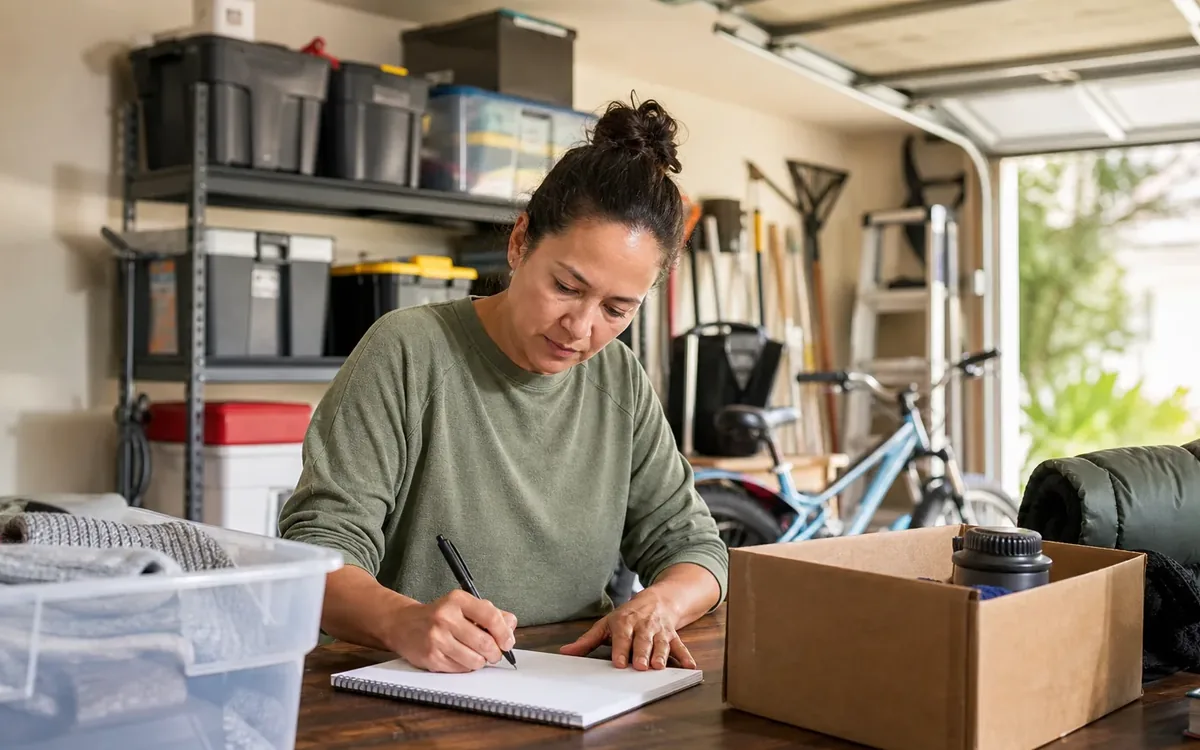
2. What should you remove from the garage first?
Remove records, valuables, medications, firearms, ammunition, keys, and sensitive personal property before ordinary sorting begins. These items should not sit in an open discard or donation pile.
Look first for:
- Vehicle titles, maintenance records, and receipts
- Property records, tax papers, and insurance documents
- Cash, coins, jewelry, and collections
- Photographs, letters, and irreplaceable keepsakes
- Spare keys, remotes, and access devices
- Prescription or over-the-counter medication
- Firearms, ammunition, and related equipment
- Digital devices or storage media containing personal information
- Items specifically named in an estate plan or family agreement
Place documents and small valuables in a secure indoor location. Label sentimental property for review instead of making rushed decisions in a hot, crowded, or poorly lit garage.
If the garage belongs to an estate, the authorized fiduciary or other responsible party determines who may direct the work and approve disposition. A cleanout or move team can discuss sorting, labor, staging, and removal logistics. It should not interpret a will, determine ownership, resolve beneficiary disputes, or provide legal advice.
For more detail on sequencing an inherited-property project, read how to make moving day less stressful. That broader guide can help coordinate the garage with the rest of the home without turning every garage decision into an estate-wide task.
3. Sort by destination, not by object type
Sorting all tools together may seem efficient, but it can create a second round of work. Instead, decide where each object is going and place it directly in that destination zone.
Use bold, visible labels. Avoid vague categories such as “maybe” or “miscellaneous.” If the household truly cannot decide, create one limited review zone with a firm decision date.
Moving with the household
Keep items that are useful, wanted, affordable to transport, and permitted by the mover. Consider the storage available at the next home before keeping duplicate rakes, scrap wood, empty containers, or rarely used equipment.
Staying with the property
Do not assume shelving, spare paint, garden tools, refrigerators, workbenches, or remotes should remain. Personal property included in a real-estate transaction should be addressed through the appropriate agreement and real-estate professional.
Sale or appraisal review
Set aside objects that may justify knowledgeable review, such as collections, specialty tools, vintage signs, or equipment with uncertain value. A cleanout team may identify categories worth pausing, but only a qualified appraiser should provide a formal appraisal. An auction or estate-sale professional decides what fits a particular sale format.
Donation or recycling review
Donation centers and recyclers set their own acceptance standards. Confirm condition, quantity, and material rules before loading a vehicle. Broken, recalled, incomplete, contaminated, or obsolete goods may not be accepted.

4. How should chemicals and restricted items be handled?
Do not place unknown chemicals, fuel, propane cylinders, ammunition, batteries, pesticides, or similar materials into an ordinary removal pile. Keep products upright, ventilate the workspace when safe, and prevent children or pets from entering the area.
Common garage materials requiring advance confirmation include:
- Gasoline, diesel, kerosene, and mixed fuel
- Motor oil, transmission fluid, and antifreeze
- Paint, stain, thinner, and solvents
- Pesticides, herbicides, and pool chemicals
- Propane cylinders and other compressed-gas containers
- Vehicle, power-tool, and rechargeable batteries
- Tires
- Fire extinguishers
- Fluorescent lamps
- Ammunition, fireworks, and explosives
- Unlabeled, leaking, corroded, or combined substances
Read the original label when it is intact, but do not mix products or pour them into drains, onto soil, or into stormwater systems. Do not sniff an unknown product to identify it. If a container is leaking, isolate the area without touching the substance and seek direction from the appropriate local or state authority.
Requirements and collection options can differ across South Carolina and may change. The household should verify current instructions with the relevant waste, recycling, fire-safety, law-enforcement, or environmental authority. A practical cleanout or move team can explain its acceptance limits, but it cannot override regulations or guarantee that another facility will accept an item.
Firearms, ammunition, and explosives need separate, lawful handling. Consult the responsible authority or qualified professional rather than putting them in a moving, donation, or discard box.
5. Check what movers will and will not transport
Ask the selected mover for a written prohibited-items policy before final packing. Restrictions often cover flammable, corrosive, pressurized, perishable, or unusually heavy items, but the mover’s actual policy controls.
Discuss these categories in advance:
- Fuel-powered lawn and workshop equipment
- Propane cylinders and fuel cans
- Paints, solvents, and chemicals
- Vehicle and lithium-ion batteries
- Large tool chests or machinery
- Firearms and ammunition
- Plants, food, and temperature-sensitive products
- Items attached to walls, ceilings, or floors
Equipment may need fuel removed, batteries disconnected, blades protected, or attachments secured. Follow the manufacturer’s instructions and the mover’s requirements. If draining or servicing machinery is beyond the household’s ability, use an appropriate technician.
Measure large equipment and compare it with door openings, ramps, truck access, and the destination space. Do not dismantle load-bearing shelving, electrical fixtures, or permanently installed equipment without qualified guidance.
6. Create a decision process for tools and project materials
Garages accumulate useful objects in quantities that exceed future needs. A focused decision process keeps the project from becoming a simple transfer of clutter from one property to another.
For each tool or supply, ask:
- Does it work safely?
- Is it complete?
- Has it been used recently?
- Is there space for it at the next home?
- Is transporting it sensible compared with replacement?
- Does another household member or beneficiary need to review it?
Keep matched parts together. Put drill bits, sockets, fasteners, keys, manuals, and attachments in labeled bags or containers. Tape the bag to the corresponding tool only if doing so will not damage it.
Separate usable lumber and building materials from scraps containing nails, rot, chemical contamination, or pests. Unknown construction materials may require professional identification before disturbance. If suspected asbestos-containing material, lead hazards, mold, structural damage, or pest contamination appears, stop work in that area and consult an appropriately qualified inspector, contractor, environmental professional, or authority.
A cleanout team may discuss access, lifting, sorting, and removal options. It should not declare a material safe, certify code compliance, or replace an inspection.
7. What can stay in the garage when the home is sold?
Only leave items that the responsible parties have clearly agreed will remain. A buyer may not want leftover paint, spare tile, shelving, chemicals, firewood, or lawn equipment, even if those objects seem useful.
Before leaving anything, create a list and discuss it with the appropriate real-estate professional. Items to clarify may include:
- Attached and freestanding shelving
- Workbenches and wall-mounted storage systems
- Refrigerators or freezers
- Spare flooring, tile, shingles, or paint
- Garage-door remotes and exterior keys
- Lawn and garden equipment
- Trash and recycling containers
- Security devices or charging equipment
The household decides what it wishes to offer or remove. The buyer and seller address included personal property through their agreement, with guidance from their real-estate professionals or attorneys as appropriate. A cleanout team can remove or stage items according to authorized instructions, but it cannot determine what a contract requires.
Do not conceal defects behind stored belongings. Questions about disclosure, fixtures, contract terms, inspection findings, or required repairs belong with the responsible real-estate, legal, inspection, or compliance professional.
8. Pack and stage the items that are moving
Once decisions are complete, pack by destination room and function. Write the contents and next-home location on at least two sides of every box.
Use these staging practices:
- Keep walkways, doors, panels, and exits accessible
- Place heavy boxes on the floor and lighter ones above
- Protect sharp edges and exposed blades
- Do not overload boxes with books, metal parts, or fasteners
- Use small containers for dense hardware
- Coil and label cords
- Photograph complicated assemblies before disassembly
- Keep parts and instructions together
- Reserve a clearly marked area for mover-approved goods
- Keep prohibited or unresolved items outside the loading zone
Avoid blocking the electrical panel, water shutoff, garage door controls, or equipment a professional may need to inspect. If the home is being photographed or shown, ask the real-estate professional how empty and clean the garage should be.
9. Complete the final garage walkthrough
After removal, inspect shelves, rafters, cabinets, drawers, pegboards, appliances, and corners. Check for keys, documents, small hardware, and items stored above eye level.
Then complete a reasonable basic cleanup:
- Sweep or vacuum loose debris
- Remove tape, labels, and empty packaging
- Wipe accessible shelving if appropriate
- Bag ordinary trash
- Check for nails, screws, and sharp fragments
- Confirm that approved items are labeled
- Photograph the cleared condition for household records
- Close and secure windows and access doors
- Test remotes only if authorized and safe
- Return keys and access devices to the designated person
Do not wash chemicals into a drain or attempt to hide stains. If there are signs of a leak, electrical problem, structural concern, pest issue, or contamination, document the area and refer it to the appropriate professional.
In Charleston-area moves and elsewhere in South Carolina, weather can affect scheduling and loading conditions. Check the actual forecast, protect moisture-sensitive items, and avoid leaving cardboard or electronics exposed. This is practical planning, not a substitute for the mover’s safety decision.
10. Decide where professional help fits
A household can decide its priorities, sentimental choices, acceptable timeline, and intended destinations, provided the person making decisions has authority. It can also pack ordinary belongings and perform basic sweeping when safe.
A practical cleanout or move team may discuss:
- Project sequence and access
- Sorting and staging needs
- Labor for authorized item removal
- Move-management coordination
- Downsizing and organizing
- Home-sale preparation tasks
- Potential auction or estate-sale pathways
- Acceptance limits and unresolved-item procedures
Clutter Cleaner of South Carolina lists estate cleanouts, downsizing and organizing, auctions and estate sales, move management, home sale preparation, and code compliance support among its services statewide. Actual project scope should be discussed directly rather than assumed from this checklist.
Some decisions remain with other professionals or authorities:
- Attorneys or authorized fiduciaries address legal authority and disputes
- Appraisers determine formal value opinions
- Real-estate professionals and attorneys address transaction documents
- Inspectors evaluate property conditions within their scope
- Movers determine what they will transport
- Donation, recycling, and disposal facilities determine acceptance
- Government authorities determine regulatory and compliance requirements
- Qualified contractors or environmental professionals assess specialized hazards
For project-scope questions, households can contact Clutter Cleaner of South Carolina at (843) 972-7020. Confirm availability, property access, decision-making authority, and the exact items involved before scheduling.
FAQ
How early should I clean out a garage before moving?
Begin several weeks ahead when possible, especially if the garage contains chemicals, inherited belongings, sale candidates, or bulky equipment. Finish major decisions before movers arrive and leave a buffer for items requiring specialized handling.
Should I sell garage items before requesting removal help?
That depends on value, condition, time, and likely demand. Separate possible sale items early. An auction, estate-sale, or appraisal professional can advise within their role. Avoid delaying the entire move for low-value objects with uncertain prospects.
Can leftover paint stay for the buyer?
Only if the relevant parties agree and the transaction documents or professional guidance support it. Labeling paint by room may be helpful, but do not assume the buyer wants it or that it can be left under local requirements.
What should I do with an unidentified container?
Do not open, smell, mix, or transport it casually. Isolate the area when safe and ask the appropriate waste, fire-safety, environmental, or other responsible authority for current instructions.
Is sweeping enough after the garage is emptied?
Often, basic debris removal is a practical final step, but the required condition depends on the sale agreement, lease, inspection issues, or household goals. Repairs, contamination, and compliance questions should be directed to the appropriate professional or authority.



