
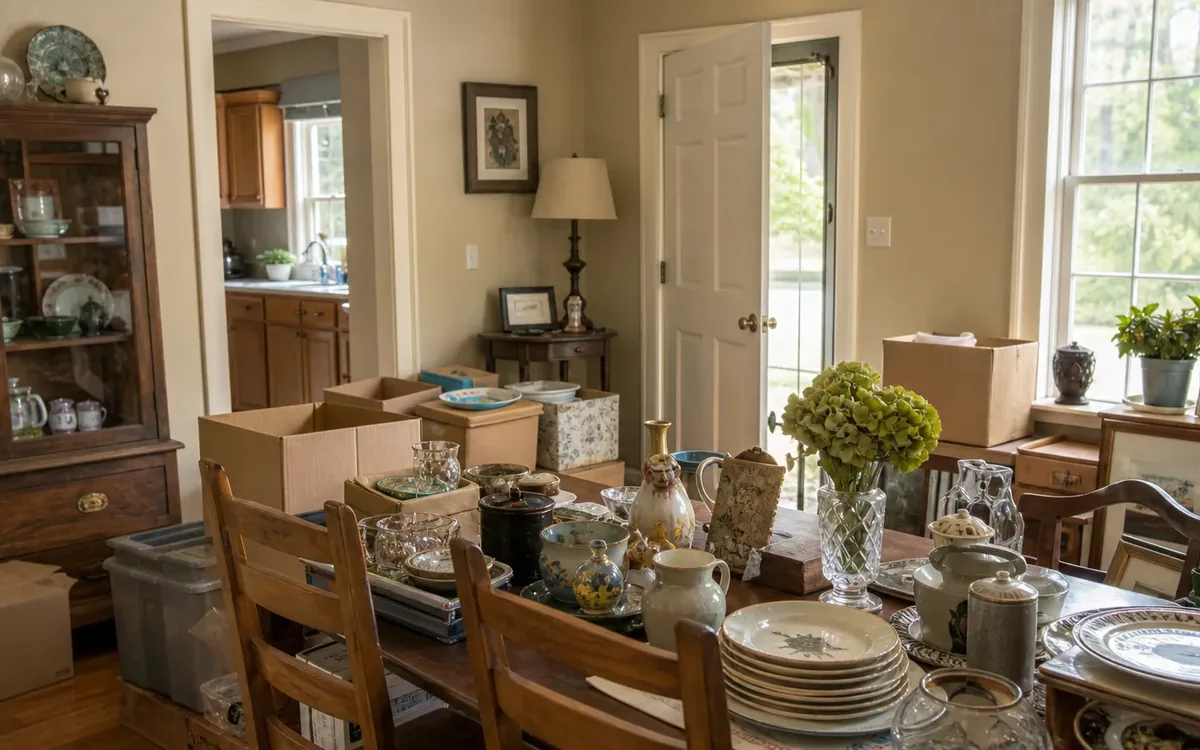
An estate cleanout at a South Carolina property with well water should begin by locating the wellhead, marking a protected work area around it, and keeping vehicles, debris, chemicals, and wash water away. The household can control sorting and access, while qualified well contractors, environmental professionals, appraisers, attorneys, and local authorities should handle decisions within their expertise.
Quick answer: Identify the well before moving anything outdoors. Keep the wellhead visible and accessible, create separate routes for people and vehicles, isolate liquids and questionable materials, and do not use the well area for staging, washing, burning, or disposal. Ask an appropriate professional about damage, testing, setbacks, abandonment, or contamination concerns.
This approach applies whether the estate will be sold, transferred, occupied, or held by the family. It keeps the cleanout focused on a specific risk: preventing avoidable disturbance to the household’s drinking-water source while preserving access for inspection or service.
Why does the well change an estate cleanout plan?
A private well makes outdoor logistics more important. An ordinary staging choice, such as placing boxes beside an outbuilding or parking a trailer near the house, may interfere with the wellhead or the route a well contractor needs to reach it.
The cleanout can also uncover products that should not be opened, poured out, mixed, burned, or placed on bare soil. Examples include:
- Gasoline, kerosene, oil, and equipment fluids
- Paint, thinner, stains, and solvents
- Pesticides, herbicides, and fertilizers
- Pool, automotive, and workshop chemicals
- Unmarked bottles, drums, or leaking containers
- Batteries and damaged electronic equipment
- Medical or veterinary products
The household does not need to determine chemical hazards by guesswork. Its immediate role is to stop handling a questionable item, keep others away, and seek instructions from the appropriate disposal program, waste facility, emergency authority, or environmental professional.
Clutter Cleaner of South Carolina offers estate cleanout services across South Carolina. A practical cleanout discussion may cover room priorities, sorting zones, removal access, and items designated by the authorized decision-maker. It should not replace well inspection, water testing, hazardous-material assessment, or regulatory direction.

Who should make each decision?
Clear roles prevent a hauling decision from becoming a legal, financial, or environmental mistake.
The household or authorized estate representative
The responsible person can generally decide:
- Which ordinary belongings to keep, donate, sell, recycle, or discard
- Where indoor sorting areas will be established
- Who may enter the property
- Which family members or beneficiaries should review disputed items
- Whether work pauses until ownership or safety questions are resolved
- Which qualified providers to contact
Only a person with proper authority should approve disposition of estate property. If authority, title, beneficiary rights, or probate instructions are unclear, an attorney or the court process should resolve them before disputed belongings leave.
A cleanout or move team
A practical team may discuss:
- Work zones and walking paths
- Furniture and box removal routes
- Areas that should remain untouched
- Visible access constraints
- Staging locations approved by the household
- Separation of ordinary contents from questionable materials
- Coordination with an auctioneer, estate-sale provider, mover, or other selected provider
The team should be told where the well is, but it should not be expected to certify the well’s condition, determine contamination, interpret setback rules, or decide whether a well can be abandoned.
For broader estate sequencing, read what is the best way to clean out an estate. That guide can help place the well-protection plan within the larger process without turning this project into a generic whole-house checklist.
Specialized professionals and authorities
Separate decisions belong with the relevant expert:
- A qualified well contractor evaluates well components, access needs, repairs, or abandonment work.
- A certified laboratory or appropriate water professional handles sampling and explains test results within its scope.
- An environmental professional or public authority advises on suspected contamination.
- Local or state authorities interpret applicable disposal, environmental, building, or property requirements.
- An attorney addresses probate, authority, title, contracts, and disputes.
- A qualified appraiser determines value when a formal appraisal is needed.
- A real-estate professional advises on listing strategy and market presentation.
- A licensed home inspector reports within the scope of the inspection.
- Specialty waste providers determine what materials they can lawfully accept.
These roles may overlap in scheduling, but their decisions should remain separate.
How do you identify and protect the wellhead?
Do not assume the visible pipe, cover, pump house, or concrete feature is definitely the well. Rural properties can contain old equipment, multiple water-related structures, buried components, or wells no longer in use.
Use the following four-part process:
- Ask people familiar with the property. The owner, family, caretaker, neighbor, or maintenance provider may know the well location and service route. Treat recollections as useful leads, not technical confirmation.
- Review available property records. Look for well invoices, inspection reports, treatment-system records, surveys, diagrams, or labels. A real-estate professional, attorney, contractor, or relevant authority may help identify records within that person’s role.
- Request professional identification when uncertain. A qualified well contractor can examine the system. Do not dig, remove covers, disconnect equipment, or probe the ground to find it.
- Mark the protected area visibly. Use cones, stakes, tape, or freestanding signs that do not require disturbing the ground. Keep the markers in place throughout sorting and hauling.
Everyone entering the site should understand that the marked area is not a parking spot, turnaround, smoking area, wash station, or debris zone. Keep the wellhead visible rather than covering it with tarps, brush, boxes, or furniture.
Mark the access path too. A clear ring around the well is not enough if trucks, dumpsters, branches, or stacked contents block the only practical approach for service equipment.
How should staging and vehicle access be arranged?
Start with a simple site sketch. It does not need to be a legal survey. Show the house, driveway, gates, outbuildings, septic features if known, the identified well area, and proposed work zones.
Create distinct zones for:
- Family review and undecided items
- Confirmed keep items
- Potential sale or appraisal items
- Donation candidates, subject to recipient acceptance
- Ordinary disposal items
- Questionable liquids or regulated materials awaiting instructions
- Equipment parking and loading
Choose zones based on safe access and professional guidance, not convenience alone. Do not set a universal buffer distance unless an appropriate authority or professional has supplied one for that property.
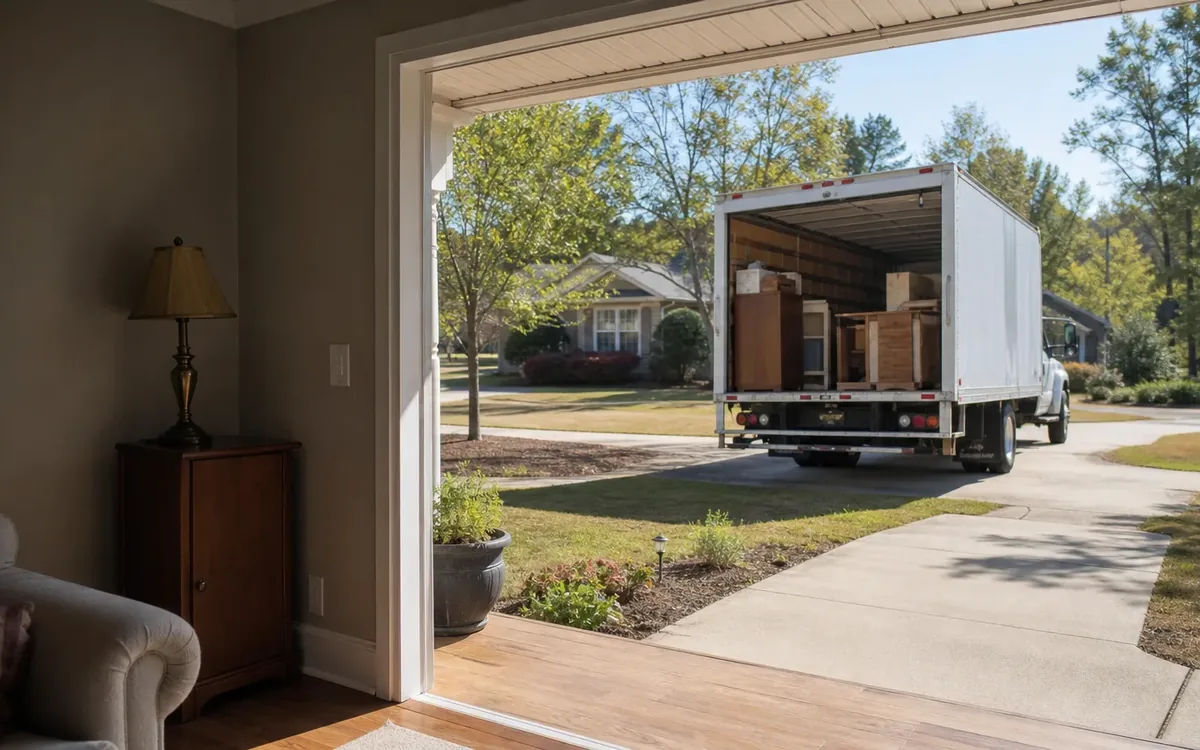
Vehicle drivers should receive the route before entering. Consider overhead limbs, soft ground, narrow gates, buried-system concerns identified by the household, and room to leave without crossing the protected well area. Large vehicles can create rutting, compaction, or impact risks even when they never touch the wellhead.
If the safest loading route is unclear, pause that portion of the cleanout. A different vehicle position, smaller loads, hand-carry route, or professional site review may be appropriate. The household chooses whether to alter the plan, while contractors determine what equipment and access their work requires.
What should happen when liquids or unknown materials are found?
Treat every unknown container as a decision point, not as ordinary trash. Labels may be missing, contents may have changed, and seemingly empty containers may retain residue.
Use these five immediate steps:
- Stop moving the container if it is unstable, bulging, corroded, leaking, or producing an odor.
- Keep people and ignition sources away without touching or sniffing the contents.
- Do not pour anything into sinks, toilets, floor drains, ditches, onto soil, or near the well.
- Prevent casual handling by clearly isolating the surrounding area, provided this can be done without approaching a hazard.
- Contact the appropriate authority or specialty provider for instructions based on the label, condition, and location.
Do not consolidate partly filled containers or mix products to reduce volume. Do not rinse containers outdoors. Do not assume household trash, recycling, donation, or an estate sale is an acceptable outlet.
If a spill is occurring or there is an immediate threat to people, property, or water, contact the appropriate emergency authority. A cleanout company should not diagnose the substance or direct an environmental response outside its scope.
How can sorting protect future well inspection and property transfer?
Estate sorting should preserve information as well as physical access. Well documents can be easy to overlook among utility bills, appliance manuals, and old receipts.
Create a property-systems file for:
- Well installation or service records
- Pump and pressure-tank information
- Water treatment equipment manuals
- Laboratory reports
- Invoices for plumbing or electrical work related to the system
- Property surveys or diagrams
- Notes identifying shutoffs, controls, and service contacts
Do not discard unfamiliar keys, tags, control boxes, filters, treatment supplies, or labeled spare parts until someone familiar with the property systems reviews them. Their presence does not prove condition, but they may help a contractor or future owner understand the setup.
Keep statements about the well factual. Record where it appears to be, what documents were found, and which professional inspected or tested it. Do not convert family recollection into a guarantee about depth, output, potability, boundaries, or compliance.
For a sale, the real-estate professional and attorney can explain transaction responsibilities within their respective roles. Inspectors and well professionals provide findings within the scope of their work. The cleanout team’s role is to maintain access and avoid discarding records or components designated to remain.
Items that deserve a pause before removal
Some belongings affect more than clutter volume. Set them aside when their purpose or ownership is uncertain:
- Water-treatment devices and replacement media
- Pumps, tanks, piping, wiring, or controls
- Maps, surveys, permits, and contractor invoices
- Locked cabinets and unlabeled containers
- Collectibles, jewelry, firearms, financial papers, and family records
- Items specifically mentioned in a will, trust, agreement, or dispute
- Fixtures that may be attached to the property
An auctioneer or estate-sale provider can discuss sale suitability. A qualified appraiser handles appraisal conclusions. An attorney addresses ownership and estate authority. A contractor determines whether equipment is part of a working system and how it may be disconnected. Storage is a separate household choice that should account for security, access, cost, and preservation needs.
A practical day-of-work briefing
Before work starts, gather participants at a safe location and cover the property-specific plan. A useful briefing addresses:
- Who has authority to approve removal
- Where the wellhead and protected area are located
- Which route vehicles may use
- Where each sorting category belongs
- Which rooms, buildings, or outdoor areas are off-limits
- What to do when an unknown liquid or system component appears
- Who can pause work
- Which professional or authority is the contact for specialized questions
Photographing work zones may help the authorized representative track layout and decisions, but photographs should not be treated as technical inspection evidence. Protect personal documents, account numbers, medicine labels, and other private information when creating records.
At the end of each work period, confirm that the wellhead and service path remain open. Remove loose packing material that could blow into the area. Check that no liquid containers were left outdoors and that vehicles did not shift into a restricted zone.
What if the well appears damaged or unused?
Do not open, repair, cap, fill, or dismantle it during the cleanout. Keep people and equipment away and contact a qualified well contractor or relevant authority.
An unused-looking well is not automatically abandoned according to applicable requirements. Likewise, a cover that looks intact does not establish that the water is safe. Testing, repair, and abandonment are specialized decisions.
If the estate representative plans to sell or occupy the property, that person can ask the relevant professionals what evaluation is appropriate. The cleanout can continue in unaffected areas if the responsible person and appropriate safety professional determine that doing so is suitable.
Short FAQ
Can furniture or boxes be staged beside the well?
Use another location unless a qualified professional has confirmed an appropriate plan. Staging can hide the wellhead, impede service access, attract vehicle traffic, or allow leaking contents to reach the surrounding soil.
Should the water be tested before the cleanout?
That decision depends on property use, known concerns, and professional advice. A qualified laboratory or water professional should give sampling instructions. Cleanout workers should not collect a casual sample and present it as a formal result.
Can an old pump or treatment unit be discarded?
Not until the authorized person confirms it is no longer needed and, when necessary, a qualified contractor determines it can be safely disconnected. Some components may belong to an active system or matter to a buyer or inspector.
Who decides how chemicals are disposed of?
The household identifies the material if this can be done safely, then follows directions from an appropriate waste provider or authority. Acceptance rules belong to the receiving facility or applicable agency, not the cleanout team.
Can Clutter Cleaner coordinate the estate cleanout?
Clutter Cleaner of South Carolina can discuss estate cleanout needs throughout the state at (843) 972-7020. The physical business location is Mount Pleasant, and Charleston is the primary market. Well testing, repairs, legal decisions, formal appraisals, inspections, disposal acceptance, and compliance determinations remain with the appropriate providers or authorities.
A successful plan keeps one principle visible from the first box to the final load: the well is part of the property’s working infrastructure, not spare outdoor space. Protecting it means controlling access, separating questionable materials, retaining useful records, and pausing whenever a decision requires specialized authority.



