
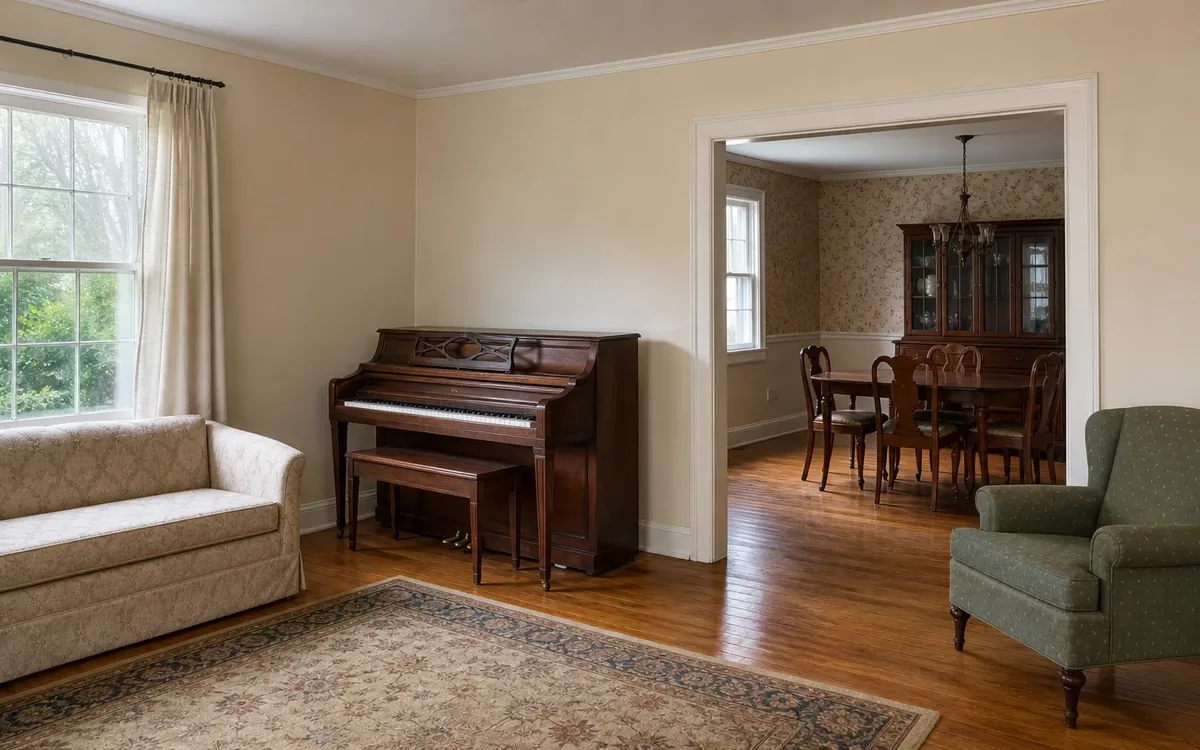
Piano or organ removal from an estate home starts with confirming who can authorize the decision, identifying the instrument, and assessing its exit route. Then coordinate with an appropriate instrument specialist before arranging removal. In Charleston, Mount Pleasant, and elsewhere in South Carolina, steps, narrow doors, and tight turns can make this different from moving ordinary furniture.
The immediate goal is not simply to empty the room. It is to choose a lawful destination, protect the property, and establish a workable removal plan without assuming that a general cleanout crew can safely handle the instrument.
Quick answer: Do not push, tilt, dismantle, or roll an unfamiliar piano or organ to test whether it fits. Photograph it, record its identifying information, document the route out, and have the proposed mover assess access. Confirm estate authorization and the receiving destination before scheduling. Treat valuation, storage, disposal, contractor work, and legal decisions as separate arrangements.
Who can authorize removal from the estate home?
An instrument may be valuable, sentimental, borrowed, or specifically addressed in estate documents. Before discussing its destination, establish who has authority to approve removal and whether any ownership questions remain unresolved.
The household can gather records and discuss preferences. However, a family agreement does not necessarily settle estate authority or ownership. The personal representative, attorney, court, or other responsible party must address those questions as appropriate.
Useful records include:
- Purchase receipts, insurance schedules, or loan agreements.
- Estate instructions and any specific bequest involving the instrument.
- Prior appraisals, tuning records, or repair invoices.
- Written authorization from the responsible decision-maker.
If relatives disagree, pause the disposition decision rather than treating removal as permission to sell or discard. Relocation for safekeeping and permanent disposition are different decisions.
For the broader household process, the guide to how estate cleanouts work explains how sorting and coordination fit together. Keep the instrument as a distinct planning item within that larger cleanout.
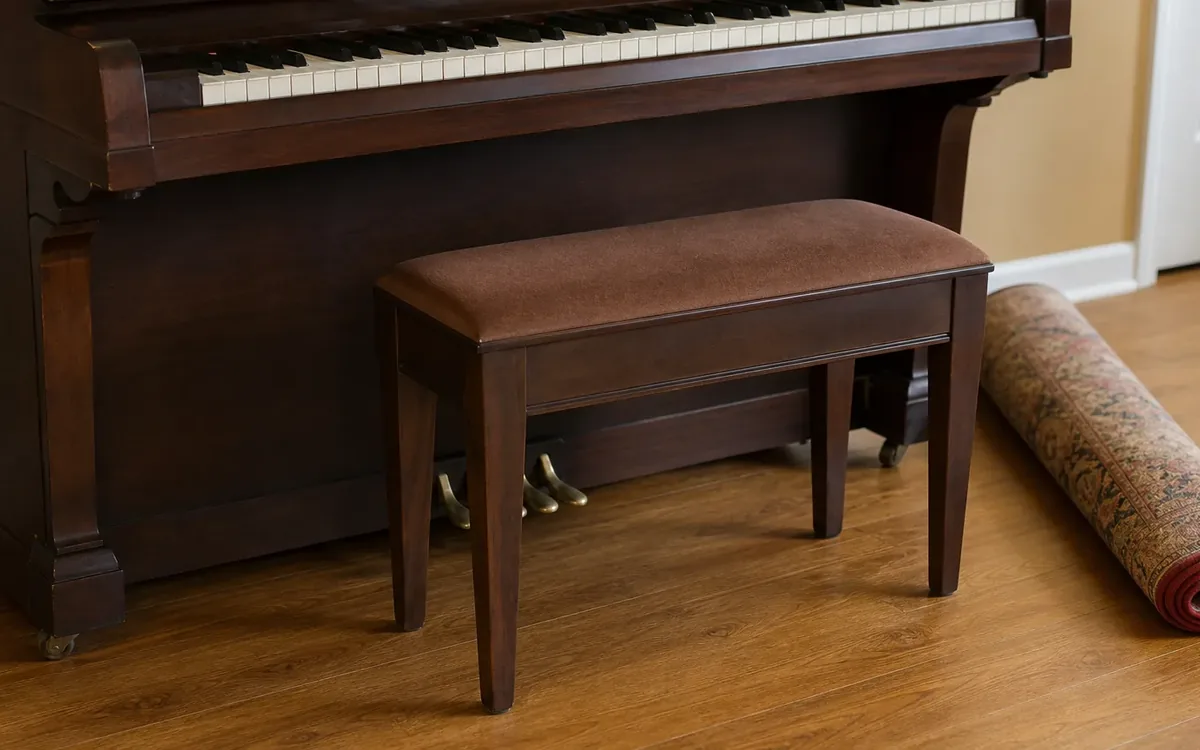
Identify the instrument before discussing the move
“Piano” or “organ” is not enough information for an access assessment. An upright piano, grand piano, electronic organ, and installed pipe organ can present very different handling requirements.
Photograph the entire instrument, its pedals, underside where visible, and any separate components. Capture the manufacturer, model, and serial number only where accessible without lifting or opening unfamiliar assemblies.
Record what you can observe:
- Whether it is upright, grand, electronic, or installed in the building.
- Approximate dimensions, including projecting pedals or attached benches.
- Separate speakers, pedalboards, cables, or other accessories.
- Visible damage, loose parts, or signs of moisture exposure.
- Its current room and whether it appears attached to the structure.
Do not assume an organ is portable because it resembles a cabinet. Wiring, speakers, pipes, or structural connections may require a specialist’s assessment.
Likewise, do not assume a piano’s legs, lid, or pedals should be removed by household members. Let the proposed instrument mover determine what preparation is appropriate and who will perform it.
How do you assess steps, narrow doors, and tight turns?
Document the entire route from the instrument’s current position to the proposed loading area. The narrowest doorway matters, but so do approach angles, landing space, thresholds, and turns immediately beyond the opening.
Measure clear openings rather than relying on a door’s labeled size. Note handles, trim, railings, and other projections. Photographs should show both sides of tight passages so the specialist can understand the approach.
Include these access details:
- Doorway width and height, with doors in their normal open position.
- Hallway widths and turns between rooms.
- Steps, stair landings, railings, and changes in floor level.
- Porch dimensions and the route through a yard or driveway.
- Soft ground, uneven paving, or obstacles near the loading position.
- Shared entrances, elevators, or building access restrictions, if applicable.
Measurements are information for assessment, not proof that a move is safe. A specialist may need an on-site review or additional photographs.
Avoid moving the instrument closer to the exit in advance. Its wheels may not be suitable for the route, and shifting it can create a less stable or less accessible starting position.
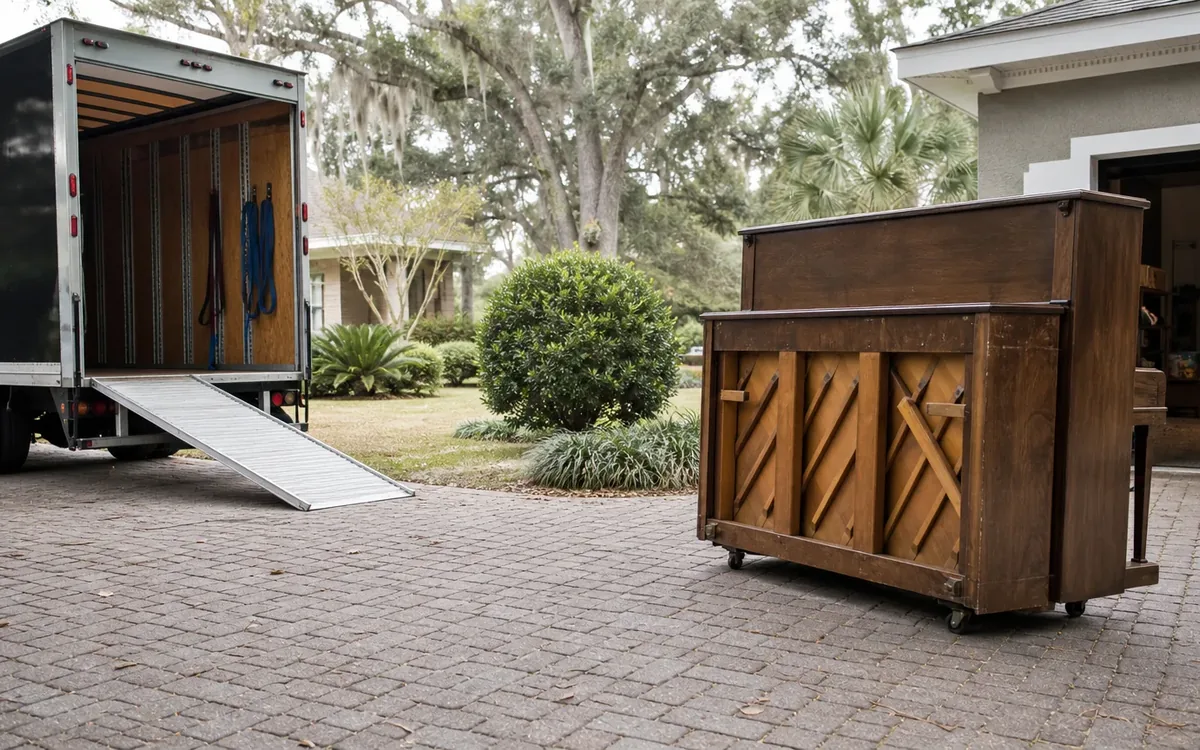
Separate estate coordination from specialist handling
A practical cleanout or move-management team may discuss scheduling, access, room preparation, and how instrument removal fits with other estate work. That conversation should establish responsibilities rather than imply that every provider handles every task.
Clutter Cleaner of South Carolina offers estate cleanout services statewide. Its physical business location is Mount Pleasant, and Charleston is its primary market. For an estate containing a piano or organ, ask what coordination falls within the proposed scope and whether separate specialist handling needs to be arranged.
Keep these roles clear:
- Household or authorized estate representative: Approves the destination and authorized expenditures.
- Instrument mover: Assesses handling, equipment, staffing, and the removal method.
- Appraiser or relevant instrument professional: Evaluates value or condition within their expertise.
- Contractor or qualified trade professional: Evaluates proposed building changes or disconnections.
- Storage or receiving provider: Confirms acceptance and its own requirements.
Request a written scope identifying who prepares the instrument, protects surfaces, transports it, and handles delivery. If multiple providers are involved, establish who coordinates their arrival and who can authorize changes.
Choose a destination before reserving removal
An instrument needs a confirmed destination, not merely a hopeful listing or a relative’s tentative interest. Receiving-site access can be as challenging as the route out of the estate home.
The household may choose to retain, sell, donate, store, or pursue appropriate disposal, subject to estate authority. Each choice needs separate verification.
For retention, have the recipient confirm space and access. For a sale, clarify who arranges transport and when responsibility transfers. For donation, obtain acceptance from the organization before committing to removal; do not assume every usable instrument will be accepted.
Storage requires its own discussion about suitability, access, handling, and the provider’s conditions. It is not automatically part of a cleanout or move-management arrangement.
If disposal is being considered, ask the proposed provider or receiving facility what it accepts and how the instrument will be handled. Do not assume municipal collection or a general waste container is appropriate.
Keep benches, sheet music, original documentation, and detachable accessories associated with the instrument until the destination is settled. These items can otherwise be separated during room sorting.
When should appraisal or condition advice come first?
Seek professional advice before committing to a destination when value, ownership, or condition could materially change the decision. A manufacturer’s name, an attractive cabinet, or a family story alone does not establish market value.
An appraisal and a technical condition assessment answer different questions. Ask the professional what their evaluation covers and whether it is suitable for the estate’s purpose. Formal estate valuation requirements should be discussed with the responsible legal or tax professional.
Useful questions include:
- Is the purpose resale guidance, insurance, or estate documentation?
- Does the evaluation address mechanical condition or only value?
- Are significant repairs or missing components relevant to the decision?
- Should the instrument remain in place until the evaluation is complete?
For an organ integrated into the home, removal may also raise questions about what belongs to the building. A real-estate professional and attorney should address transaction or ownership implications where relevant.
A cleanout team can help keep the instrument accessible and preserve records. It should not substitute its opinion for a required appraisal, inspection, or legal determination.
Build the removal plan around the property
Once a specialist has reviewed access, connect the handling plan to the estate home’s other activities. Avoid scheduling overlapping work that blocks the route, removes needed lighting, or leaves floors exposed to unrelated hazards.
Discuss practical protections with the responsible providers:
- Which rooms and passages must remain clear.
- How flooring, doorways, and nearby surfaces will be protected.
- Where equipment and the transport vehicle can be positioned.
- Whether weather exposure affects the proposed route.
- Who will secure the home after removal.
- What happens if actual conditions differ from the assessment.
If the proposed route requires removing a railing, altering an opening, or disconnecting installed equipment, obtain advice from the appropriate contractor or trade professional. Any required approval or compliance determination remains with the responsible authority.
Do not treat a mover’s suggestion as permission to modify the building. Likewise, structural capacity concerns should go to a qualified professional, not be resolved through household estimates.
For a home being prepared for sale, coordinate access and property changes with the responsible real-estate professional without assuming removal improves value.
Prepare the room without preparing the instrument yourself
The household can usually contribute by removing loose belongings from the agreed route and preserving information. Focus on surroundings rather than mechanical preparation.
Clear small rugs, boxes, lamps, and decorative items that could obstruct assessment or handling. Keep pets and uninvolved visitors away from the work area. Do not stack sorted estate belongings beside the instrument merely because that room is otherwise empty.
Leave unfamiliar cables, fasteners, and components alone. For electronic or installed organs, ask who should disconnect electrical connections and whether any fixed wiring requires a qualified professional.
Before the scheduled visit, confirm the receiving contact, authorized decision-maker, access arrangements, and written scope. Document existing visible property and instrument condition without interfering with the work.
After removal, check the room for accessories, paperwork, and exposed connections. Any needed repair, electrical work, or inspection is a separate provider decision. Record where the instrument went so the estate’s remaining administration does not depend on everyone’s memory.
Short FAQ
Can a general estate cleanout crew remove a piano?
Do not assume so. Ask whether instrument handling is included in the actual scope, who performs it, and what access assessment is required. Separate specialist arrangements may be necessary.
Should we remove a door to make more space?
Document the opening first and let the mover assess the route. Door removal alone may not solve a tight turn or stair problem. Building alterations belong with the appropriate professional and any required authority.
Can we donate an instrument that needs repairs?
Possibly, but acceptance is the receiving organization’s decision. Disclose known condition issues and confirm transport responsibilities before scheduling removal.
What if nobody in the family wants it?
The authorized estate representative can consider sale, donation, storage, or appropriate disposal. Confirm the destination and provider responsibilities before proceeding, and obtain professional advice where value or ownership is uncertain.
Who should we contact about the wider cleanout?
Contact Clutter Cleaner of South Carolina at (843) 972-7020 to discuss estate-cleanout or move-management coordination. Explain the instrument type and access concerns, then confirm which tasks are within scope and which need a separate specialist.



