
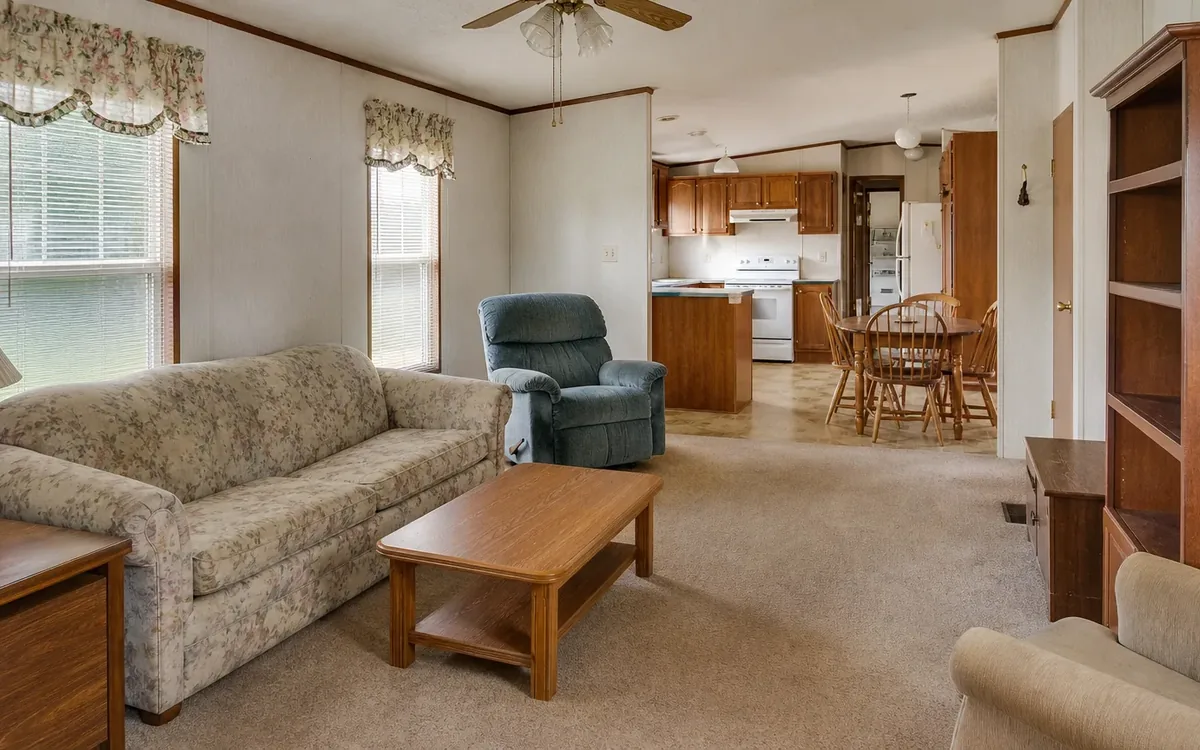
An estate cleanout of a manufactured or mobile home should begin with authority, access, and property boundaries, not with hauling. Confirm who may make decisions, determine whether the home sits on a leased lot or family land, and separate its contents from decisions about the home itself. Then plan the work around compact rooms, potentially lighter floors, narrow doors, skirting, exterior storage, and park or landowner requirements.
Quick answer: Secure the property, identify the authorized decision-maker, review the lot arrangement, and inventory important belongings before anything leaves. Ask the park manager or landowner about access and disposal rules. Use small sorting zones and light loads, and leave title, sale, appraisal, structural, utility, and compliance questions to the appropriate professionals or authorities.
Why does a manufactured-home cleanout need a different plan?
The estate process is broadly similar in any residence, but the physical setting changes how belongings can be sorted and removed. Manufactured homes commonly have compact rooms, limited staging space, narrow halls, and fewer practical exit routes. Large piles or overloaded boxes can obstruct movement and place avoidable stress on floors.
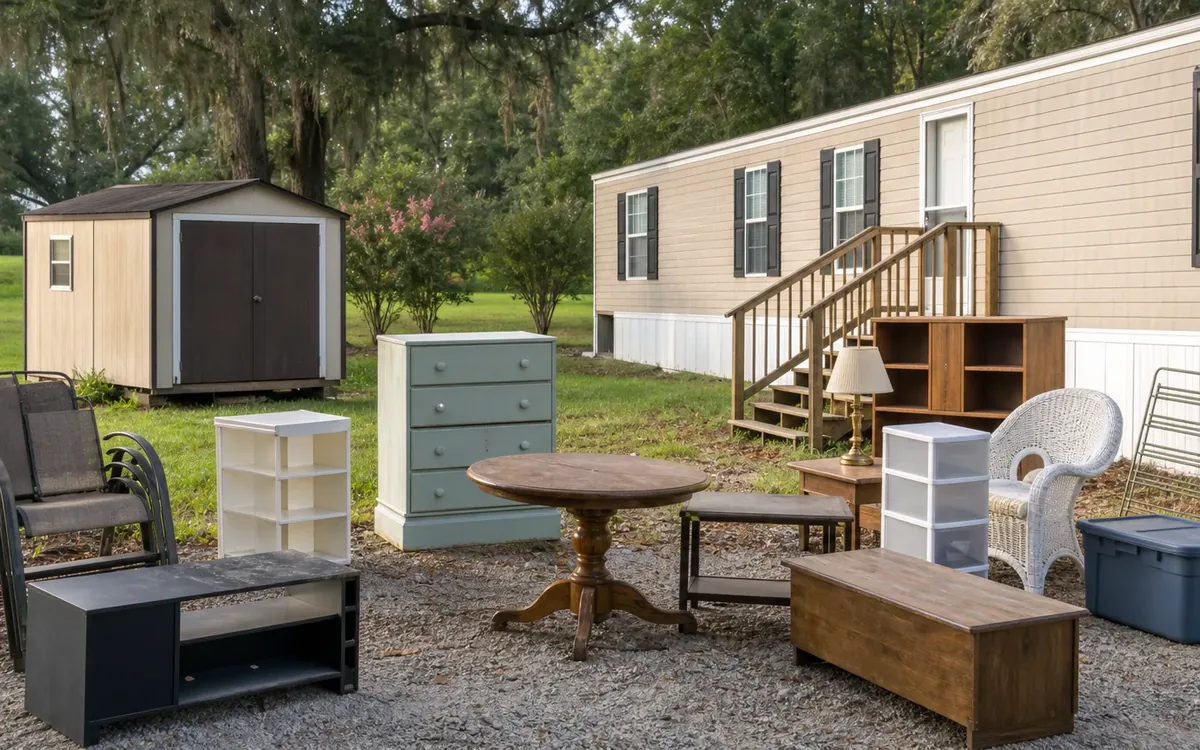
Exterior details also matter. Skirting may conceal stored possessions, utility components, pests, moisture, or unstable ground. Detached sheds, decks, porches, and carports may contain estate property but may not be part of the home itself. On a leased lot, some exterior improvements may be governed by a lease or park rules.
South Carolina properties also vary in their land arrangement. A home might stand on a rented site, on land owned by the estate, or on family property owned by someone else. That distinction affects access, exterior cleanup, and what can be changed, but it does not determine who owns the home or its contents by itself.
A household needing practical help can review Clutter Cleaner of South Carolina’s estate cleanout service. For a broader overview before developing this property-specific plan, read how estate cleanouts work.
Who can authorize the cleanout and related decisions?
The personal representative, executor, or other legally authorized person should establish who may direct the cleanout. Family consensus can be helpful, but agreement among relatives does not replace legal authority. If authority is uncertain, pause removal and consult the probate court, an estate attorney, or another qualified legal professional.
The authorized household representative can generally decide practical matters such as:
- Which rooms should be secured first
- Where family-review and document-hold areas will be located
- Which clearly authorized belongings may be donated, sold, retained, or discarded
- Who may enter the property
- How family pickup will be coordinated
- Whether an independent cleanout, moving, storage, appraisal, or estate-sale provider should be contacted
A practical cleanout or move team may discuss access, staging, sorting categories, lifting concerns, removal paths, and the desired handling of authorized contents. It should not decide ownership disputes, interpret a will, determine title, declare property abandoned, or tell heirs what they are legally entitled to receive.
Keep the manufactured home itself on a separate decision track. Whether it will remain, be sold, transferred, relocated, surrendered, repaired, or demolished is for the authorized representative to address with the relevant attorney, title professional, real-estate professional, lender, park management, landowner, transporter, contractor, or public authority.
What should you ask the park manager or landowner?
Contact the appropriate person before bringing in vehicles, placing a container, removing exterior items, or scheduling substantial activity. The questions differ depending on whether the site is leased or privately owned, but written answers reduce confusion.
Ask about:
- Approved entry times and gate procedures
- Parking areas and vehicle size restrictions
- Whether trailers, trucks, or containers require advance permission
- Rules for temporary outdoor staging
- Community disposal or recycling restrictions
- Responsibility for sheds, decks, steps, porches, skirting, and landscaping
- Requirements for removing appliances or hazardous household materials
- Utility shutoff procedures and authorized contacts
- Keys, gate cards, mailbox access, and return procedures
- Whether management needs proof that the person directing work has authority
Park management can explain park rules and the lease terms it administers, but it should not be treated as the final source on probate authority or ownership of disputed belongings. Likewise, a family landowner may control access to the land without necessarily owning the home or its contents.
Do not assume a curb, community dumpster, or vacant neighboring area may be used. Obtain specific permission from the party responsible for the site and confirm disposal requirements with the relevant provider or local authority.
Build a contents map before moving anything
A room-by-room map helps prevent valuables from disappearing into general removal piles. It is especially useful when several small rooms or exterior compartments contain similar boxes.
Mark each area with one of these six statuses:
- Not searched: No sorting or removal is allowed yet.
- Document hold: Papers, photographs, digital devices, keys, and records stay for review.
- Family decision: Ownership, sentimental value, or intended distribution remains unresolved.
- Professional review: Potentially valuable or specialized items await an independent appraiser, auction professional, or other qualified specialist.
- Approved removal: The authorized representative has given clear handling instructions.
- Hazard or access hold: Entry or movement stops until the relevant professional evaluates the condition.
Search carefully rather than quickly. Manufactured homes may have built-in cabinetry, storage beds, shallow closets, wall units, exterior compartments, or belongings placed beneath the home. Check ordinary containers too, including coat pockets, purses, luggage, tins, books, and file folders.
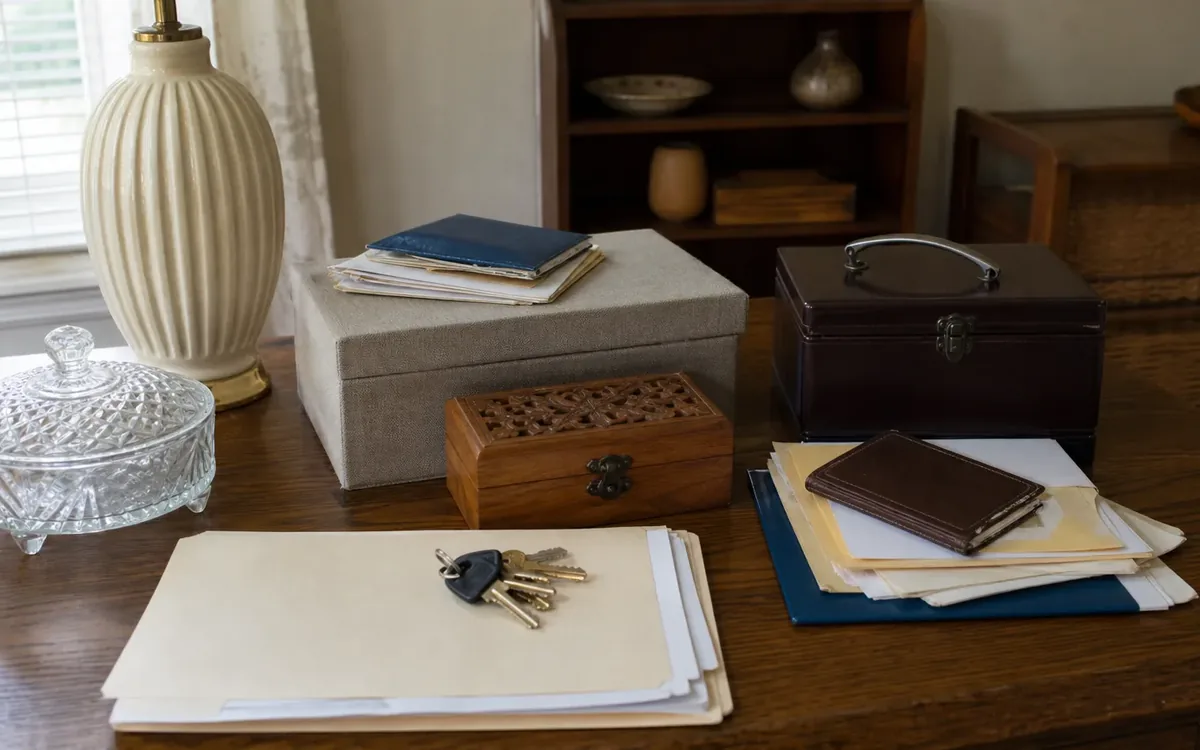
Keep keys with labels showing what they open. Set aside titles, registrations, tax records, insurance documents, loan records, leases, utility information, wills, trusts, military papers, deeds, account statements, photographs, and address books. The authorized representative or legal professional should determine which documents must be retained.
How can you protect lighter floors and compact rooms?
Start by creating a clear path from the farthest work area to the safest approved exit. Avoid filling a central room with mixed belongings. In a compact home, that approach can block movement, hide trip hazards, and force items to be handled repeatedly.
Use smaller sorting groups and containers that can be lifted without dragging. Keep heavy contents distributed rather than concentrating books, tools, canned goods, or records in one spot. Never assume a floor, porch, step, deck, or ramp can support a particular load.
Watch for warning signs such as:
- Soft, springy, or uneven flooring
- Water staining or visible decay
- Loose steps or railings
- Damaged thresholds
- Sagging porch or deck sections
- Exposed fasteners or broken floor coverings
- Active leaks or standing water
- Animal or insect activity
- Strong fuel, sewage, mold, or chemical odors
These signs do not establish the cause or severity of a condition. Stop using the affected area and ask an appropriate inspector, contractor, utility provider, pest professional, environmental specialist, or public authority for guidance. A cleanout team can discuss a different work path, but it cannot certify structural safety or environmental conditions unless separately qualified to do so.
Protective floor covering may help with dirt and minor abrasion, but it does not strengthen a floor. Do not fasten coverings in a way that damages surfaces or creates a trip hazard.
Treat skirting and under-home storage as a separate zone
Do not casually remove skirting panels or crawl beneath the home while searching for property. Skirting can conceal utilities, sharp materials, animals, moisture, unsupported components, and uneven ground. Some panels are fragile or are governed by park or property requirements.
First, ask the authorized representative whether belongings are known to be stored underneath. Then confirm whether park management, the landowner, or another responsible party has access rules. If entry is appropriate, determine whether a qualified contractor, inspector, pest professional, utility provider, or other specialist should evaluate the area before retrieval.
Keep these categories separate:
- Estate contents: Boxes, tools, lawn items, decorations, or personal belongings
- Home components: Tie-downs, piers, vapor barriers, ductwork, plumbing, wiring, and skirting
- Landowner or park property: Items identified as belonging to the site owner or community
- Unknown property: Anything whose ownership or purpose is unclear
A practical cleanout team may remove authorized personal property from a safe and accessible area. Decisions about altering supports, disconnecting utilities, repairing skirting, treating contamination, or entering a hazardous space belong with the relevant qualified provider and responsible authority.
Plan removal without turning the home into a warehouse
Limited staging space makes sequencing important. Work by zone, complete decisions where possible, and move approved categories out through the designated route. Keep family-review property secure instead of repeatedly shifting it around the home.
A useful sequence is:
- Secure documents, money, medications, firearms, jewelry, and digital devices according to household instructions and applicable law.
- Mark disputed, sentimental, and appraisal-review property so it cannot enter general removal.
- Clear an unobstructed route to the approved exit.
- Sort one defined room or exterior area at a time.
- Remove authorized categories before opening another major work zone.
- Conduct a final contents check without making decisions about the home’s legal disposition.
Appliances and oversized furniture need separate planning. Measure doors, halls, steps, and landings. Do not dismantle built-in features, railings, doors, or parts of the home without authorization and, where needed, advice from a qualified contractor or park representative.
The household chooses whether suitable items go to heirs, buyers, donation organizations, storage, an estate sale, an auction, or disposal. An appraiser determines value when a formal or specialist opinion is needed. A storage provider sets its acceptance terms. Donation and disposal providers decide what they accept. Those outcomes should not be assumed in advance.
Keep the cleanout separate from the home’s future
Removing personal property can support a later sale or transfer, but it does not resolve the home’s legal or physical status. Manufactured housing can involve separate questions about the structure, land, title, financing, taxes, installation, and community agreement.
The personal representative and relevant professionals should address questions such as:
- Who owns the home and who owns the land?
- Is there a lease, lien, loan, or title issue?
- Can the home remain on the site after a transfer?
- Are repairs required before sale, occupancy, or relocation?
- Does a prospective transaction need an inspection or appraisal?
- Which fixtures or exterior improvements must remain?
- What approvals would relocation or demolition require?
A real-estate professional may advise on marketing and transaction strategy within their role. An appraiser provides an independent value opinion. An inspector evaluates conditions within the scope of an inspection. Contractors address defined repair work. Attorneys, title professionals, lenders, park management, and government authorities handle the legal, title, financing, site, and compliance questions that fall within their responsibilities.
Clutter Cleaner of South Carolina can discuss practical estate cleanout, downsizing, move management, home sale preparation, auctions and estate sales, and code compliance support across South Carolina. Any exact scope should be confirmed for the property. Support with preparation or compliance does not replace a legal determination, official inspection, appraisal, permit, or government approval.
Coordinate family communication and final review
Use one authorized contact for work instructions. Multiple relatives giving conflicting directions can lead to accidental removal or stalled decisions. Share a written category list and record major decisions, especially for disputed property or items assigned to specific people.
Before declaring the contents phase complete, inspect:
- Every cabinet, drawer, closet, and built-in compartment
- Pockets in clothing, luggage, and furniture
- Appliances that may hold cookware or papers
- Shed, porch, deck, carport, and approved exterior areas
- Vehicles or utility trailers included in the estate review
- Mailbox and management office, if access is authorized
- Safe and accessible under-home storage, if any
- The removal path for overlooked small items
Photographs and an inventory can document what was retained, transferred, or left for professional review. The authorized representative should decide what records are appropriate and how long to keep them. Questions about fiduciary recordkeeping belong with an attorney, accountant, court, or other responsible professional.
After contents are removed, do not promise that the home is ready to sell, occupy, move, or pass an inspection. Those conclusions require the appropriate transaction, inspection, repair, title, park, or government process.
Short FAQ
Can relatives start cleaning before a personal representative is confirmed?
They should not remove or distribute estate property without clear authority. They may be able to secure an immediate hazard or protect the premises, but legal questions should go to the probate court or a qualified estate attorney.
Should everything under the home be removed?
No. First distinguish personal belongings from home components and site property. Avoid unsafe entry or alteration of utilities, supports, vapor barriers, and other systems. Ask the appropriate professional to assess questionable conditions.
Who decides whether an item needs an appraisal?
The authorized representative decides whether to seek an appraisal, often with guidance from an attorney, accountant, auction professional, or other adviser. A qualified independent appraiser determines value within the scope of the appraisal.
Can a cleanout team decide what stays with the home?
A team can follow written instructions and flag uncertain items. Decisions about fixtures, lease obligations, sale inclusions, ownership, and title should remain with the authorized representative and relevant legal, real-estate, park, or land professionals.
What if park rules conflict with the family’s plan?
Pause the affected activity and request the applicable rule or lease provision in writing. The responsible parties can then consult park management and, if needed, a qualified attorney or public authority.
How can the household begin?
Confirm authority and site access, identify all work zones, secure records and valuables, and list unresolved ownership or safety questions. Clutter Cleaner of South Carolina can be reached at (843) 972-7020 to discuss practical needs and confirm an appropriate scope. The business is physically located in Mount Pleasant and serves households across South Carolina, with Charleston as its primary market.



