
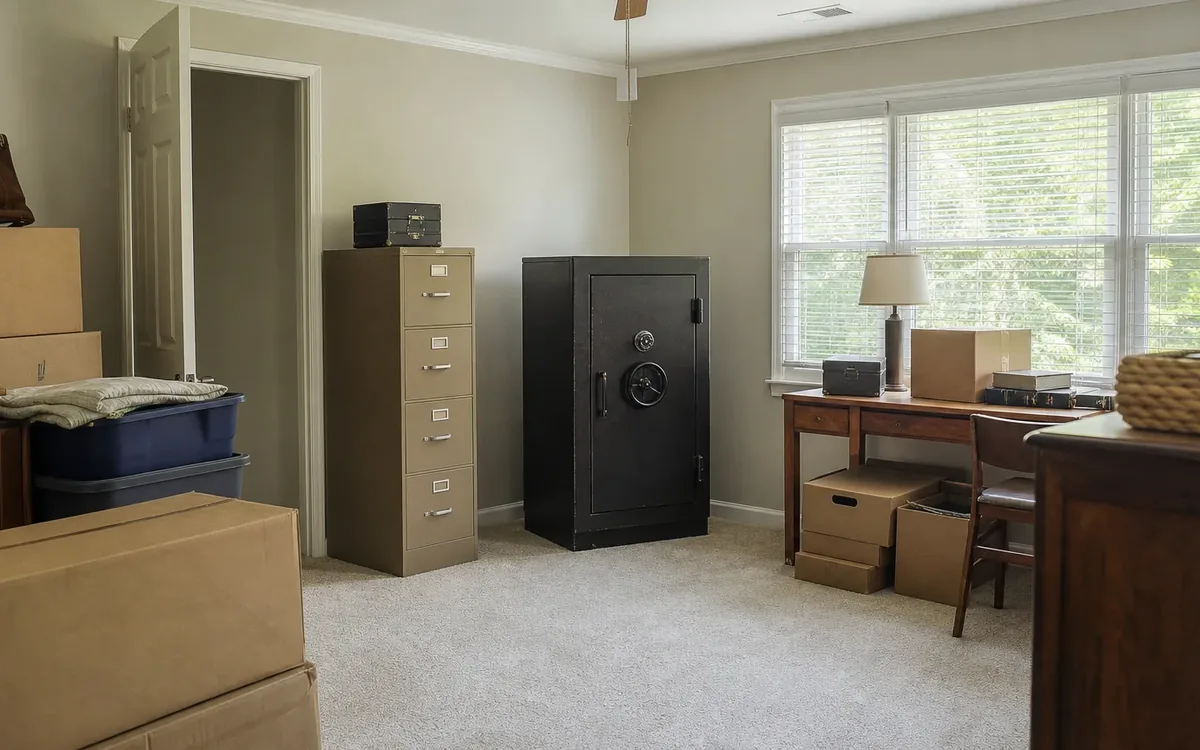
When you find a locked safe, cabinet, trunk, or document box during a South Carolina estate cleanout, keep it intact, document where it was found, and confirm who can authorize access before anyone opens, moves, sells, or discards it. Look for keys and records through an organized search, then arrange appropriate professional help if access remains unresolved. A locked container should stay outside the ordinary disposal stream until its ownership, contents, and handling instructions are clear.
Quick answer: Label the container, photograph its exterior, record its location, and place it on hold. Ask the estate’s authorized decision-maker to approve a key search or qualified access provider. Keep cleanout work moving elsewhere without forcing entry or assuming the contents are disposable.
For families managing an estate in Charleston or elsewhere in South Carolina, the practical goal is to separate unresolved access from the rest of the house transition. Clutter Cleaner of South Carolina is physically based in Mount Pleasant and serves all of South Carolina. Its estate cleanout service is a useful starting point for discussing sorting boundaries and coordinating work around items that must remain untouched.
Who can authorize opening a locked estate container?
Possession of the house keys does not, by itself, resolve authority over every item inside the home. A family member, occupant, beneficiary, or helper may have access to the property without having authority to open a particular container or distribute its contents.
Ask the person responsible for administering the estate to establish the instructions. If authority is uncertain, that person should consult the estate attorney or appropriate probate authority rather than asking the cleanout team to interpret legal documents.
Before arranging access, clarify:
- Who owns the container, if known.
- Who is authorized to approve opening it.
- Whether anyone has claimed personal property inside.
- Whether an estate instruction or unresolved dispute affects handling.
- Who should attend when it is opened.
- Who will receive the contents afterward.
The household can share information, identify likely keys, and suggest practical arrangements. A cleanout or move team may discuss work boundaries and handling concerns. Neither role substitutes for legal advice about ownership, inheritance, or authority.
If family members disagree, leave the container on hold. A moving deadline does not settle a disputed right to access.
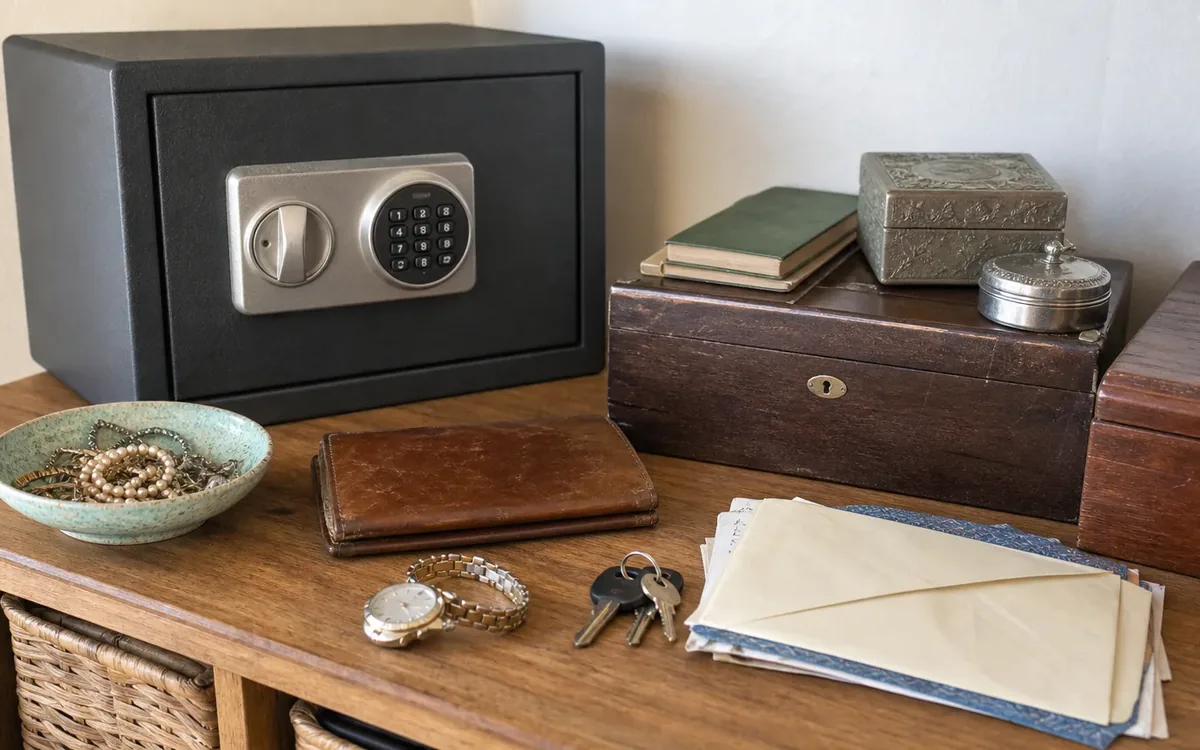
Create a record before the container moves
Document the container where it was found. This preserves useful context and reduces confusion when several people are sorting different rooms.
Give each locked item a simple identifier, such as “Locked box A, upstairs closet.” Use the same identifier on the hold list, photographs, and any later handling record. Attach a removable label only where it will not damage the finish or obscure information.
Record the following details:
- Room and exact position within the room.
- Container type, approximate dimensions, and visible condition.
- Visible manufacturer name, model information, or identifying marks.
- Whether it appears attached to the building or another object.
- The person who discovered it.
- Known keys, combinations, or associated paperwork.
- Current instruction, such as “Do not move” or “Await authorized access.”
Photograph the exterior and surrounding area without disturbing the container. Do not publish identifying details, combinations, or security information in a family group chat or public sale listing.
Describe uncertainty accurately. Write “contents unknown,” not “empty safe” or “old paperwork,” unless authorized inspection has established that fact. A container’s weight, sound, or appearance is not a reliable inventory.
For the broader sorting process, the guide to the best way to clean out an estate can help the household keep the locked-item hold separate from ordinary keep, sale, and removal decisions.
Where should you look for keys and access records?
Start with a coordinated search, not repeated attempts at the lock. Ask the authorized decision-maker which areas and records may be examined, especially if the home contains another person’s belongings.
Likely places to review include:
- Labeled key rings and household key drawers.
- Desk organizers and filing cabinets that are already accessible.
- Safe manuals, purchase receipts, and warranty paperwork.
- Envelopes labeled with a cabinet, box, or safe description.
- Notes left with estate documents or household instructions.
- Information held by a trusted contact, if the estate representative approves asking.
Keep discovered keys together with a note about where they came from. Photograph labels before separating a key from its envelope or ring. An unlabeled key may relate to another item, so avoid assigning it to a container simply because it looks plausible.
Do not force a key that does not turn normally. Stop if the lock resists, the key bends, or the mechanism behaves unexpectedly. Damage can make later access more difficult and may affect an item’s value.
Account logins, password managers, and private electronic records raise separate access questions. Do not assume permission to search household drawers includes permission to enter someone’s accounts. Ask the authorized representative how any digital records should be handled.
What help is appropriate when no key turns up?
The right provider depends on the container and the task. A locksmith or safe specialist may assess access to a household safe, while a furniture restoration professional may be relevant when preserving an antique cabinet matters. Ask prospective providers whether the item falls within their expertise.
The estate’s authorized representative should discuss:
- What proof of authority the provider requires.
- What identifying information can be supplied in advance.
- Whether assessment can occur where the container stands.
- Whether the proposed approach could damage the lock or container.
- Whether preserving the container’s value is a priority.
- Who must be present and who receives the contents.
- How access and any resulting damage will be documented.
Do not assume a cleanout team opens safes or provides locksmith work. Access work is a separate provider choice, and any appointment, fee, or method should be agreed directly with that provider.
Avoid drilling, prying, cutting, or trying online bypass instructions as a household shortcut. Besides the authority issue, improvised entry can damage contents, create injury risks, or compromise a potentially valuable object.
A bank safe-deposit box is also different from a safe found in the home. If a key or rental record suggests one exists, contact the financial institution through the authorized estate representative. The institution’s access requirements are separate from the house cleanout.
Keep the cleanout moving without losing control of the hold
An unresolved container does not have to stop sorting in every other room. It does require a visible boundary that everyone working in the home understands.
Create a written hold list and identify one household contact for questions. Tell helpers and any practical cleanout or move team that held items are excluded from donation, sale, disposal, and relocation unless new instructions are issued by the authorized decision-maker.
Useful coordination points include:
- Whether work may continue around the container.
- Whether access to the room should be limited.
- Who may update the hold instruction.
- Whether nearby loose keys and records also need protection.
- How the team should report a newly discovered locked item.
- Where approved handling instructions will be recorded.
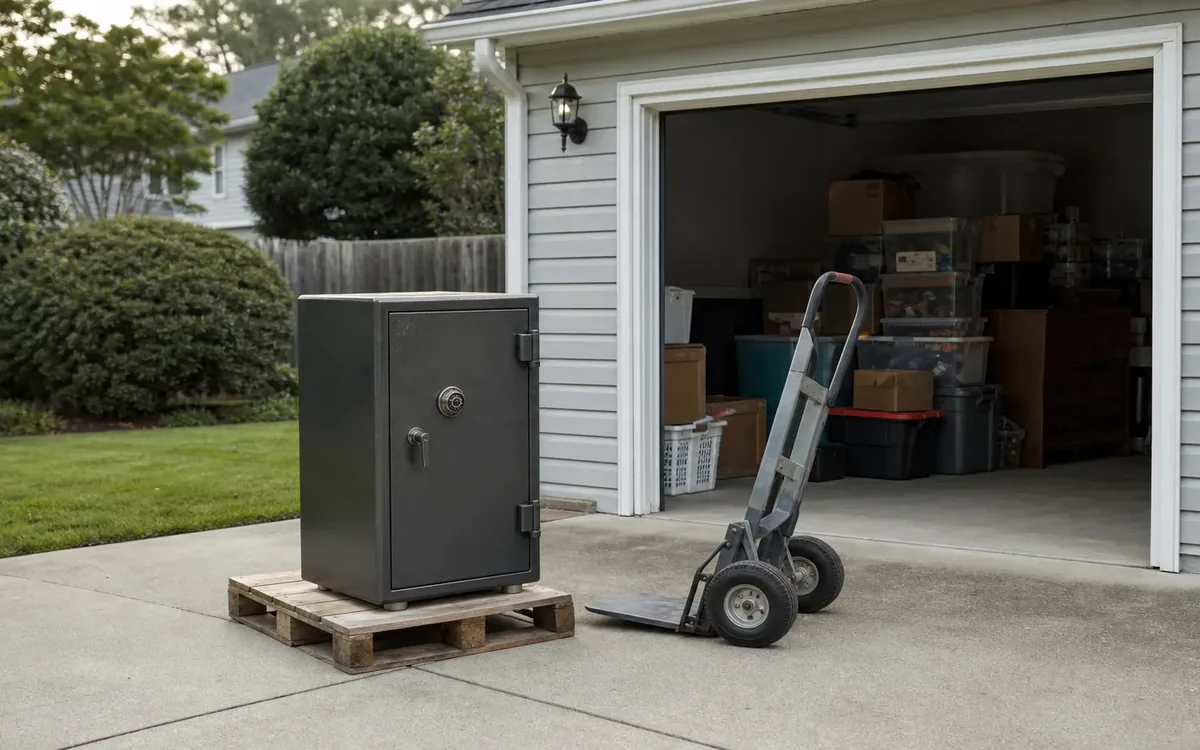
A heavy safe can present a handling problem even when nobody intends to open it. Do not ask relatives to tilt it, drag it down stairs, or load it into a vehicle to clear the room. A qualified mover or other appropriate provider should assess any proposed relocation.
If the container is anchored to a floor or wall, removal may involve contractor work and possible damage to the building. Property-owner approval, contractor decisions, and any applicable inspection or compliance requirements remain separate from cleanout coordination.
Likewise, temporary storage is a household or separate-provider choice. Confirm acceptance, access control, transport arrangements, and responsibility for the item before choosing that route.
Plan for the moment authorized access occurs
Opening the container is not the same as deciding what to do with everything inside. Prepare a place to document and secure the contents before the access provider arrives.
The authorized representative can decide who should attend, subject to any legal guidance or provider requirements. Keep attendance purposeful. Avoid turning the opening into a casual family gathering or allowing people to remove items before they are recorded.
A practical contents record should connect back to the container identifier. Describe what is found without making unsupported conclusions about authenticity or value.
Separate items into controlled categories:
- Personal and estate documents needing review.
- Financial records, cash, or apparent valuables requiring secure custody.
- Items claimed by another person, pending ownership clarification.
- Objects needing professional appraisal or specialist assessment.
- Materials requiring a safety or disposal decision.
- Ordinary belongings awaiting authorized distribution instructions.
Do not photograph sensitive documents more broadly than necessary. Keep account numbers, identification records, and other private information out of shared sorting folders.
If a firearm, ammunition, unknown chemical, or another potentially hazardous item is discovered, pause handling and keep others away. Seek instructions from an appropriately qualified professional or authority. A cleanout crew should not be asked to determine legality, safety, or an unfamiliar item’s disposal requirements.
Decide separately about the contents and the container
Once access is resolved, there are two decisions: what happens to the contents, and what happens to the container itself. Record both so an emptied safe does not remain on hold indefinitely or get removed by mistake.
The authorized household decision-maker can provide distribution instructions consistent with the estate’s requirements. Legal questions about beneficiaries, competing claims, or restricted property belong with the estate attorney or responsible authority.
An appraiser should address value when valuation is needed. An auction or estate-sale discussion is not a substitute for an appraisal, and a cleanout team’s visual impression should not determine whether jewelry, collectibles, or documents are valuable.
Before releasing the container, confirm:
- Its contents have been reviewed and accounted for.
- Any internal compartments have been addressed by the access provider.
- No unresolved claim requires it to remain in place.
- Removal, sale, retention, or disposal has been authorized.
- Any separate transport or disposal provider has accepted the task.
If the home is being sold, ask the real-estate professional how a remaining or attached safe should be addressed in transaction discussions. Contractors handle building repairs; inspectors and applicable authorities handle inspection or compliance decisions. None of those determinations should be folded into an informal cleanout instruction.
Short FAQ
Can a locked box go straight into the discard pile?
Keep it on hold until authorized access or another properly authorized disposition resolves the unknown contents. An inexpensive-looking box can still contain important records or someone else’s property.
What if the family thinks the safe is empty?
Record that as an unverified belief. Ask the authorized representative how to confirm it before approving removal or disposal.
Can Clutter Cleaner of South Carolina coordinate around it?
Families can discuss estate cleanout boundaries and move-related logistics by calling (843) 972-7020. Locksmith access, storage, contractor work, appraisal, and legal decisions remain separate arrangements, not guaranteed cleanout services.
What is the most useful next step?
Assign the container an identifier and put it on a written hold list. Then have the authorized estate decision-maker choose the access path. That keeps the house transition progressing without sacrificing control of unknown contents.



