

Clearing a large home library during an estate cleanout works best when you handle one shelf at a time, inspect each book for tucked-away belongings, and separate ownership decisions from packing and removal. Keep potentially important books and papers aside, confirm donation acceptance before loading, and use small, manageable boxes rather than filling large cartons with heavy books.
Quick answer: Photograph the library before disturbing it, establish clearly labeled destinations, and work through each shelf in order. Check inside every book over a clear surface. Pause for family decisions or professional review when needed, then pack approved outgoing books by destination and manageable weight.
Establish who can approve decisions before moving books
A library can contain personal keepsakes, inherited collections, borrowed books, and records that belong elsewhere. Before sorting, identify who is responsible for authorizing decisions about estate property. Do not assume that the person opening the house can approve every sale or donation.
The household can identify sentimental interests and propose what to keep. The estate’s authorized decision-maker should resolve ownership and distribution questions, with legal guidance when necessary. A cleanout team can help organize physical handling, but it does not determine inheritance rights or interpret estate documents.
Agree on a simple pause rule: anything with unclear ownership, possible financial significance, or competing family interest stays out of outgoing boxes until reviewed.
For help coordinating the physical project, review estate cleanout services from Clutter Cleaner of South Carolina. Discuss the library’s size, access conditions, and unresolved decisions rather than treating every shelf as ready for removal.
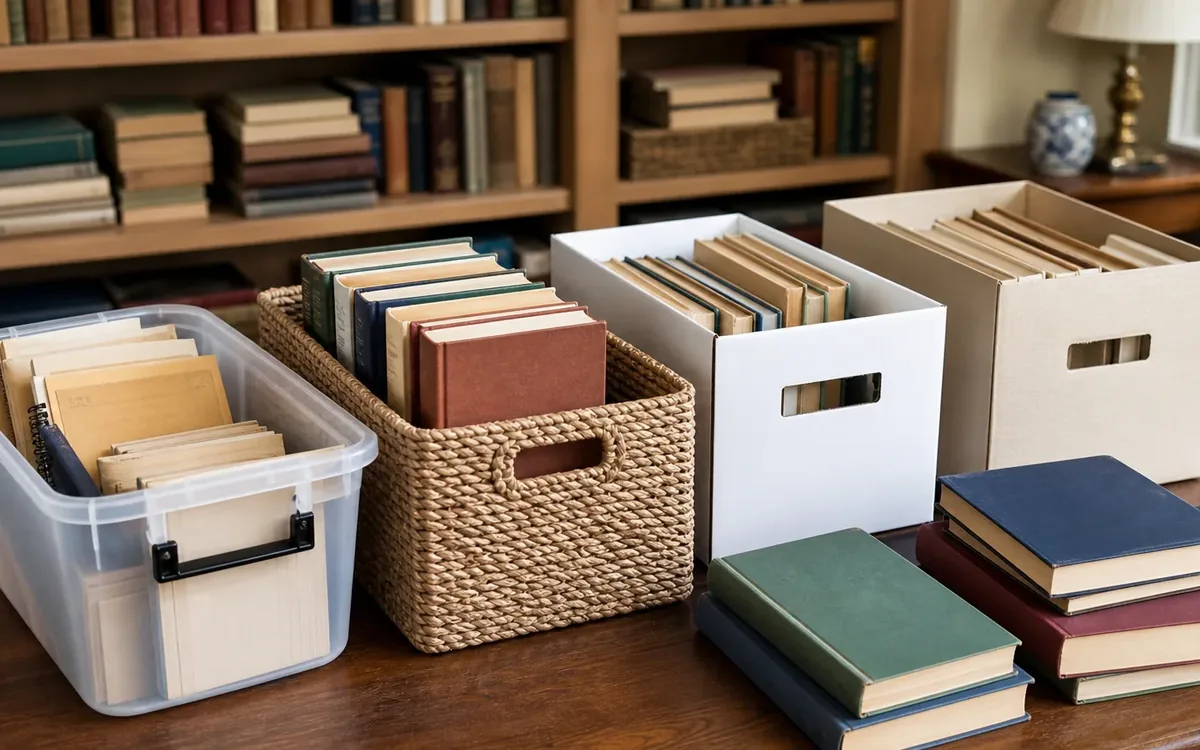
How do you sort a large library without losing track?
Start by photographing each bookcase and assigning it a plain label, such as “study, left wall.” Record shelf locations from top to bottom. These references help reconnect a book, document, or family request with its original location.
Set up a work surface near the shelves without blocking doors or walking routes. Use clearly labeled areas:
- Keep: Books approved for retention by the household or authorized decision-maker.
- Family review: Items awaiting a specific person’s decision.
- Professional review: Books or papers needing specialist evaluation.
- Donation inquiry: Books awaiting recipient confirmation.
- Other disposition: Items awaiting a sale, recycling, or disposal decision.
Clear one shelf before starting another. Remove a manageable group, inspect each book, record exceptions, and place it in the appropriate area. Avoid emptying entire bookcases onto the floor, where categories become mixed and walking space disappears.
Keep related volumes together. An encyclopedia set, collected works, or books arranged around a particular subject may be harder to evaluate after being scattered among unrelated cartons.
For the wider sequence beyond the library, use the guide to the best way to clean out an estate. The library process should fit the estate’s authorization and room-clearing plan, not create a separate stream of untracked decisions.
What should you check inside every book?
Books often function as informal storage. A volume that appears ordinary may hold a photograph, letter, receipt, handwritten note, or document. Check it before deciding its destination, even when the book itself is clearly unwanted.
Work over a clean table or tray so loose contents cannot disappear beneath furniture. Inspect the front and back covers, endpapers, and visible gaps between pages. Gently fan ordinary books while supporting their bindings. Do not shake books or force fragile pages apart.
Look for:
- Loose photographs, postcards, and correspondence.
- Cash, checks, receipts, or financial paperwork.
- Handwritten family notes and inscriptions.
- Bookplates, ownership marks, and presentation messages.
- Documents folded into dust jackets or covers.
Place discovered belongings in a labeled envelope or folder identifying the book and shelf location. Keep private papers out of donation cartons and general sorting photographs. Give them to the authorized decision-maker for review.
Do not discard paperwork merely because it looks old or routine. Questions about retention, financial significance, or legal relevance belong with the appropriate attorney, accountant, or responsible estate representative.
For a brittle, tightly bound, or potentially significant book, stop if inspection risks damage. A qualified book specialist or conservator can advise on appropriate handling.

Separate sentimental importance from possible market value
A book can matter deeply to a family without having substantial resale value. Conversely, an unremarkable-looking volume may deserve professional attention. Treat these as separate questions rather than using age or appearance as a shortcut.
Ask family members to identify specific interests: a parent’s annotated cookbook, a child’s favorite story, or a shelf connected to someone’s profession. A photograph of the shelf may help someone choose without requiring the entire library to be moved first.
Set aside books with features that warrant further inquiry:
- Signatures, inscriptions, or unusual ownership history.
- Fine bindings, illustrations, maps, or limited-edition statements.
- Local history, specialist subjects, or potentially scarce publications.
- Complete sets with matching volumes and jackets.
- Manuscripts or substantial handwritten material.
These features are review prompts, not proof of value. Edition, completeness, condition, provenance, and demand can all affect an assessment. A qualified appraiser or knowledgeable book dealer should address valuation questions. Tax-related appraisal requirements belong with the relevant tax professional and qualified appraiser.
Keep dust jackets with their books. Avoid tape repairs, aggressive cleaning, erasing notes, or removing labels before specialist review. Household choices about keeping or selling should follow any necessary ownership and valuation decisions.
Plan heavy book boxes around the route out
Books become heavy quickly. Choose sturdy, smaller cartons and stop filling when the box is no longer comfortable for the intended handler. A carton with unused space is preferable to one that is difficult to lift or likely to fail.
Test the bottom and handles before packing. Keep box flaps secure and avoid cartons weakened by moisture or previous damage. Use suitable packing material to limit shifting without adding unnecessary weight.
Before carrying anything, walk the full route from the shelves to the loading area. Look for stairs, loose rugs, narrow turns, uneven surfaces, and doors that cannot stay open safely. Do not stack cartons in exits or across access paths.
Useful handling precautions include:
- Pack manageable loads instead of testing lifting limits.
- Label each box with its destination and contents.
- Keep retained books separate from outgoing loads.
- Use equipment suited to the route and load.
- Arrange assistance when lifting or carrying is unsafe.
A practical cleanout or move team may discuss box sizes, staging space, stairs, parking access, lifting limitations, and who supplies packing materials. Confirm the agreed scope rather than assuming all packing or transportation is included.
Do not climb on furniture to reach upper shelves. If bookcases are unstable, attached to walls, or difficult to access, pause and discuss safe handling. Decisions about repairs or removing built-in shelving may require a separate contractor.
Where can South Carolina households donate unwanted books?
Contact prospective recipients before packing a donation load. South Carolina households can check organizations’ current acceptance policies directly rather than relying on an old website notice or a past donation experience.
Ask whether the organization currently accepts the subjects, formats, and quantity you have. Textbooks, reference sets, magazines, damaged books, and outdated technical material may have different acceptance rules. Do not assume a library, school, charity, or resale organization wants every category.
Useful questions include:
- Which types of books are currently accepted?
- Are there condition restrictions or quantity limits?
- Is an appointment required for delivery?
- How should books be boxed and labeled?
- Is pickup available, and who arranges it?
Keep confirmed donations separate from inquiries. Record the recipient’s instructions on the relevant boxes so someone helping load does not accidentally send the wrong material.
Donation acceptance, pickup arrangements, and receipts are controlled by the recipient organization. Any claimed deduction or valuation should be discussed with the appropriate tax professional, not inferred from a cleanout inventory.
Books that are not accepted need a separate decision. Ask local recycling or waste providers about their current requirements, including how they handle bindings and damaged material. Disposal arrangements are provider or household choices, not an automatic part of donating books.
Address damp books and room conditions before packing
If books smell musty, show visible growth, or feel damp, separate them from clean material and avoid routine packing. Do not brush or shake affected books indoors, where debris may spread.
Do not offer visibly affected books for donation without disclosing their condition and receiving explicit acceptance. Packing damp material into closed cartons can also create problems for other contents.
The household can document the location and visible condition without trying to diagnose the cause. A qualified remediation provider, conservator, or building professional may be needed to evaluate the books or room. Inspection and remediation decisions remain with those professionals.
Once shelves are empty, visible wall or floor damage may become easier to notice. Photograph concerns and refer them to the responsible professional. A cleanout team should not be treated as a substitute for a building inspection or a determination that the property meets applicable requirements.
Close the library with a clear handoff
Before outgoing boxes leave, compare their labels with the approved destinations. Check that family-review items, private papers, and books awaiting appraisal have not joined the removal load.
Keep a brief handoff record with shelf photographs, unresolved decisions, recipient confirmations, and the location of retained books. If books are going into storage, the household should separately choose an appropriate provider and discuss environmental conditions, access, and packing requirements.
For a property headed toward sale, the real-estate professional can advise on presentation priorities. Contractor work, inspections, and compliance determinations remain separate from clearing the shelves.
Clutter Cleaner of South Carolina is physically based in Mount Pleasant and serves households throughout South Carolina, with Charleston as its primary market. To discuss estate cleanout coordination, call (843) 972-7020. Explain the library’s condition, access route, and decision status so the conversation can focus on the practical work that may be appropriate.
Short FAQ
Should we alphabetize everything before clearing the library?
Usually, preserving shelf references and related sets is more useful than reorganizing the entire collection. Alphabetize only if it helps a specific retention, sale, or inventory decision.
Can ordinary-looking books go straight into donation boxes?
Inspect them first. Loose belongings and personal papers can be tucked into any book, regardless of its apparent value.
Who decides whether a book is valuable?
A qualified appraiser or knowledgeable book dealer can evaluate potential market value. The authorized estate decision-maker determines disposition, with professional advice where needed.
What if nobody has decided about a shelf?
Label it as pending and keep it out of outgoing loads. Record who needs to decide so physical clearing does not become an accidental donation or sale.



