
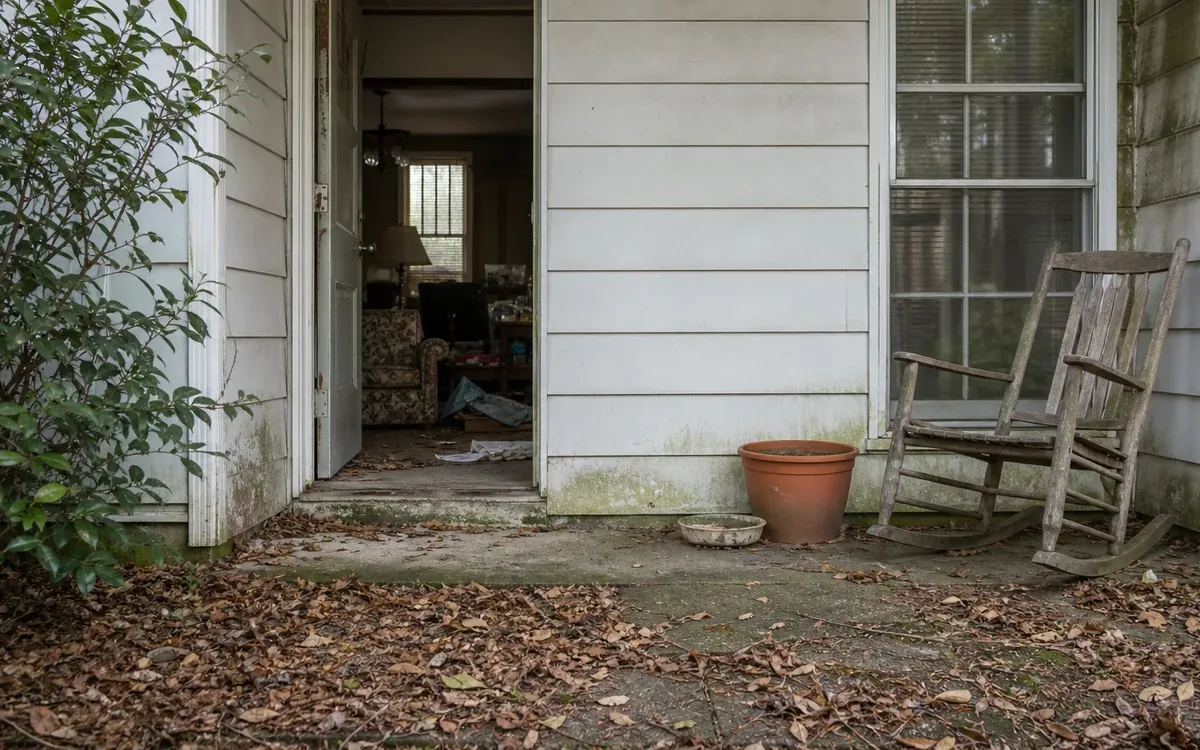
When an estate room cannot be entered safely, begin with a non-entry assessment from a stable, accessible location. Record only what is visible, keep people out, and identify which questions require a cleanout discussion or a qualified professional. Do not pull objects from a crowded doorway to create access: one item may support a much larger pile, and moving it can trigger a collapse.
Quick answer: Stay outside the blocked room. Note visible hazards, document the access problem without disturbing anything, and separate known facts from guesses. If there are signs of immediate danger, leave the affected area and contact the appropriate emergency service or utility. A doorway assessment helps plan next steps; it does not establish that the room is safe to enter.
For South Carolina families managing an estate, this approach can turn an overwhelming view into a useful planning record. The goal is not to inventory the entire room. It is to understand the limits of access without creating another hazard.
What can you assess without entering the room?
A non-entry assessment starts before the threshold. Choose a position on a clear, stable route that does not require stepping over belongings, leaning against piles, or standing beneath damaged materials. If there is no such position, stop farther away.
Do not force a door that appears to be held shut by belongings. Pressure against it may shift objects on the other side. A narrow opening is not an invitation to squeeze through.
From a safe position, record these observations:
- Door condition: Fully open, partly open, closed, or apparently obstructed.
- Visible floor: Clear areas, covered areas, or no floor visible.
- Pile shape: Leaning stacks, bulging bags, tilted furniture, or objects resting against the door.
- Overhead concerns: Sagging ceiling material, loose fixtures, or stacked items above the opening.
- Environmental clues: Visible water, staining, pest activity, unusual odors, or damaged wiring.
- Access limits: Whether the approach itself is narrow, obstructed, or unsafe.
Use plain descriptions rather than diagnoses. “Dark staining visible near the ceiling” is more useful than declaring mold. “Floor condition cannot be seen” is more accurate than assuming the floor is sound.
For the broader estate process, the guide to how estate cleanouts work explains the surrounding planning steps. The blocked-room assessment is an early input to that process, not a substitute for it.
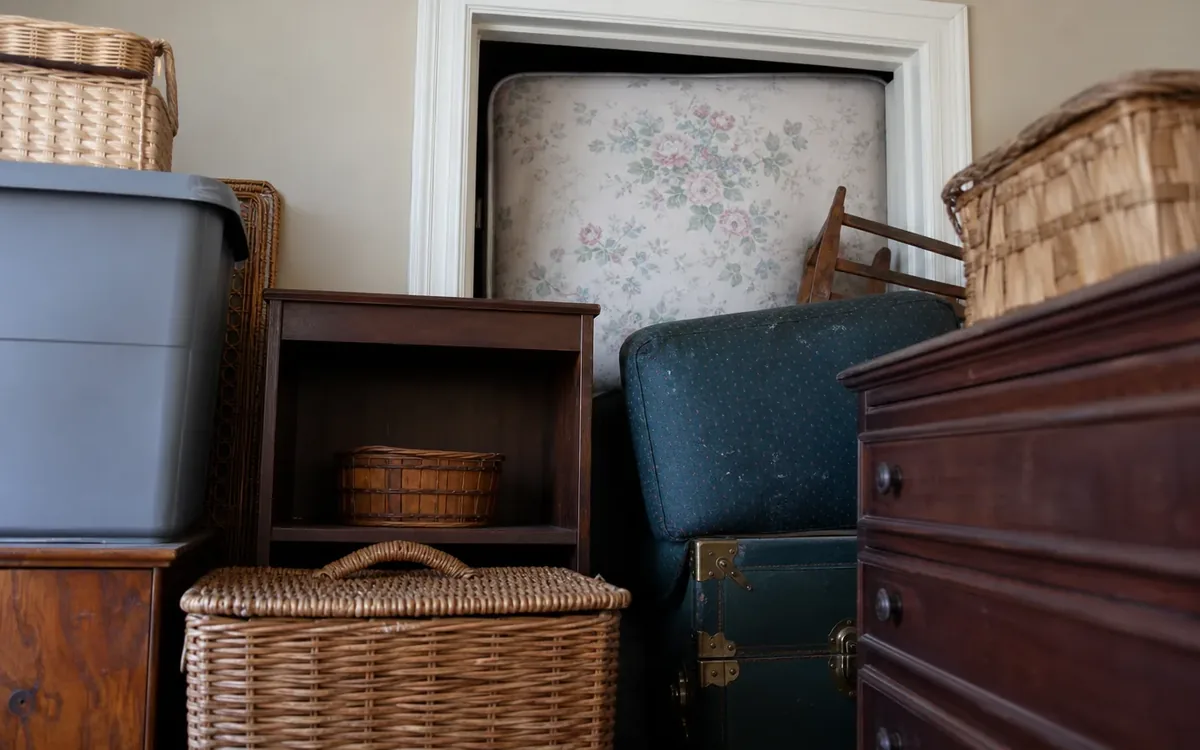
Why is pulling items from a blocked doorway unsafe?
An unstable pile can behave differently from an orderly stack. Objects may be wedged together, leaning on furniture, or supported by something that looks unimportant. A box near the opening may be holding back bags, shelving, or a taller column of belongings.
Removing a visible object can change the load without revealing what will move next. Even a light item can be caught beneath something heavy. Tugging may also expose broken glass, sharp metal, chemicals, or damaged electrical equipment.
The doorway adds another problem: it is often the only exit. If belongings slide into that opening, someone reaching inside may lose the route back out.
Avoid actions that turn observation into an improvised extraction:
- Pulling bags or boxes through a narrow gap.
- Climbing onto furniture to see farther into the room.
- Pushing a door inward against resistance.
- Moving a shelf because it appears to block access.
- Reaching under piles for documents or valuables.
- Using a broom, hook, or other tool to drag objects outward.
Work gloves or a dust mask do not make unstable clutter safe. Protective equipment must match the actual hazard, and some conditions require specialized assessment rather than household handling.
A practical discussion about estate cleanout services can begin with the access problem itself. Ask what information is needed before anyone decides whether or how work can proceed.
When should you stop the assessment entirely?
Some conditions make even a doorway observation inappropriate. If you smell gas, see smoke, hear sparking, or suspect an immediate structural failure, leave the affected area. Contact emergency responders or the relevant utility from a safe location. Do not investigate the source yourself.
Standing water near electrical equipment, exposed wiring, a visibly sagging floor, or a falling ceiling also warrants keeping people away and seeking appropriate professional guidance. Do not operate switches or appliances to test whether they work.
Other warning signs may not require an emergency call but still need a different assessment path:
- Unidentified liquids, powders, or chemical containers.
- Suspected asbestos-containing material that is damaged or disturbed.
- Extensive moisture damage or suspected mold growth.
- Heavy pest contamination or animal waste.
- Firearms, ammunition, or unknown sharp objects within piles.
- Furniture or stacked contents visibly shifting without being touched.
Describe what you observed and where you observed it. Do not label a substance, certify a structure, or decide that contamination is minor based on appearance.
An inspector, structural professional, electrician, environmental specialist, or other appropriate provider may need to evaluate the condition. Which professional is needed depends on the hazard, not simply on how crowded the room looks.
Build a doorway record that preserves uncertainty
A useful record is brief, factual, and easy to share with authorized decision-makers. Label it as a non-entry observation so nobody mistakes it for a complete inventory or safety inspection.
Photographs can help if they can be taken from an already safe position. Do not open the door farther, lean into the room, or move belongings to improve the picture. Avoid flash or device use where a suspected gas hazard makes investigation unsafe; leave instead.
Use a simple record format:
- Room identifier: For example, “rear bedroom beside bathroom.”
- Observation position: Hallway, exterior opening, or another accessible location.
- Visible conditions: What can actually be seen from that position.
- Unknown conditions: Hidden floor, unseen outlets, or inaccessible corners.
- Potentially important contents: Visible papers, labeled boxes, or distinctive furniture.
- Decision needed: Hazard assessment, access planning, or confirmation of authority.
Keep observations separate from family recollections. “A relative believes tax records are in the dresser” is not the same as “tax records are visible.” Both may matter, but they support different decisions.
Share photographs carefully. Estate rooms can reveal financial information, medications, personal correspondence, and other private material. Give access only to people who need it for the estate or the proposed work.
Separate access planning from ownership and value
A blocked room often creates pressure to make fast decisions about belongings. Resist combining several different questions into one. Whether an item is reachable, who may authorize its removal, and what it is worth are separate issues.
Family members can communicate priorities, identify sentimental categories, and explain where important records may be located. Those preferences should be confirmed with the person who has authority to make estate decisions.
If that authority is unclear, seek guidance from the estate’s responsible legal professional. A cleanout or move team does not determine inheritance rights, resolve ownership disputes, or replace required estate authorization.
Value requires its own judgment. A visible collection, antique, or unusual object may justify consultation with an appropriate appraiser or auction professional. A doorway photograph alone may not support a reliable valuation.
Create categories rather than premature item-level conclusions:
- Hold for authorized review: Documents, photographs, and disputed belongings.
- Potential appraisal discussion: Collections or objects with uncertain value.
- Possible household retention: Items someone wishes to keep, subject to approval.
- Undetermined: Anything whose identity or condition cannot be established safely.
Do not mark an unseen room “all trash.” Disposal, donation, sale, and transfer decisions should follow appropriate authority and an adequate understanding of the contents.
What should you discuss with a cleanout or move team?
Describe the room as inaccessible, not merely cluttered. Explain whether the doorway is obstructed, whether the floor is visible, and whether any hazards have already been identified. Share the observation record before assuming an ordinary removal plan will fit.
A practical team may discuss access limitations, handling priorities, protection of surrounding areas, and coordination with other providers. The discussion should also clarify what cannot be evaluated remotely.
Useful questions include:
- What information is needed before assessing the proposed work?
- Which conditions would prevent work from starting?
- Does another professional need to assess hazards first?
- How will authorized hold items be distinguished from other contents?
- Where could reviewed belongings go without blocking exits?
- Who will approve changes if unexpected conditions are found?
Ask specifically about responsibilities and scope. Do not assume that storage, contractor repairs, specialist hazard handling, appraisals, or every disposal method are included. These may be separate household arrangements or separate-provider services.
Clutter Cleaner of South Carolina is physically based in Mount Pleasant and serves all of South Carolina, with Charleston as its primary market. Families can discuss estate cleanouts and move management by calling (843) 972-7020. Describe the access concern clearly rather than assuming a particular entry method or outcome.
Plan the handoff without creating another blocked area
Before any approved access work begins, consider where belongings could go if they are brought out for review. Moving a room’s contents into a hallway can simply relocate the risk and obstruct an escape route.
The household can identify preferred destinations and decision-makers. A practical team can discuss whether the proposed handling arrangement is workable within its agreed scope. Neither discussion establishes that the room is structurally safe.
Keep these responsibilities distinct:
- Household or estate representative: Authorizes permitted decisions and sets retention priorities.
- Cleanout or move team: Discusses practical access and handling within agreed capabilities.
- Storage provider: Confirms its own acceptance rules and arrangements.
- Contractor or inspector: Evaluates relevant building conditions or proposed repairs.
- Appraisal or auction professional: Addresses valuation or sale suitability.
- Responsible authority: Determines applicable compliance requirements or official clearance.
If the home may be sold, ask the real-estate professional how the inaccessible room affects showing, disclosure, and sale preparation. Do not conceal the condition or treat a cleared doorway as proof that the underlying issue is resolved.
The best next step may be professional assessment, not removal. Keep the room restricted until the relevant concerns have been addressed and an appropriate plan is established.
Short FAQ
Can I step inside if I can see a small patch of floor?
Not on that basis alone. A visible patch does not establish floor strength, pile stability, or a safe exit. Keep the assessment outside and discuss access with an appropriate professional.
Should I retrieve a visible document before it gets lost?
Record its visible location without reaching into unstable clutter. Tell the authorized estate representative why it matters so it can be prioritized in an appropriate access plan.
Can photographs replace an inspection?
No. Photographs communicate visible conditions and access limits. They do not reveal hidden damage or establish structural, electrical, environmental, or legal clearance.
What if relatives disagree about opening the room?
Keep the access restriction in place. Separate the safety question from the ownership dispute, and ask the responsible estate representative or legal professional to clarify decision-making authority.



