
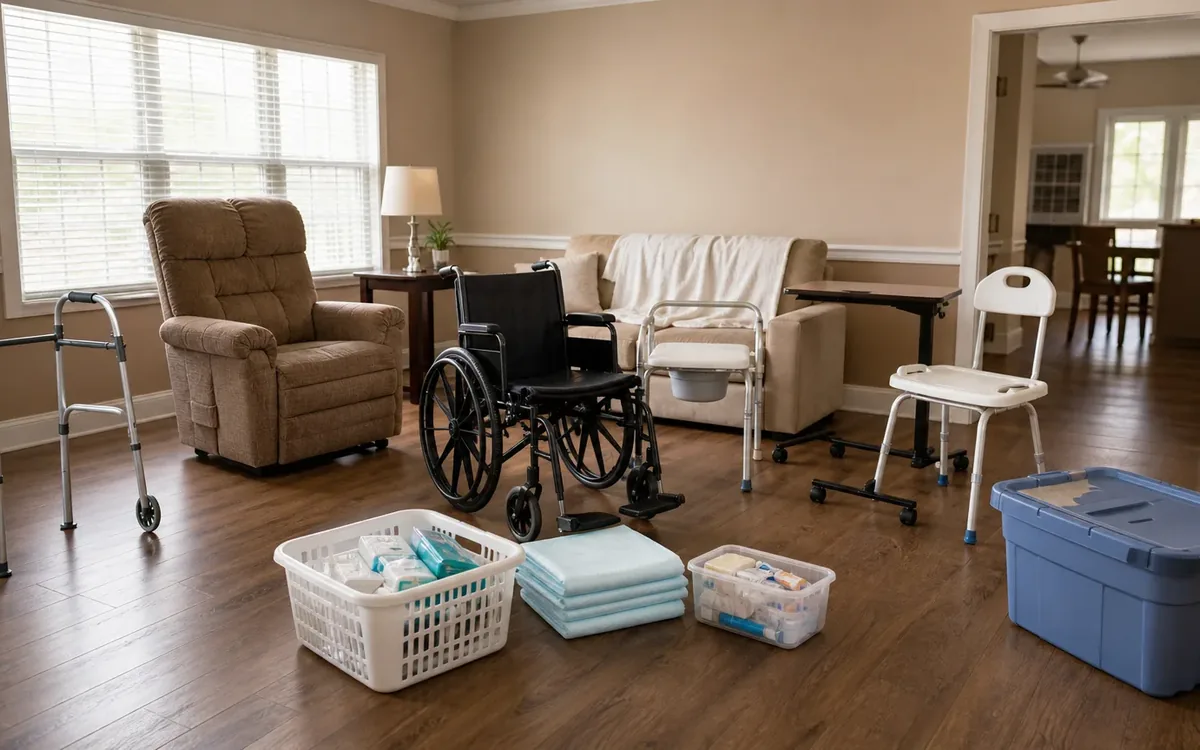
After a loss, do not automatically donate, discard, or move home medical equipment. First separate rented items from owned property, preserve supplier labels and paperwork, and have the legally responsible person contact each supplier about return instructions. Keep medications apart for the family or estate representative to handle through an approved disposal option.
Quick answer: Create separate zones for rented equipment, owned reusable equipment, sealed supplies, opened supplies, medications, and uncertain items. Photograph identifying labels without sharing private medical details. Ask suppliers what they require for returns, and let the estate representative approve any donation, sale, recycling, or disposal.
This approach is especially useful when an estate home contains walkers, shower chairs, wheelchairs, hospital beds, oxygen-related equipment, or boxes of unopened supplies. Each category can have different ownership, safety, privacy, and acceptance concerns.
Why medical equipment needs its own sorting plan
Home medical items should not be treated like ordinary furniture or household clutter. A hospital bed may belong to a rental provider. A wheelchair may have been purchased by the household. A powered device may include a battery that requires separate handling. A sealed carton of supplies may be useful, while an opened package may not be accepted anywhere.
There can also be private information on labels, paperwork, delivery tickets, and device settings. Prescriptions and medications raise additional safety and disposal questions. Combining everything into a general donation or trash pile can create avoidable problems.
Before the broader household cleanout begins, designate a holding area for medical items. A spare room, section of a garage, or clearly marked part of a living area can work if it is secure and does not block exits.
For help organizing the larger property around this category, review Clutter Cleaner of South Carolina’s estate cleanout service. The household or estate representative still decides what may leave the property, while suppliers, donation organizations, and disposal facilities decide what they will accept.
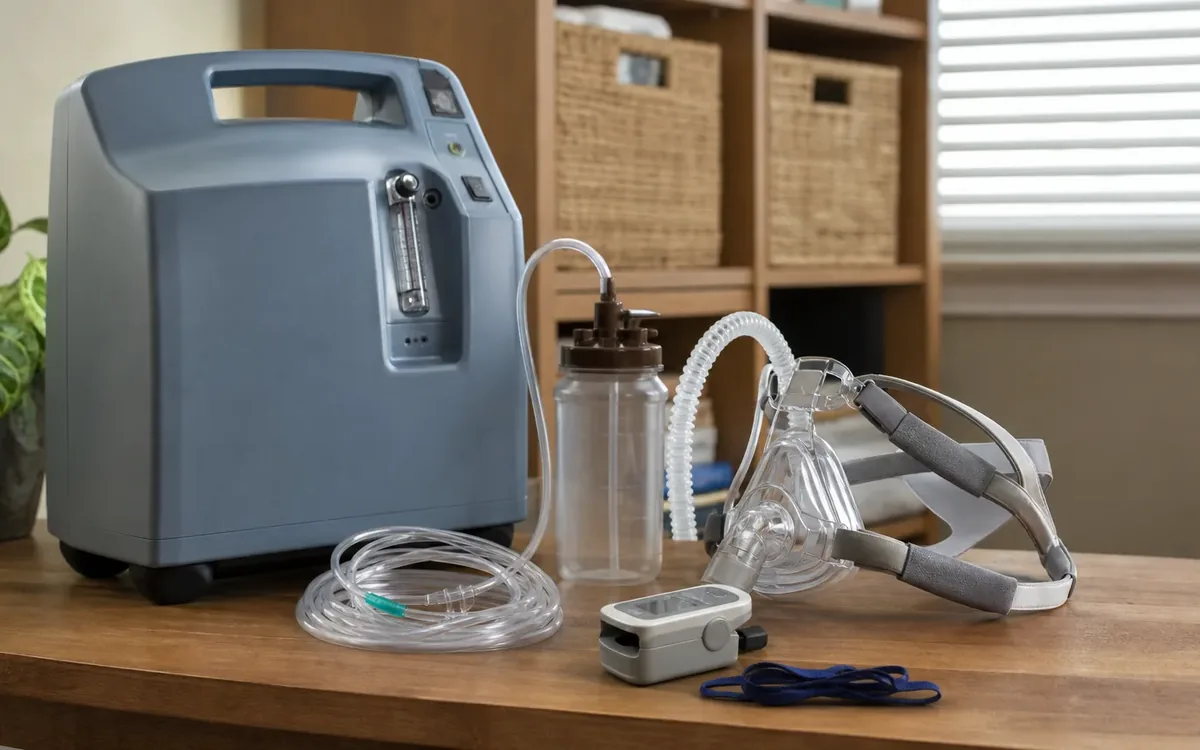
Is the equipment rented, financed, or owned?
Ownership is the first question because physical possession does not necessarily mean an item belongs to the estate. Medical equipment may have been rented, provided under an ongoing arrangement, financed, borrowed, or purchased outright.
Look for clues without dismantling or operating the equipment:
- Supplier names and telephone numbers
- Rental stickers, barcodes, or inventory tags
- Delivery tickets and setup documents
- Billing statements or recurring charges
- Warranty and purchase records
- Insurance-related correspondence
- Serial and model numbers
- Notes identifying an item as borrowed
Keep related paperwork with the item, but cover or secure documents displaying medical, insurance, financial, or identifying information. Photographing a supplier tag can help with a return call. Avoid sending a full medical label when only an inventory number is needed.
If ownership remains uncertain, place the item in an “ownership unresolved” group. Do not list it for sale, donate it, or dispose of it until the responsible person confirms its status.
A practical cleanout or move team may discuss how to stage equipment, protect floors, clear access routes, and separate confirmed property from items on hold. The team should not determine legal ownership, interpret insurance coverage, or decide whether an item is part of the estate. Those decisions belong to the estate representative, relevant provider, insurer, attorney, or other responsible professional.
How should the supplier be contacted about a return?
Use the telephone number or contact method shown on the supplier’s current label, contract, bill, or official materials. Avoid assuming that a nearby branch, medical office, or hospital owns the equipment.
The responsible caller can prepare four pieces of information:
- The name associated with the account, shared only through an appropriate channel
- The equipment description, model, serial number, or supplier asset tag
- The location where the equipment is being held
- The caller’s authority to discuss the account or arrange access
Ask whether the item is rented or owned, whether accessories must stay with it, and what return process the supplier requires. Request instructions for associated pieces such as cords, remotes, rails, mattresses, tanks, pumps, or carrying cases.
Do not leave equipment outdoors or transport it to an unconfirmed location merely because it has a supplier label. The supplier controls its own return requirements. The estate representative controls access to the home, subject to any applicable legal obligations.
If a hospital bed or other large item must remain assembled for pickup, keep it stable and accessible. Do not disconnect powered, pressurized, or medically specialized equipment unless the supplier or an appropriate professional gives instructions. A cleanout team may discuss safe staging and pathways, but it does not replace technical direction from the equipment provider.
For broader sequencing beyond medical property, the guide to how estate cleanouts work explains how authorization, sorting, removal, and final preparation can fit together.

What can happen to owned walkers, beds, and shower chairs?
Once ownership is confirmed, the household or authorized estate representative can choose among keeping, offering to family, selling, donating, recycling, or disposing of an item. That choice should account for condition, privacy, transportation, and whether a recipient will accept it.
Separate owned equipment into practical groups:
- Mobility items: walkers, canes, wheelchairs, rollators, and crutches
- Bath and transfer items: shower chairs, commodes, grab devices, and transfer benches
- Bedroom equipment: adjustable beds, rails, support surfaces, and over-bed tables
- Powered equipment: scooters, lift chairs, chargers, and battery-powered mobility devices
- Monitoring or treatment devices: pumps, monitors, respiratory devices, and related accessories
- General aids: reachers, cushions, trays, and dressing tools
Before offering an item, check for cracks, corrosion, missing hardware, damaged cords, staining, strong odors, or absent accessories. Do not describe used medical equipment as sanitized, safe, compliant, or suitable for a particular person unless a qualified party has actually made that determination.
A donation organization decides what it accepts and under what conditions. A buyer decides whether an item suits their needs. A medical professional should address whether equipment is appropriate for a living person’s care. An appraiser or qualified resale professional can advise on value when that question matters to the estate.
Storage is also a household choice. If items are placed in a storage facility, the household should evaluate cost, access, climate needs, insurance, and facility rules. A cleanout team may help organize items selected for storage, but storage availability and suitability belong to the chosen provider and responsible decision-maker.
How should unopened and opened medical supplies be separated?
Supplies need more than a quick “keep or toss” decision. Packaging condition, expiration information, prescription status, and recipient policies all affect whether an item has a possible next use.
Create distinct groups for:
- Factory-sealed supplies with readable labels
- Opened boxes containing individually sealed units
- Open or loose supplies
- Items with damaged, wet, or contaminated packaging
- Products with unreadable labels
- Sharps or supplies that may contain sharps
- Prescription-specific or patient-specific products
- Refrigerated or temperature-sensitive items
Do not mix loose supplies into sealed cartons. Keep original labels attached, but protect the deceased person’s private information. If removing a patient label would damage required product information, ask the potential recipient what to do before altering the package.
Call a prospective donation recipient before transporting supplies. Ask about accepted product types, packaging standards, expiration requirements, and whether an appointment or documentation is needed. Acceptance belongs entirely to that organization.
Opened, expired, contaminated, or specialized products may require disposal rather than donation. The household should confirm current rules with the relevant waste provider, facility, manufacturer, pharmacy, or government authority. Do not place sharps in an ordinary donation box or leave them where sorters could be injured.
What should the family do with medications and sharps?
Medications should stay separate from the physical cleanout. Put them in a secure area away from children, visitors, pets, donation boxes, and ordinary household goods. The authorized family member or estate representative should identify an approved disposal option through an appropriate pharmacy, take-back program, law-enforcement collection point, manufacturer resource, or relevant public authority.
Do not donate medication, offer it to another person, pour it into a combined liquid container, or flush it unless current official instructions specifically direct that method for the particular medication. Prescription labels should be protected from casual viewing and handled according to the disposal option’s instructions.
Sharps require their own plan. Do not reach blindly into drawers, bags, bedside containers, or bathroom cabinets. If needles or lancets are discovered, stop work in that immediate area and have the responsible household member obtain current handling instructions from an appropriate waste or health authority.
A practical cleanout team may identify and isolate a questionable container without opening it. Medication selection, use, transfer, and disposal decisions remain with the family, estate representative, pharmacist, healthcare professional, disposal program, or responsible authority.
Protect privacy while documenting the estate
Medical paperwork may be mixed with ordinary mail, bedside supplies, and equipment manuals. Set aside records before moving equipment out of the home.
Potentially sensitive materials include:
- Prescription labels and medication lists
- Insurance statements and claim documents
- Patient identification stickers
- Delivery and service records
- Care notes and appointment paperwork
- Device memory or account information
- Names, birth dates, addresses, and member numbers
The responsible person should decide what records must be retained and obtain legal advice when document-retention duties are unclear. A cleanout team can follow household instructions for grouping papers, but it should not decide which legal, tax, medical, or estate records can be destroyed.
Before sale or donation, check whether an electronic device contains stored personal data or links to an account. The manufacturer, supplier, or qualified technician can explain appropriate reset procedures. Do not guess if resetting could affect ownership records, return eligibility, or device operation.
Plan removal without damaging the house
Large medical equipment can be awkward, heavy, powered, or assembled inside a room. Measure doors, hallways, stairs, and turns before attempting removal. Protect walls and floors, and clear unrelated boxes from the route.
Keep these categories separate during removal:
- Supplier returns
- Family keepsakes or retained property
- Approved donations
- Items designated for appraisal or sale
- Recycling awaiting facility confirmation
- Disposal authorized by the estate representative
- Medications and sharps excluded from general removal
Hospital beds, lifts, and powered chairs may require disassembly instructions or specialized handling. Supplier-owned equipment should be handled according to the supplier’s directions. Contractor work, electrical changes, wall repair, flooring repair, or accessibility-fixture removal should be discussed with an appropriate contractor chosen by the household.
If the home will be sold, a real-estate professional can advise how remaining equipment affects showing or listing preparation. A home inspector evaluates property conditions within the inspector’s scope. An appraiser addresses valuation within the appraisal assignment. Code officials and other authorities determine compliance matters. A cleanout or home-preparation team may discuss access, sorting, and presentation, but it does not replace any of those roles.
Build a clear decision record
A simple inventory reduces confusion when several relatives, suppliers, or professionals are involved. It does not need to include medical history.
Record:
- Item description
- Supplier or brand name
- Asset tag or serial number when relevant
- Suspected ownership status
- Confirmed decision-maker
- Intended destination
- Contact made and instructions received
- Accessories that must remain with the item
- Final authorization before removal
Use neutral labels such as “supplier return pending” or “family decision pending.” Avoid labels that prematurely declare an item trash or a donation.
If the estate has an executor, personal representative, trustee, or another authorized person, establish who can approve removal. Questions about authority, ownership disputes, creditor interests, wills, probate, or beneficiary rights should go to a qualified South Carolina attorney or the responsible court or authority. A cleanout company cannot resolve those questions.
A focused handoff plan for the property
Once medical items have been separated, the remainder of the estate cleanout can proceed with fewer interruptions. A useful handoff note identifies which zones are cleared for work and which remain restricted.
The household can decide:
- Which confirmed estate property to retain
- Who may receive family items
- Whether to seek appraisal or resale advice
- Which approved destinations to use
- Whether storage is appropriate
- Who may authorize removal from the property
A practical cleanout or move team may discuss:
- Sorting zones and labeling methods
- Access routes and floor protection
- Grouping items by approved destination
- Coordination around confirmed supplier instructions
- Sequencing the physical cleanout around holds
Professionals and authorities retain decisions about legal ownership, estate authority, medical suitability, market value, real-estate strategy, inspections, code requirements, regulated disposal, and recipient acceptance.
Clutter Cleaner of South Carolina is physically located in Mount Pleasant and serves households across South Carolina, with Charleston as its primary market. Call (843) 972-7020 to discuss an estate cleanout after the household has identified decision-makers and flagged medical items that require separate instructions.
Short FAQ
Can a family donate a hospital bed?
Possibly, if the bed is owned by the estate and a recipient confirms acceptance. First rule out rental or supplier ownership. Ask the recipient about condition, mattress, disassembly, transportation, and documentation requirements before moving it.
Should unopened supplies go into the general donation pile?
No. Keep them separate until a prospective recipient confirms that it accepts the product type, packaging condition, and labeling. Prescription-specific, expired, temperature-sensitive, or damaged supplies may need another disposition.
Can a cleanout crew dispose of medications with household contents?
Medications should be excluded from ordinary cleanout material. The family or authorized estate representative should use a currently approved disposal option and follow that program’s directions.
What if no one knows who owns a wheelchair or oxygen device?
Place it on hold. Check labels, bills, contracts, and delivery paperwork, then contact the identified supplier or insurer through verified channels. Do not sell, donate, or discard it while ownership is unresolved.
Who decides whether medical equipment has resale value?
The estate representative decides whether to pursue a sale or appraisal. A qualified appraiser, auction professional, or resale specialist can address value. A cleanout team may keep the item separate while that decision is pending.



