
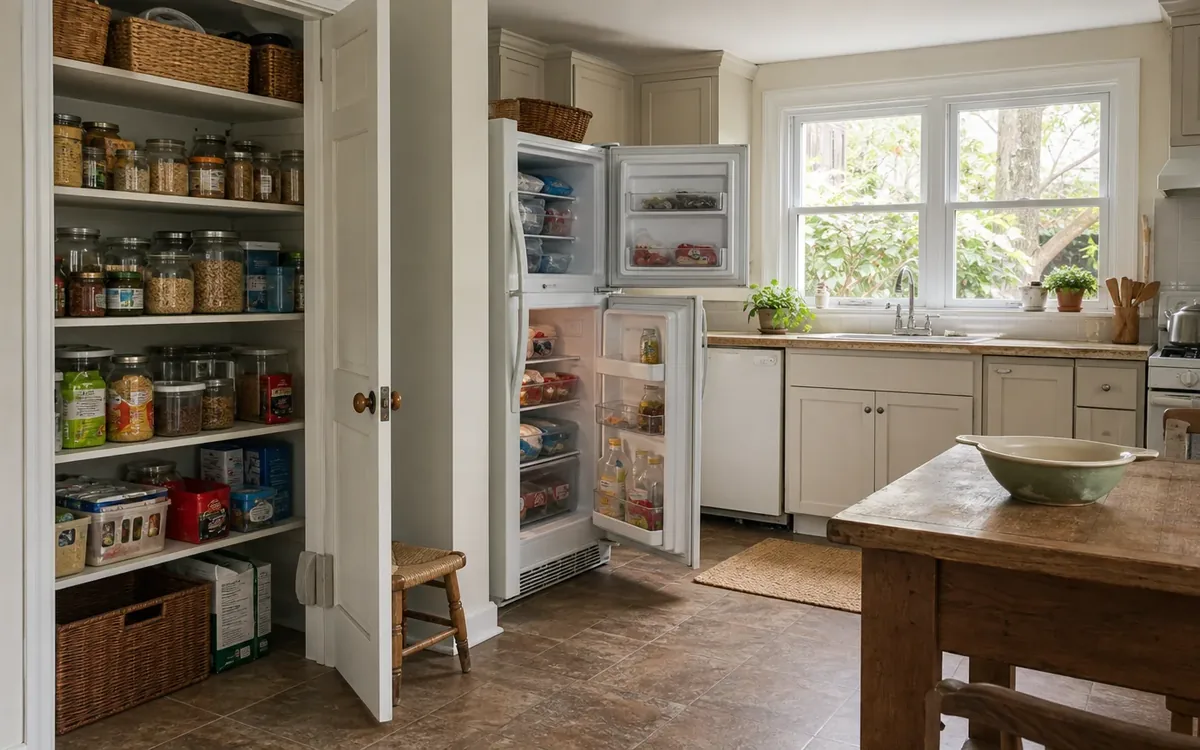
Start by confirming who can authorize decisions, checking whether the refrigerator and freezer still have power, and separating clearly usable food from anything spoiled, damaged, or uncertain. In a South Carolina estate home, interrupted electricity and heat make perishable food an early priority, not something to leave until the furniture is sorted. Do not taste food to determine whether it is safe.
Quick answer: Keep cold-storage doors closed while checking power and available temperature information. Treat questionable perishables as a food-safety issue, not a donation opportunity. Set aside sound pantry goods for household review, ask recipients about acceptance rules, and confirm disposal arrangements before emptying a freezer with spoiled contents.
The goal is to make defensible decisions without asking a grieving household to examine every jar indefinitely. Food handling also needs its own boundaries: estate authority, appliance repairs, donation acceptance, and waste disposal are different responsibilities.
Who can decide what happens to estate food?
Before anyone takes food home, gives it away, or discards it, identify the person authorized to direct the estate cleanout. Being a relative, neighbor, or helpful volunteer does not automatically establish authority over estate property.
The authorized household decision-maker can establish practical categories such as retain, offer to an approved recipient, discard, and hold for review. If authority is disputed or unclear, the personal representative or estate attorney should resolve that question. A cleanout crew cannot determine inheritance rights.
Food requires prompt attention when deterioration could affect the house. Ask the responsible person how immediate spoilage concerns should be documented and handled rather than allowing uncertainty to become an open-ended delay.
A practical arrangement might include:
- One contact who approves food-related decisions.
- A designated area for shelf-stable items awaiting review.
- Written instructions about refrigerated and frozen food with uncertain histories.
- Photographs of significant spoilage or appliance problems before removal.
- A record of any unopened items retained or offered elsewhere.
For broader coordination, the estate cleanout service can be discussed alongside the household’s food priorities. Ask specifically what handling, removal, and disposal arrangements are included rather than assuming all contents receive the same treatment.
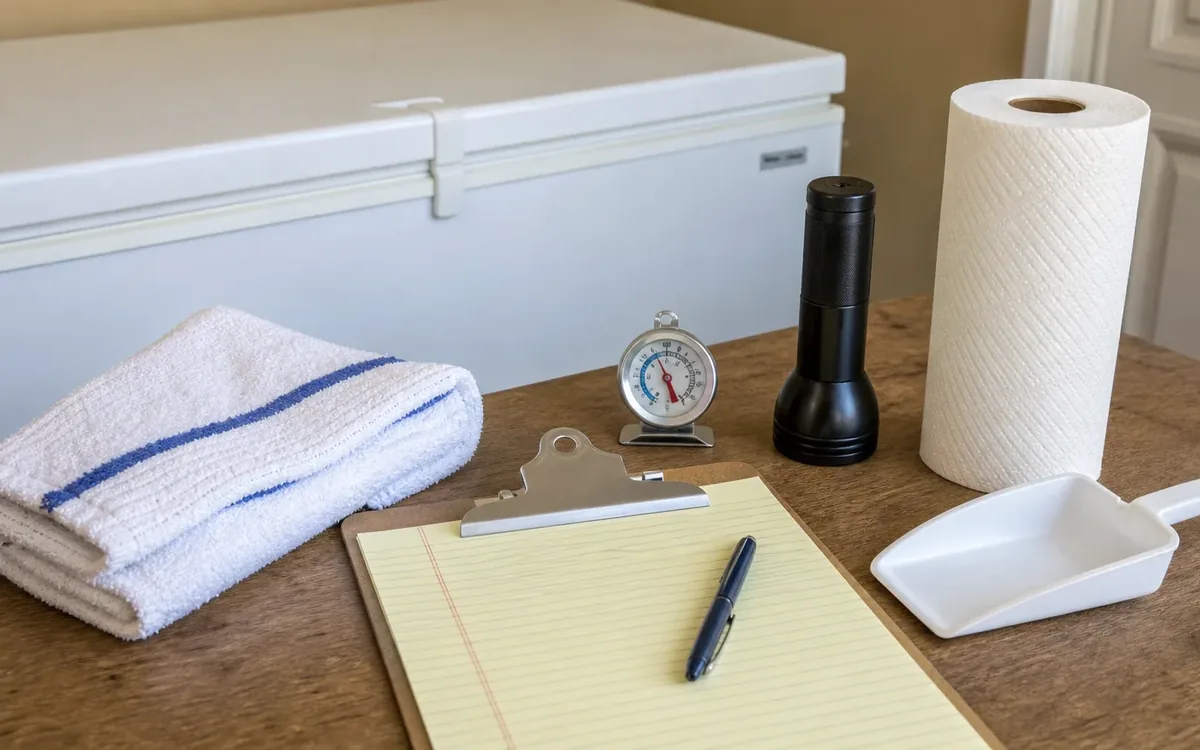
What should you check before opening the freezer?
First, look for obvious hazards around the appliance: standing water, damaged wiring, a burning smell, pest activity, or leaking contents. Do not step into water to reach a plug or breaker. Electrical hazards belong with the appropriate utility, electrician, or emergency authority.
If the appliance appears safe to approach, determine whether electricity is currently on and whether anyone knows when an interruption began. A working light or running compressor only shows that power is available now. It does not prove food stayed cold earlier.
Keep refrigerator and freezer doors closed while gathering information. Repeated opening introduces warm air and makes an already uncertain situation harder to assess. South Carolina heat can add urgency, particularly in an unconditioned house.
Useful information includes:
- A reliable outage history, if available.
- Current appliance-temperature readings.
- Whether frozen packages still contain ice crystals.
- Evidence of thawing, leakage, or food that appears to have refrozen.
- Reports that someone unplugged the appliance during earlier work.
Do not rely on odor alone. Harmful contamination may be present without an obvious smell, and a currently frozen package may have thawed previously. When safe storage cannot be established, do not donate or serve questionable perishables. Seek current food-safety guidance if a specific retain-or-discard decision remains uncertain.
Build a food plan before the broader cleanout
Food should have a separate workstream from furniture, documents, and keepsakes. A box of books can wait for a family decision; leaking meat cannot be handled as another ordinary sorting category.
The household can choose who will inspect pantry goods, where retained food will go, and who will approve disposal. A practical cleanout or move team may discuss access, staging, containers, lifting, transport, and whether an appliance should remain in place while contents are addressed.
Clarify these points before work starts:
- Who is assessing food condition and making the final decisions?
- Will the household remove retained food before general sorting begins?
- Are spoiled contents present, and has their condition been disclosed?
- Who will supply suitable leak-resistant containers?
- What waste destination will accept the material?
- Will appliance removal require a separate arrangement?
The guide to how estate cleanouts work provides a broader framework for coordinating decisions and removal. Within that process, food deserves an earlier decision point because its condition can change while other categories remain stable.
Clutter Cleaner of South Carolina serves households statewide, with its physical location in Mount Pleasant and Charleston as its primary market. Food-specific handling should still be confirmed for the particular project, not inferred from the statewide service area.
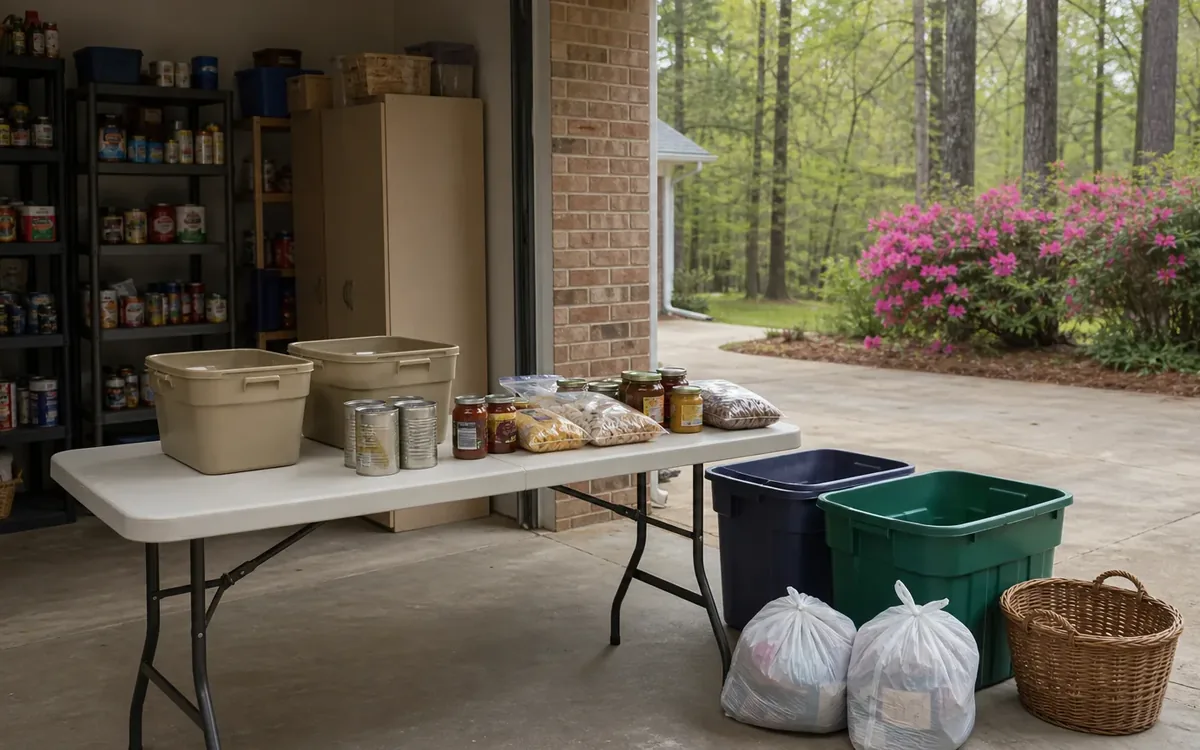
How do you sort pantry food without donating unsafe items?
Use condition, storage history, packaging, and recipient requirements together. An unopened package is not automatically suitable for donation, and a date label alone does not answer every food-safety question.
Begin with a visual inspection. Set aside leaking, bulging, badly rusted, or severely dented cans, especially those damaged at seams. Reject packages with pest evidence, water damage, broken seals, or unexplained contamination. Do not open suspect cans or jars simply to inspect their contents.
Organize the remaining pantry into practical categories:
- Household review: Intact goods with a known storage history that an authorized person may want to retain.
- Possible donation: Commercially packaged goods that appear sound and meet a recipient’s stated requirements.
- Discard: Spoiled, contaminated, damaged, recalled, or otherwise unsafe items.
- Uncertain: Items needing a specific decision, such as unlabelled containers or unfamiliar preserved foods.
Date labels may relate to quality rather than provide a universal safety cutoff. Nevertheless, donation organizations can apply their own date limits. Ask before transporting food, and do not use charitable donation as a way to avoid disposal decisions.
Home-canned foods, opened ingredients, and unlabelled jars require particular caution. If their preparation or storage history is unknown, do not assume boiling, reheating, or repackaging will make them safe. Avoid offering uncertain items to neighbors as an informal workaround.
Handle spoiled cold-storage contents as a separate task
If spoiled food is present, keep children, pets, and unnecessary helpers away from the work area. Avoid contact with leaking liquids. Disposable gloves can reduce direct contact, but they do not replace handwashing or make hazardous surroundings safe.
Prepare the route from the appliance to the collection point before moving contents. Protect nearby household items from leakage and keep food waste separate from donations, documents, and belongings intended for transport.
For a manageable situation, the household or agreed provider can discuss:
- Leak-resistant bags or containers appropriate to the contents.
- Smaller loads that can be lifted without tearing or spilling.
- Secondary containment where liquids could escape.
- A secure staging location inaccessible to animals.
- Cleaning supplies suitable for the affected surfaces.
Do not pour spoiled food liquids into a yard, storm drain, or other unsuitable location. Avoid putting all food waste down a sink or garbage disposal, particularly when the plumbing condition is unknown.
Heavy contamination, extensive leakage, strong persistent odors, or pest activity may require a separate cleaning, pest-control, or other qualified provider. Disclose the condition before anyone arrives. Ordinary estate sorting should not quietly become an unplanned contamination-cleanup job.
Confirm disposal and donation destinations before transport
Waste rules and donation acceptance vary by provider and location. Check with the actual recipient or waste authority rather than assuming household trash service, a collection site, or a food pantry will accept everything.
For food donation, describe the goods honestly: package condition, dates, quantities, and any uncertainty about storage. Refrigerated or frozen donations require appropriate acceptance and temperature-control arrangements. Do not transport questionable cold food in hopes that an organization will decide for you.
For disposal, confirm:
- Whether food waste is accepted through the proposed collection method.
- How leaking or heavily spoiled contents must be contained.
- Where containers may be staged before collection.
- Whether an appliance must be emptied before it is accepted.
- Whether appliance disposal requires separate handling.
Do not place a full freezer outside or include it in a removal load without agreement about its contents and condition. A shut lid does not eliminate leakage, weight, odor, or handling concerns.
Donation receipts and any claimed tax value are separate matters. The receiving organization determines its documentation practices; valuation and tax questions belong with the appropriate adviser or appraiser when needed.
Decide separately what happens to the refrigerator or freezer
Food condition and appliance condition are related, but they are not the same decision. Discarding food does not necessarily mean discarding the appliance. Conversely, an appliance that runs may still have contamination or mechanical issues requiring assessment.
After contents are addressed, the household can decide whether to seek cleaning, repair, retention, sale, or disposal. Persistent odors, damaged seals, inaccessible contamination, or repeated temperature problems warrant a separate evaluation.
A cleanout or move team may discuss appliance dimensions, lifting access, floor protection, and whether removal is within the agreed scope. Refrigerant handling, electrical work, repairs, and disposal requirements belong with the relevant qualified provider or authority.
If the home will be sold, ask the real-estate professional which appliances are intended to remain and how their condition should be addressed. An inspector evaluates applicable condition concerns; a cleanout team does not certify that a refrigerator is safe, functional, or compliant.
Coordinate any disconnection with the responsible provider. Never compromise needed electricity just to simplify clearing the room while other cold-storage appliances still hold food.
Leave clear notes for the next person entering the house
A cleared kitchen should not leave future helpers guessing. Record what was discarded, what was retained, and whether any food remains in a secondary freezer, garage refrigerator, cabinet, or outdoor storage area.
Keep notes factual rather than diagnostic. “Liquid leaked beneath the freezer” is useful. Declaring the floor structurally sound or the room free of contamination is a professional assessment, not a sorting note.
Share unresolved matters with the responsible person:
- Remaining food and its location.
- Appliance power status.
- Visible leakage or affected surfaces.
- Arrangements still needed for waste or appliance removal.
- Any specialist assessment requested.
This handoff keeps the food issue from resurfacing after movers, contractors, or real-estate professionals begin their work.
Short FAQ
Can we keep food that still looks frozen?
Appearance alone cannot establish its storage history. Consider reliable temperature information and outage details. If safety remains uncertain, do not serve or donate it.
Should expired pantry food go into donation boxes?
Not automatically. Check condition and the recipient’s rules. Damaged, contaminated, or uncertain food does not become acceptable because it is donated.
Should the freezer be unplugged immediately?
Not if it safely holds food awaiting a decision. Coordinate contents removal and disconnection. If there is an electrical hazard, avoid contact and seek appropriate help.
Who can help coordinate the estate cleanout?
Clutter Cleaner of South Carolina can discuss estate cleanout coordination at (843) 972-7020. Explain the food and appliance conditions, and confirm the agreed scope. Legal authority, food acceptance, repairs, and disposal requirements remain separate decisions.



