
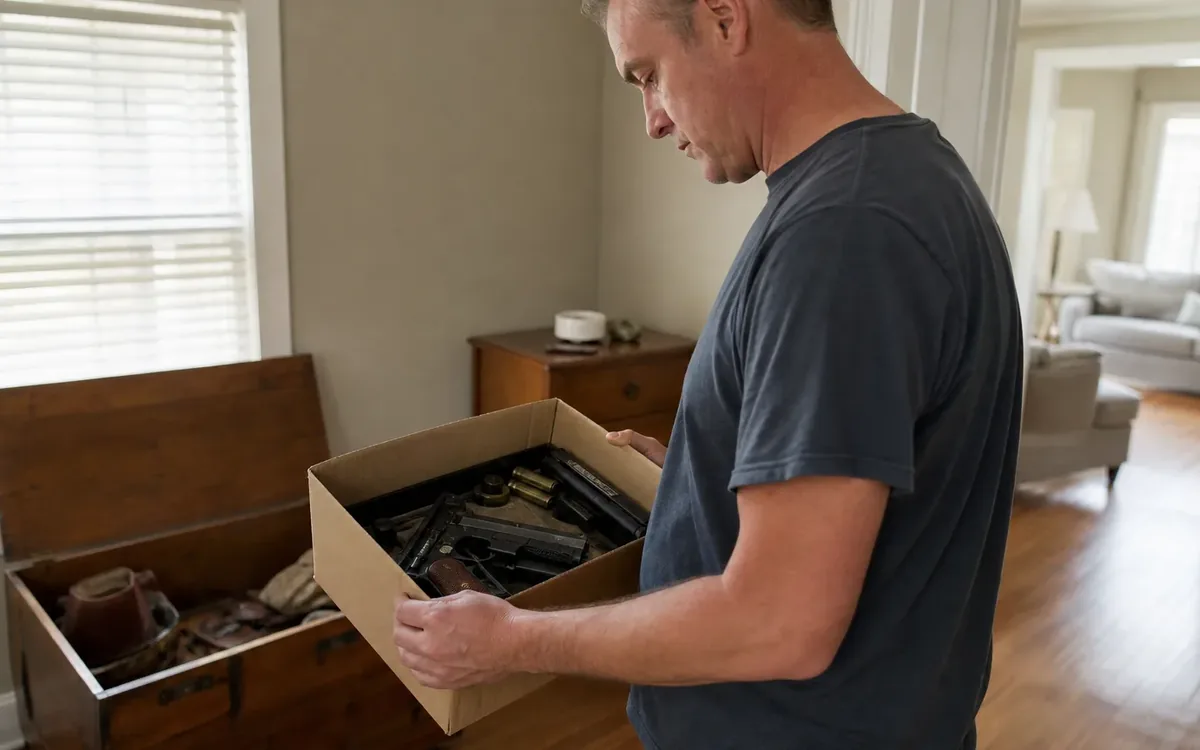
If firearms or ammunition are found during a South Carolina estate cleanout, stop routine sorting in that area, keep other people away, avoid unnecessary handling, and contact an appropriate qualified professional before moving, selling, transferring, transporting, or disposing of anything. The household can secure access and document where the items were found, but legal ownership, transfer, transport, and disposal questions should be addressed by current legal guidance, law enforcement, or a qualified firearms professional.
Quick answer: Pause work near the discovery. Do not test, unload, clean, display, transport, sell, or discard the items. Restrict access, record the location without exposing sensitive details, and identify the estate representative. If there is an immediate threat, an unsecured firearm near a child, a suspected crime, or a potentially dangerous device, leave the area and contact 911. For a non-emergency, verify next steps with an appropriate South Carolina authority, attorney, law-enforcement agency, or qualified firearms professional.
This issue should be separated from the rest of the cleanout. Clothing, furniture, papers, and ordinary household goods can wait while the responsible person determines how the firearm-related discovery must be handled.
What should you do immediately after the discovery?
The first priority is preventing access and avoiding actions that could make the situation less safe or complicate the estate’s responsibilities.
Take these five initial steps:
- Stop sorting in the immediate area. Ask workers, relatives, buyers, and visitors to step away.
- Do not handle the firearm or ammunition unnecessarily. Do not assume a firearm is unloaded, disabled, or safe because of its appearance or storage location.
- Limit access. Keep children, unauthorized family members, contractors, shoppers, and pets out of the room or controlled area.
- Notify the responsible estate representative. This may be the personal representative, executor, administrator, trustee, or another person legally authorized to act for the property.
- Seek qualified direction. The correct contact depends on whether the situation is an emergency, a legal ownership question, a transfer question, or a condition and safety concern.
Do not continue opening nearby cases, bags, boxes, drawers, safes, or containers in search of more weapons. Finding one item may suggest that related items exist, but an unsupervised search can create additional risks.
Families planning the broader project can review Clutter Cleaner’s South Carolina estate cleanout service to understand how ordinary household sorting fits into a coordinated transition. Firearm decisions remain a separate matter for the household and the appropriate authorities or professionals.
How should access to the area be controlled?
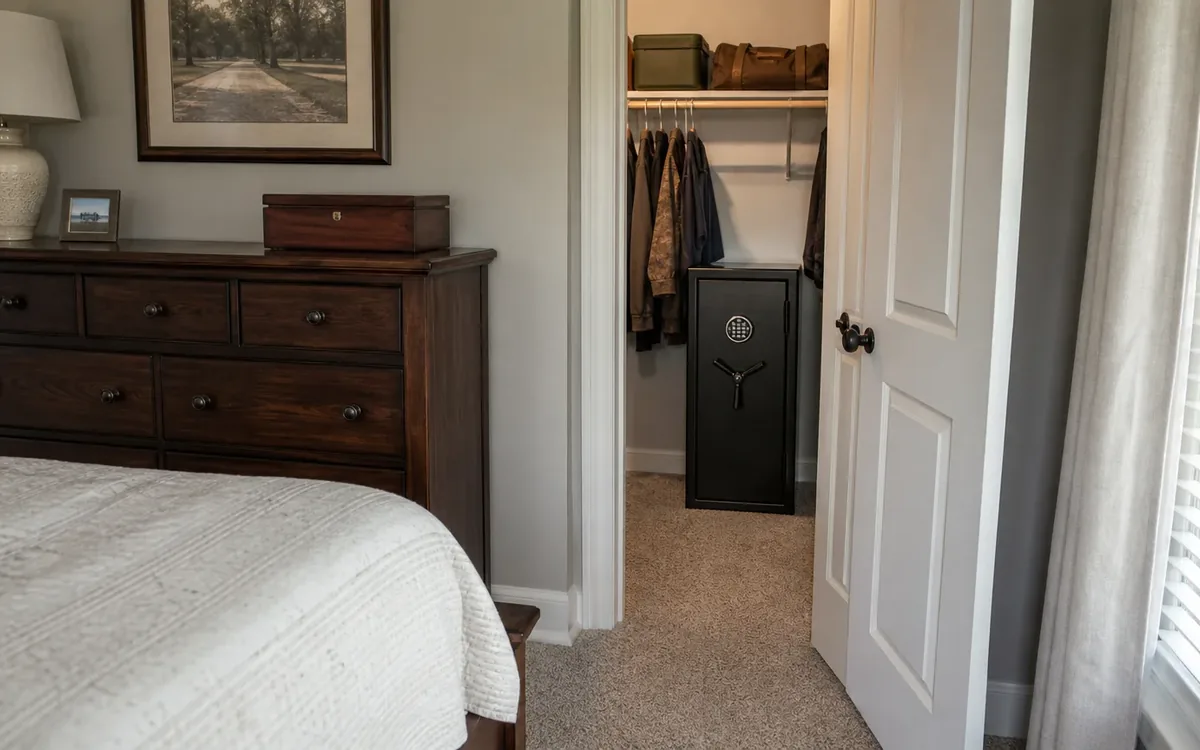
Restricting access does not require investigating or manipulating the item. The goal is to preserve the situation while the responsible person obtains guidance.
Practical access controls may include:
- Pausing all work in the room or immediate area
- Closing the room, if that can be done without approaching or touching the item
- Keeping estate-sale visitors and prospective buyers away
- Telling contractors not to enter or move containers
- Recording who discovered the item and who has entered since then
- Avoiding photographs that reveal the property’s address, alarm details, safe location, or other security information
- Keeping the discovery off social media and public sale listings
A firearm should not be left in an area that remains open to the public. If the property is being prepared for an auction, estate sale, showing, inspection, repair, or open house, the responsible estate representative should address the discovery before public access resumes in that area.
A cleanout or move team may discuss pausing work, changing the sorting sequence, isolating unrelated contents, and rescheduling access to the affected room. The team should not decide who legally owns the firearm, whether a person may possess it, or how it can be transferred.
Should you move, unload, or inspect a found firearm?
Generally, avoid unnecessary handling while seeking qualified direction. A person who is not trained should not try to determine whether the firearm is loaded, clear its action, remove a magazine, test a safety, inspect the barrel, clean it, or prepare it for transport.
Appearance is not a reliable basis for action. An old, rusty, damaged, inherited, decorative, or partially disassembled firearm may still require careful treatment. The same caution applies to items believed to be replicas until a qualified person identifies them.
Do not:
- Pull a trigger or manipulate controls
- Point the firearm at anyone or anything
- Carry it through the house to show another person
- Place it in a vehicle without confirming lawful and safe transport requirements
- Insert it into a donation, trash, recycling, or ordinary removal pile
- Bring it to a police station without first asking that agency how it wants the situation handled
- Invite an unverified buyer to the property
If the item appears altered, damaged, booby-trapped, unusually configured, or connected to suspicious circumstances, increase distance and contact law enforcement. Do not inspect a suspected explosive, military ordnance item, or improvised device.
For wider project planning, the guide on how estate cleanouts work explains the general stages of household review and removal. A firearm discovery interrupts that normal workflow and should be resolved through a separate, controlled process.
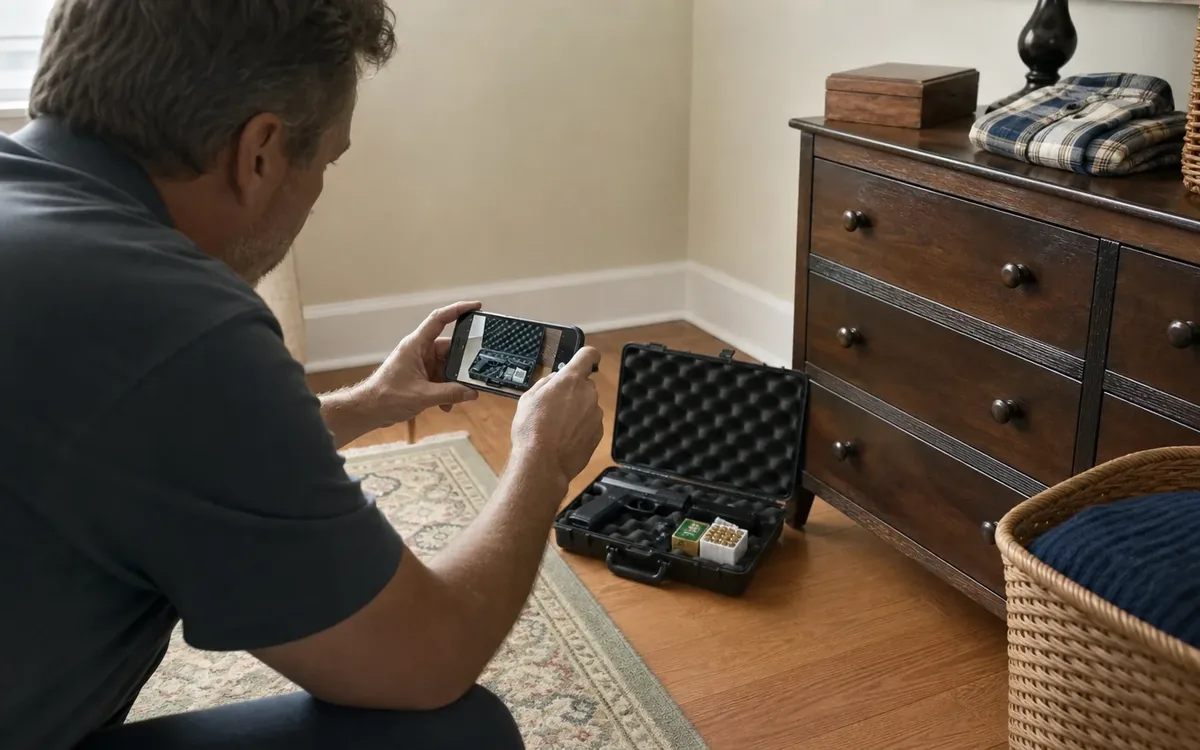
Document the find without creating new risks
Basic documentation can help the estate representative explain the discovery to an attorney, authority, insurer, appraiser, or qualified firearms professional. Documentation is not an appraisal or a legal ownership determination.
Record facts such as:
- The date the item was noticed
- The room and general place where it was found
- Whether it was visible or inside a container
- The name of the person who noticed it
- Whether anyone handled or moved it
- Who was notified
- Whether related papers, cases, or ammunition were visible nearby
Do not publish serial numbers or security-sensitive photographs. Do not scrape, clean, disassemble, or rotate a firearm merely to find identifying marks. If identification is needed, ask the appropriate professional how to proceed safely.
Keep the record with the estate’s controlled documents rather than on an open sorting table. Relevant documents may include an inventory, will, trust papers, purchase records, prior appraisals, permits from other jurisdictions, insurance schedules, or correspondence. Their presence does not by itself settle current ownership or transfer requirements.
Separate firearms, ammunition, and unknown items conceptually
Although firearms and ammunition may be found together, they can present different questions. Avoid assuming that one set of instructions covers everything in a safe, cabinet, or box.
Ammunition should not be opened, dismantled, burned, discarded in household trash, or mixed with scrap metal. Loose cartridges, damaged boxes, reloaded ammunition, powder, primers, and unidentified components may require different handling advice.
Likewise, do not assume that a canister, military-looking object, flare, antique cartridge, or corroded item is harmless. If an object could be explosive or otherwise unstable, keep away and contact emergency services.
The household may decide to suspend work and prevent access. A qualified firearms professional may discuss condition, identification, secure storage options, or possible commercial pathways within the limits of that professional’s role. Law enforcement may advise on immediate safety, suspected stolen property, prohibited items, evidence, or agency procedures. An attorney can advise the estate about authority, ownership, possession, and transfer under current law.
These roles should not be merged. A cleanout crew is not a substitute for legal counsel, law enforcement, a firearms appraiser, or a qualified dealer.
Who has authority to make decisions for the estate?
Possession of the house key does not necessarily establish authority to sell or transfer estate property. Before any disposition, identify the person legally responsible for the estate or trust.
That person may need to confirm:
- Whether the firearm belongs to the deceased person or someone else
- Whether the item is specifically addressed in estate documents
- Whether a proposed recipient may lawfully receive or possess it
- Whether another state’s law is relevant to a beneficiary or transfer
- Whether court approval, estate administration, or other documentation is required
- Whether federal requirements apply
- Whether the firearm may be restricted, regulated, reported stolen, or connected to an investigation
These are legal questions. South Carolina families should verify current law rather than relying on remembered rules, online comments, or statements from prospective buyers. Laws and agency procedures can change, and the facts of an estate can affect the answer.
If family members disagree, pause the disposition. Moving forward before authority is clear can create conflict and may interfere with estate administration.
What can a cleanout or move team discuss?
A practical cleanout or move team can help reorganize the project around a restricted area. The discussion may cover ordinary workflow rather than legal disposition.
Appropriate planning topics include:
- Stopping work in the affected room
- Redirecting sorting to another part of the home
- Keeping unrelated donation, sale, recycling, and removal categories separate
- Marking a room as restricted without identifying valuable contents
- Coordinating access after the estate representative receives guidance
- Preserving documents found elsewhere for the representative’s review
- Keeping public sale traffic away from the discovery
A team should not pronounce the firearm legal or illegal, choose an heir, estimate value without proper expertise, or promise a lawful sales channel. Clutter Cleaner of South Carolina, based in Mount Pleasant and serving households statewide, can discuss estate cleanout coordination. Decisions about firearm possession, transport, transfer, sale, surrender, or destruction stay with the responsible person and qualified authority or provider.
Storage is also a separate household or provider choice. The estate representative should verify who may lawfully possess the items, what secure arrangement is appropriate, and whether transportation is permitted before selecting storage.
Appraisal and sale require different decisions
An appraisal addresses value, not legal authority. A valuation professional with relevant firearms expertise may consider identity, condition, provenance, completeness, modifications, and market factors. The household should verify the appraiser’s qualifications and avoid cleaning or repairing an item before receiving advice, since alterations can affect value.
A potential buyer’s offer is not an appraisal. Nor does an appraisal establish that a sale or transfer is lawful.
Before pursuing a sale, the responsible estate representative should confirm legal authority and current transfer requirements with an attorney, qualified firearms professional, dealer, or appropriate agency. Interstate transfers and regulated items may involve additional rules. Do not treat an informal handoff to a relative, neighbor, contractor, or estate-sale shopper as routine.
Any auction or estate-sale plan should keep firearm transactions distinct from ordinary household merchandise. The selected provider should explain its role, procedures, and limitations. The estate remains responsible for obtaining appropriate legal guidance.
Coordinate the discovery with the property transition
A firearm discovery can affect access, but it does not require abandoning the entire home transition. Once the affected area is controlled, unrelated work may continue if the estate representative and project team consider it appropriate.
Keep the following decisions separate:
- Legal decisions: Authority, possession, transfer, transport, surrender, and disposal questions belong with legal counsel, qualified firearms professionals, law enforcement, or the responsible authority.
- Appraisal decisions: Identification and valuation belong with a properly qualified appraiser or specialist.
- Real-estate decisions: Listing disclosures, access, showings, and transaction strategy belong with the responsible seller and real-estate professional.
- Inspection decisions: A licensed or otherwise appropriate inspector determines the scope and findings of a property inspection, not a cleanout team.
- Contractor decisions: Safe repair methods and the contractor’s work scope belong with the selected contractor.
- Compliance decisions: Courts, agencies, municipalities, and other responsible authorities determine applicable requirements.
- Cleanout decisions: The household and cleanout team can plan sorting, access control, removal categories, and the sequence for ordinary contents.
This separation prevents a practical property project from drifting into decisions that require different qualifications or authority.
Short FAQ
Can ammunition go into household trash?
Do not place ammunition, powder, primers, or unknown firearm components in household trash or recycling without verified direction. Ask an appropriate local authority or qualified firearms professional about current lawful options.
Should we call 911 for every found firearm?
Use 911 for an immediate danger, threat, suspected crime in progress, unsecured access by a child, or potentially explosive or highly dangerous object. For a non-emergency discovery, contact the appropriate agency through its non-emergency channel and ask for instructions before transporting anything.
Can a beneficiary simply take the firearm named in a will?
Do not assume so. Estate authority, the recipient’s eligibility, the type of item, transfer requirements, and laws in another state may matter. The personal representative should seek current legal guidance.
Can a cleanout company dispose of it with unwanted contents?
Firearms and ammunition should not enter ordinary donation, waste, recycling, or removal streams. Their disposition requires a separate decision by the authorized estate representative with qualified guidance.
What if nobody knows whether the firearm is loaded?
Treat it as loaded and avoid handling it. Restrict access and obtain instructions from a qualified source. Do not attempt to test or unload it merely to satisfy curiosity.
A controlled pause protects the estate
Finding firearms or ammunition changes the order of work, not the basic goal of the estate transition. Pause the affected area, limit access, document only what can be recorded safely, and place the decision with the authorized estate representative.
The next step should match the issue. Emergency danger belongs with 911. Non-emergency safety or agency-procedure questions may belong with law enforcement. Ownership and transfer questions belong with an attorney or other qualified legal resource. Identification, condition, appraisal, storage, and commercial options require appropriately qualified providers.
Once those questions are resolved, the household can return to ordinary sorting and property preparation with clear boundaries. Clutter Cleaner of South Carolina can be reached at (843) 972-7020 to discuss the estate cleanout workflow and how unrelated household contents can be organized around a restricted area.



