

Clothing should be sorted during an estate cleanout by first protecting anything personal or potentially valuable, then separating family keepsakes, appraisal candidates, wearable donations, textiles needing another outlet, and unusable items. Check every pocket, lining, shoe, handbag, garment bag, and storage container before anything leaves the property. This prevents documents, jewelry, cash, keys, photographs, and sentimental objects from being discarded accidentally.
Quick answer: Do not begin with donation bags. Establish who has authority to make decisions, create a protected review area, inspect each item and its hiding places, flag garments requested by family, and separate appraisal questions from ordinary donation decisions. Only after review should clothing be packed for its chosen destination.
Estate closets in humid South Carolina homes may contain decades of clothing and accessories. Moisture, heat, pests, and long storage can affect condition, but age alone does not determine whether something is meaningful, wearable, collectible, or suitable for donation. A careful process keeps sentimental review separate from decisions about market value and disposal.
What should happen before clothing is removed from a closet?
Confirm who is responsible for the estate and who can approve removal, donation, sale, or disposal. A relative helping at the property may not necessarily have authority to distribute its contents. Questions about ownership, probate, beneficiary rights, or disputed property belong with the executor, personal representative, estate attorney, or other appropriate legal authority.
Before opening bags and emptying drawers, establish several clearly marked zones:
- Protected family review: Items no one should remove until designated relatives have responded.
- Personal records and valuables: Documents, cash, jewelry, keys, identification, and other secured finds.
- Possible appraisal: Garments or accessories that may warrant review by a qualified appraiser or specialist.
- Wearable donation: Clean, usable items that meet the receiving organization’s current guidelines.
- Textile outlet: Items that are not wearable but may qualify for a separately chosen textile program.
- Disposal: Wet, contaminated, pest-damaged, or otherwise unacceptable material.
Keep the zones physically separate. A garment selected for family review should not share a bag with donations. Use labels that name the destination and decision status, such as “Awaiting Maria’s Reply” or “Appraiser Review,” rather than vague labels like “Maybe.”
For the broader order of handling household contents, read the best way to clean out an estate. Families considering practical property assistance can also review the statewide estate cleanout service information from Clutter Cleaner of South Carolina.
How do you check pockets, linings, and hidden compartments?
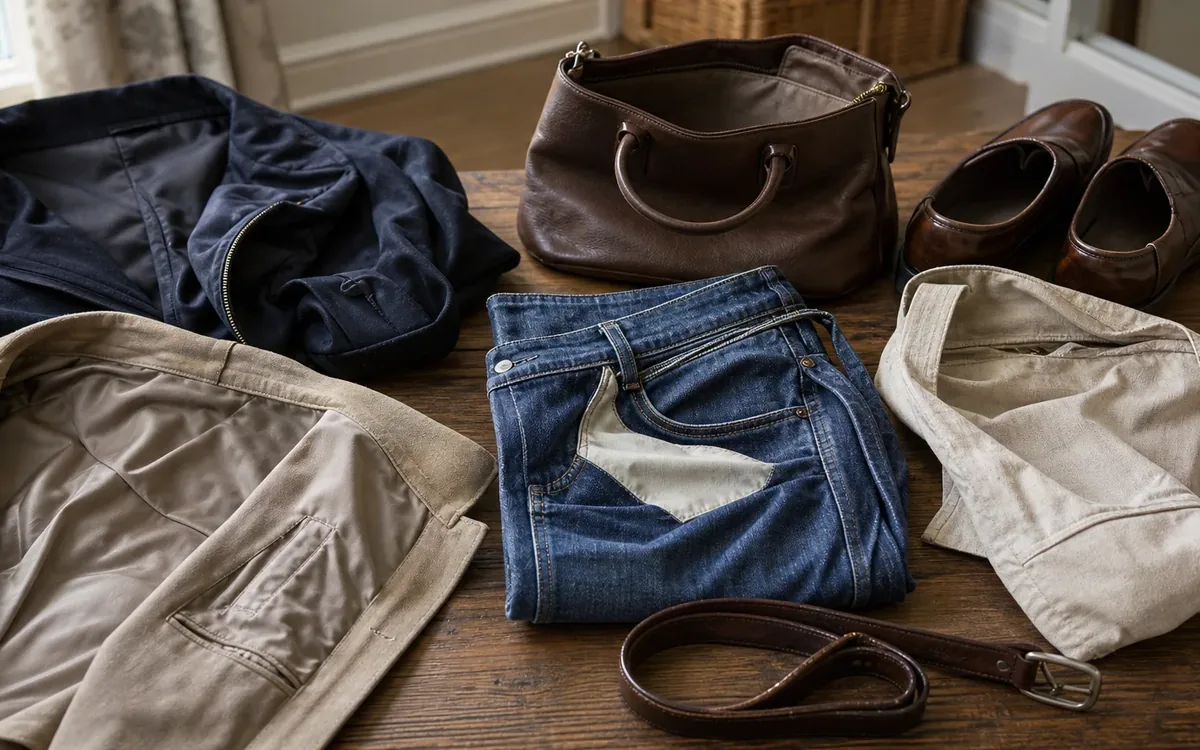
Inspect garments and accessories one at a time under good lighting. Do not rely on shaking a coat or feeling the outside of a handbag. Small objects can settle into torn linings, interior dividers, cuffs, hoods, and the bottom corners of cases.
Use this five-part inspection:
- Empty visible pockets. Check breast, hip, back, interior, watch, ticket, and coin pockets. Unbutton or unzip each closure.
- Feel the full lining. Run a hand along seams and lower corners. A torn pocket can release its contents between the outer fabric and lining.
- Inspect garment features. Look inside removable hoods, cuffs, belts, shoulder pads, hatbands, and zippered security sections.
- Open every accessory. Examine wallet slots, handbag dividers, cosmetic pouches, luggage pockets, eyeglass cases, jewelry rolls, and shoe boxes.
- Check paired items. Look inside both shoes, gloves, boots, slippers, and folded socks. Inspect under insoles only when doing so will not damage the item.
Set all found objects into a secure tray rather than leaving them on a bed or dresser. Record where significant items were found if that context may help identify ownership. Sensitive records should be protected from casual viewing, while medications and hazardous materials should be handled according to applicable instructions or guidance from the proper local authority.
Do not discard a garment simply because its pocket held an expired receipt. Finish inspecting the entire item first. More than one object may be hidden inside it.
Which garments should be flagged as family keepsakes?
Keepsake value is personal and does not depend on resale value. A worn work shirt may matter more to a relative than a formal coat. Avoid making assumptions based only on condition, fashion, or original cost.
Common keepsake candidates include:
- Wedding attire, veils, gloves, and formalwear
- Military uniforms, insignia, patches, and related cases
- Occupational uniforms, name badges, and embroidered clothing
- Handmade, tailored, quilted, knitted, or altered garments
- Clothing strongly associated with family photographs or events
- Cultural, religious, fraternal, school, or ceremonial attire
- Signature hats, scarves, jewelry, handbags, or everyday accessories
- Children’s clothing preserved with family records
Group related pieces together. Keep a suit with its vest, matching trousers, belt, and garment bag. Keep a uniform with detachable insignia unless the estate’s responsible person or a qualified specialist directs otherwise. Photographing the complete set before moving it can help prevent confusion.
Family review works better when each item has a clear identifier. Assign a box or rack section a simple code, then use that code in photographs or messages. Record requests and final decisions in one shared list managed by the person authorized to coordinate distribution.
If two people request the same garment, pause the item rather than resolving the disagreement informally. The responsible estate representative should apply the estate plan, family agreement, or advice from counsel. A cleanout or move team may organize and label disputed items, but it should not decide inheritance rights.
How should wearable clothing be grouped for donation?
Donation sorting should focus on present condition and the receiving organization’s rules, not merely whether an item once had value. Contact the chosen recipient before packing because acceptance standards and current needs can change.
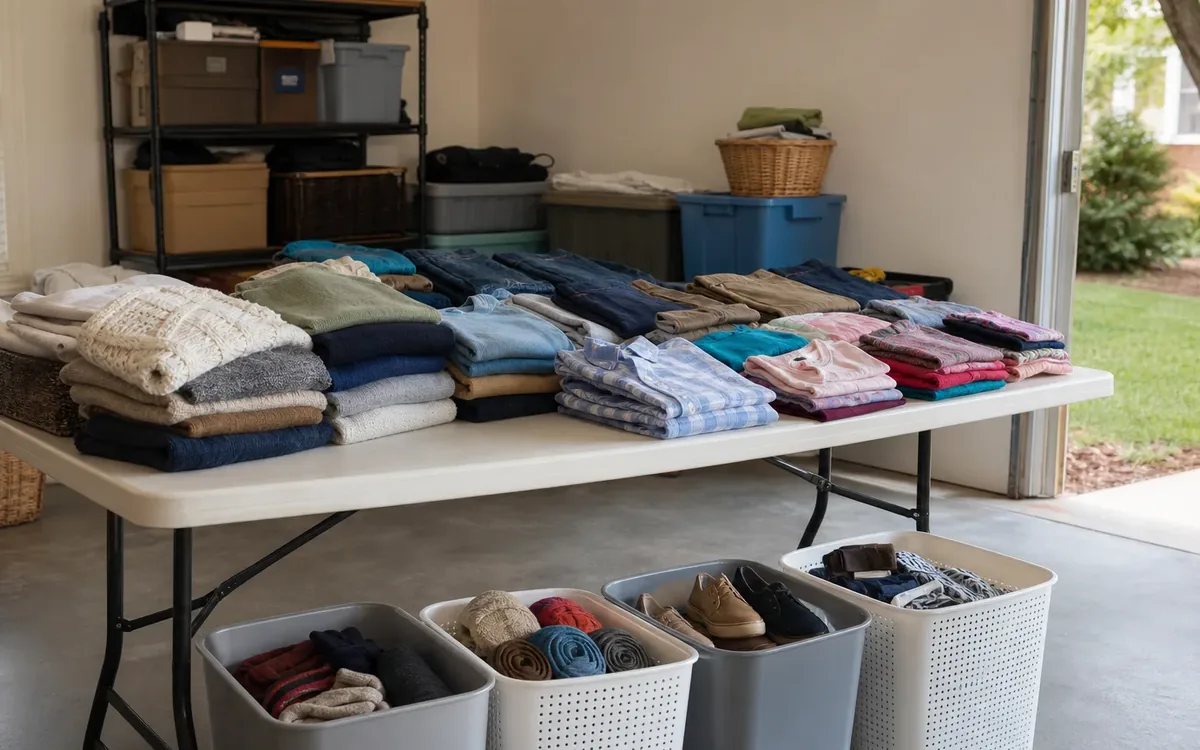
Group wearable items into practical categories:
- Adult tops, bottoms, dresses, and outerwear
- Children’s clothing
- Shoes paired and secured together
- Handbags, belts, scarves, hats, and gloves
- Professional or interview clothing
- Seasonal or specialty garments, if accepted
Items should generally be dry, reasonably clean, and usable as they are. Examine fabric for persistent odor, mildew, active pest evidence, heavy staining, brittle elastic, broken fasteners, missing soles, or extensive tears. A donation recipient decides what it accepts. The household should not assume that leaving questionable bags outside a charity transfers responsibility appropriately.
Do not conceal damaged material beneath good clothing. Label bags by category and keep an inventory if the estate representative needs one. Questions about tax deductibility, fair market value, documentation, or required forms belong with a qualified tax professional and the recipient organization. A cleanout team can discuss physical sorting and packing, but it does not determine tax value.
When might clothing or accessories need an appraisal?
Set aside an item for possible specialist review when there is a reasonable question about its identity, maker, materials, history, or market. Do not label it “valuable” before an appraiser examines it.
Potential review candidates may include:
- Designer garments and handbags with labels, serial details, receipts, or original packaging
- Fine jewelry, watches, precious-metal accessories, and mounted stones
- Historically significant uniforms or garments with documented provenance
- Rare vintage clothing in strong condition
- Handcrafted pieces connected to a known maker
- Fur garments, where ownership, sale, transport, or donation may raise specialized questions
- Collections of coordinated accessories or unworn items with tags
Keep supporting material with the item. Receipts, photographs, certificates, correspondence, original boxes, dust bags, and repair records may help a professional evaluate it. Avoid polishing jewelry, washing vintage garments, removing labels, repairing seams, or applying leather conditioner before receiving appropriate advice. Well-intended treatment can alter condition or remove useful evidence.
The household chooses whether to seek an appraisal and which qualified professional to hire. An appraiser determines value within the scope of that engagement. An auction professional or estate-sale provider separately decides whether an item fits a proposed sale and under what terms. These are not decisions a practical cleanout team should guarantee.
How does South Carolina humidity affect the sorting process?
Humidity can contribute to musty odors, mildew, metal corrosion, leather deterioration, and weakened cardboard storage. It does not automatically mean every stored garment is ruined. Inspect condition item by item and avoid mixing affected pieces with clean clothing.
If you find damp or suspect material:
- Stop packing it into sealed bags with unaffected items.
- Wear suitable personal protective equipment for the observed condition.
- Avoid vigorous shaking that could spread dust or particles.
- Keep wet boxes away from stable flooring and dry contents.
- Ask an appropriate remediation, textile-conservation, or environmental professional about significant contamination.
A contractor or inspector should evaluate building leaks, widespread mold, unsafe flooring, pest activity, or other property conditions within that professional’s scope. The owner or estate representative chooses whether to authorize repairs or remediation. A cleanout team may identify a visible concern and adjust handling, but it does not provide a legal clearance, environmental determination, property inspection, or guarantee that an item is safe.
Storage is also a separate decision. If the family wants more review time, the responsible person may choose an appropriate storage provider after considering security, climate control, access, insurance, and contract terms. Moving items into storage postpones disposition, so boxes should remain inventoried and clearly labeled.
What belongs in textile recovery, and what should be discarded?
Textile recovery is not the same as charitable donation. Some programs accept worn fabric, while others accept only specific fibers or household sources. Confirm the outlet’s rules directly before designating anything for that route.
Possible textile candidates might include clean but non-wearable cotton garments, unmatched fabric accessories, or damaged textiles accepted by the chosen program. Items with moisture, chemicals, biological contamination, active pests, or heavy mold may be prohibited and may require disposal under applicable local rules.
Keep separate streams for wearable donations, approved textile material, ordinary trash, and potentially regulated or hazardous material. Shoes, hangers, plastic garment covers, metal buckles, luggage, and electronics embedded in accessories may each have different disposal options.
The household or authorized estate representative approves disposal. The receiving facility or relevant authority determines its acceptance and compliance requirements. A practical cleanout team may discuss sorting, container labeling, loading access, and the destinations selected by the household, but disposal eligibility remains subject to the recipient and applicable rules.
Coordinating the clothing sort with the larger estate cleanout
Closet work should fit the estate’s overall decision sequence. If a property sale, inspection, repair project, or estate sale is pending, coordinate access so clothing does not block rooms or disappear before the appropriate person has reviewed it.
A useful handoff record includes:
- Category and container identifier
- Room or closet of origin
- Decision status
- Requested recipient or selected destination
- Unresolved appraisal, legal, or family question
- Name of the person who approved release
Clutter Cleaner of South Carolina, based in Mount Pleasant and serving households across South Carolina, may discuss practical estate cleanout, organizing, move management, auction or estate-sale coordination, and home-sale preparation needs within an agreed scope. The household still selects recipients and approves personal-property decisions.
Real-estate agents advise on listing strategy within their professional role. Inspectors report on property conditions within the inspection scope. Contractors propose and perform separately authorized work. Attorneys address legal authority and disputes. Appraisers evaluate property under their engagement. Government agencies and facilities determine code, disposal, or compliance requirements.
Short FAQ
Should clothing be washed before family review?
Usually, review it first. Washing may damage fragile fabric, alter vintage condition, remove identifying marks, or separate matching pieces. Ask a textile specialist about delicate or historically important garments. Ordinary donation items can be prepared according to the recipient’s guidelines after approval.
What should happen to unidentified jewelry found in a pocket?
Secure it, note where it was found, and notify the authorized estate representative. Do not place it into a donation box or decide ownership based on the garment alone. A qualified appraiser can address value, while legal ownership questions belong with the responsible representative or attorney.
Can empty hangers and garment bags stay with donated clothing?
Only if the recipient accepts them. Otherwise, sort hangers by material and choose an appropriate reuse or disposal route. Keep protective bags with appraisal or family-review garments when they help preserve sets or identifying information.
Who makes the final decision when relatives disagree?
The person with lawful authority must follow the applicable estate documents, agreements, and legal advice. A cleanout or move team can isolate, label, photograph, and protect an item while the question is resolved, but it should not decide who inherits it.
What is the most important final check?
Reopen every packed container before release and compare its label with the decision record. Confirm that family holds, appraisal items, documents, and valuables have not entered the donation or disposal stream. That last controlled review is the best safeguard against an irreversible mix-up.



