

Separate business property during an estate cleanout by identifying anything that may belong to an employer, business, client, or equipment provider, then holding it apart from household possessions until the appropriate representative reviews it. Being inside the home does not establish ownership. A desk may be personal, while the laptop on it, the documents inside it, and the accounts accessed through it may require separate decisions.
Quick answer: Create a business-review area, record identifying details without opening private files, and pause sale, donation, disposal, or data removal for uncertain items. Ask the estate’s authorized representative to coordinate with the employer, business representative, attorney, accountant, or other responsible professional as needed.
For South Carolina families clearing a home office, the goal is not to resolve every ownership question during sorting. It is to keep household belongings moving through the cleanout while preventing business assets and sensitive records from entering the wrong stream.
What counts as business property in a home office?
Business property can include more than computers and filing cabinets. A home may contain employer-issued equipment, assets purchased by a family-owned company, customer materials, rented devices, or inventory stored in a spare room or garage.
Start with visible clues rather than assumptions:
- Employer asset tags, shipping labels, or support stickers.
- Business names on invoices, folders, packaging, or equipment.
- Multiple identical products that could be inventory.
- Customer names attached to repairs, orders, or stored materials.
- Lease paperwork or rental-provider labels.
- Company credit cards, checks, keys, or access badges.
A business label is a reason to pause, not proof of ownership. Likewise, an unmarked item is not automatically personal. A privately purchased computer could contain company records, while an employer-owned screen could sit beside a household printer.
Keep those distinctions visible. Ownership of the physical object, access to its contents, and authority to transfer or dispose of it are separate questions. The household can flag the uncertainty; the responsible representative determines how to resolve it.

Set up a separation system before furniture moves
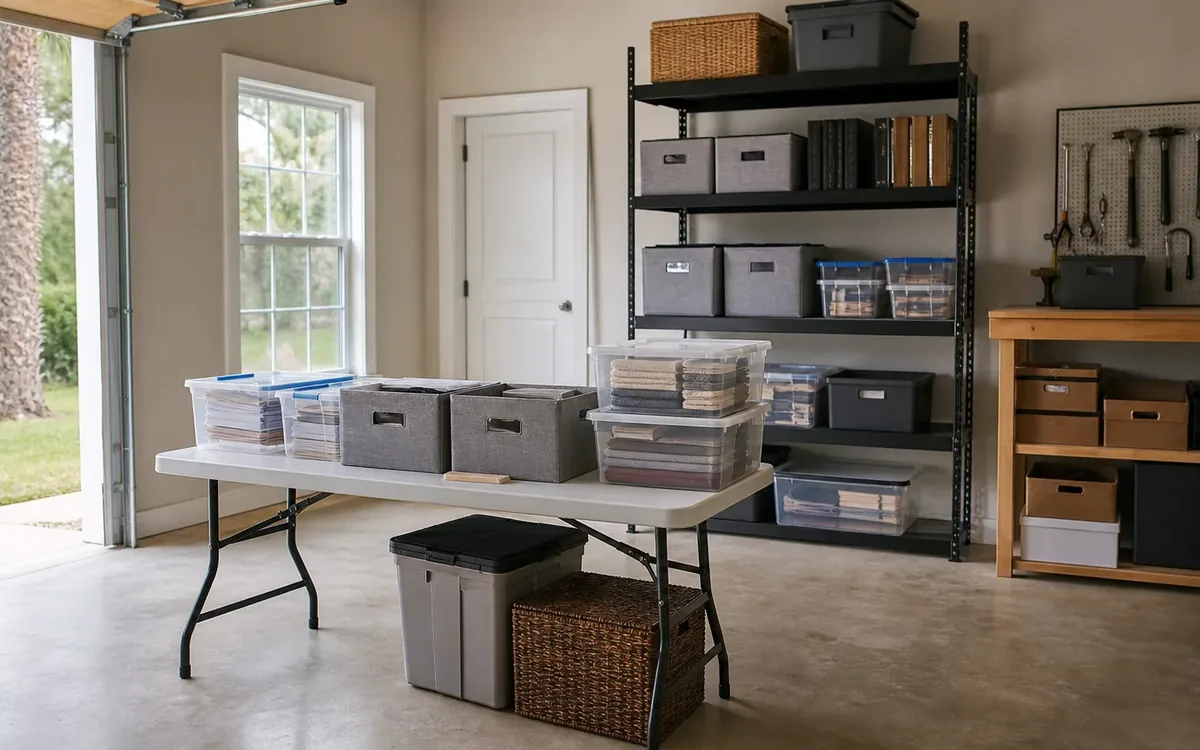
Establish clearly labeled areas before drawers are emptied or furniture is loaded. Use categories that describe what is known without making premature legal conclusions:
- Household sorting: Items the authorized representative has cleared for ordinary estate sorting.
- Business review: Equipment, supplies, or inventory with a possible business connection.
- Protected records: Paperwork and devices that may contain confidential information.
- Ownership unclear: Items that need more documentation or another person’s input.
Keep review items away from donation boxes and sale staging. If space is limited, labeled containers or an agreed room can provide a practical boundary. Avoid putting sensitive records somewhere accessible to buyers, visitors, or unrelated helpers.
An estate cleanout service discussion can address how these categories affect staging, access, and handling. The family should identify who can authorize movement and what must remain on hold. A cleanout team should not be expected to infer ownership from where an item sits.
For the broader process, the guide How Do Estate Cleanouts Work? offers context beyond business-property separation. This extra review category fits within that process without making every household item a business investigation.
Who should decide whether an item belongs to the estate?
The household can notice clues, create an inventory, and protect items from accidental removal. That does not mean every family member has authority to release employer equipment, sell business inventory, or destroy records.
The estate’s authorized representative should coordinate decisions within their authority and seek professional advice when ownership or access is unclear. Depending on the circumstances, the relevant contact may be:
- An employer’s designated equipment-return or human-resources contact.
- A business partner, manager, or authorized company representative.
- An attorney advising on estate administration or business ownership.
- An accountant reviewing business purchases and financial records.
- An equipment provider confirming a rental or lease arrangement.
Do not assume that a surviving relative owns a business asset simply because they inherit household possessions. Business structure, agreements, purchase records, and estate documents may affect the answer. Legal interpretations belong with the appropriate professional, not the sorting crew.
Choose a household coordination contact so helpers know where to send questions. That person can maintain the review list and communicate approved handling instructions, while leaving decisions outside their authority with the responsible representative.
Build an inventory that supports review without exposing data
A useful inventory records enough information to distinguish items without collecting unnecessary private details. Give each uncertain item or grouped set a simple reference label, then use that label on the container and review list.
For equipment, record:
- General description, brand, and model when visible.
- Serial number or asset tag, if accessible without dismantling.
- Room and location where it was found.
- Associated chargers, cables, cases, or keys.
- Visible ownership clues and the reason for the hold.
- Current storage location and review contact.
Photographs can show the object and its labels. Avoid photographing open screens, customer lists, financial details, or document contents unless an authorized reviewer specifically needs them and approves the method.
For files, a description such as “closed folders labeled payroll” is often more appropriate for the household inventory than a list of employee names. Keep any detailed record in a restricted location rather than a shared family sorting spreadsheet.
Record decisions as they arrive. “Released for household sorting by the authorized representative” communicates more than “probably personal.” Note the source of the instruction so the next helper does not need to revisit the same question.
How should you handle computers, phones, and business records?
Treat devices as both physical property and possible containers of protected information. Do not factory-reset, sell, donate, or discard a device merely because its hardware appears outdated or inexpensive.
A household can keep a device together with its power supply and flag it for review. Accessing accounts, copying files, removing management software, or wiping storage should wait for instructions from the appropriate authorized person or professional.
Practical precautions include:
- Leave locked devices locked rather than trying guessed passwords.
- Keep external drives, memory cards, and backup devices in the review category.
- Preserve attached asset tags and identifying labels.
- Avoid connecting unfamiliar drives to another computer.
- Do not send sensitive files through informal family group messages.
- Keep business paperwork out of recycling and donation containers.
The responsible representative may need advice about record retention, account access, privacy, or secure destruction. Those decisions can differ across employers, industries, and document types. A cleanout team may discuss physical handling, but it should not decide what must be retained or what may be erased.
If secure destruction or electronic disposal is authorized, the household or representative should choose a suitable separate provider and confirm the required process. Do not treat a cleanout booking as a guarantee of data destruction, electronics recycling, or business-record compliance.
Separate mixed-use rooms without losing household momentum
A home office often contains genuinely personal possessions alongside business materials. Family photographs, household bills, hobby supplies, and ordinary furniture do not all need the same review simply because they share a room.
Sort by function and uncertainty rather than clearing the entire room into a single pile. For example, approved personal books can move into household sorting while a tagged monitor and sealed client folders stay on hold.
Mixed drawers need particular care. Emptying them directly into bags can separate documents from equipment or hide important ownership clues. Use a tray or clear surface to review visible categories, then place uncertain contents in labeled containers.
Keep equipment sets together where practical. A docking station, specialized adapter, security token, or machine accessory may be needed for a return even if it looks like miscellaneous clutter.
The household can also decide which personal items it wants to keep, subject to the estate representative’s direction. That preference does not determine whether a business-connected object can be retained. Mark a requested keepsake separately from its ownership status so sentiment does not become an accidental release instruction.
Plan handoffs, sales, and disposal as separate decisions
Once ownership and authority are clarified, each item needs a destination. Employer equipment might be returned under the employer’s instructions. A business asset might remain with the business. An item confirmed as estate property may enter the ordinary keep, sale, donation, or disposal process.
For a handoff, ask the responsible parties to confirm:
- Which items and accessories are included.
- Who is authorized to receive them.
- Whether packing or handling instructions apply.
- Where the transfer will occur.
- What acknowledgment or receipt should be retained.
Do not place unresolved business property in an estate sale simply to reduce the volume in the house. Ownership clearance and valuation are different steps. When an appraisal is appropriate, an independent qualified appraiser or other suitable professional should address value; a cleanout inventory is not an appraisal.
Storage is another separate household or representative choice. If items must leave the home before review is complete, arrange an authorized destination and record the transfer. Temporary storage should preserve the hold status, not quietly convert it into permission to sell or discard.
Disposal decisions also need their own approval. Chemicals, specialty equipment, batteries, and regulated materials may require guidance from a suitable provider or relevant authority. Unknown substances should remain flagged rather than treated as ordinary household waste.
Coordinate property preparation without crossing professional boundaries
Business-property holds can affect how a room is cleared for a move or home sale. Tell the practical cleanout or move team which areas contain protected materials, which furniture is cleared, and who can approve changes.
The team may discuss access routes, staging boundaries, labeling, and the sequence for moving approved items. It can also help the household identify questions that need answers before a cabinet or workbench is moved. That logistical discussion does not settle ownership or authorize access to records.
If business equipment is attached to the building, separate removal planning from sorting. Contractor work, utility disconnection, inspections, and compliance determinations belong with the appropriate qualified provider or authority. A real-estate professional should advise on sale-related implications within their role.
Clutter Cleaner of South Carolina is physically based in Mount Pleasant, serves all of South Carolina, and has Charleston as its primary market. Families can discuss estate cleanout coordination at (843) 972-7020, including which items need to remain outside the approved removal scope.
Short FAQ
Can we donate an old employer laptop?
Not until ownership and release authority are confirmed. Age or condition does not establish permission to donate it. Data handling also requires a separate authorized decision.
What if nobody knows whether office furniture is personal?
Place it on hold and record any purchase clues. Ask the estate representative to coordinate review rather than relying on its location or appearance.
Should business papers be shredded during the cleanout?
Only after the responsible representative has approved destruction and resolved any retention questions. Arrange an appropriate separate provider if secure destruction is needed.
What if the house must be cleared before review is finished?
Discuss authorized storage or another controlled destination. Label the items, record what moves, and preserve the review hold until the proper person gives further instructions.



