
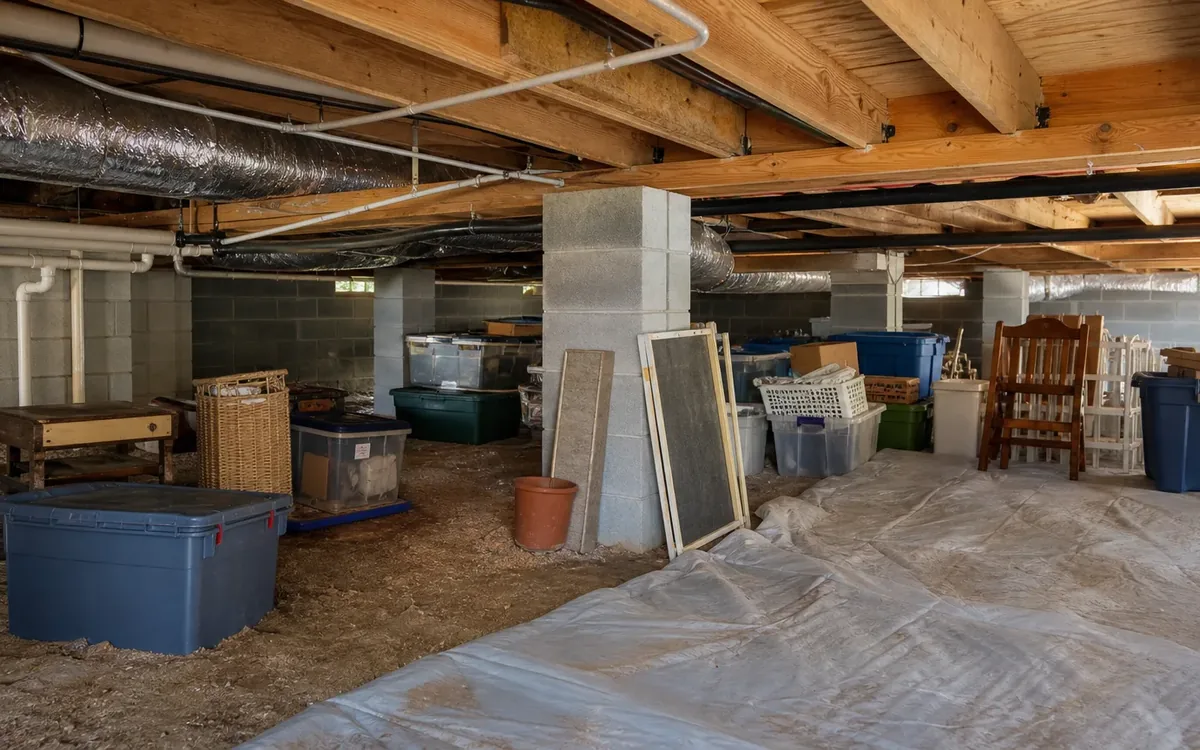
Before listing a raised or crawl-space home, remove stored belongings, loose debris, household chemicals, cardboard, textiles, and anything blocking entry or visibility. The goal is not to make technical judgments about the space. It is to let buyers, agents, inspectors, and qualified contractors see and reach the accessible areas without navigating around personal property.
Quick answer: Empty under-house storage as fully as practical, especially around the entrance, foundation elements, utilities, vents, pipes, and visible mechanical equipment. Keep uncertain materials undisturbed, document anything concerning, and refer moisture, pest, electrical, plumbing, structural, or environmental questions to the appropriate professional.
Many Lowcountry homes are raised or have crawl spaces and under-house storage. These areas often accumulate leftover building materials, lawn equipment, seasonal goods, and boxes that were placed out of sight. Clearing them before a sale helps distinguish removable clutter from conditions that require professional evaluation.
Why should under-house storage be cleared before listing?
An inspector needs reasonable access to visible parts of the structure and installed systems. Buyers may also want to understand whether the area is usable, dry, maintained, or restricted. Stored possessions can conceal conditions, limit movement, and create uncertainty even when the belongings themselves are harmless.
Clearing also reduces the chance that sale preparation will stall over items no one has claimed. A box of family papers, an old propane cylinder, and a stack of scrap lumber require very different decisions. Addressing them early allows the household to separate personal decisions from property-related questions.
The household can decide what to keep, donate, sell, transfer, recycle, or discard. A practical cleanout or move team may discuss sorting zones, safe working access, removal priorities, and coordination with other providers. The real-estate agent determines how the space fits the listing strategy, while an inspector or appropriately qualified contractor evaluates property conditions.
For broader help preparing possessions and rooms for market, review the home sale preparation service. If the property also contains belongings from an estate, the guide to how estate cleanouts work explains the larger decision process.
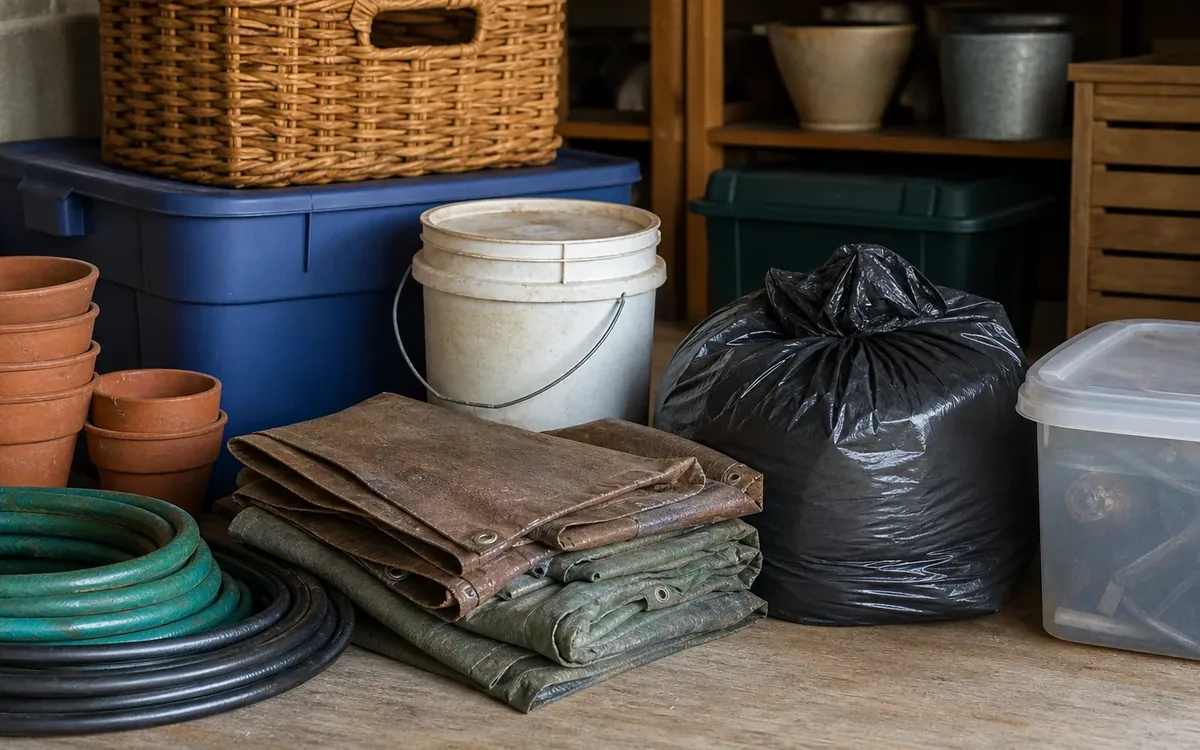
What should be removed first?
Start with items that block the entrance or prevent a clear view of accessible components. Do not crawl over unstable piles or force entry into a hazardous area merely to begin sorting.
Prioritize these categories:
- Boxes, bins, bags, and loose household belongings
- Cardboard, paper, fabric, rugs, and upholstered items
- Scrap wood that is not visibly part of the structure
- Empty containers and ordinary loose debris
- Stored furniture and unused shelving
- Lawn tools, hoses, pots, and garden supplies
- Bicycles, toys, coolers, and recreational equipment
- Leftover flooring, tile, fixtures, and removable renovation materials
- Unused appliances or portable equipment
- Items leaning against supports, walls, pipes, ducts, or equipment
Clear a practical route from the entry to areas a professional may need to observe. That can include visible foundation elements, plumbing lines, ductwork, vents, electrical components, and mechanical equipment. Do not move installed equipment or alter structural, drainage, insulation, or moisture-control components to improve the appearance.
Separate obvious personal property from anything that may belong with the house. Spare flooring, matching tile, equipment manuals, remotes, and replacement parts may be useful to a buyer. Ask the real-estate professional whether those materials should stay, be labeled, or be removed.
What requires special handling instead of ordinary disposal?
Some under-house items should not be placed automatically into a general discard pile. Product labels, local disposal rules, property ownership, and material condition all matter.
Set aside these items for a separate decision:
- Paint, stain, solvents, pesticides, fertilizers, fuels, and pool chemicals
- Propane cylinders, compressed-gas containers, and fuel cans
- Batteries, fluorescent lamps, electronics, and motor oil
- Ammunition, firearms, fireworks, or unknown sealed containers
- Medical sharps, medicines, and biological material
- Containers with missing or unreadable labels
- Material suspected to contain asbestos, lead, mold, sewage, or another hazard
- Animal remains, active nests, or substantial pest contamination
Do not open, combine, drain, burn, or test unidentified substances. Follow label instructions and current requirements from the relevant disposal facility or public authority. A cleanout team may identify an item that needs separate routing, but the accepting facility or responsible authority decides whether it can be received and under what conditions.
If building material appears deteriorated or suspicious, leave it undisturbed until a qualified professional advises how to proceed. Household members should not assume that insulation, old flooring, pipe wrap, panels, or coatings are harmless based on appearance alone.
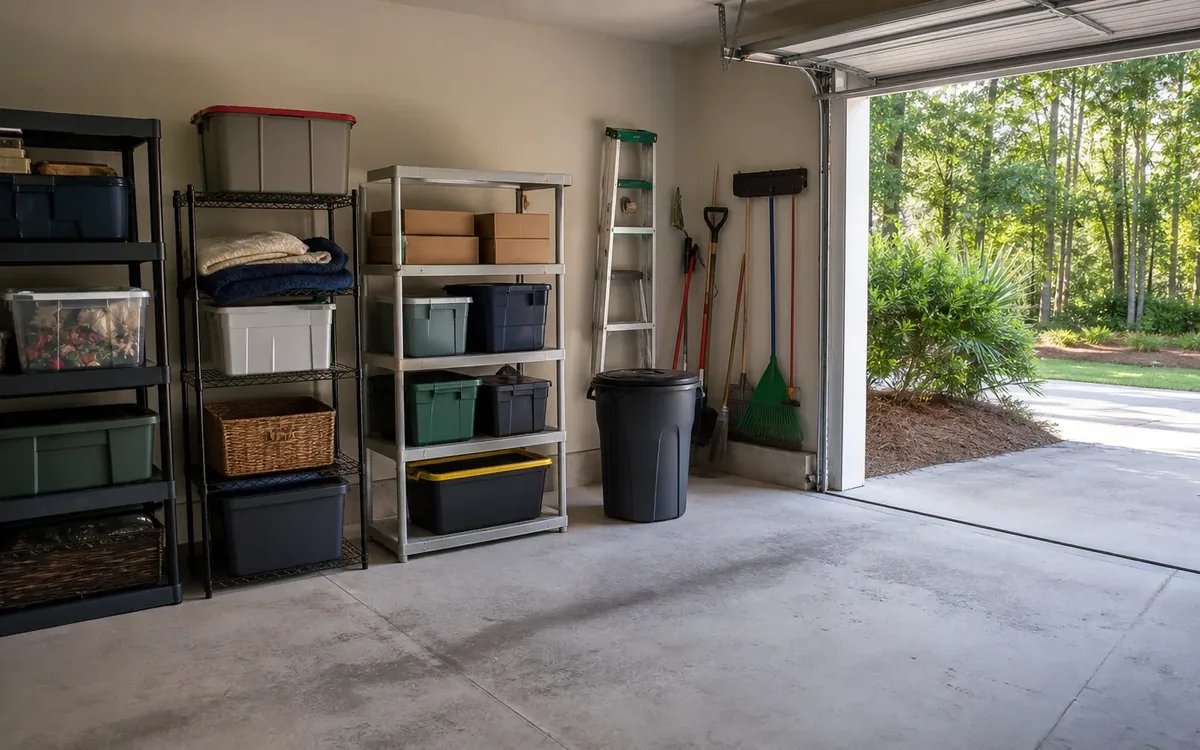
Should you keep anything under the house during showings?
An empty area usually offers the clearest access, but complete removal is not always a household’s preferred option. If items must remain, use a limited, orderly arrangement only after confirming that it will not obstruct inspection or conflict with the listing plan.
Consider keeping only belongings that are:
- Dry, clean, stable, and clearly owned by the household
- Appropriate for the conditions in that space
- Consolidated in sound, labeled containers
- Positioned away from visible components and access routes
- Easy to remove before closing if the sale requires it
Avoid presenting the space as suitable storage unless the responsible professionals agree that such a representation is accurate. A real-estate agent can advise on listing language. An inspector may report observed conditions and access limitations. Building, floodplain, zoning, fire, insurance, or other authorities may apply separate standards depending on the property.
Storage suitability is a household risk decision informed by those professionals. Plastic bins do not resolve moisture, pest, flood, electrical, or structural concerns. They only organize the possessions inside them.
How should moisture, pests, and damage be handled?
Treat visible concerns as property issues, not cleanout conclusions. Removing wet cardboard or a damaged chair may expose a stain, damaged insulation, standing water, droppings, wood deterioration, or corrosion. That discovery does not establish the cause or the required remedy.
Use this four-part response:
- Stop disturbing the affected area. Avoid spreading debris, spores, contaminated insulation, or pest material through the home.
- Record what is visible. Note the location and take clear photos if it is safe to do so. Do not dismantle building components for a better view.
- Notify the responsible parties. Tell the homeowner and, when appropriate, the real-estate professional coordinating the listing.
- Refer the condition. Use a licensed inspector, pest professional, plumber, electrician, engineer, moisture specialist, environmental professional, or qualified contractor suited to the question.
The household decides whether to authorize assessments and contractor work. An inspector or specialist determines the scope of an evaluation. A contractor proposes repairs within that provider’s qualifications. The real-estate professional handles listing and transaction strategy, while disclosure and legal questions belong with the appropriate attorney or other responsible professional.
A cleanout or move team can discuss removing accessible belongings around an affected area once it is safe and permitted. It should not diagnose mold, certify a crawl space as dry, identify structural failure, declare pests eliminated, or promise that a condition satisfies inspection or transaction requirements.
Build a sorting plan around access, not appearance
Crawl-space preparation differs from decluttering a bedroom. The main objective is functional visibility and access, not decorative presentation. Establish sorting zones outside the confined area whenever possible so decisions are not made while kneeling near utilities or moving through a narrow opening.
Useful categories include:
- Keep and relocate: Personal items moving to the next home
- Keep with property: Clearly identified materials or accessories that may transfer with the house, subject to transaction decisions
- Sell or appraise: Objects whose value is uncertain or significant enough to justify specialist advice
- Donate: Usable items accepted by the chosen organization
- Recycle: Materials accepted under current facility rules
- Special handling: Chemicals, fuel, batteries, unknown substances, or suspect materials
- Ordinary disposal: Nonhazardous items with no reuse or recycling path
Appraisal is separate from cleanout work. The household chooses whether to seek an appraiser, auction professional, dealer, or other valuation provider. That specialist determines value within the scope of the engagement. Do not discard old tools, architectural pieces, collectibles, or family property merely because they are dirty or stored in an inconvenient place.
If ownership is disputed, an estate is unsettled, or another party may have rights to the contents, pause removal. An executor, personal representative, attorney, court, or other responsible authority may need to decide what can be transferred or discarded.
Coordinate cleanout decisions with the inspection plan
Ask the real-estate professional whether an inspection, contractor visit, photography appointment, or buyer access is expected. The answer can shape which areas need to be cleared first, but it does not replace technical guidance.
A practical coordination sequence is:
- Identify who has authority to make decisions about the belongings.
- Ask the agent which access points and visible areas should remain unobstructed.
- Sort ordinary possessions outside the crawl space or under-house area.
- Isolate items requiring special disposal, valuation, or ownership review.
- Report visible property concerns without attempting to diagnose them.
- Let qualified professionals assess conditions and recommend any work.
- Recheck the area for overlooked personal property before listing access begins.
If repairs are proposed, keep contractor work separate from the belongings plan. Contractors decide their own work scope, methods, permits, and site requirements. Inspectors report within their professional scope. Government authorities determine code or compliance requirements. The homeowner chooses which proposals to authorize, subject to contracts, laws, transaction obligations, and professional advice.
Clutter Cleaner of South Carolina is based in Mount Pleasant, with Charleston as its primary market and service territory across South Carolina. A discussion about home sale preparation may cover sorting, organizing, move coordination, and removal priorities. Availability, accepted materials, site conditions, and the exact scope should be confirmed directly at (843) 972-7020.
Protect people and the property while clearing
Under-house areas can contain low clearances, poor footing, exposed fasteners, animals, electrical components, and contaminated material. Do not treat access as safe simply because previous owners used the area for storage.
Before moving belongings:
- Confirm that the entrance and route are stable and accessible
- Keep children and pets away from the work area
- Use lighting without altering installed wiring
- Avoid contact with exposed conductors or damaged electrical equipment
- Do not cut, detach, or shift pipes, ducts, insulation, supports, or barriers
- Do not block vents, drains, access panels, or mechanical equipment
- Stop if there is standing water, strong chemical odor, active pests, sewage, unstable material, or another apparent hazard
Personal protective equipment may reduce some exposure, but it does not make a hazardous environment safe. The appropriate professional should evaluate unsafe conditions and determine what preparation or remediation is necessary before possessions are removed.
Take care with the house itself. Dragging metal shelves past pipes, stacking bins against ductwork, or using structural elements as hanging points can cause damage. When an object is too heavy, awkward, contaminated, or entangled with building components, leave it for a properly equipped provider.
Do a final visibility check before listing
Once ordinary belongings are out, view the area from the entrance and any safely accessible route. The goal is to identify remaining possessions and obstructions, not to conduct a property inspection.
Check for:
- Small containers hidden behind supports or equipment
- Papers, labels, or identifying documents
- Tools or materials resting on pipes and ducts
- Extension cords connected to stored portable equipment
- Loose trash near vents or access openings
- Items attached to the house that have not been classified
- Chemicals or fuels separated earlier but not yet routed
- Belongings that another household member intended to keep
Photograph the cleared area for household records if it is safe. Then let the real-estate professional decide whether additional presentation changes are useful. Let inspectors and qualified contractors identify conditions, causes, and corrective work. A clean-looking space is not proof that it is dry, structurally sound, pest-free, code-compliant, or ready for a particular use.
Short FAQ
Can boxes remain if they are neatly stacked?
They can still restrict visibility, movement, and access. Ask the real-estate professional about the listing plan and keep inspection routes and visible components unobstructed. Relocating the boxes is generally clearer than rearranging them under the house.
Should vapor barriers or insulation be removed during cleanout?
Not as ordinary clutter. These may be installed building components or part of a moisture-control system. An inspector or qualified contractor should determine their condition and whether alteration is appropriate.
Who decides whether an item has value?
The owner or legally authorized decision-maker chooses whether to pursue valuation. An appraiser, auction professional, dealer, or relevant specialist assesses value within that provider’s field. A cleanout team can separate items for review but should not make binding appraisal decisions.
What if the area contains standing water or strong odors?
Stop work and restrict access. Contact the property owner and an appropriately qualified inspector, contractor, environmental professional, utility, or public authority based on the apparent issue. Do not assume that removing possessions resolves the source.
Does clearing the crawl space guarantee a successful inspection?
No. Clearing improves access and visibility, but the inspector determines findings within the inspection scope. Repairs, disclosures, code questions, negotiations, and legal obligations remain with the relevant professionals, authorities, and transaction parties.



