
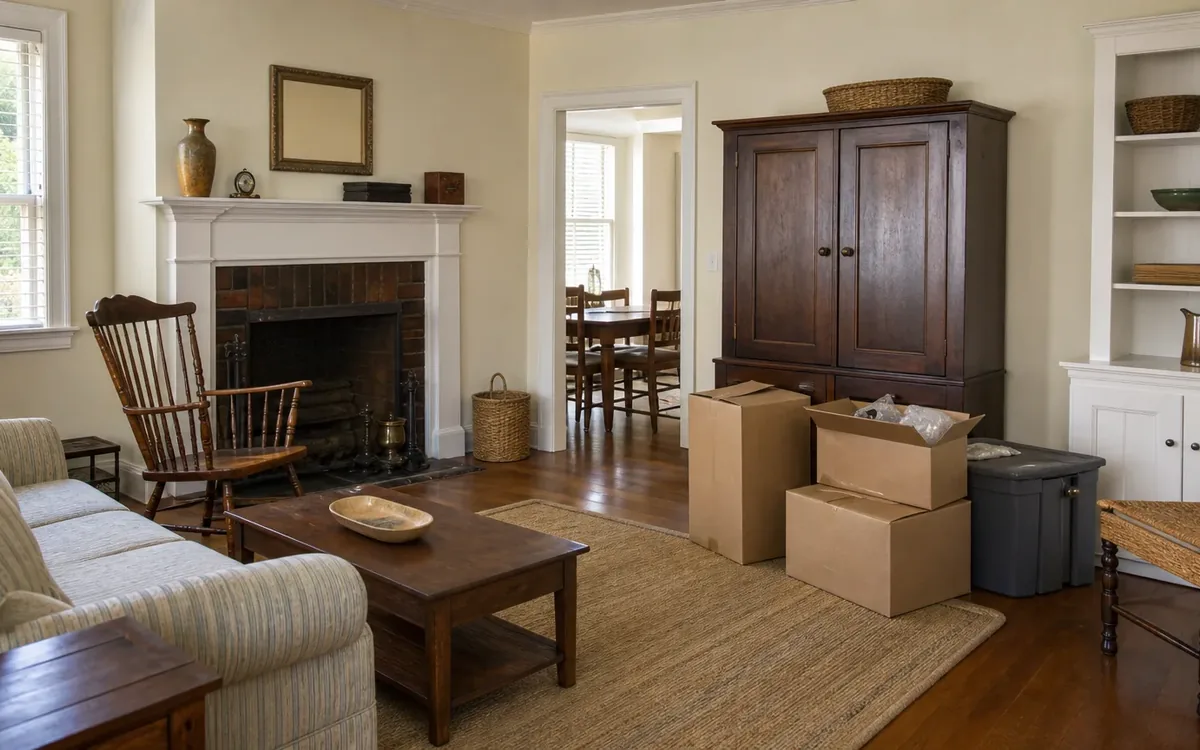
You can coordinate a South Carolina estate cleanout from out of state by confirming who has authority over the property, naming one decision contact, arranging authorized access, and requiring written approval before belongings leave the home. The key is a remote decision-making workflow, not simply finding someone to open the door. Each person involved should know what they may decide, what needs family approval, and what must wait for a responsible professional.
Quick answer:
- Confirm property and estate authority before arranging entry or removal.
- Name a primary contact and a backup with clearly defined responsibilities.
- Separate protected belongings from items approved for removal.
- Agree on how questions, photographs, and written approvals will be exchanged.
- Coordinate local appointments without assuming one provider handles every task.
- Require a closing summary that identifies completed work and unresolved items.
Clutter Cleaner of South Carolina is physically based in Mount Pleasant, with Charleston as its primary market and a service territory covering all of South Carolina. Its estate cleanout and related transition services can be discussed in the context of your property, access arrangements, and decision needs. Confirm the actual scope rather than assuming remote oversight, storage, repairs, or document handling are included.
Who can authorize access and removal when you live out of state?
Being a relative, holding a key, or paying a bill does not necessarily establish authority to direct an estate cleanout. Before scheduling work, identify the person legally entitled to authorize entry and make decisions about the property and its contents.
If authority is uncertain, ask the estate attorney or appropriate court office what documentation or process applies. A cleanout team should not be expected to interpret a will, resolve ownership disputes, or decide whether an executor, beneficiary, or other relative has controlling authority.
Keep legal authority separate from everyday coordination. The authorized person may appoint a family member to gather information and arrange appointments, while retaining approval over removal decisions. Confirm any delegation with the responsible legal professional when necessary.
Create a contact sheet containing:
- The person authorized to direct work.
- The primary coordinator and backup contact.
- The approved local access contact, if there is one.
- Relevant provider contacts and their assigned responsibilities.
- Matters that must be referred to the attorney or another professional.
For a broader explanation of the process, the guide How Do Estate Cleanouts Work? can help you frame the initial conversation. Your remote plan should then add explicit access permissions and approval checkpoints.

Set up one decision channel, not a family-wide message chain
Remote projects become difficult when several relatives send conflicting instructions. Use one primary channel for work decisions, with a backup method for urgent access or security questions. Choose a format that the authorized contact and participating providers can reliably use.
Family discussion can happen elsewhere. The designated coordinator should send the final instruction after the authorized decision-maker has approved it. This prevents a casual family comment from being mistaken for permission to remove something.
A shared decision log is useful even if it is just a document or spreadsheet. Include the item or area, the question, the person responsible for deciding, the decision, and any restrictions.
Use unambiguous wording. “Remove the empty shelving in the detached garage” is clearer than “clear out the garage.” If photographs are available, connect the instruction to a labeled image rather than relying on memory.
Discuss these communication expectations before work begins:
- Which decisions require written approval.
- Whether photographs or a video conversation are practical.
- Who receives questions when the primary contact is unavailable.
- What happens if an answer is not received.
- Where final decisions will be recorded.
For removal questions, the safest default is to pause the uncertain item, not guess. Agree on whether other approved work can continue while that question remains open.
How do you arrange authorized property access remotely?
Access needs its own plan. Identify who controls the keys, who may enter, and whether the home has an alarm, gate, shared driveway, building rules, or an occupied area that affects entry.
Do not put alarm codes, key locations, or detailed security instructions into a broadly shared family document. Send sensitive information only to the people who need it, using a method everyone agrees is appropriate.
A practical cleanout team may discuss entry arrangements, parking, room access, stairs, and other conditions that affect the agreed work. The household or authorized representative remains responsible for granting permission and identifying restrictions. Property managers or associations may control additional access requirements.
Your access instructions should address:
- Who is permitted to unlock and secure the property.
- Which rooms, buildings, or storage areas are included.
- Areas that must remain closed or untouched.
- How arrival and departure will be confirmed.
- Who to contact about a lock, alarm, or unexpected occupant.
If you want a neighbor or relative to provide access, confirm their willingness rather than treating their availability as automatic. Specify whether they are only opening the door or also authorized to answer questions.
Discuss the property’s access needs and proposed scope through Clutter Cleaner of South Carolina’s estate cleanout services. Ask which arrangements are workable for the property rather than assuming a particular access or reporting method is available.

Build approval checkpoints around irreversible decisions
The most important checkpoints occur before something changes ownership, leaves the property, or becomes difficult to recover. Arrange approvals around those moments rather than requesting updates that do not lead to a decision.
Use three checkpoints for the remote workflow:
- Before work begins: Confirm authority, access, scope, protected areas, and the approved categories of work.
- Before belongings leave: Confirm which items may be removed and which require retention, further review, or another provider’s involvement.
- Before closing the project: Review completed areas, remaining belongings, unresolved questions, and the property’s access status.
At the first checkpoint, label protected categories clearly. These might include family photographs, personal records, jewelry, named gifts, or belongings claimed by someone whose ownership still needs verification.
At the removal checkpoint, avoid blanket permission for mixed spaces. A cupboard might contain both ordinary household supplies and important papers. Ask how uncertain items will be separated and presented for review within the agreed scope.
At the closing checkpoint, distinguish “approved work completed” from “property ready for sale.” Sale readiness may depend on inspections, repairs, disclosures, or other decisions outside the cleanout team’s role.
What should happen when nobody can identify an item?
Uncertainty is normal in an inherited home. A remote coordinator may not recognize a tool, photograph, collection, or box of documents from an image. Build a hold process so uncertainty does not become accidental disposal.
Agree on a place for items awaiting review, if suitable space exists. Label them by room or discovery location. Keep the description factual: “sealed envelope from desk drawer” is more useful than an unsupported assumption about its importance.
The household can decide whether ordinary belongings should be retained, offered to relatives, or considered for removal, subject to estate authority. Disputed ownership and legal records should go to the responsible legal professional. Possible valuables can be referred to an appropriate appraiser before a disposition decision.
A hold list can separate unresolved items into:
- Family identification needed.
- Ownership or estate authority unclear.
- Possible appraisal needed.
- Sensitive documents requiring review.
- Special handling or disposal questions.
Do not assume a cleanout provider can value collectibles, evaluate legal documents, or accept every material. Ask what can be handled within the proposed scope and what needs a separate provider.
If storage is necessary, treat it as a separate household choice. Confirm the storage provider, access arrangements, transport responsibility, and who will decide what eventually happens to the stored belongings.
Coordinate local appointments without mixing responsibilities
An out-of-state cleanout may overlap with an appraisal, real-estate consultation, inspection, contractor visit, or utility appointment. Coordination helps, but these tasks should not be blended into one undefined assignment.
Create an appointment record that states who is coming, why they need access, who approved the visit, and whether anyone must be present. Identify dependencies. For example, an appraiser may need to review selected belongings before they are moved, while a contractor may need an area made accessible before assessing work.
Keep responsibility clear:
- Household or authorized representative: Sets priorities and approves permitted decisions.
- Cleanout or move team: Discusses practical scope, handling, access, and coordination within its agreement.
- Appraiser: Provides valuation within the appraiser’s assignment.
- Real-estate professional: Advises on listing strategy, presentation, and sale-related needs.
- Inspector or contractor: Evaluates conditions or proposes work within their role.
- Attorney or responsible authority: Addresses legal authority, disputes, and applicable requirements.
Clutter Cleaner offers home sale preparation and code compliance support among its services. Those service descriptions do not transfer legal, inspection, permitting, or enforcement decisions to the company. Confirm the specific support proposed and retain the appropriate professional or authority for determinations.
Repairs, storage, and specialized disposal also need their own scope and authorization. Do not assume they are included because they affect the same property.
Keep remote records useful and protect private information
Remote documentation should help you make decisions without exposing unnecessary personal information. Ask whether photographs, written summaries, or other records can be provided, and agree on their purpose before work starts.
Useful photographs show the relevant item or area clearly enough to support a decision. Avoid distributing images of financial records, identification documents, or private correspondence to a large family group.
Keep a project folder with:
- Approved scope and access instructions.
- The contact sheet and decision log.
- Item decisions and any available supporting photographs.
- Appointment records and separate provider agreements.
- Closing notes and unresolved matters.
Record changes in scope explicitly. If the family adds an attic or excludes a bedroom, make sure the authorized contact and provider acknowledge the change.
An unanswered message is not approval. Make that rule clear so silence cannot accidentally authorize removal or a change in scope.
Close the cleanout with a clear handoff
Before calling the project complete, compare the agreed scope with the closing information. Identify areas addressed, belongings intentionally retained, and anything awaiting a family or professional decision.
Confirm who now controls keys or other access credentials. If access permissions need changing, the authorized representative should arrange that with the appropriate person or provider.
The closing record should make the next step obvious. An unresolved appraisal, contractor assessment, or document review belongs with a named contact rather than a vague note to “handle later.”
To discuss an out-of-state estate cleanout anywhere in South Carolina, contact Clutter Cleaner of South Carolina at (843) 972-7020. Have the property location, authorized contact, access situation, and major decision constraints ready so the conversation can focus on a workable scope.
Short FAQ
Do I have to travel to South Carolina?
Not necessarily. Whether remote coordination is practical depends on authorized access, clear approvals, and the proposed scope. Confirm what can be arranged before deciding whether travel is needed.
Can a local relative approve changes for me?
Only within the authority granted to them. Define their role in writing, and consult the estate attorney if legal authority or delegation is uncertain.
What if family members disagree about belongings?
Keep disputed items out of the approved removal scope. Refer ownership or estate disputes to the responsible legal professional rather than asking the cleanout team to choose.
Does a cleanout mean the house is ready to sell?
No. A cleanout addresses its agreed scope. Sale preparation, repairs, inspections, disclosures, and legal requirements may need separate decisions and professionals.



