
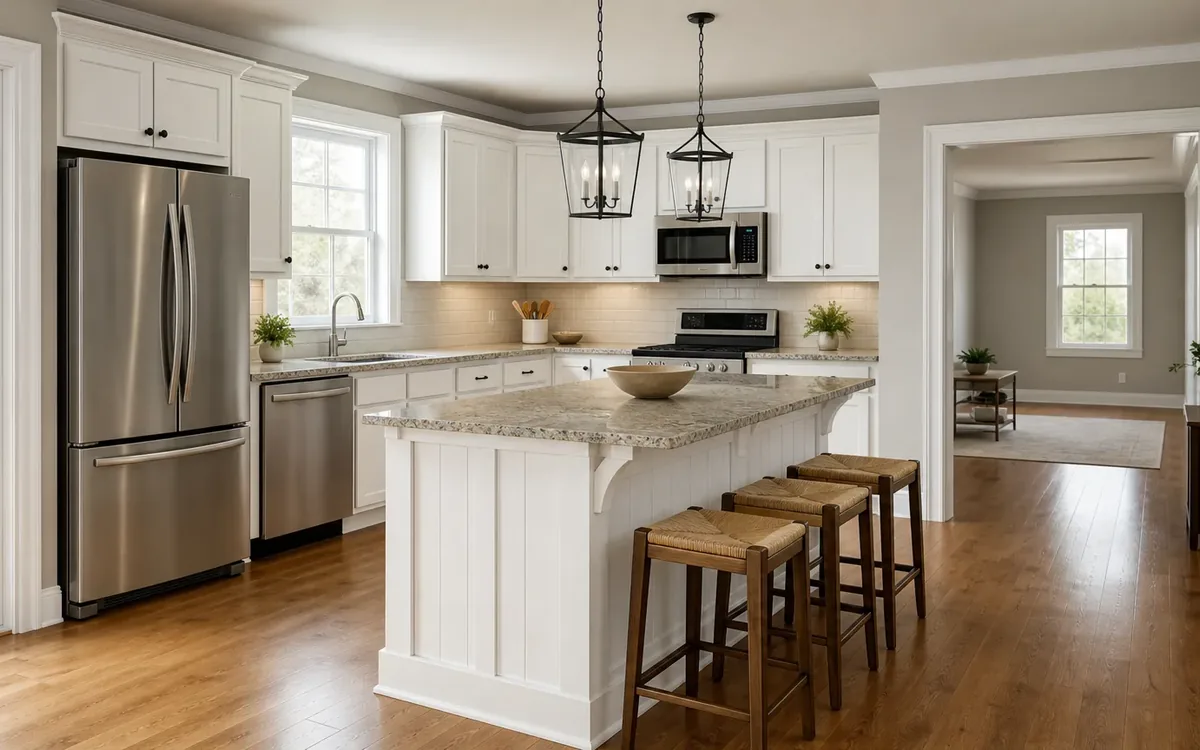
Clearing a kitchen before listing means reducing what buyers see without making the room unusable for the seller. Keep only a few intentional items on counters, create visible space inside cabinets and the pantry, and place daily-use supplies in easy-to-store containers. The goal is not to downsize the entire kitchen. It is to help buyers touring a South Carolina home see storage, surfaces, and condition while the household can still cook and clean.
Quick answer: Clear most countertop appliances, papers, food packages, and cleaning products. Thin crowded cabinets and pantry shelves, but do not empty them. Group everyday items in portable bins that can be put away before a showing and brought back afterward. Leave appraisal, repair, inspection, disclosure, and compliance decisions to the appropriate professionals.
Why do kitchen counters and cabinets matter during a showing?
The kitchen is both a work area and a major part of how buyers evaluate a home. Open countertop space makes the room easier to understand. Less crowded storage helps buyers see shelf depth, cabinet layout, pantry capacity, and the physical condition of those areas.
Buyers may open cabinets, drawers, and pantries during a tour. That makes hidden clutter relevant. A clear counter paired with packed shelves can suggest that the kitchen lacks storage, even when the real issue is simply too many items in active use.
Preparation should therefore cover three visible layers:
- Counters: Appliances, papers, dishes, décor, and food left in view
- Working storage: Cabinets and drawers used every day
- Reserve storage: Pantry shelves, upper cabinets, and areas holding duplicate or occasional items
This is presentation work, not a property valuation. The household decides what it needs to keep accessible. A real-estate professional can advise how the kitchen should be presented for its target market. An appraiser determines value, and an inspector evaluates relevant property conditions within the scope of the inspection.
For broader sale-readiness planning beyond the kitchen, review the home sale preparation service. If the kitchen project is connected to inherited property or a larger household transition, the guide to the best way to clean out an estate explains how to separate decisions before removing belongings.
What should stay on the kitchen counters?
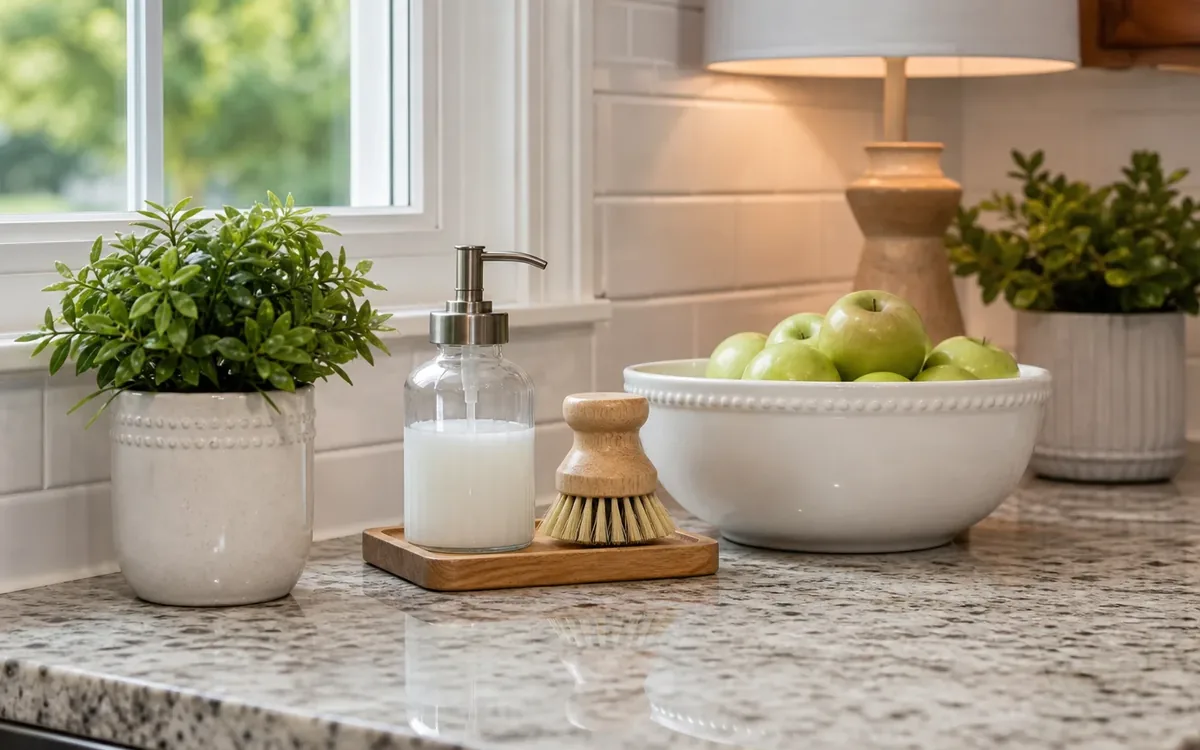
Keep items that either support daily life or make the counter look deliberate. A useful standard is to preserve clear work areas rather than trying to make every surface completely bare.
Reasonable items to leave out may include:
- One frequently used coffee maker or kettle
- A simple fruit bowl with fresh contents
- A compact utensil holder, if it is not crowded
- One restrained decorative item
- Hand soap near the sink
- A clean drying solution only when needed
Remove or store visual distractions such as:
- Mail, school papers, receipts, and calendars
- Medicine, vitamins, and personal information
- Multiple small appliances
- Dish racks full of dishes
- Bulk food packages and snack boxes
- Bottles clustered around the sink
- Magnets, notes, and takeout menus covering the refrigerator
- Pet food, bowls, leashes, and medication when practical
- Cleaning sprays, sponges, and extra towels
Do not relocate countertop clutter into the nearest cabinet without sorting it. Buyers may open that cabinet, and tightly packed storage can undermine the effect of a clear surface.
Instead, assign each removed item to one of four destinations: daily-use storage, temporary off-site storage, donation or sale consideration, or disposal. Storage arrangements, resale choices, and disposal providers remain separate household decisions unless specifically discussed with an appropriate provider.
How much should you remove from cabinets and the pantry?
Remove enough to make shelves easy to view and access. There is no universal percentage that fits every kitchen. Cabinet dimensions, household size, and the seller’s daily needs vary too much for a fixed formula.
Look for functional signs that an area needs thinning:
- Items fall forward when a door opens
- Products are stacked in unstable piles
- The back or sides of shelves cannot be seen
- Several duplicates occupy prime space
- Rarely used items block everyday supplies
- Food is expired, damaged, or unidentified
- Shelf liners or cabinet surfaces cannot be inspected visually
- Doors or drawers do not close freely
Start with the easiest reductions. Remove expired food, empty containers, broken utensils, unmatched lids, and packaging that no longer serves a purpose. Then move seasonal cookware, party supplies, duplicate appliances, and bulk inventory out of prime kitchen storage.
Avoid making cabinets look artificially vacant. A small amount of neatly arranged cookware, tableware, or pantry food helps buyers understand the function and scale of the space. The target is orderly capacity, not emptiness.
Group similar pantry products together. Keep labels facing outward where practical, contain loose packets, and place heavier goods on stable shelves. Do not hide leaking food, pest evidence, moisture staining, damaged shelving, or other possible defects. Questions about disclosure belong with the seller’s real-estate professional or attorney, while pest, moisture, electrical, plumbing, or structural concerns should be evaluated by qualified specialists.
How can an occupied seller keep the kitchen usable?
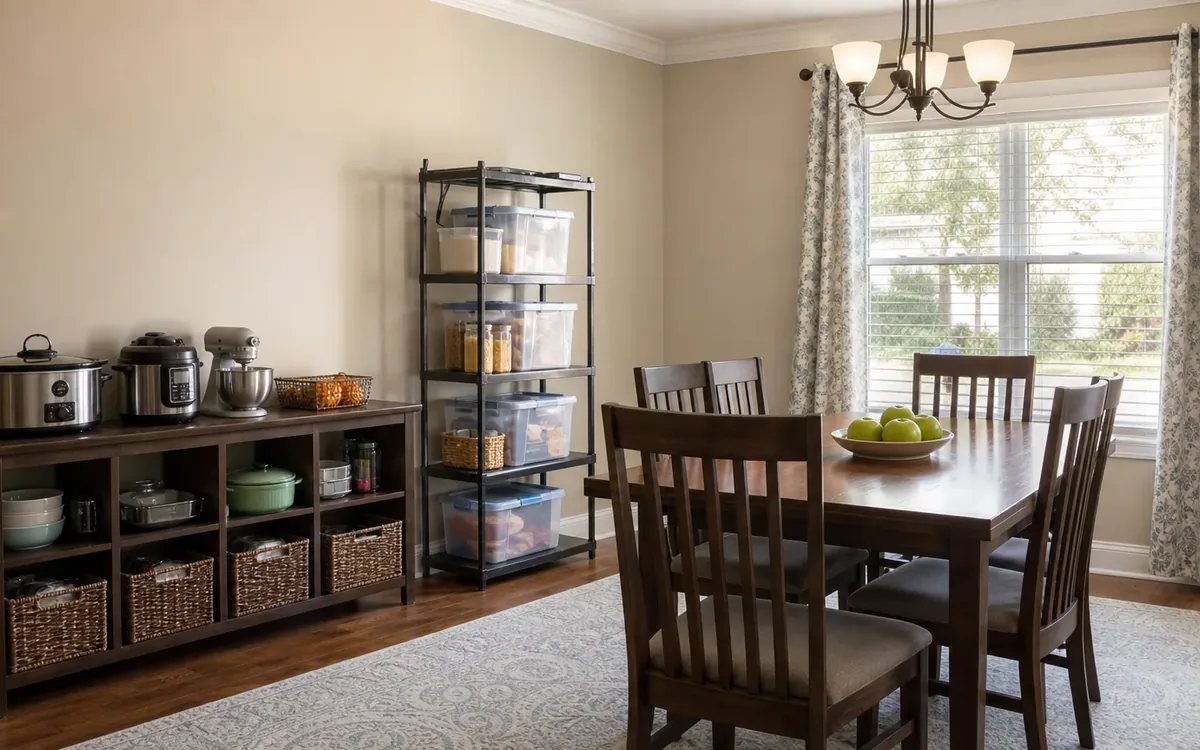
The best system separates daily operation from showing presentation. Instead of repeatedly sorting loose objects, create portable groups that can be put away with little disruption.
Use five functional categories:
- Morning items: Coffee, tea, filters, mugs, and breakfast supplies
- Meal preparation: Oils, seasonings, knives, and frequently used tools
- Cleanup: Dish soap, brushes, dishwasher products, and towels
- Household administration: Mail, chargers, keys, and school materials
- Pet care: Food, treats, medicine, bowls, and cleanup supplies
Place each category in a small bin, handled basket, drawer, or dedicated cabinet zone. Before a showing, the household can return each group to its assigned location instead of scattering objects among unrelated cupboards.
Choose locations that do not create a new problem. A basket of papers should not be pushed into an oven, dishwasher, clothes dryer, or another appliance. Appliances may be opened or operated by the seller, an inspector, or another authorized person. Storing loose belongings inside them can create safety risks and forgotten clutter.
If the home remains occupied, keep enough cookware and tableware for normal routines. Pack reserve quantities instead of daily essentials. The household should decide what it realistically uses rather than adopting a staged look that cannot be maintained.
Build a showing-ready reset routine
A reset routine should focus on restoring the same agreed condition each time, not achieving perfection. Write the routine around the household’s habits and assign responsibility for personal items, dishes, food, pets, and waste.
A practical reset can cover these seven actions:
- Put papers, keys, chargers, and medication in their assigned containers.
- Wash or load dishes and clear the sink.
- Return portable daily-use bins to designated storage.
- Wipe counters, the sink edge, appliance fronts, and cabinet pulls.
- Remove food scraps and manage household waste appropriately.
- Check the pantry and visible cabinets for fallen or protruding items.
- Scan the refrigerator exterior, floor, and eating area for visual clutter.
Keep the routine specific to the kitchen. Whole-home preparation, repair coordination, exterior cleanup, and moving tasks should have separate plans so they do not overwhelm this reset.
If children, older adults, or household members with disabilities use the kitchen, do not compromise accessibility for appearance. Keep necessary equipment within safe reach. Discuss any presentation concern with the listing professional rather than moving essential items into unsafe or inconvenient locations.
Sort cabinets by use, not by sentiment
A listing-focused kitchen sort is narrower than a move or downsizing project. The immediate question is whether an item needs to remain in active kitchen storage while the property is shown.
Use these categories:
- Use now: Needed routinely and suitable for organized cabinet storage
- Pack for later: Wanted, but not needed during the listing period
- Decide elsewhere: Valuable, sentimental, shared, or disputed items
- Release: Items the household has chosen to donate, sell, recycle, or discard
The “decide elsewhere” category prevents a kitchen project from stalling over inherited dishes, collectibles, or family property. Move those objects to a secure decision area rather than making rushed choices at the counter.
If an item may have meaningful monetary value, seek an appropriate appraisal before sale or disposal. A cleanout or move team may discuss sorting, packing, organizing, removal logistics, or coordination needs within an agreed scope. It should not replace a qualified personal-property appraiser, attorney, real-estate professional, inspector, contractor, or government authority.
Likewise, the household decides whether belongings go into self-storage, portable storage, a relative’s home, or another location. Review access, insurance, security, climate needs, and contract terms directly with the storage provider. Temporary storage is not automatically the best choice for every item.
Do not let decluttering conceal maintenance concerns
Clearing a cabinet can reveal loose hinges, damaged shelves, plumbing stains, pest activity, or deteriorated finishes. Do not cover these areas with shelf paper, bins, or carefully arranged goods merely to keep them out of sight.
Record the concern and route it appropriately:
- Ask the listing agent how visible condition may affect presentation.
- Ask an attorney or real-estate professional about disclosure questions.
- Use a qualified contractor or trade professional to assess repair work.
- Let a licensed inspector address issues within the inspection’s scope.
- Contact the responsible authority about applicable compliance requirements.
The household can authorize cleaning, organizing, packing, or removal. It can also decide whether to request estimates from independent contractors. The household should not treat a cleaner’s observation as a diagnosis or assume that moving possessions resolves an underlying condition.
Before discarding chemicals, paint, fuel, batteries, medication, or other regulated materials found in kitchen storage, check current instructions from the responsible local or state authority. Disposal rules and available facilities may vary by material and jurisdiction.
What can a practical cleanout or move team discuss?
When the kitchen is part of a broader sale transition, a practical team may discuss the physical work needed to make decisions manageable. Depending on the provider and agreed scope, that conversation may cover:
- Sorting zones and household priorities
- Packing items that will not be used during showings
- Organizing the kitchen’s active-use contents
- Separating selected donations, sale items, recycling, and waste
- Planning removal logistics
- Coordinating kitchen work with other home-sale preparation tasks
- Protecting clearly labeled belongings from accidental removal
Clutter Cleaner of South Carolina is based in Mount Pleasant, with Charleston as its primary market and a service territory covering South Carolina. Its listed services include home sale preparation, move management, downsizing and organizing, estate cleanouts, auctions and estate sales, and code compliance support. The exact scope for a property should be discussed directly rather than assumed.
A cleanout or move team does not decide what must legally be disclosed, determine market value, issue an appraisal, approve repairs, conduct a home inspection, or rule on code compliance. Those decisions stay with the responsible professional or authority. Contractor work, storage, appraisals, legal advice, and regulated disposal should also be arranged as separate services or household choices when needed.
Final kitchen review before listing photos or tours
Review the room from a buyer’s point of view while protecting the seller’s privacy and routine. Open representative cabinets and drawers. Stand at each entrance. Look across the counters rather than only down at them.
Confirm that:
- Counter work zones are visible
- Cabinets open without items falling or catching
- The pantry is orderly and easy to scan
- Personal documents and medication are secured
- Valuables and spare keys are not left in the kitchen
- Trash and recycling are managed
- Food is stored safely
- Cabinet interiors are clean enough to view
- Necessary accessibility items remain available
- Known concerns have not been hidden by stored belongings
Ask the listing professional whether the kitchen’s presentation supports the home’s marketing plan. Ask a photographer what must be moved for images, but keep final property-marketing decisions with the real-estate professional and seller.
Short FAQ
Should kitchen cabinets be completely empty for showings?
Usually, no. Neatly arranged contents show how cabinets function and help an occupied seller maintain normal routines. Remove crowding, duplicates, expired products, and items that block visibility.
Where should countertop appliances go?
Keep the appliance used most often and store the rest in accessible cabinets, packed boxes, or household-selected off-site storage. Do not overload cabinet shelves or place appliances where they create a lifting hazard.
Can I put everything in the garage before buyers arrive?
That transfers clutter rather than resolving it, and buyers may also evaluate the garage. Pack and label what will be kept, isolate undecided property, and use a deliberate storage plan.
Who decides whether a cabinet needs repair?
The household can note damage and request an assessment. Repair recommendations and work belong with an appropriate contractor or trade professional. Inspection, disclosure, appraisal, and compliance determinations stay with their respective professionals or authorities.
Is this the same as downsizing for a move?
No. This process preserves a working kitchen while improving presentation and storage visibility. Full downsizing requires broader decisions about what will fit and be useful in the next home.



