
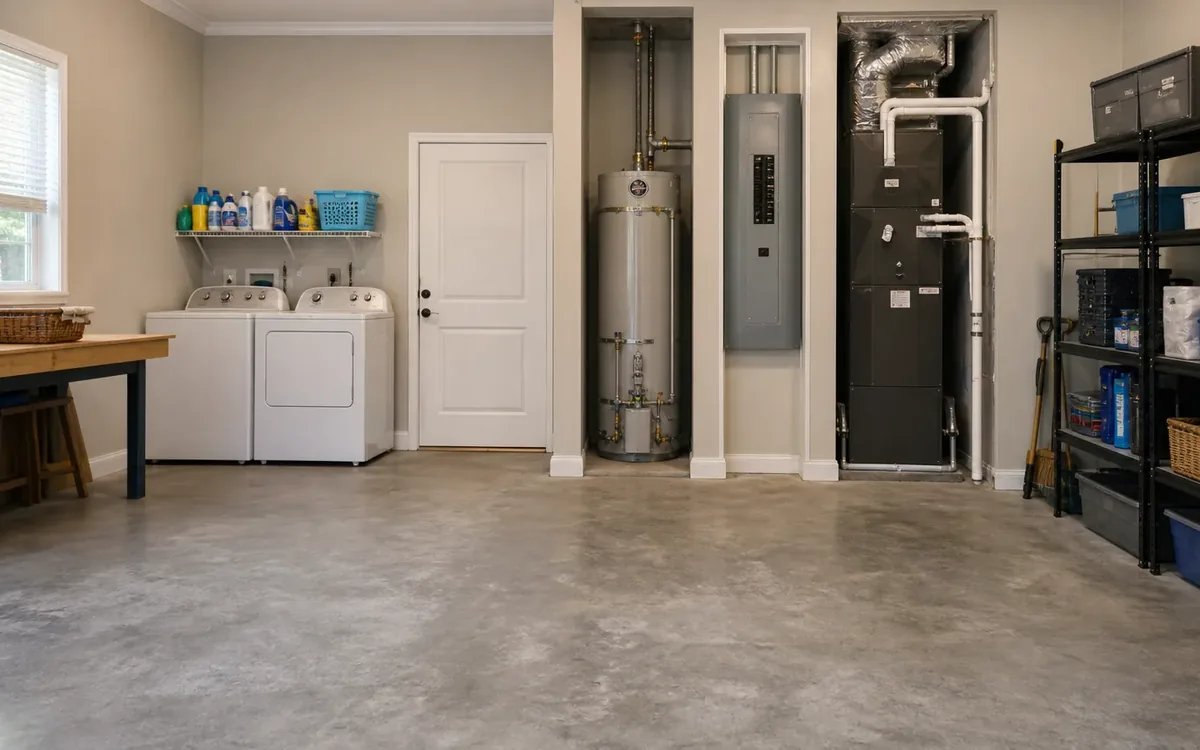
Before a home inspection, clear stored belongings away from the water heater, electrical panel, HVAC equipment, attic opening, and the routes leading to them. The goal is not to repair or assess these systems. It is to give the inspector a visible, reasonably safe working path while keeping the occupied home functional.
Quick answer: Remove boxes, clothing, shelving, vehicles, and loose household items that block utility equipment or access routes. Keep belongings away from hot surfaces, wiring, pipes, drains, and moving HVAC parts. Do not open panels, disconnect equipment, alter wiring, test valves, or make technical judgments. Leave inspection, repair, code, and safety decisions to the appropriate qualified professional or authority.
Why does clear utility access matter before an inspection?
An inspector may need to see utility equipment, identify visible components, and reach the surrounding area without climbing over household contents. A technically accessible system can still be practically inaccessible if it sits behind stacked boxes, a packed closet, garage shelving, or an obstructed attic opening.
Occupied homes present a particular challenge. Sellers still need clothing, tools, pantry supplies, seasonal decorations, and daily-use storage. The preparation task is therefore selective: clear the inspection zones without turning the whole home upside down.
Blocked access can also hide stains, corrosion, damaged surfaces, or other visible conditions near equipment. Only an inspector or relevant specialist should interpret those conditions. The household’s role is to expose the area, not diagnose it.
For broader sale-readiness help, review the home sale preparation service. If inherited belongings are part of the obstruction, the guide to how estate cleanouts work explains how sorting and removal decisions can be organized separately from inspection work.
What areas should the household clear?
Start with the equipment the inspector is expected to reach, then trace the route from the nearest normal entry point. Consider doors, stairs, hallways, closets, garage bays, and attic access points.
Focus on these areas:
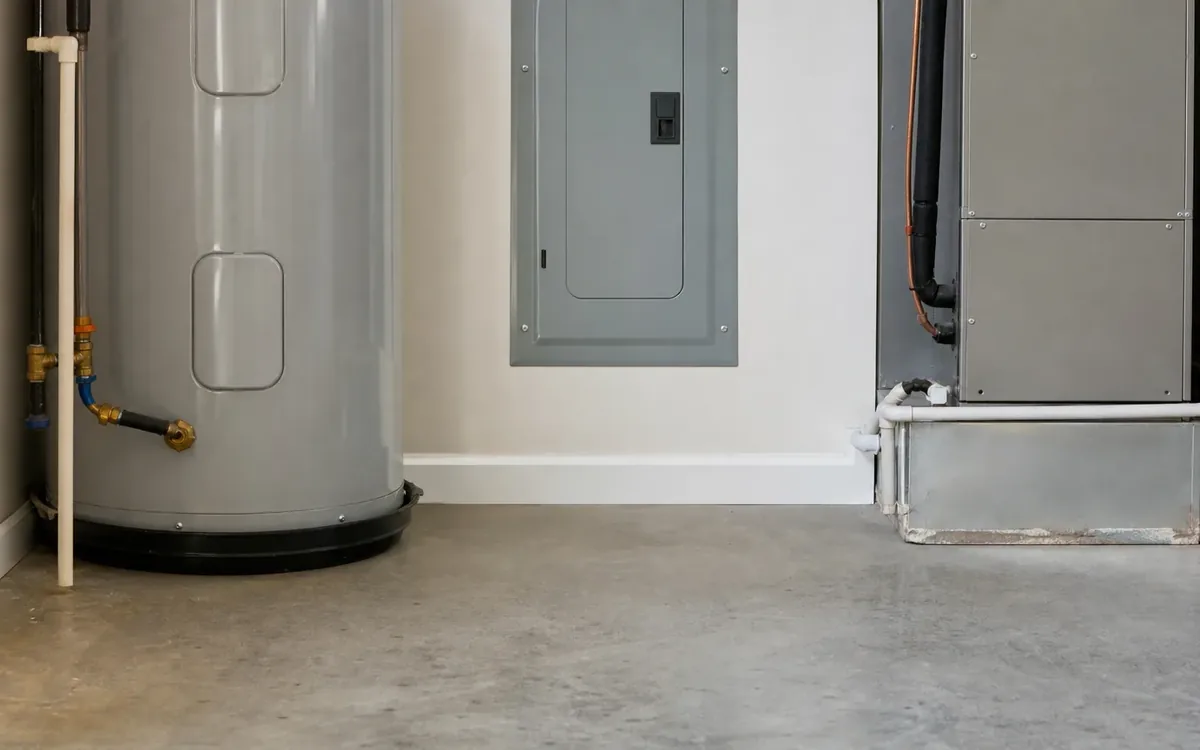
- Electrical panel: Clear the floor and wall area in front of it. Remove items leaning against the panel or preventing its door from opening.
- Water heater: Remove belongings stored against or immediately around the unit, its pipes, drain area, and visible controls.
- Indoor HVAC equipment: Clear the path to air handlers, furnaces, heat pumps, access panels, and nearby filters.
- Outdoor HVAC equipment: Move portable household objects, toys, hoses, planters, and loose storage away from the unit without disturbing installed components.
- Attic opening: Remove items under and around the opening. Make sure household storage does not obstruct the ordinary access point.
- Crawlspace entrance: Clear movable belongings from the approach, but leave entry and inspection decisions to the inspector.
- Utility closets: Remove coats, linens, cleaning supplies, and bins that conceal equipment or prevent the closet door from opening fully.
Do not assume a narrow gap is sufficient simply because a person could squeeze through it. Ask the inspector, real-estate professional, or relevant specialist whether they have specific access instructions. Their requirements may depend on the property and the planned scope of inspection.
How should you clear a packed utility closet?
A utility closet often combines mechanical equipment with household storage. The safest practical approach is to empty movable contents without touching installed parts.
Use this four-step sequence:
- Photograph the closet as stored. This creates a reference for items that may return after the inspection.
- Remove loose contents from the floor and shelves. Take out laundry products, paper goods, tools, linens, and hanging clothing that limit access or visibility.
- Create a temporary destination. Place keep items in labeled containers outside the access route rather than piling them in the next doorway.
- Stop at installed or connected components. Do not move pipes, vents, wiring, controls, drains, equipment platforms, or attached shelving without direction from the appropriate professional.
Avoid placing household goods on top of a water heater, air handler, furnace, or electrical enclosure. Do not conceal warning labels or controls. Combustible-material and clearance questions should go to the inspector, a qualified contractor, or the authority responsible for applicable requirements.
If the closet also contains confidential records, medication, valuables, or hazardous household products, separate those items for secure handling. A cleanout or move team may discuss sorting, packing, relocation, donation candidates, or removal choices. It should not decide whether a substance is safe, whether equipment complies with code, or whether repairs are required.
Clearing garage access without emptying the garage
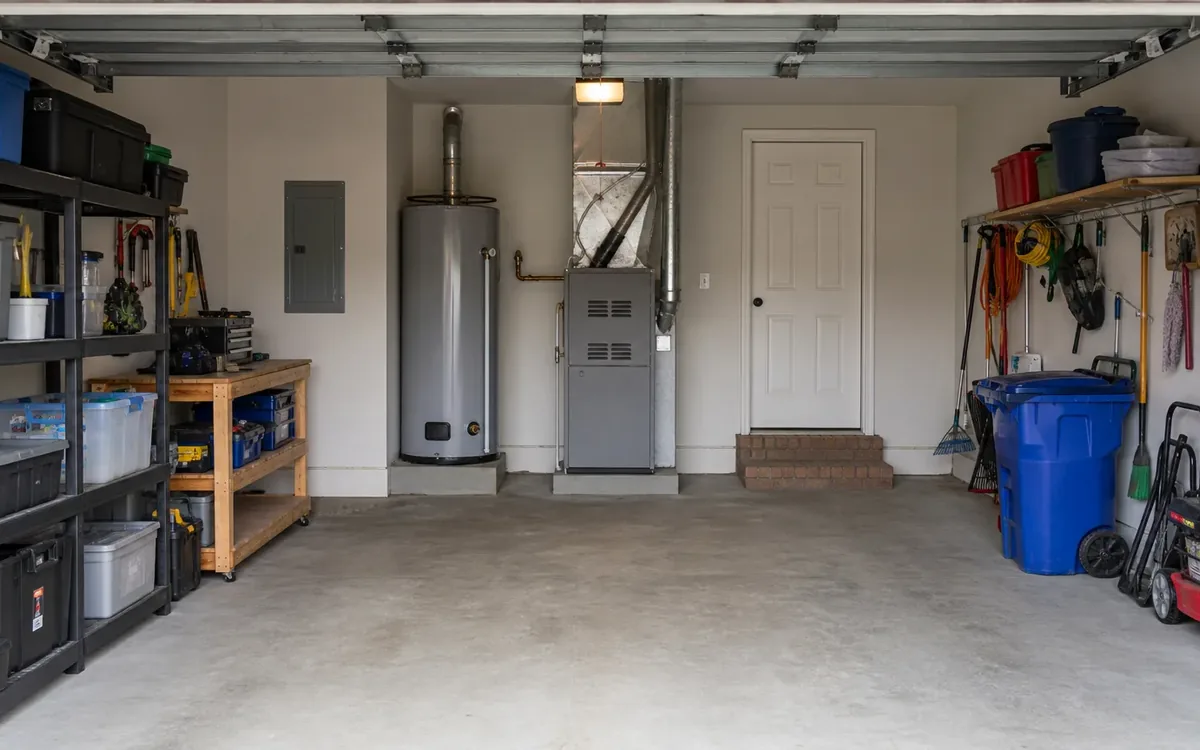
Water heaters, electrical panels, and HVAC components are often surrounded by garage storage. You usually do not need to reorganize every shelf. Concentrate on equipment visibility and a direct walking route.
Sort movable contents into four practical groups:
- Items that remain in active household use
- Items to pack for the move
- Items the household may donate, sell, or otherwise transfer
- Items the household chooses to discard through an appropriate disposal option
Move vehicles if they block the panel, water heater, attic access, or the path to equipment. Coil loose hoses and cords, stabilize freestanding tools, and remove objects that could fall into the access route.
Do not stack displaced boxes in front of another utility, an exit, or a garage door control. Avoid using the mechanical area as temporary staging simply because it has open floor space.
Paint, fuel, batteries, chemicals, compressed cylinders, and similar materials may require special storage or disposal decisions. The household should confirm requirements with the relevant waste provider, product guidance, or local authority. A practical cleanout team may help separate these items from ordinary belongings, but disposal acceptance and compliance remain with the appropriate provider or authority.
What if the HVAC equipment is in the attic?
Attic access requires more restraint than ordinary closet clearing. Prepare the opening and approach, but do not improvise structural access or enter areas that appear unsafe.
Clear furniture and storage from beneath the attic opening. Remove hanging garments or shelf contents that prevent the hatch or pull-down stair from operating normally. Keep children and pets away while the area is being prepared.
If the access is inside a closet, relocate the closet contents to labeled containers. Place those containers somewhere that does not obstruct bedrooms, stairs, exits, or other inspection areas.
Do not build a temporary walkway, alter framing, detach insulation, cut an opening, or install access hardware solely to make the attic reachable. Questions about safe entry, load-bearing surfaces, access construction, insulation, or visible damage belong with the inspector, qualified contractor, structural professional, or other responsible specialist.
If a pull-down stair is damaged or the hatch will not open normally, disclose that condition to the real-estate professional or inspector before the appointment. Let the appropriate professional decide whether entry is possible and whether repair by a qualified provider should be considered.
Protecting an occupied home while creating access
Inspection preparation should not make normal living harder than necessary. Use temporary zones that preserve access to beds, bathrooms, kitchen functions, exterior doors, and essential medications.
Helpful temporary locations may include:
- A labeled section of a room not involved in the inspection route
- Sealed moving boxes arranged away from doors and utilities
- A household-selected storage space outside the inspection area
- Off-site storage chosen and arranged by the household
- A vehicle only when temperature, security, and item safety are appropriate
Storage is a separate household and provider decision. The household chooses what leaves the property, where it goes, who transports it, and what security or environmental conditions it needs. A move team may discuss packing and relocation logistics, but it should not guarantee that a third-party storage option is suitable for every item.
Keep valuables, financial papers, keys, firearms, medication, and identifying documents secured according to household needs and applicable requirements. Do not place them in an unlabeled discard or donation group.
Use simple labels such as keep here, move storage, review, and approved removal. Avoid labels based on technical conclusions, such as unsafe heater or bad wiring, unless that wording comes from the relevant professional.
Who decides what gets moved, repaired, or evaluated?
Clear roles prevent an organizing project from becoming an unauthorized repair or assessment.
The household can decide:
- Which belongings to keep, pack, sell, donate, store, or discard
- Which rooms may hold temporary staging
- Who may handle personal property
- Whether to hire separate packing, hauling, storage, appraisal, or contractor providers
- Which valuables or sensitive items require special handling
A practical cleanout or move team may discuss:
- Sorting household contents
- Packing and labeling movable belongings
- Creating clear walking routes
- Relocating approved items within or away from the home
- Coordinating household-approved removal categories
- Sequencing belongings work around an inspection appointment
The responsible professional or authority decides:
- Whether the inspector has adequate access
- The condition or performance of the water heater, panel, or HVAC system
- Whether wiring, venting, drainage, or installation meets applicable requirements
- Whether a repair, replacement, permit, or specialist evaluation is needed
- Whether attic, crawlspace, or equipment entry is safe
- The value of personal property or real estate
- Contract, disclosure, legal, and compliance obligations
Real-estate agents can address transaction coordination within their professional role. Inspectors report according to their inspection scope. Qualified contractors address trade-specific repair questions. Appraisers determine value within their assignment. Attorneys and relevant authorities handle legal or regulatory interpretations.
A focused pre-inspection walkthrough
Once belongings are moved, walk the same route an inspector may use. This is not a technical pre-inspection. It is a check for practical access and household-created obstructions.
Review these five points:
- Entry route: Can the person reach the utility area without stepping over boxes, cords, or loose objects?
- Door operation: Can closet, garage, panel, and access doors open normally without moving stored goods?
- Floor space: Are household items removed from the immediate work area around equipment?
- Visibility: Are labels, controls, pipes, vents, drains, and surrounding surfaces not concealed by belongings?
- Exit route: Can the person leave the area without encountering a newly created pile or blocked doorway?
Do not operate unfamiliar shutoffs, breakers, valves, disconnects, or service switches during this walkthrough. Do not remove an electrical panel cover. If a leak, burning odor, sparking, exposed wiring, unstable equipment, or another concerning condition is observed, keep people away and contact the appropriate qualified professional or emergency authority based on the situation.
Common mistakes that shift clutter instead of clearing access
The most frequent preparation problem is moving an obstruction only a few feet. Boxes leave the electrical panel but block the water heater. Closet contents move into the hallway. Garage storage gets piled beneath the attic hatch.
Avoid these mistakes:
- Filling the route between the front door and utility area
- Placing boxes where equipment doors or panels need to open
- Leaning lumber, tools, or folding furniture against utility equipment
- Covering floor drains or visible piping with stored goods
- Moving unidentified containers into a donation or disposal pile
- Asking organizers or movers to judge technical safety
- Scheduling contractor work based only on a household guess
- Treating an inspection report as an appraisal or repair estimate
A useful staging zone has defined boundaries and does not interfere with another part of the inspection. If the home has limited space, reduce the volume through household decisions rather than creating taller, less stable piles.
Short FAQ
Should I remove the electrical panel cover?
No. Clear movable belongings from the area, but leave panel opening and technical inspection to the inspector or appropriate electrical professional.
Can boxes stay near the water heater if they are neatly stacked?
Neatness does not establish safe or adequate clearance. Move stored belongings away and ask the inspector or qualified professional about any property-specific access concern.
Should I test shutoff valves before the inspection?
Do not operate an unfamiliar valve merely to prepare. A qualified inspector or contractor should determine what testing or service is appropriate within their role.
What if heavy shelving blocks the equipment?
Do not move unstable or attached shelving without a safe plan. The household can hire an appropriate moving or contractor provider, depending on whether the shelving is movable, installed, or connected to the building.
Can a cleanout team say whether the equipment will pass inspection?
No. A cleanout or move team can address belongings and access logistics. Inspection findings, compliance conclusions, and repair recommendations remain with the responsible professional or authority.
Prepare the access, then leave the assessment alone
The best preparation is narrow and practical: remove personal property from utility zones, preserve a clear route, secure sensitive belongings, and avoid altering systems. That gives the inspector access without asking the household or a cleanout team to make technical conclusions.
Clutter Cleaner of South Carolina is based in Mount Pleasant and serves households across South Carolina. For help discussing belongings-related preparation for an occupied sale, call (843) 972-7020. Inspection, appraisal, real-estate, repair, disposal acceptance, legal, and compliance decisions should remain with the properly responsible provider or authority.



