
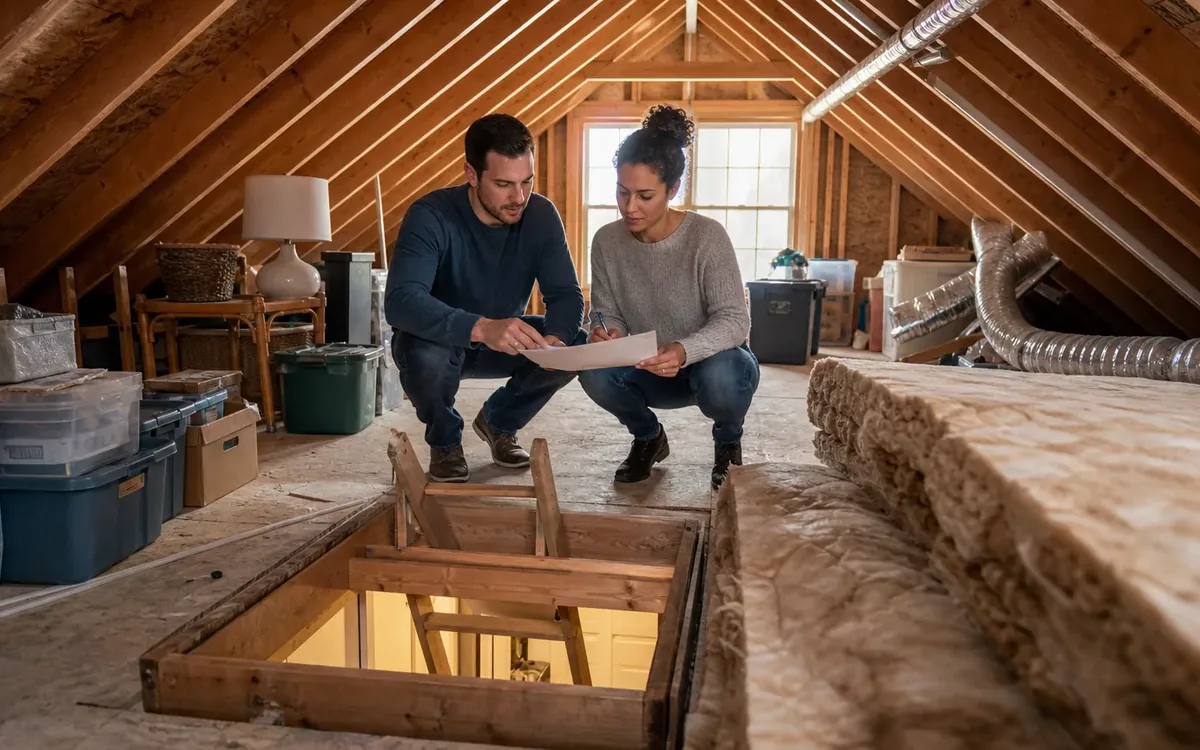
An attic cleanout team generally sorts, carries out, and routes stored belongings, while an insulation contractor evaluates and removes insulation using task-specific equipment and containment methods. For an estate transition, the practical sequence is usually to identify hazards, preserve important property, remove accessible contents, and then let qualified professionals address insulation, pests, wiring, structural concerns, or regulated materials.
Quick answer: Household goods and ordinary attic clutter belong in the cleanout scope. Loose-fill, batt, spray-foam, wet, burned, pest-contaminated, or suspect insulation should be discussed with an insulation contractor or other appropriately qualified professional. Stop work when the material, structure, access, or contamination is uncertain.
What is the basic division of responsibility?
An attic can look like one project, but it often contains several separate jobs. Treating everything above the ceiling as ordinary clutter can expose workers, spread contamination, damage the home, or destroy papers and valuables.
The household or estate representative can decide which belongings to keep, distribute, sell, donate, recycle, or discard. A practical estate cleanout or move team may discuss sorting, packing, pathways, removal order, labor, and disposition options for accessible personal property.
An insulation professional should address the condition, type, removal method, containment needs, and replacement of insulation. Other conditions may require additional specialists:
- A pest-control professional for active infestations, droppings, nests, or animal entry
- An electrician for damaged, exposed, buried, or questionable wiring
- A roofer for leaks, decking damage, or roof ventilation concerns
- A structural professional or qualified building professional for unsafe framing or flooring
- An environmental professional for suspect asbestos-containing material, mold assessment when appropriate, or other hazardous materials
- The relevant local authority for permit, disposal, or code requirements
Clutter Cleaner of South Carolina provides estate cleanout support statewide, but insulation diagnosis and removal are distinct from moving ordinary attic contents. Defining that boundary before work begins helps everyone plan the correct sequence.
Why should attic contents usually come before insulation removal?
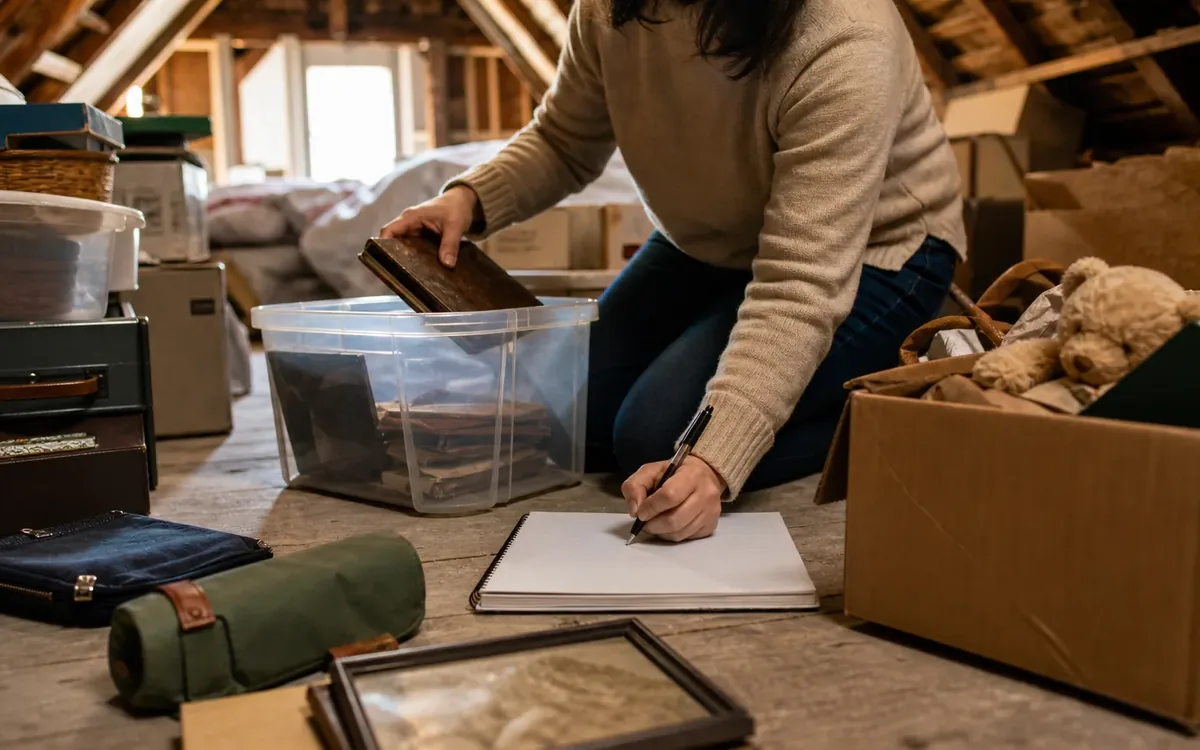
Removing accessible belongings first can give the insulation professional room to inspect and work. Boxes, trunks, furniture, decorations, and loose household items may hide insulation conditions, wiring, pest evidence, or weak walking surfaces.
There are important exceptions. Contents should not be moved first if reaching them requires workers to cross exposed joists, disturb suspect material, enter an unstable area, or work amid significant contamination. Safety and professional evaluation take priority over the preferred sequence.
A practical order is:
- Confirm who has authority to direct the estate property.
- Review access, lighting, temperature, flooring, and obvious hazards from a safe location.
- Identify documents, photographs, heirlooms, firearms, chemicals, and other controlled or sensitive items.
- Ask the appropriate professional to evaluate suspect insulation, active pests, structural damage, or electrical hazards.
- Remove accessible household contents without disturbing insulation.
- Complete any required pest treatment or hazard work.
- Have the insulation contractor remove or replace insulation if needed.
- Arrange inspection, repair, or sale-preparation decisions through the responsible professional.
For families still determining how the broader property should be handled, this guide to the best way to clean out an estate explains how to set authority and priorities before disposal begins.
What can an estate cleanout team handle in an attic?
A cleanout team may discuss removing ordinary personal property that can be reached and carried safely. The exact scope should be confirmed after access and site conditions are understood.
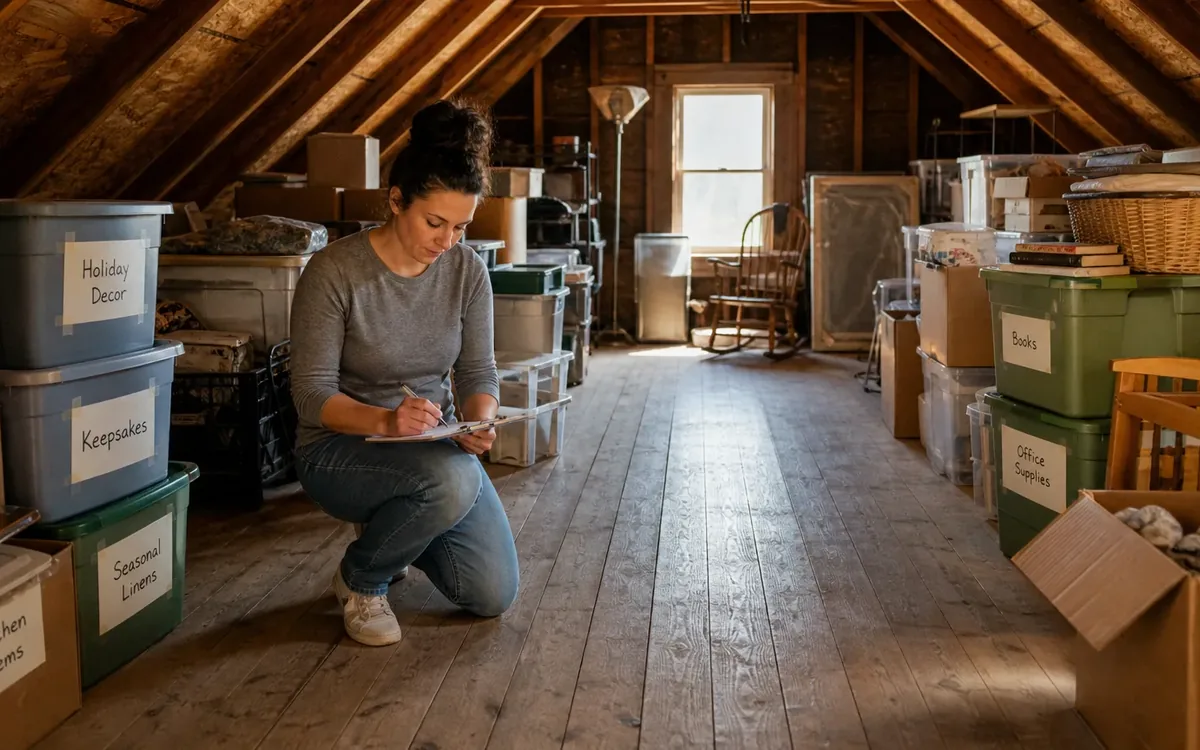
Typical attic contents may include:
- Holiday decorations
- Empty boxes and packing materials
- Clothing and linens
- Books, records, and household papers
- Small furniture
- Toys and hobby materials
- Luggage
- Framed art and decor
- Stored kitchenware
- Family photographs and memorabilia
The work may also include grouping property by the household’s instructions, packing retained items, and moving selected belongings to another safe area. If the estate representative wants help preparing for an auction, estate sale, move, or home sale, that goal should be raised before items are discarded.
A cleanout discussion should address practical limits such as:
- Whether there is a stable floor or only exposed ceiling joists
- Whether the stairs, ladder, or hatch safely support removal
- Whether large objects fit through the opening
- Whether summer heat or poor ventilation limits working conditions
- Whether items are embedded in insulation or contaminated by pests
- Whether sharp objects, chemicals, fuel, ammunition, or firearms are present
- Whether ceilings, rafters, or roof decking show visible damage
The team can discuss workflow and handling options. It should not declare insulation safe, diagnose mold, certify structural stability, determine code compliance, or decide whether specialized remediation is legally required.
When does the attic need an insulation professional?
Bring in an insulation professional when the task involves removing, vacuuming, replacing, or evaluating insulation rather than simply lifting stored belongings away from it. This is especially important when the insulation is widespread, difficult to identify, wet, compacted, burned, mixed with debris, or contaminated.
Situations to flag include:
- Loose-fill insulation that must be vacuumed out
- Batts that are wet, deteriorated, heavily soiled, or intertwined with wiring
- Spray foam that adheres to building components
- Insulation affected by roof or plumbing leaks
- Strong odors, widespread staining, droppings, nesting material, or carcasses
- Soot or fire damage
- Insulation blocking access to a repair area
- Unknown material around pipes, ducts, furnaces, flues, or older components
- A planned energy-efficiency upgrade requiring removal and replacement
An insulation contractor may discuss removal technique, equipment, containment, ventilation, disposal, and replacement options. The contractor should also explain what must happen before work, such as pest treatment, leak repair, electrical correction, or material testing.
Do not assume that age or appearance proves what an insulation product contains. If a material may contain asbestos or another regulated substance, identification, testing, removal decisions, and disposal requirements belong with appropriately qualified professionals and relevant authorities.
What warning signs should stop the cleanout?
Stop and reassess when continuing could disturb material, spread contamination, or place someone on an unsafe surface. A deadline for listing or closing the home does not make an uncertain attic safe.
Pause the cleanout for any of these conditions:
- Workers cannot see where it is safe to step
- The attic floor, hatch, stairs, ladder, rafters, or decking appear unstable
- Material must be dug out of insulation
- There are exposed or damaged wires
- Strong chemical, fuel, sewage, animal, smoke, or musty odors are present
- Droppings, nesting, stinging insects, or live animals are widespread
- Insulation or stored goods are wet
- There is visible soot, charring, or fire damage
- Pipes, tanks, ducts, or mechanical equipment may be damaged
- Unknown powder, fibers, wrapped pipe material, or deteriorating building products are present
- The attic has unsafe heat or inadequate ventilation
The appropriate next call depends on the condition. It might be an insulation contractor, pest-control provider, electrician, roofer, environmental professional, engineer, inspector, or local authority.
A cleanout company can document where work stopped and discuss how remaining contents might be handled after clearance. It should not provide a legal or technical clearance outside its role.
Who decides what happens to valuable or sensitive property?
The authorized household member, executor, personal representative, trustee, or other responsible party directs the disposition of estate belongings. If authority is disputed or unclear, pause distribution and seek advice from the appropriate attorney or court-connected professional.
Before routine removal, set aside categories that require deliberate decisions:
- Wills, deeds, tax records, titles, and financial papers
- Family photographs, letters, military records, and genealogy materials
- Jewelry, coins, collectibles, and artwork
- Firearms, ammunition, and controlled items
- Medications and chemicals
- Digital devices and storage media
- Items named in a will or requested by heirs
- Objects that may need an appraisal
A cleanout or move team may help create sorting zones and follow written instructions. An auction or estate-sale professional may discuss marketability. A qualified appraiser determines appraisal conclusions, and an attorney addresses legal ownership or estate-administration questions.
This separation matters in an attic because dusty, damaged, or unfashionable objects can still carry financial or family significance. Insulation removal should not start until important contents have been identified wherever they can be reached safely.
How should a South Carolina household plan the sequence?
Across South Carolina, attic designs and site conditions vary. The most useful plan is based on the particular home’s access, construction, occupancy, hazards, and transition deadline, not on a generic assumption about every attic.
Start with one authorized decision-maker and one written scope. Record which rooms and attic areas are included, what must be preserved, where retained items will go, and which conditions automatically stop work.
Then coordinate the project in phases.
Phase 1: Authority and preservation
Confirm who can direct the work. Gather estate documents already available, photograph the attic from safe access points, and list known valuables or requested items.
Do not enter an unsafe space merely to create documentation.
Phase 2: Preliminary condition review
From a stable position, note access limitations, standing water, leaks, electrical concerns, animals, odors, heat, visible insulation, and flooring. This is observation for planning, not a technical inspection.
Route uncertain conditions to the responsible professional.
Phase 3: Accessible content removal
Remove household goods that can be handled without disturbing suspect materials or crossing unsafe areas. Use clearly labeled destinations such as keep, family review, potential sale, donation review, recycling, and disposal.
Avoid creating too many ambiguous piles. A compact family-review category is more manageable than leaving every decision unresolved.
Phase 4: Specialized work
Schedule pest treatment, environmental assessment, electrical work, leak repair, insulation removal, or other specialty services in the order recommended by those professionals. Ask each provider what conditions must be completed before the next trade enters.
Phase 5: Property preparation
After the attic is cleared and specialty work is complete, the responsible real-estate professional, inspector, contractor, or authority can address repair, disclosure, inspection, permit, or compliance questions. A home-preparation team may help coordinate practical tasks, but it does not replace those professional judgments.
What should you ask before hiring either type of team?
Clear questions reduce overlap and surprise. Describe the attic accurately rather than asking only whether a company does cleanouts or insulation.
Ask a cleanout or move team:
- Do you remove belongings from this type of attic access?
- What access or flooring conditions would prevent work?
- How do you handle items touching or buried in insulation?
- Can retained items be packed and moved to a designated location?
- How will undecided papers and valuables be separated?
- What materials are excluded from your scope?
- What happens if workers discover pests, damaged wiring, or suspect material?
Ask an insulation professional:
- What type and condition of insulation do you observe?
- Is testing or another specialist needed before disturbance?
- Must household contents be removed first?
- What containment and cleanup methods are appropriate?
- Does pest treatment, leak repair, or electrical work need to happen first?
- Who handles disposal under applicable requirements?
- What documentation will be provided for the completed work?
- Who determines whether replacement insulation or other improvements meet current requirements?
For sale preparation, ask the real-estate agent and relevant contractors what work supports the property’s plan. Inspection findings belong to the inspector, repair recommendations to the relevant trade, valuation to qualified appraisal or real-estate professionals, and legal disclosures to the seller with appropriate professional guidance.
A focused decision guide
Use this simple division when assigning the work:
| Condition or task | First party to contact |
|---|---|
| Boxes, decor, clothing, and ordinary stored goods | Estate cleanout or move team |
| Family sorting and retained-item packing | Cleanout, organizing, or move team |
| Potentially saleable estate contents | Auction or estate-sale professional |
| Insulation removal or replacement | Insulation contractor |
| Unknown or suspect building material | Appropriately qualified environmental professional |
| Active animals, insects, nests, or droppings | Pest-control professional |
| Damaged or exposed wiring | Electrician |
| Roof leak or damaged decking | Roofer or relevant contractor |
| Weak framing or uncertain structural capacity | Qualified structural or building professional |
| Ownership, probate, or disputed-property question | Attorney or responsible legal authority |
| Appraisal conclusion | Qualified appraiser |
| Inspection finding | Qualified inspector |
| Permit, disposal, or code requirement | Relevant authority or responsible compliance professional |
More than one party may be needed. The table identifies the most logical first conversation, not a technical or legal conclusion.
Short FAQ
Can a cleanout crew remove a few insulation-covered boxes?
Not automatically. If retrieving them would disturb insulation, spread contamination, require stepping on unsafe surfaces, or expose workers to unknown material, stop and consult the appropriate specialist. Safe, clearly accessible items may be handled only within the team’s agreed scope.
Should insulation be replaced before an estate home is listed?
That is not solely a cleanout decision. Discuss the property’s condition and sale strategy with the real-estate professional, then obtain technical recommendations from the relevant insulation contractor, inspector, or other qualified professional. The estate representative makes the household decision after receiving appropriate guidance.
Who handles items discovered during insulation removal?
Set a discovery procedure in advance. The insulation contractor should stop around documents, valuables, controlled items, or unexpected materials and notify the authorized representative. A cleanout or move team may then help route ordinary belongings if conditions are safe.
Can Clutter Cleaner of South Carolina coordinate the entire decision?
Clutter Cleaner of South Carolina can discuss estate cleanouts, downsizing and organizing, auctions and estate sales, move management, home sale preparation, and code compliance support across South Carolina. Technical, legal, appraisal, inspection, real-estate, insulation, environmental, and governmental determinations remain with the responsible professional or authority.
What is the best next step?
Photograph the attic from a safe location, identify the authorized decision-maker, list known valuables, and note any insulation, pest, electrical, moisture, or structural concerns. Then call the appropriate providers in sequence rather than asking one team to perform every role. Clutter Cleaner of South Carolina can be reached at (843) 972-7020 to discuss the cleanout and transition portions of the plan.



