A search result cannot tell you what an official record means. What is a property violation? In general terms, it is an agency’s identified concern about a property under rules within that office’s jurisdiction. The actual notice, cited provision, facts, and official process control the meaning in a specific case.
Clutter Cleaner offers practical planning support, not legal advice or code interpretation. The team does not act for owners with a city or county, perform official inspections, determine compliance, or guarantee closure. Use the contact details on the notice and consult trained experts when needed.
What is a property violation?
A property violation is an issue cited through an agency’s process. Its meaning, due date, response options, proof, and consequences depend on the notice and jurisdiction. Use the official record instead of relying on a general definition. For the related service scope and planning steps, review our code compliance cleanup support and code compliance documentation checklist.
Protect the notice as received and create a working copy. Confirm the address, owner or named party named, issuing office, cited section, dates, attachments, and contact details. If any field appears wrong, ask the office how to raise that question.
Turn the notice into questions, not conclusions
For each cited item, ask:
- What exact issue is identified?
- Which area does it concern?
- What date applies?
- What response options exist?
- What proof is asked for?
- Is inspection or reinspection required?
- How will status be communicated?
Record answers with their source and date. Do not let a vendor translate the notice into a promise.
The cleanup planner can organize owner-approved private tasks. Clutter Cleaner’s Code Compliance Support may help coordinate basic cleanup within its role. It does not decide what satisfies the cited item.
If the issue concerns ownership, tenant rights, penalties, appeals, or another legal matter, consult a lawyer. Trade issues require trained experts. A general cleanup scope should remain general.
Use statuses such as clarification needed, owner choice pending, firm scheduled, private work complete, sent, and office reply pending. Reserve compliant or closed for the office’s determination.
What to do on the first day
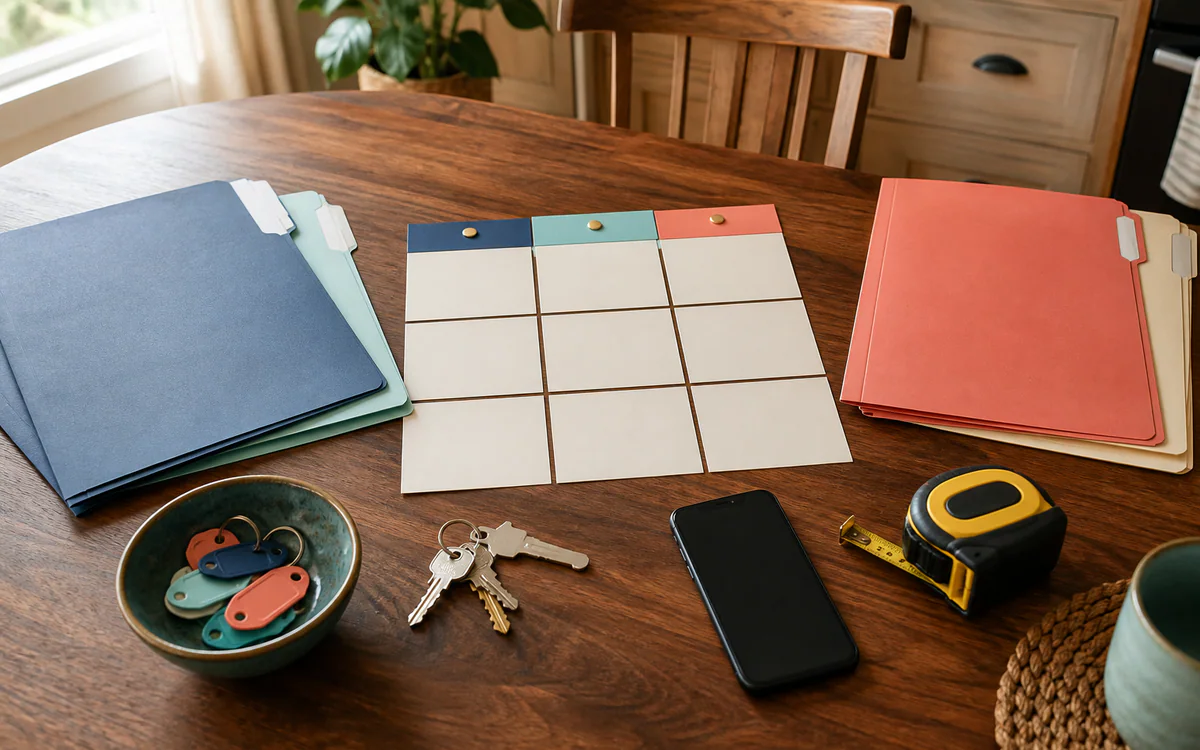
Put every page of the notice in one folder. Keep the envelope too. Take a clear photo or scan for your work file. Do not write on the only copy. Use a copy for notes.
Read the notice once from start to end. Check the name and street address. Look for a case number, office name, phone number, and each date. Make a short list of words you do not know. Do not guess what they mean.
Call or write to the office on the notice. Ask one clear question at a time. Start with the area named in the record. Then ask what reply is due and how the office wants it sent. Write down the name of the person who replies. Add the day and time.
Do not call a cleanup firm first and ask it to explain the notice. A firm can look at the work you want done. It cannot tell you what the local office meant. Get that part from the source.
Next, name the person who can say yes to work at the home. A key alone does not grant that role. If the home has an owner, tenant, estate, or shared title, the answer may need help from a lawyer. Keep hands off the items in doubt.
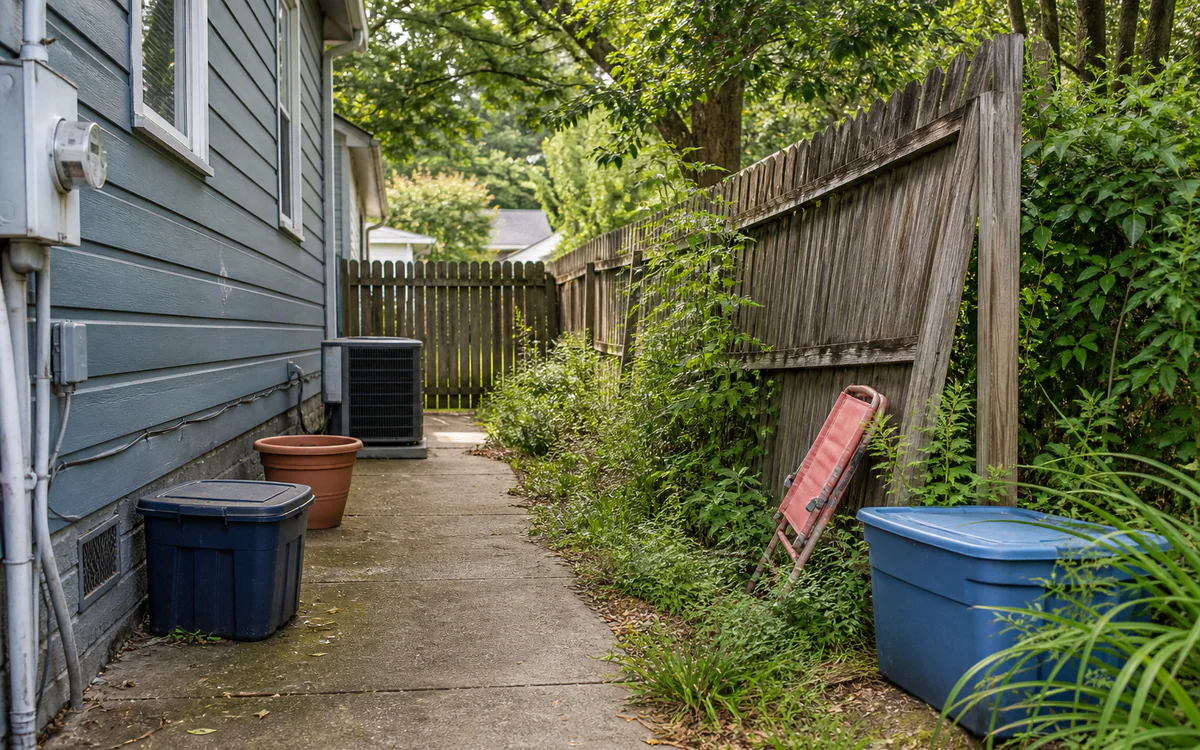
Walk the site only if it is safe. Do not move things yet. Note the room or yard zone named in the notice. Look for blocked paths, sharp items, leaks, loose wires, pests, or cans with no label. Step back from a risk. Do not touch it for a better photo.
Make two lists. The first is for facts you can see. The second is for questions. A fact may be, “Six bags sit by the shed.” A question may be, “Does the office want this zone kept clear?” Keep facts and guesses apart.
If the work is plain home sorting, write a small scope. Name the room, items, limits, and next place. Add who said yes. If the work needs a trade, stop there and ask a trained firm for that job.
Before you stop for the day, give each open line a name and next date. A short, clear log can cut down on lost calls and mixed tasks. It also helps the owner see what still needs a reply.
What happens with a code violation?
What happens next depends on the issuing office’s rules and the notice. The process may involve contact, a response, private work, proof, inspection, reinspection, or another step. Ask the office directly. Do not ignore dates or assume cleanup alone ends the matter. Related South Carolina planning tools include our code compliance cleanup support and code compliance documentation checklist.
Build an official timeline and a private project timeline. The official one comes from the notice and office. The private one covers owner-approved tasks and vendors. Link them with filing dates, but keep their choices separate.
Document private work honestly
For each task, save:
- Owner signoff
- Written vendor scope
- Work date
- Before photos
- After photos
- Invoice or receipt
- Filing receipt
- Office reply
A receipt proves a sale with a vendor. It does not automatically prove official code status. A photo shows a view at a moment. It does not replace an inspection.
The City of Charleston’s official Livability page offers program context and contact details for properties in that jurisdiction. Follow the notice for the actual process. Another city or county may use other procedures.
If an official date may be missed, contact the office promptly and ask about its process. A private firm cannot grant an extension or speak for the office.
Do not conceal open issues. Keep office questions and expert referrals visible in the project log.
How to prepare a compliance checklist?
Prepare a compliance checklist from the notice as received. Use one line for each cited item, then record the issuing office, date, unanswered question, authorized decision-maker, approved private task, requested proof, and current status. Keep the office’s wording intact and ask for clarification before guessing. To turn this answer into a practical plan, compare code compliance cleanup support with the code compliance documentation checklist.
The checklist should separate official instructions from private work. A notice line may lead to an office question, an owner decision, a cleanup task, or a referral to a qualified trade. Those paths can share a schedule without becoming the same responsibility.
Build the checklist before moving anything
Record:
- Exact notice wording
- Property area named
- Issuing office and contact
- Date shown on the notice
- Clarification requested
- Owner-approved task
- Assigned firm and scope
- Proof requested
- Current status
Use statuses that state facts: awaiting clarification, owner decision needed, vendor scheduled, private work complete, proof sent, and office response pending. Only the issuing office can state that the matter is closed or that an official requirement has been met.
Keep sensitive household papers outside the general project folder. Vendors need the location, access details, scope, and records tied to their work. They do not need identity numbers, account statements, health details, or unrelated family records.
What do you need for a code of compliance?
Requirements depend on the office, property, cited issue, and process. Use the exact term on your notice, ask the issuing office what result is available, and follow its instructions for records or inspection. A private cleanup company cannot provide a universal signoff checklist. For additional planning context, see code compliance cleanup support and the code compliance documentation checklist.
Before scheduling work, confirm what the office wants clarified and what the owner can approve. If the notice points to legal rights, a building trade, environmental work, or another specialty, take that question to the appropriate professional instead of placing it in a general cleanup scope.
Match each date and record to its source
Keep separate calendar entries for:
- Notice response dates
- Owner decision dates
- Vendor visits
- Requested inspections
- Proof submissions
- Follow-up dates
Label every date with the office, person, or firm that supplied it. A reminder called “compliance due” is too vague. It can cause the wrong person to answer the wrong task.
For private work, save the written scope, owner signoff, dated photographs, invoice, receipt, and any destination record. Ask the office which records it accepts and how they should be sent. A vendor invoice shows private work. It does not establish official acceptance.
What building code does SC use?
The code or property-maintenance rule that applies can depend on the jurisdiction, property, work, and adopted edition. Ask the office named on the notice for the exact code title, section, local provision, and current process. Do not rely on another city or a general online list. The next steps connect to our code compliance cleanup support and code compliance documentation checklist.
Clutter Cleaner does not interpret building codes or decide which provision controls a property. Its role is limited to approved cleanup planning and coordination. Questions about repairs, construction, systems, permits, or technical compliance belong with the issuing office and the qualified trade for that work.
Protect the source records during cleanup
Set up a secure record zone before broad sorting. Keep the notice, office messages, owner signoffs, vendor scopes, photographs, invoices, filing receipts, and official replies together. Do not mix deeds, tax records, identification, account statements, or other sensitive papers with general recycling.
The EPA’s household hazardous waste guidance is a reminder that not everything found during cleanup belongs in basic trash. Pause when a product is leaking, unlabeled, or outside the selected firm’s accepted materials. Follow labels and current local collection guidance.
Use secure storage and avoid photographing sensitive numbers. Share records only with people who need them for an approved purpose. Ask the appropriate adviser how long a specific record should be retained rather than using a general cleanup rule.
Build the project from the actual notice
Preserve the complete notice, envelope, attachments, photos, and links. Record the issuing office, property address, case or reference number, contact, date received, every date shown, and response instructions. Keep the original unchanged. Use a copy for highlights and project notes.
Turn each unclear point into a question for the issuing office. Ask which area the wording refers to, what response path applies, how proof should be sent, whether a visit is expected, and how the office communicates status. Record the date and source of each answer. Do not fill gaps with a generic checklist or another city’s procedure.
Confirm the person who can authorize access, spending, movement of items, and release choices. Property ownership, tenancy, estate administration, management, or another arrangement can affect approval rights. A relative or nearby contact should not be treated as approved merely because that person is available.
If a question concerns legal rights, ownership, appeals, contracts, taxes, or court procedure, consult the expert for that field. Clutter Cleaner can help organize approved household and property tasks within its scope. It does not interpret law or act for an owner before an agency or court.
Keep private cleanup work precisely bounded
For each approved area, write the task, item or items involved, next place, assigned firm, access window, owner signoff, and record requested. Separate keep, owner review, firm referral, and approved release groups. Silence is not signoff to discard unclear property.
Stop basic work when it reaches a structure, utility, unknown container, strong odor, leak, damaged battery, unstable item, pest concern, environmental issue, or other trade issue. Notify the named contact and bring in a qualified firm for that task. Do not cut, disconnect, drain, open, mix, demolish, or repair merely to maintain the schedule.
Use a written change note for discoveries outside the original scope. State where work paused, what was observed without diagnosing it, which firm may be needed, how timing or cost may change, and who approved the next step. Preserve the original scope so the project history remains clear.
Occupied properties need safe access to exits, bathrooms, food, medicine, sleeping areas, mobility gear, work supplies, and pet care. Remote properties need controlled keys, codes, photo sharing, and choice channels. In either case, share only the details each firm needs and end access when its purpose ends.
Track evidence without promising the result
Take photos of approved areas from planned views before and after private work. Keep dates, room or exterior-zone labels, scopes, invoices, destination records, and owner signoffs together. Avoid images that expose sensitive papers, neighboring property, or people without signoff. Save original images when they may support the project record.
Use factual descriptions such as private sorting complete, approved item removed, trade referral open, proof sent, or office reply pending. Do not state that a violation was corrected, the property passed, or the matter closed unless the issuing office provides that official status.
Follow the office’s instructions for filing and save the receipt or acknowledgement. A vendor invoice records private work. A portal confirmation records delivery. Neither one proves official acceptance. If the office requests another step, add a new dated item and ask questions before expanding the scope.
At closeout, check rooms, storage, containers, tools, keys, codes, invoices, and shared folders. Give the owner an index that separates original records, private completion records, filings, and official responses. Keep exceptions visible and remove completed vendors from access lists.
Schedule a final owner review before ending the private project. Confirm that unclear items remain protected, every off-site place is identified, and the next official contact is clear. If the office has not responded, keep that status open rather than choosing an end date for it.
Close only the signoffs that are no longer needed. If an expert or office still needs access, record who approved it, its purpose, and when it should be reviewed. Do not leave permanent codes active by convenience.
A property violation is defined by its official source, not by a service website. Preserve the notice, ask focused questions, and separate private work from the office’s choice. Organized support is valuable precisely because it respects that limit.