

Code enforcement notes help turn a spoken request into a clear written record. For a property in Simpsonville, SC, summarize the talk, list open questions, and ask the issuing office to confirm your understanding. Use that office’s preferred contact method. Your summary records the conversation; it isn’t written approval.
Keep the focus on what was said and what remains unclear. A cleanout plan can follow once the scope is clear. Decisions about compliance, permits, and approval stay with the responsible office or professional.
Quick answer: Send a short, neutral summary through the issuing office’s preferred channel. Identify the property, the conversation, and each requested action. Ask the office to correct errors and answer open questions. Keep its response with the original notice. Don’t treat silence or your own notes as approval.
What should code enforcement notes include?
Code compliance support can help frame the household’s planning needs. The guide to how estate cleanouts work explains a related process for sorting and removal.
Your notes should identify the property, who spoke, and what you understood. Separate exact words from your own summary. Record each requested action and any stated due date. Add questions where the scope remains unclear. Keep the original notice nearby so the follow-up stays tied to the same issue.
Write the notes while the conversation is fresh. Use plain words rather than trying to sound official. If you didn’t hear a date clearly, say so. Don’t fill a gap with what seems likely.
A useful record includes these details:
- Record the property address and any case number shown on the written notice.
- Note the speaker’s name, office, and role as they identified them during the conversation.
- Describe each requested action without adding work that the speaker did not discuss.
- Mark any unclear date, area, item, or condition as a question needing an answer.
- State any next step mentioned, including who would arrange further contact or review.
Use quotation marks only when you recall the exact words. Otherwise, label the passage as your understanding. For example, write, “I understood that stored items near the side gate were discussed.” That wording leaves room for correction.
Keep separate notes for separate conversations. A later call may change one point without changing others. Combining every call into one summary can hide that change. A dated record makes the order easier to follow.
Photos may help show which area you mean. Label them with the location and date. Photos can support a question about scope. They don’t prove that the property meets the rule.

How do you ask the issuing office to confirm?
Use code compliance support planning to separate cleanup needs from office decisions. The estate cleanout planning guide offers context for sorting household contents.
Ask the issuing office which contact method it prefers. Then send a short summary through that channel. Request corrections and clear answers to the points still open. Ask how the office will document its response. Don’t assume a phone call, email, or online form serves the same purpose everywhere.
For Simpsonville, SC, start with the office named on the notice. The property’s mailing address alone doesn’t tell you which office issued it. Check the notice for the contact person, case reference, and response details. If those details conflict, ask the issuing office to clarify.
Keep the subject line easy to find. “Request to confirm conversation: [address], [case number]” gives useful context. Avoid calling the message an appeal or formal filing unless that is your intent. Ask the office about the process for those steps.
You can adapt this plain-language message:
“Hello [name]. I’m writing about [property address and case number]. We spoke on [date] about [issue]. I understood the requested actions to be [brief summary]. Please correct anything I misunderstood and answer the questions below. Please also confirm how any required follow-up review will be arranged.”
Below the summary, keep each open question on its own line. Ask what area is covered, which action is requested, or how a date applies. Don’t bury those questions in a long account of the property’s history.
Close by asking where to send later updates. If you need to confirm receipt, ask how to do that. A receipt shows that a message reached a channel. It doesn’t, by itself, confirm the content or grant approval.
How is a discussion different from written approval?
Code compliance support concerns practical planning around the household’s needs. The Clutter Cleaner resource blog provides related home-transition reading without replacing the issuing office’s direction.
A discussion may explain a concern or suggest a next step. Your notes capture your understanding of that talk. Written approval must come from the responsible office or authority through its process. Ask what any response means, what it covers, and what further review remains before calling the matter resolved.
Look closely at the words used in a reply. “We received your photos” differs from “the case is closed.” A suggestion about clearing an area may leave other concerns open. Permission for one action may not cover a second action.
If the office replies, “That sounds fine,” ask a narrow follow-up. Does the reply confirm your summary, approve a proposed step, or record a final decision? You don’t need to argue about the wording. You need a clear record of its meaning.
Likewise, don’t read silence as agreement. An unanswered message leaves the question open. Keep the sent copy and any receipt, then ask about follow-up through the preferred channel. A household note should show the lack of a response clearly.
A useful status sheet separates what was requested, what was done, and what was reviewed. These are different stages. Removing contents may complete a household task while an office review remains pending.
Ask who has the authority to confirm the result. A cleanout team can describe its agreed work and share records. It cannot decide that an enforcement case is closed. Legal advice belongs with legal counsel, and code decisions belong with the responsible authority.
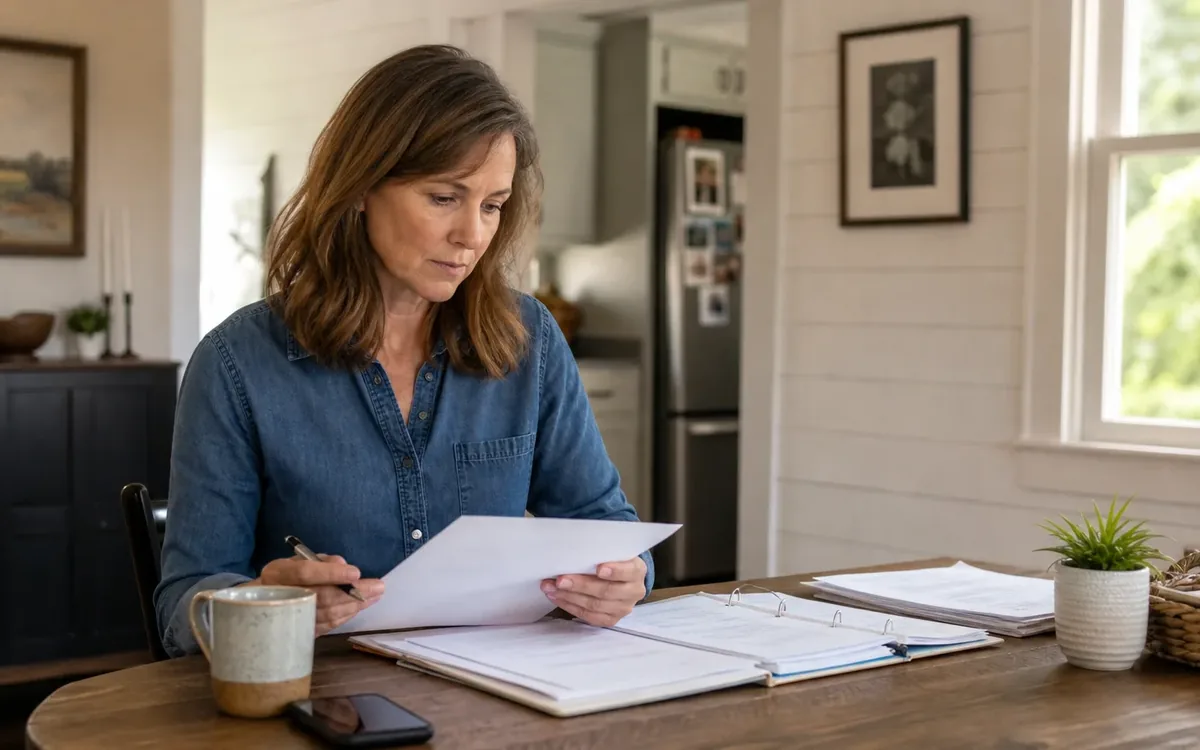
Build a record that stays clear when plans change
Use code compliance support planning for the practical work discussion. The guide to how estate cleanouts work can help you prepare a separate contents plan.
Keep the original notice, your notes, and each reply together. Add a simple log that shows what changed and who said it. Preserve earlier versions rather than replacing them. This helps the household and providers see the current plan without losing the record of how that plan took shape.
Use these five steps to build the record:
- Save the original notice, including attachments and the contact details shown on it.
- Add a dated summary of each call, visit, or other spoken discussion.
- Send your confirmation request through the issuing office’s preferred communication method.
- Save the reply and mark which questions it answers or leaves open.
- Update the work plan while keeping earlier notes and messages in the same file.
Choose a format the household can maintain. A folder can hold paper notices and printed messages. A shared digital folder can hold copies and labeled photos. Use clear file names so a provider doesn’t mistake an old request for the current one.
Assign one household contact when possible. That person can collect questions and share replies. Other owners or responsible parties may still need direct access. Ask about their roles rather than assuming one person can speak for everyone.
If two messages seem to conflict, quote the relevant passages. Ask which direction applies now and to what area. Avoid rewriting the conflict into a single instruction of your own.
Keep private details out of broad group messages. A provider may need the work scope without needing every family record. Share enough to explain the task, access limits, and open questions. Keep the full case file with the responsible household contact.
Turn confirmed directions into a provider handoff
Code compliance support offers a relevant starting point for discussing cleanup needs. The estate cleanout planning guide helps frame choices about household items.
Build the provider handoff from the current written record. State the agreed contents scope and flag unresolved points. The household decides what it owns and wants to keep. A practical team may discuss sorting, access, and removal needs. Approval, appraisal, repairs, and legal decisions remain separate matters for the proper parties.
Clutter Cleaner of South Carolina serves all of South Carolina. Its physical business location is Mount Pleasant, SC, and Charleston is its primary market. Households in Simpsonville can discuss code compliance support without treating the team as the issuing authority.
Give the team a short work brief:
- Identify the rooms or outdoor areas tied to the confirmed cleanup request.
- List items the household plans to keep, review, or offer for removal discussion.
- Flag disputed ownership and pause those items until the responsible parties resolve them.
- Share access limits and name the household contact who can answer scope questions.
- Mark tasks that need a separate contractor, waste provider, or professional decision.
For furniture and powered items, provide inventory details only. List the item type, location, photos, and any known model information. Ask the proposed provider what it needs to assess the handoff. Don’t add directions for testing, repair, disassembly, wiring, anchoring, or use.
Keep storage choices separate from cleanup scope. The household can seek terms from a storage provider if needed. Contractors should address repair work within their own scope. Appraisers handle value questions, while real-estate professionals advise on sale-related choices.
Waste decisions need their own review too. The EPA’s household hazardous waste guidance explains why some household products need special care. Ask the relevant waste program about accepted materials and handling requirements. A general removal discussion doesn’t settle those questions.
Check the record before calling the task complete
Use code compliance support planning to review the household’s next steps. The Clutter Cleaner resource blog offers other guides for related transitions.
Review the record after the agreed work is done. Compare the work notes with the confirmed request. Ask the issuing office what evidence or review it needs next. Keep completed cleanup separate from any pending decision. Only the responsible authority can explain the status of its case or required approval.
A completion note should describe work, not claim a legal result. “Listed contents removed from the named area” is a task record. “Property fully compliant” is a broader conclusion. Leave that conclusion to the responsible authority unless it has supplied clear written confirmation.
Keep any later office response with the same file. If new issues arise, record them as new directions or questions. Don’t quietly fold them into the earlier scope. That can confuse the household and any provider reviewing the file.
If a deadline remains unclear, ask the issuing office for clarification. A request for more time is separate from approval of that request. If the notice raises legal concerns, seek legal counsel. A cleanout or move team cannot determine appeal rights or legal deadlines.
FAQ: Written follow-up after a code conversation
Code compliance support helps frame practical cleanup discussions. The guide to how estate cleanouts work provides background for a separate household contents plan.
Can I send my own summary of a phone call?
Yes. Label it as your understanding and ask for corrections. Include the property, case reference, speaker, and conversation date. Use the issuing office’s preferred contact method. Your summary can help clarify the record, but it doesn’t become the office’s instruction merely because you sent it.
What if the office doesn’t answer my message?
Keep the message and any receipt in your file. Follow up through the preferred channel and ask how to confirm receipt. Leave unanswered questions marked as open. Don’t treat silence as consent, approval, or a changed date. Legal counsel can advise if a pending deadline creates a legal concern.
Should I copy the cleanout team on every message?
Share the information the team needs for its agreed scope. That may include confirmed directions, relevant photos, and unresolved access questions. The full file may contain private details unrelated to the work. Keep one household contact responsible for passing along changes, so the provider receives a clear current plan.
What if written directions differ from the conversation?
Keep both records and ask the issuing office to explain the difference. Quote the specific point rather than restating the whole case. Ask which direction now applies and whether the scope changed. Don’t choose the version that seems easier or blend both versions into a new instruction.
Can a cleanup team confirm that the case is closed?
A team can describe the work it completed within its agreed scope. It cannot replace the issuing authority’s decision. Ask the office how it records review, approval, or closure. Keep that response separate from provider work notes so later readers can tell who confirmed each part of the process.



